Men & Womens Health

Chronic Pain: Swimming Therapy


Most people don’t think of Mental Illness when discussing Chronic Pain. Mental Illness can be physically debilitating with many spending large amounts of time in bed. For someone like me who is challenged by both, daily life can be difficult. Today I’m in bed juggling my laptop on one knee trying to avoid the pain screaming on the left side of my body.

Pool Shade

Over the holiday weekend my husband installed a pool shade so I can swim and get exercise without burning to a crisp lobster. They are very inexpensive and easy to install. He bought the sail on Amazon for less than $50.

One of the therapies the Pain Management doctor suggested was swimming and water exercises. Every other day I spend 30-45 minutes with my water noodle paddling around and doing basic exercises. I have noticed a difference in the muscles not used in ages.

I work on my shoulders by doing wide arm paddling, leg scissors for my back and hips, tiptoes for calves, stretching my back out till it hurts, and lunges. After spending years in bed I’m building stamina for the good days ahead.

Doing exercises in the water puts less resistance on the body which can help injuries. I’m rehabilitating my knee and it’s much easier than walking up and down the stairs repeatedly.

It helps my mental health by getting away from all the noise, I watch the butterflies and see how my flowers are growing. I work on meditating to keep my head clear. I’m also getting Vitamin D from the sun.

M


Men & Womens Health

Pain Warriors

As Ambassador for U.S. Pain Foundation I want to share the latest news on a meeting offered by U.S. Pain Foundation and Coilition for Headache and Migranes Patients. Melinda Sandor Ambassador-Texas U.S. Pain Foundation.

Dear pain warriors, 
Those with chronic pain, including migraine and headache disorders, can have an especially tough time finding a doctor they click with. Have you ever wanted to find a way to better communicate with your doctor, get the most out of your visits, and maximize your treatment plan?
If yes, please join us this Thursday, June 13, at 7 pm ESTfor an intimate conversation between neurologist and headache specialist Abby Chua, DO, and patient advocate Katie Golden. Dr. Chua and Katie will discuss what patients and doctors can learn from one another, and offer tips for interacting.
Dr. Chua is a headache specialist at Hartford HealthCare Headache Center in Connecticut. She also is program director of their Headache and Facial Pain Fellowship Program, one of the few such programs in the country. Dr. Chua brings a special level of compassion to her practice as a person living with vestibular migraine, and advocates tirelessly on behalf of patients.

Katie lives with chronic migraine disease, and has emerged as a leading voice for the patient community. She is the Migraine Advocacy Liaison for U.S. Pain Foundation and a member of the steering committee for CHAMP. She was the recipient of the Impact Award 2017 for the Association of Migraine Disorders and writes frequently for migraine-related news sites, including www.migraine.com and her personal blog, www.goldengrain.com
Register for June 13
For more ways to get involved (and more events!), visit the official MHAM homepage. If you have questions, please reply to this email.
Sincerely,
Nicole HemmenwayInterim CEOU.S. Pain Foundation
P.S. Don’t miss our other event with Lindsay Weitzel, PhD, migraine strategist, on Facebook Live June 19!

Health and Wellbeing · Men & Womens Health

This NBA Superstar Used 2 (Surprising) Words to Teach a Valuable Lesson in Emotional Intelligence

By Justin BarisoFounder, Insight

It’s rare for professional athletes to admit weakness. It’s even rarer for them to do this.

As the Toronto Raptors and Golden State Warriors continue their slugfest to determine the NBA’s 2019 champion, one player is already preparing for next season:

The Milwaukee Bucks’ Giannis Antetokounmpo.

Not that long ago it appeared that Antetokounmpo and the Bucks would be playing the Warriors for this year’s championship. The Bucks had cruised through the playoffs, and were up two games to zero against the Toronto Raptors.

But the Raptors went on to win the next four games in a row–a remarkable feat considering the Bucks hadn’t lost three games in a row the entire season.

The Raptors managed to defeat the Bucks by tooling their defense to focus on stopping the young team’s star (who’s affectionately known as “the Greek Freak” due to his Athens upbringing and monstrous athletic prowess).

In a recent interview with The Athletic, Antetokounmpo acknowledged that Raptors players Kawhi Leonard and Marc Gasol gave him particular trouble. Giannis admitted that now the series is over, “every day in his head,” he continues to see Gasol and Leonard coming at him.

Then, Antetokounmpo went on to say something remarkable to his opponents:

“Thank you. Thank you, because Gasol and Kawhi made me a better player. I’m not trying to be sarcastic. I’m being honest. They’re going to push me to be better.”

“Thank you.”

It’s rare for professional athletes to admit weakness or to credit opposing players for stopping them. It’s even rarer that they thank their opponents.

With these two words, Antetokounmpo revealed evidence of a remarkable and invaluable quality:

The ability to learn from mistakes.

What’s EQ got to do with it?

Emotional intelligence is the ability to identify emotions (in both yourself and others), to recognize the powerful effects of those emotions, and to use that information to inform and guide behavior. In essence, it’s the ability to make emotions work for you, instead of against you.

Failing to reach a goal gives rise to negative emotions like sadness, frustration, even anger.

But feelings like these can help you–if you let them.

For example, when you experience failure, consider there are a few ways to respond:

  • You can move on and pretend the failure never happened.
  • You can sit around and feel sorry for yourself.
  • You can stop and reflect, extracting lessons from the failure to help you grow.

Guess which option is going to make you better?

The key is to treat every mistake as a learning experience.

It helps to find a mentor or coach you can trust, that will help expose your blind spots and provide additional insights. Ask yourself–and your confidants:

  • What problems did my mistake reveal?
  • What can I do differently next time?

Then, use the answers to learn and grow.

It’s true–failure never feels good. 

But instead of dwelling on negative feelings, you can use them–to help you achieve heightened focus, and to provide motivation to make needed changes.

Accomplish this and you’ll begin to see failure, not as the end of the road, but as a stepping stone to bigger and better–much like a certain NBA superstar.

Because remember: Often it’s our opponents, those who point out our weaknesses and flaws, who help us to grow. It’s the ones who challenge us who truly make us better. 

PUBLISHED ON: JUN 4, 2019

Like this column? Sign up to subscribe to email alerts and you’ll never miss a post.The opinions expressed here by Inc.com columnists are their own, not those of Inc.com.

Men & Womens Health

Blair Underwood: Ava Duvernay Made A Grief Counselor Available On The Set Of ‘When They See Us’

HelloBuzz

Shamika Sanders, Sr. Entertainment Editor

Posted May 31, 2019

Blair Underwood

Ava Duvernay was just a teenager when five young Black boys, from Harlem, were arrested and convicted for the rape of a white woman in Central Park on the night of April 19, 1989. So when Raymond Santana, one of the “Central Park 5” sent her a wishful tweet about bringing the Central Park 5 story to the screen, “it meant a lot” to her, she revealed to NPR.

Ava and Netflix’s When They See Us chronicles the events of the Central Park Five case that captivated the nation. The four-part series will span 25 years, taking on the wrongful conviction of the boys, as well as highlight their exoneration in 2002 and the settlement reached with the city of New York in 2014.

Antron McCray, Yusef Salaam, Raymond Santana, Jr., Kevin Richardson and Korey Wise were beaten upon arrest, forced into making false confessions and convicted of a crime they did not commit. They served between seven and 13 years in prison and were later exonerated only to have a convicted murderer, who was serving a life sentence, eventually confess to the crime.

Their story is perfectly aligned with Duvernay’s mission to raise awareness around the injustices of the prison industrial system, which she explored in her critically acclaimed documentary the 13th.

When They See Us stars a stellar cast Michael K. Williams, John Leguizamo, Niecy Nash and Blair Underwood, who opened up to us about this role in the series.

“My character’s name is Robert Burns and I play the defense attorney to one of the, no longer Central Park 5, the Exonerated 5,” he says making a clear distinction.

Burns comes into action in the second hour of the four-hour series. According to Underwood, his character isn’t necessarily “a huge part” of the limited series. Albiet small, the emotional toll of a role like this can’t be underestimated.

“Ava did something I’ve never seen on any project I’ve done. She made a grief counselor available to everyone on the set,” Underwood revealed in a candid conversation. “They were up and running by the time I came to set and I’d get e-mails from production that would say this is a very tough  material. It’s emotional and it dredges up so much in all of us. Especially the young boys recreating these emotions. To be able to say here’s the person to contact if you need any grief counseling is amazing. It’s apart of what we do. It’s our job as actors to bring those emotions to the forefront and let it manifest. People deal with it different ways.”

Underwood said he took several walks to connect with nature after filming. “It’s very deep themes. The thing with this story is there is no distance from history to separate then and now. There’s 30 years logistically but emotionally, how far we’ve come? Theres very little daylight.”

When They See Us is on Netflix now.

Health and Wellbeing · Men & Womens Health

23andMe Scientist to Present Data on the Genetics of Type 2 Diabetes at American Diabetes Association Conference

June 3, 2019 By 23andMe under 23andMe ResearchEducation

By Eloycsia Ratliff, MPH, 23andMe Medical Education Project Manager

We know that diet and exercise play an important role in a person’s likelihood of developing type 2 diabetes, but what role does genetics play?

That’s a question 23andMe researchers have been investigating, and at a meeting of the American Diabetes Associations (ADA) Annual Conference on June 10th in San Francisco, 23andMe’s Senior Product Scientist, Michael Multhaup, Ph.D., will be presenting some of what we’ve learned in a presentation titled “Polygenic Risk Score Predicts Type 2 Diabetes Susceptibility in a Diverse Consumer Genetic Database.” 

Polygenic Score

Dr. Multhaup’s presentation comes on the heels of the release of 23andMe’s Type 2 Diabetes report (T2D)*  that is currently available to eligible customers who have opted into receiving health reports. The T2D report calculates a polygenic score based on more than 1000 genetic variants. A polygenic score quantifies how an individual’s genetics may contribute to developing a complex disease, such as T2D. For the T2D genetic susceptibility study, 23andMe researchers generated a polygenic score based on more than 1200 variants discovered using data shared by more than 600,000 consented research participants who self-reported if they had been diagnosed with T2D.

Our researchers then tested the performance of the polygenic score in separate sets of participants to cover five different ancestries — African-American, East-Asian, European, Latino and South Asian. Based on the results, 23andMe researchers were able to make associations between an individual’s genetics and their likelihood of developing T2D. Researchers categorized results into “increased likelihood” and “typical likelihood,” where an “increased likelihood” result means the likelihood of developing T2D from genetics alone exceeds the likelihood of developing the condition due to being overweight. 

Presentation of Findings

At the conference, Dr. Multhaup will present findings from this study and he will discuss the use of genetics as a screening tool to inform cost-effective interventions that could be used by both healthcare providers and their patients.

In addition to Dr. Multhaup’s scientific session presentation, 23andMe will host a booth in the exhibit hall (booth #1340) to engage directly with healthcare professionals over the three day conference from June 8th to June 10th. At the meeting, 23andMe plans to discuss with healthcare providers the impact of 23andMe’s health predisposition reports, such as theType 2 Diabetes report, on medicine and routine patient care. It is important for healthcare providers to understand the consumer experience and motivations, as well as available tools and resources, so they are prepared for patient encounters around direct-to-consumer genetic testing.

23andMe believes knowledge about genetic information has a role in improving health outcomes. Our goal in providing consumers with access to their genetic information is to provide insights into their likelihood of developing a condition, like T2D, before they develop that condition. Early access to this information has the potential to motivate individuals to be more proactive in changing health behaviors — a goal 23andMe wants for their consumers.

If you are attending the ADA conference in San Francisco and would like to learn more about the findings from 23andMe’s T2D research study, come to Dr. Multhaup’s presentation at Scientific Session 304-OR, Monday, June 10th 2:30 – 2:45pm. Also, look for us on the exhibition floor at booth #1340!

To stay up to date on health report releases and resources available to healthcare professionals, visit our 23andMe for healthcare professionals site at  https://medical.23andme.com/.

*The 23andMe Type 2 Diabetes report is based on 23andMe research and incorporates more than 1,000 genetic variants to provide information on the likelihood of developing type 2 diabetes.  The report does not account for lifestyle or family history and has not been reviewed by the US Food and Drug Administration. Visit 23andMe’s Type 2 Diabetes landing page for additional important information.

Celebrate Life · Family · Health and Wellbeing · Men & Womens Health · Mental Health

Four Hidden Reasons For Family Drama During Wedding Planning

 It’s not about “bridezillas” or the fight for bigger centerpieces.

The summer wedding season is upon us—the culmination of months or years of planning and executing the day that honors a couple’s legal union. For many couples and their families, these months mean navigating a complex web of logistical decisions tied to culture, religion, money, relationships, and identity. The fight over centerpieces, a stressed out “bridezilla,” or even mundane miscommunications may immediately come to mind as the culprit for inter-family discord during wedding planning, but the fights are typically much deeper. Here are some of the real reasons wedding planning can be so acrimonious and stressful:

The Couple’s Joint Identity and Split Loyalties

When a couple comes together, they merge their experiences, traditions, and values into a life that reflects shared goals and priorities. In the process, they may step away from their original families’ religious, political, financial, geographical, and dietary values. Typically, couples can gloss over or avoid these differences, attending their family’s religious events even if they no longer believe in the tradition or eating before attending a family dinner that doesn’t meet their dietary needs. But during wedding planning, these differences must be negotiated and decisions must be made about what the wedding will look like, leading to hurt feelings. Families may experience the couple’s diverging views with feelings of irrelevance, confusion, alienation, abandonment, or rejection.

Complicating matters, during arguments, each partner may feel loyal both to their future spouse and their family. When a future spouse and a parent disagree about the religious nature of the ceremony, for example, the partner may feel compelled to both defend their parents and defend their partner. In that process, somebody’s feelings can get hurt. Weddings force couples to draw lines in the sand and declare their loyalty to one another while managing delicate family ties.

Whose Wedding Is It, Anyway?

Perhaps it seems obvious that a wedding should reflect the choices and preferences of the couple getting married. But if the members of a couple come from different religious backgrounds, ethnic cultures, geographical regions, socio-economic classes, or culinary traditions, the question of “whom should this wedding reflect” will almost certainly emerge and create tension. Should the day reflect the couples’ wishes and beliefs, even if they diverge from those of their families? Should one family expect the wedding to reflect their own needs and values? When the wedding cannot reflect everybody, who takes priority, and does that change based on who is paying for the wedding—one or both sets of parents, or the couple themselves? Some weddings more closely resemble the desires and preferences of parents while others focus more on the couple’s vision for the day. Many couples and their families try to work together to incorporate important cultural elements to create a sense of inclusion and respect, but parsing out those details can lead to many arguments and hurt feelings.

Fear of Judgement and Community Perception

The question of whom the wedding reflects may be tied not only to a family’s commitment to their culture and beliefs but also to the issue of perception. With family, friends, business colleagues, and community members from all sides of the family attending, many worry about how the wedding will reflect back on them. The couple and both families may worry about what their friends and family will say about the event and what others will assume about them based on what it looks like, how much money was spent, and what religious and cultural traditions did or did not take place. Fear of gossip, judgment, and community standing may be at stake, heightening the stakes of the wedding. Concerns about perception muddy the waters of decision-making because they turn the question of What do we want for the event? into What does this event need to look like to receive the approval of others?

Control and Inclusion

When families argue over venues, centerpieces, and colors, the point of the disagreement can quickly become less about the centerpieces and more about who has the power to make the decision about the centerpieces. Logistical conversations quickly turn to who said what to whom, what families think about one another, and who feels included and excluded. For some, the desire to have control may reflect the fear of being left out or feeling irrelevant on the couple’s big day. For others the need for control over decisions ties back to the idea of parental control over their now-adult children. Many adult children no longer live at home by the time they get married, leaving parents with less say over their decisions and choices. When a wedding comes around, that parent/child dynamic can re-emerge and parents and kids may seek or unconsciously recreate that power differential.

A more complicated truth

For many families, weddings are not merely a day to celebrate the couple, but a way to illustrate family identity, beliefs, wealth, and culture. And so the couple, with its new differentiated identity, as well as each family, must address their different priorities, needs, and beliefs. It is much easier to blame a stressed-out bride or disagreements about wedding decor for ongoing tension, but the underlying dynamics tell a different story. Indeed, some couples avoid these dynamics all together when they decide to make all decisions unilaterally, taking full responsibility for their wedding.  But even then, families may carry expectations.

Melinda

Source:

Psychology Today

Men & Womens Health

Prompt For Today Open, Book, and Write #SoSC

Your Friday prompt for Stream of Consciousness Saturday is “open book, point, write.” Pick up the closest book to you when you sit down to write your post. Close your eyes, open the book, and place your finger on the page. Whatever word or phrase your finger lands on, write about it. Enjoy!


“Joanie pressed the waxy lipstick into my lips” before I could even say hello. She was so excited and couldn’t hold the secret any longer. She said I’ve been accepted into Harvard and plan to stay in the dorm my freshman year. His heart sank…What about us? When will I see you?

Chad was reeling with thoughts, what will happen to their relationship? Is she about to break up? Joanie leads him down to the park saying it’s such a perfect day for a walk.

They found a bench and sat down. She brought up the subject first, I’m not breaking up, we won’t see each other often but you’re still my boyfriend. Then a thump….if you find someone while I’m away at school I’ll understand.

Before he could say anything Joanie pressed her waxy lipstick into my lips.


Join us for the fun and sharing good media stories  

For more on the Stream of Consciousness Saturday, visit Linda Hill’s blog. Here’s the link:https://lindaghill.com

Here are the rules for SoCS:

  1. Your post must be stream of consciousness writing, meaning no editing, (typos can be fixed) and minimal planning on what you’re going to write.
  2. Your post can be as long or as short as you want it to be. One sentence – one thousand words. Fact, fiction, poetry – it doesn’t matter. Just let the words carry you along until you’re ready to stop.
  3. There will be a prompt every week. I will post the prompt here on my blog on Friday, along with a reminder for you to join in. The prompt will be one random thing, but it will not be a subject. For instance, I will not say “Write about dogs”; the prompt will be more like, “Make your first sentence a question,” “Begin with the word ‘The’,” or simply a single word to get your started.
  4. Ping back! It’s important, so that I and other people can come and read your post! For example, in your post you can write “This post is part of SoCS:” and then copy and paste the URL found in your address bar at the top of this post into yours. Your link will show up in my comments for everyone to see. The most recent pingbacks will be found at the top. NOTE: Pingbacks only work from WordPress sites. If you’re self-hosted or are participating from another host, such as Blogger, please leave a link to your post in the comments below.
  5. Read at least one other person’s blog who has linked back their post. Even better, read everyone’s! If you’re the first person to link back, you can check back later, or go to the previous week, by following my category, “Stream of Consciousness Saturday,” which you’ll find right below the “Like” button on my post.
  6. Copy and paste the rules (if you’d like to) in your post. The more people who join in, the more new bloggers you’ll meet and the bigger your community will get!
  7. As a suggestion, tag your post “SoCS” and/or “#SoCS” for more exposure and more views.
  8. Have fun!
Men & Womens Health

Today in History June 6

Photo by Andrey Grushnikov on Pexels.com


1944

Four years and two days after Allied forces evacuated from the European mainland, they return in the Normandy landings, the largest amphibious military assault in history. By the end of the day, 5,000 vessels land 160,000 troops on the French coastline, launching the push to defeat Germany.

1844

George Williams, formerly of rural Somerset, England, and now working as a draper in London, is shocked by the decadence of city life and so opens the Young Men’s Christian Association (YMCA) to give other Industrial Revolution laborers a wholesome alternative to taverns and brothels.

1933

Richard Hollingshead opens his “automobile movie theatre” in Camden County, New Jersey, featuring 400 car slots, a 40-x-50-foot screen, and three 6-foot speakers. The feature at the first US drive-in theater is ‘Wives Beware,’ with admission costing a quarter per car and customer.

1971

Truly a ‘really big show,’ Ed Sullivan’s CBS variety hour ends after reigning as perhaps the most widely seen show biz showcase in US history. The Sunday evening staple helped launch the biggest stars of the era, including The Beatles, The Rolling Stones, Elvis, and The Supremes.

BIRTHDAYS

Alexander Sergeyevich Pushkin  Jun 06, 1799 – Feb 10, 1837

Colin Edward Quinn 1959

Sandra Bernhard 1955

Björn Borg  1956

Men & Womens Health

Why every desk at your office should have a plant

Ideas.TED.com

May 20, 2019 / Mary Halton + Daryl Chen

Call it green energy — by giving every employee a plant, engineer Mike Robinson created an environment where both humans and their leafy friends thrive. Plus, 9 recommendations for hardy, hard-to-kill plants to call your own.

This post is part of TED’s “How to Be a Better Human” series, each of which contains a piece of helpful advice from someone in the TED community; browse through all the posts here. Besides a paycheck and reasonable hours, what else does a person need to thrive at work? Decent space, adequate supplies and tools? Yes. Lunch breaks, sick days, time off to recharge? Sure. A plant? Well … Such an idea had never occurred to engineer Mike Robinson. He owns a small company based in British Columbia, Canada, that designs and builds windbreaks and other control structures. One day, his wife, Suzanne, who runs the company with him, said: “I think we should give every person in the office a plant for their desk.” Robinson was skeptical. He thought that plants would be distracting and a drain on people’s time. “The average staff member would probably spend about five minutes a day either looking after the plant or admiring it,” as he puts it in a TEDxWhiteRock talk. Upon his wife’s insistence, however, he agreed to give it a try. He and Suzanne bought 20 plants for their 20 employees. Then, they did something a bit different. Instead of handing them out, they asked each employee to approach the tableful of plants and choose their own — but from the perspective of the plant. Think of it like a human-plant speed-date. Robinson explains, “So you have to put yourself in the spot of the plant, as it were, and say, ‘Which person do I want to be my new friend?’” Employees then received a small sign on which they wrote ‘My friend is …’ and their own name, stuck it in the soil, and brought it into their personal workspace. Over time, Robinson realized that the plants were having a positive impact. He says, “I did my own mathematics, and I reckoned that we might be doing about 30 percent more business per staff [member].” Of course, this is far from a scientific study. There’s no control group or double-blind — just a company filled with happy plant lovers excelling at their jobs. And maybe that’s enough. Another sign that something is going right: After 5 years, not a single plant has died. Robinson guesses that since each was hand-selected and bears the employee’s name on the label, they’re well-tended because “this is your friend and you care about your friend.” As he explains, “Our office is a more contented place, a relaxed place, and a place that I’m proud to be to be a part of, and a big part of that is the personal plant.” But what plant is right for your desk? Perhaps you’ve gotten one and felt the warm glow of human-plant friendship — only to see it wither before your eyes. We asked Rebecca Bullene, New York City horticulturist, cofounder of Greenery Unlimited and the person who designed and tends the greenery at the TED NYC offices, to recommend hardy plants for different light conditions. Note: Almost all of these plants are available in desktop sizes, but if you want them to stay that way, you will need to prune them.

Plants for low light 

Sansevieria plant, or snake plant: “They’re an architectural plant; I usually use them in spaces that have a more modern aesthetic,” says Bullene. ZZ plant, or emerald palm: “This plant has very deep glossy leaves and a kind of two-tone coloring. It’s a softer plant.” Aglaonema, or Chinese evergreen: “It has very beautiful patterning on the leaves, and it’s a larger-leafed plant. It is a welcoming plant.”

Plants for medium light 

Monstera deliciosa, or Swiss cheese plant: “It’s a fabulous name for a fabulous plant. The leaves have a really interesting texture, and this plant is a fast grower.” Schefflera arboricola: “it’s very cute. It’s one of my favorites, and it’s easy to take care of.” Anthurium, or laceleaf plant: “This is one of my favorite flowering plants. I prefer them to orchids because orchids can be difficult to care for and their blooms only last for about six weeks, whereas the anthurium puts up new flowers year-round.”

Plants for high light 

Ficus audrey, or banyan fig: “While the fiddle-leaf fig is the most popular ficus, the ficus audrey is gaining. I think it’s just as beautiful, if not more so. It has very velvety leaves, and its growth habit is more restrained.” Philodendron selloum, or philodendron hope selloum: “This was popular in the 1970s and the 1980s and fell out of favor, but it’s having a resurgence now. These plants have large tropical leaves with really deep cuts in them and a lovely, ruffle-like texture. This is not one that you’d have on your desk — it’s large — but next to it.” Succulent plants, such as aloe verapincushion or zebra plant: “These are very popular right now. They’re best on a sunny windowsill rather than away from natural light. Most need water every 7 to 10 days, but touch the soil first — if it’s damp, don’t water it. They really like to dry out between waterings.” Echeveria: “This is a flowering succulent that’s good in high light. They put out these long stems with bell-shaped flowers.” But what if you’re in a space that has no windows or a window facing a stairwell? “The sansevieria and aglaonema can survive in a room with no windows, although they won’t flourish. But people without natural light should known that grow lights have come far in the past three years,” says Bullene. “They screw into any fixture and they provide the same kind of light to work by, but they’re actually introducing a full spectrum of light for plants. I’ve seen plants respond really well to them.” One brand that she’s had good results with is Sansi. What about air plants“These generally require more care and attention than people are willing to give. When I’ve gone into a store and the sales people are like, ‘Oh, you don’t need to do anything with them,’ it breaks my heart,” says Bullene. “One of the fundamentals of plant care is to think about a plant’s native habitat and how to recreate it so the plant will be happy. Air plants grow in extremely high humidity environments that are full of life; they get their nutrients from the air.” She recommends either putting them near a humidifier (and misting them regularly) or soaking them for 20 minutes at a time in a bowl of water. Air plants like bright, indirect light. Last but not least: Don’t overwater. “There’s a direct proportional relationship between light and water. The less light a plant gets, the less water it should receive; the more light, the more water,” explains Bullene. “Often, people think they should water every day, and that’s the kiss of death. In a low light environment, you should water plants every 10 days or so.“ What’s confusing is the signs of overwatering and underwatering are largely the same — yellow leaves, wilting — and most of us respond by adding water. Says Bullene, “I’d say 80 percent of the time plants are receiving too much water, and the correct response would be to withhold it for a little bit longer.” Watch Mike Robinson’s TEDxWhiteRock talk now:

ABOUT THE AUTHORS

Mary Halton is Assistant Ideas Editor at TED, and a science journalist based in the Pacific Northwest. Daryl Chen is the Ideas Editor at TED.
Men & Womens Health

Clean Air With A Homemade Oil Diffuser

Willow & Sage by Stampington

Photo by Pixabay on Pexels.com

You will need

Wooden diffuser sticks

Lavender essential oil

Tea Tree essential oil

Fractionated Coconut oil

Glass bottle

Blend essential oils into fractionated coconut oil at a ratio of about 1-4, fill glass bottle halfway and insert sticks.

Use a bottle with the smallest opening possible, and use as many sticks as you can fit into the opening. This will discourage oil from evaporating quickly through the bottle opening and encourage it to evaporate more slowly through diffuser sticks.

Display the diffuser far away from sunlight, strong lights, and excessive heat to increase the longevity of the oil blend, or display closer to these things for a stronger and shorter diffuser.

Men & Womens Health

INVISIBLE PROJECT: MIGRAINE THIRD EDITION NOW AVAILABLE

As an Ambassador for the U.S. Pain Foundation I invite you to read the latest issue of Invisible Project. Melinda Sandor Ambassador-Texas U.S. Pain Foundation

June 3, 2019/ U.S. Pain Foundation/ 0 Comments

In time for Migraine & Headache Awareness Month, U.S. Pain Foundation has released its third edition of the INvisible Project focusing on headache and migraine diseases. The publication depicts the reality of life with pain, and why people living with headaches diseases need and deserve more help, treatment options, and research. It also serves as an inspiration to those living with the disease, offering hope and resources.

The magazine features profiles of 10 inspiring individuals, including:

  • Danielle Byron Henry: On March 24, 1999, at age 17, Danielle took her own life due to migraine disease; a life lost to unbearable pain from a serious neurological condition. In 2019, her family observed the 20th anniversary of her passing. The family honors Danielle’s life and legacy through the Danielle Byron Henry Migraine Foundation, which was formed in 2016. The foundation provides support and care for all those with migraine disease.
  • Tom Sayen: Since the age of 17, Tom has lived with blinding headache pain. It took 48 years, and endless nights of unbearable pain, for him to find the correct diagnosis of cluster headaches.  He has become an advocate, ensuring that all individuals living with cluster headache are provided with the necessary education and treatment.
  • Melissa Carlson Kelly: Melissa serves as Chief of Staff for a congressman in the U.S. House of Representatives. Using her position to advocate for workplace accommodations and reduced stigma for Americans suffering with migraine disease, Melissa is determined to thrive despite chronic migraine..

The magazine also includes articles from key opinion leaders covering the importance of clinical studies, understanding CGRP and medications in the pipeline, and breaking down stigma.  In addition, one spotlight shares information about each member of CHAMP (the Coalition For Headache And Migraine Patients), and what the organizations are doing to support those living headache diseases. A language glossary guide as well as a resource section round out the edition.

May 21 also kicked off this year’s INvisible Project state house tour at the Rhode Island state capitol. The event featured displays with stories and photos of the individuals in the most recent edition, along with resources and information for interested members of the public and policymakers.

To read the stories in this issue, visit the INvisible Project website. To request a print copy, email your mailing address and the amount of magazine copies you would like to: lori@uspainfoundation.org.READ THE LATEST ISSUE

Men & Womens Health

Maisie Williams on how ‘Game of Thrones’ stardom impacted on her mental health

Nick Reilly May 16, 2019 10:13 am BST

Read more at https://www.nme.com/news/tv/maisie-williams-says-game-of-thrones-stardom-affected-her-mental-health-2488647#ZzzRIZF429jpTWLX.99

“You can just sit in a hole of sadness”

Game of Thrones actress Maisie Williams has explained how finding fame on the hit show adversely affected her mental health.

The actress, who has drawn widespread acclaim for her portrayal of Arya Stark, told Fearne Cotton’s Happy Place podcast how it was tricky to navigate fame as a teenager.

The star was just 13-years-old when she was cast in the role and said that she often became overwhelmed by negative comments on social media.

“It gets to a point where you’re almost craving something negative, so you can just sit in a hole of sadness,” Williams said.

While Williams now gives less attention to negative thoughts, she admits that she still considers how they affected her.

Maisie Williams

Maisie Williams as Arya Stark

” I still lie in bed at, like, 11 o’clock at night telling myself all the things I hate about myself,” Williams said. “It’s just really terrifying that you’re ever going to slip back into it. That’s still something that I’m really working on, because I think that’s really hard. It’s really hard to feel sad and not feel completely defeated by it.”

Describing her desire for a “normal life” after the show ends on Sunday, Williams admitted: “I don’t want any of this crazy, crazy world because it’s not worth it.”

It comes as fans gear up for the end of the show after eight years – although the final season has proved divisive.

Some have petitioned for the last slice of the fantasy show to be remade, while the penultimate episode scored the lowest rating on Rotten Tomatoes.

RESOURCES

Men & Womens Health

We Need To Stop Focusing On the Mental Health of Mass Shooters

By Deborah DoroshowDeborah Doroshow is a physician and historian of medicine at Yale University and the author of “Emotionally Disturbed: A History of Caring For America’s Troubled Children.”May 20

In the two decades since the massacre at Columbine High School, digging into the psychology of mass shooters has sadly become an all-too-familiar habit — now something we seem to do almost weekly.

After the Virginia Tech shooting in 2007, media coverage pointed to the shooter’s odd behavior as a child and his near-mutism as a college student. After the mass shooting at Sandy Hook Elementary School in Newtown, Conn., in 2012, newspapers described the shooter as “withdrawn and meek” and suggested that he might have had Asperger syndrome. The two people responsible for the shooting at STEM School Highlands Ranch in Colorado on May 7 are already the subjects of forensic investigation of their presumed troubled pasts.

This practice is not just a phenomenon of the post-Columbine era of mass shootings. It has its roots in the early 20th century, and it represents an effort to shift blame and find an area of consensus after massacres that could otherwise force uncomfortable conversations. In the process, this practice fosters stigma against one of the most vulnerable groups of Americans: the mentally ill.

In the late 19th century, reports of mass shootings were typically very brief. But by the turn of the century, coverage grew more detailed, often describing how the shooter had gone “suddenly insane” as a result of financial losses or a romantic mishap.

Starting in the 1930s, newspaper coverage of shootings expanded. Journalists and those affected by the shootings searched for clues in the shooter’s past that might explain why the tragedy took place. They used the Freudian language of “complexes” that had become a part of daily conversation and the psychiatric language of diagnostic categories to offer an answer.

The first case dissected in this way was the murder of two professors and the wounding of a third at the Columbia University dental school by technician Victor Koussow in 1935. The New York Herald Tribune and the New York Times immediately speculated on the shooter’s mindset. Koussow was a Russian immigrant who claimed to have served in numerous lofty positions and been awarded medals for military bravery while in Russia. Colleagues described him as suffering from a “Napoleonic complex” and a “persecution complex,” while journalists concluded that his menial work in light of his (real or imagined) past in Russia contributed to a “superiority complex” and led him to kill colleagues who had not properly respected his achievements.

Five years later, Verlin Spencer, a junior high school principal, killed five colleagues in South Pasadena, Calif., soon after he had learned that his contract was in jeopardy. Immediately, speculation abounded that his attack was caused by a “persecution complex,” because Spencer had frequently blamed his colleagues for gossiping about him and trying to get him fired. Journalists and colleagues noted a medical leave a year prior for a “nervous breakdown,” suggesting that the problem was not new. Over the next several days, the Los Angeles Times continued its investigation of Spencer’s mind. He had been overworked and lacked sleep; he had been dismissed from a previous job because of mysterious “morals charges” involving a female student; he was terrified of failure; he was addicted to bromides for constant headaches and to amphetamines for his fatigue.

In both cases, this analysis mingled with tributes to the victims, but reporting did not include discussions about how to prevent future shootings. This began to change in the 1940s and 1950s. After 14-year-old Billy Prevatte shot and killed one teacher and wounded two others at his junior high school outside Washington, D.C., in 1956, citizens wrote letters to The Washington Post arguing for increased attention and resources, not only to treating emotionally disturbed children, but also to preventing childhood mental illness in the first place.

A sea change occurred with the 1964 release of the Warren Commission report, which investigated the assassination of President John F. Kennedy. Among its findings, the commission determined that Lee Harvey Oswald had been an emotionally disturbed child. Mental health experts and journalists seized on Oswald’s story as a means of fomenting fear about a potential epidemic of childhood mental illness sweeping the nation. This conversation fostered results: In 1969, the presidentially commissioned Joint Commission on the Mental Health of Children announced that 1 million emotionally disturbed children in the United States were going without treatment, declaring a crisis in child mental health and recommending a renewed commitment to offering support to combat this national epidemic.

This newfound focus helped start the now-familiar pattern, where we look to the abnormal psychology at the root of a shooter’s actions when trying to come to grips with senseless violence. Many then conclude that the mental health system is broken, proffering solutions that have all too often not come to fruition.

This psychoanalysis serves several purposes. Fundamentally, it’s an attempt to figure out how someone so dangerous could slip through the cracks. Blaming mental illness, which is increasingly understood as a result of abnormal biology, allows us to avoid tough or uncomfortable questions such as why specific people, like parents or teachers, didn’t see it coming and do something to prevent it. Focusing on mending a broken mental health system also redirects blame from individuals to infrastructure. Blaming mental illness also allows people to sidestep the inflamed and often vitriolic battle over gun control that erupts in these moments. Consensus is often easier to come by on mental health issues.

But we must resist this tendency, sensible though it may seem, to make mass shootings a cautionary tale about our broken mental health system. Although the mentally ill are depicted in the popular imagination as dangerous, unpredictable and violent, decades of research have shown that mental illness accounts for only a small proportion of violent crimes. By linking mass shootings to debates about mental health, we are perpetuating the stereotype of the mentally ill as violent and the stigma that this already vulnerable group of people must contend with on a daily basis. And it’s a stigma with consequences: People with mental illness are less likely to seek out help.

Mental health services undoubtedly need and deserve increased funding. But we should take care not to make this the defining lesson of each mass shooting. Doing so stigmatizes the mentally ill and prevents us from having the sorts of hard conversations that we need to have about what really causes mass shootings and how we can prevent them.

Men & Womens Health

Are you having trouble with page continuing to move up not allowing You to hit like button?

Is it me or WordPress? I can often guess the answer but want to clarify before pointing a finger. Have an awesome holiday weekend (America) and be safe. Enjoy time with friends and family.

M

Health and Wellbeing · Men & Womens Health

America’s Mental Health Crisis-Bring Change to Mind

Bring Change To Mind

Washington Post Live


Last week, our Co-Founder Glenn Close spent the day on Capitol Hill at the invitation of U.S. Senator Debbie Stabenow (D-MI) to advocate for Stabenow’s Excellence in Mental Health and Addiction Treatment Expansion Act.

This legislation would renew and expand funding for clinics that provide a comprehensive set of mental health and addiction treatment services. Glenn started the day with a Washington Post Live event on mental health and the addiction crisis and participated in a number of meetings with House and Senate leaders throughout the rest of the day.

Photo: BC2M Co-Founder Glenn Close, U.S. Senator Roy Blunt (R-MO), and U.S. Senator Debbie Stabenow (D-MI). 
Learn More
Men & Womens Health

Fibromyalgia Thoughts #2

The pain has moved to my lower body, it attacks every joint and muscle I have. For the past 10 days, my leg has caused a big problem, it’s hard to walk. Any pressure on my leg makes me scream out in pain.

I can’t stand up by myself unless there are objects strong enough to pull me up. My husband isn’t a little guy and it takes two or three tries because I start to cry out. I have no idea what is happening, this level of pain is new for me. It’s not so much the level but the time in constant pain.

I’ve been going to bed between 4:30-6:30 p.m. every night thinking resting is the only answer. So far that seems to be the case. I can now move my knee closer to a normal sitting position. Try getting on and off the toilet, it’s been a painful 10 days.

I’ve forced myself to bed in order to get better. I’m not looking for total pain relief, that’s not my goal. Right now I want to be able to get out of a chair by myself. The rest of my body feels the normal everyday dull pain, my shoulder still screams out at night. Pain meds, topical patches and ointments the doctor gave me on Friday have provided no relief.

I’m laying in bed with one leg balancing the computer, trying not to walk any more than I have to. It’s a beautiful day after the storms we had yesterday, I want to see what the damage to my flowers but it will wait.

I am feeling significantly better by resting but letting life pass me by is not my personality. I always try to bulldoze my way through any pain but I’ve never cried or had this level of pain. I remain optimistic this is not the new norm if there is a norm with Fibromyalgia.

I started a new book which helps me go to bed earlier and stay connected to the world. Tomorrow is a new day, a day with possibly less pain. 


Health and Wellbeing · Men & Womens Health

What Are Parabens—and Do I Need to Worry About Them?

Photo by Dana Tentis on Pexels.com

Real Simple

By Eleni N. Gage Updated: October 12, 2017


These preservatives are common, but health concerns have cropped up. 

Parabens have been widely used in products to prevent bacteria growth since the 1950s. “About 85 percent of cosmetics have them,” says Arthur Rich, Ph.D., a cosmetic chemist in Chestnut Ridge, New York. “They’re inexpensive and effective.” New York City dermatologist Fran E. Cook-Bolden explains, “Parabens have a long history of safe use, and that’s why they’re commonplace. New preservatives have less of a proven track record.” In fact, typically, more than one form of the ingredient is used in a product. The most common are butylparaben, methylparaben, and propylparaben. Over the last few years, however, in response to customer concerns, many brands have started to manufacture (and label) paraben-free products, including lotions, lipsticks, shampoos, scrubs, and more.

So What’s the Problem?

In the 1990s, parabens were deemed xenoestrogens―agents that mimic estrogen in the body. “Estrogen disruption” has been linked to breast cancer and reproductive issues. And in 2004 British cancer researcher Philippa Darbre, Ph.D., found parabens present in malignant breast tumors. As a result, experts in many countries are recommending limits on paraben levels in cosmetic products. What’s more, watchdog organizations worry that if parabens can be stored in the body, over time they could have a cumulative effect and pose a health risk.

But here’s the flip side: Critics of the British study point out that noncancerous tissue from healthy breasts wasn’t examined to see if parabens were also present there, and that the presence of parabens in tumors doesn’t prove that they caused the cancer. Other studies have shown parabens to have a very weak estrogenic effect. All this leads to concern about the unknown. Cook-Bolden tells her patients that “so far there’s no scientific evidence to support any link with any form of cancer.” Currently, the amount of parabens in any product is typically quite small. The U.S. Food and Drug Administration and the World Health Organization consider the chemicals safe at low levels.

The Bottom Line?

There’s reason to be mindful, but no reason to have an all-consuming concern about these chemicals. If it helps you rest easy, use a paraben-free body lotion (which coats a large area of skin). Today there are a number of formulas available from paraben-free brands (see below). Labels that list the preservatives as one of the last four ingredients also indicate that the chemicals are present in very small amounts, says Andrea Kane, editor of Theorganicbeautyexpert.com.

If you want to play it extremely safe, use a few oil-based organic products that don’t contain water (which calls for a preservative). They often come in dark containers with a pump so that light and air don’t degrade them quickly. “With truly natural products, just stay within their use-by date,” says Kane. “It’s like milk―the date is there for a reason.”

Paraben-Free Brands

Men & Womens Health

For Kids With Anxiety, Parents Learn To Let Them Face Their Fears

April 15, 20195:00 AM ETHeard on  Morning Edition

ANGUS CHEN

The first time Jessica Calise can remember her 9-year-old son Joseph’s anxiety spiking was about a year ago, when he had to perform at a school concert. He said his stomach hurt and he might throw up. “We spent the whole performance in the bathroom,” she recalls.

After that, Joseph struggled whenever he had to do something alone, like showering or sleeping in his bedroom. He would beg his parents to sit outside the bathroom door or let him sleep in their bed. “It’s heartbreaking to see your child so upset and feel like he’s going to throw up because he’s nervous about something that, in my mind, is no big deal,” Jessica says.

Jessica decided to enroll in an experimental program, one that was very different from other therapy for childhood anxiety that she knew about. It wasn’t Joseph who would be seeing a therapist every week — it would be her.

The program was part of a Yale University study that treated children’s anxiety by teaching their parents new ways of responding to it.

“The parent’s own responses are a core and integral part of childhood anxiety,” says Eli Lebowitz, a psychologist at the Yale School of Medicine who developed the training.

For instance, when Joseph would get scared about sleeping alone, Jessica and her husband, Chris Calise, did what he asked and comforted him. “In my mind, I was doing the right thing,” she says. “I would say, ‘I’m right outside the door’ or ‘Come sleep in my bed.’ I’d do whatever I could to make him feel not anxious or worried.”

But this comforting — something psychologists call accommodation — can actually be counterproductive for children with anxiety disorders, Lebowitz says.

“These accommodations lead to worse anxiety in their child, rather than less anxiety,” he says. That’s because the child is always relying on the parents, he explains, so kids never learn to deal with stressful situations on their own and never learn they have the ability to cope with these moments.

“When you provide a lot of accommodation, the unspoken message is, ‘You can’t do this, so I’m going to help you,’ ” he says.

Lebowitz wondered if it would help to train parents to change that message and to encourage their children to face anxieties rather than flee from them.

Currently the established treatment for childhood anxiety is cognitive behavioral therapy delivered directly to the child.

When researchers have tried to involve parents in their child’s therapy in the past, the outcomes from studies suggested that training parents in cognitive behavioral therapy didn’t make much of a difference for the child’s recovery. Lebowitz says that this might be because cognitive behavioral therapy asks the child to change their behavior. “When you ask the parents to change their child’s behavior, you are setting them up for a very difficult interaction,” he says.

Instead, Lebowitz’s research explores whether training only the parents without including direct child therapy can help. He is running experiments to compare cognitive behavioral therapy for the child with parent-only training. A study of the approach appeared in the Journal of the American Academy of Child & Adolescent Psychiatry last month.

Jessica Calise received 12 weeks of Lebowitz’s parent training as part of a follow-up study, the results of which are not yet published.

Once a week, she drove from Norwalk, Conn., to Yale University for an hourlong session with a therapist. Like all the parents who went through Lebowitz’s training program, Jessica began forming a plan with the therapist on how she and her husband would stop swooping in when Joseph became anxious.

The key to doing that, Lebowitz says, is to make children feel heard and loved, while using supportive statements to build their confidence. Parents need to “show their child that they understand how terrible it is to feel anxious,” he says. They need to accept that their child is “genuinely anxious and not just being attention seeking,” he adds.

The next step is to tell children that “they can tolerate that anxiety and they don’t need to be rescued from it.” This helps give them the strength to face their fears, Lebowitz says.

This approach was hard at first, says Joseph’s father, Chris Calise. He’s a construction equipment operator, roughly 6 feet tall, with a frame as solid as brick. “The hardest hump for me was the way I was brought up,” he says, rapping his fingers against the kitchen table. “I always thought the way you do things [is to say], ‘Get over it. You’re fine. Suck it up.’ But it was obvious what we were doing wasn’t working.”

So, the parents committed themselves to a plan to get Joseph to feel comfortable sleeping and showering alone.

“It was baby steps first. I’d say, ‘I’m not going to stay [outside the bathroom], but I’ll come back and check on you in five minutes,’ ” Jessica says. “Then I would say, ‘I know it’s scary for you, but I know that you can do it. You’re going to do great.’ Just acknowledging the anxiety and providing the reinforcing statement.”

It was slow at first, Jessica says. But each time, as she’d been trained, Jessica would praise Joseph when he managed to pass the time on his own. “[We’d] say like, ‘Wow, you’re a rock star! You were nervous and scared, but you did it, and you can do it,’ ” she says.

And, slowly, Joseph started to spend longer amounts of time by himself, eventually sleeping on his own all night. “It was about halfway through when you really started noticing big differences,” Chris recalls. “He was becoming more confident. He just did things on his own without us having to ask or tell him.”

Many parents in Lebowitz’s recently published study had a similar experience. Nearly 70 percent of the 64 children who were assigned to the parent-training arm of the experiment had no anxiety by the end of the study.

“It is amazing. It is really exciting. These children had never met a therapist and were as likely to be cured of their anxiety disorder as the children who had 12 sessions of the best therapy available,” Lebowitz says of the results of his recently published study.

The parent training seems to work because it lets children confront their anxieties while parents provide love and support from afar, says Anne Marie Albano, a psychologist at Columbia University who did not work on the study.

“You coach the child a bit but don’t take over. It’s helping the child stumble into their own way of coping and ride whatever wave of anxiety they’re having,” she says. “That ultimately builds their confidence.”

That suggests this parent training has a lot of potential to advance childhood anxiety treatment, Albano says. “It is preliminary, but this paper is very exciting to me as someone who worked for 30 years in this field,” she says. “This treatment brings in the parents, finally, and focuses on the ways parents need [to stop] taking over, to break the cycle of anxiety in kids.”

Lebowitz’s parent training is theoretically similar to traditional therapy, says Muniya Khanna, a psychologist at Children’s Hospital of Philadelphia and director of the OCD & Anxiety Institute in Philadelphia, who was not involved with the work. “But, this gets at it from a different angle,” she says. “It targets lifestyle change and says, yes, if you change lifestyle and family life, it can have almost the same effect as changing the child’s theoretical understanding about [anxiety].”

Khanna thinks that combining this parent program with traditional therapy might yield even better results, particularly for children who haven’t responded to behavioral therapy alone. “It’s encouraging for families where kids may not be developmentally or emotionally ready to take on cognitive behavioral therapy,” she says.

The study leaves many unanswered questions, Albano adds. “This is only a short-term outcome. We need to follow up [with] the kids at six months, 12 months, even several years,” she says. Not only does it remain to be seen if the benefits from the parent training persist as the child gets older, but more research will also need to be done to see if the same techniques will continue to work as children age into teenagers.

Jessica and Chris Calise say that they even use the techniques they learned through the parent-training program with Joseph’s twin sister and older brother, Isabella and Nicholas. “It’s important to validate your kids’ feelings and show them that we care,” Jessica says. “I think this taught us to communicate better. I think it made us better parents, quite honestly.”

Joseph says he no longer feels anxiety about being alone. He doesn’t enjoy it, “but I’m OK with it,” he says. He has learned to banish the frightening thoughts that would come when he was by himself and that kept him up at night. “If I get a nightmare, I just change the subject to something happy,” he says. “Then I’m fine.”

New fears come up from time to time — like a recently discovered fear of heights. But with his parents’ support, Joseph says, he’s learning to face these too. “I think I’ll be OK,” he says. “I’ll just try to do it.”

Angus Chen is a reporter based in New York City. Follow him on Twitter: @angRchen.

Health and Wellbeing · Men & Womens Health

Prince Harry and Oprah Winfrey are joining forces on a new documentary series about mental health and well-being.

by Imogen Calderwood 

April 16, 2019

The pair will be co-creators and executive producers of the series, according to an announcement on Wednesday from Kensington Palace via Harry and Meghan’s new Instagram account, SussexRoyal

The multi-part series is due to be broadcast next year on the recently announced US streaming service, Apple TV+, which will launch this autumn. It’s not yet known, however, how viewers in the UK will be able to watch. 

According to the statement, the show will “focus on both mental illness and mental wellness, inspiring viewers to have an honest conversation about the challenges each of us faces, and how to equip ourselves with the tools to not simply survive, but to thrive.” 

The palace said the series would build on the Duke of Sussex’s extensive work on mental health. 

 Instagram

Harry has previously spoken out about the “quite serious effect” the death of his mother, Princess Diana, had on his life, and said that he has “probably been very close to a complete breakdown on numerous occasions.” 

“I truly believe that good mental health — mental fitness — is the key to powerful leadership, productive communities, and a purpose-driven self,” said Harry, in a statement about the documentary. 

He also revealed that he feels the “huge responsibility to get this right as we bring you the facts, the science, and the awareness of a subject that is so relevant during these times.”

“Our hope is that this series will be positive, enlightening, and inclusive — sharing global stories of unparalleled human spirit fighting back from the darkest places, and the opportunity for us to understand ourselves and those around us better,” he said.

Harry has previously been very involved in raising awareness and advocating around the issue of mental health. 

In 2016, the Royal Foundation — the main philanthropic and charitable vehicle for the Duke and Duchess of Cambridge and the Duke and Duchess of Sussex — launched the Heads Together initiative, to tackle stigma and change the conversation around mental health. 

“His Royal Highness has spent many years working with communities throughout the UK and young people across the Commonwealth to break the stigma surrounding mental illness and broaden the conversation of mental wellness to accelerate change for a more compassionate, connected, and positive society,” the palace statement added. 

According to the World Health Organisation (WHO), half of all mental illness begins by the age of 14 — but most cases go undetected and untreated. 

“Fortunately, there is a growing recognition of the importance of helping young people build mental resilience, from the earliest ages, in order to cope with the challenges of today’s world,” it adds. 

“Evidence is growing that promoting and protecting adolescent health brings benefits not just to adolescents’ health, both in the short- and the long-term, but also to economies and society, with healthy young adults able to make greater contributions to the workforce, their families, and communities and society as a whole,” it says. 

The WHO also adds that specific focus and investment should be given to programmes that work to “raise awareness among adolescents and young adults of ways to look after their mental health and to help peers, parents, and teachers know how to support their friends, children, and students.”

This article originally appeared on Global Citizen. You can find the original story here.

Men & Womens Health

Being Bullied Thru Junior High

I was always the odd kid out, didn’t make friends easy, would only have one friend at a time, lied to get attention and cut myself to see who cared.

When you’re abused as a child you keep your world silent, I told no one, that’s the key reason I didn’t want to have friends. My step-father was a drunk so I couldn’t invite friends over, I didn’t want to get close to someone and share my secret.

Junior High is a tumultuous time for all teens, trying to figure out who we are, soon going to eight grade and being the rookie again.

I hated myself, when your abused everyday and called names that are horrible, it’s easy to believe overtime the evil thrown at you is real.

In sixth grade, I tried drugs and spent every morning across from the school huffing paint. Any escape worked for me no matter how small.

I walked home and provided a great target for bullies. First is was pushing, calling me a slut and anything else a sixth grader could come up with. It escalated to a dangerous level when a rumor started that I made fun of my best friend that had a cleft palate. We were friends from birth, they lived next door.

Kids would come from behind, hit me over the head with a coke bottle, throw rocks at me and pushing me to the ground. It then escalated to a fight in her backyard with thirty of my classmates looking on. I didn’t fight back, it would do no good, just took what was dished out. She pushed me down and my head hit the side of the pool, I was bleeding.

This was going to be hard to hide from my mother, a scratch on my face and a bleeding head. I looked quietly for the supplies to fix myself only to get caught. I was so humiliated, my drunk step-father went over to their house and was going to kick her dad’s ass. This is one example of why my pain physical and mental was hidden from the world. I didn’t even tell my grandparents.

Bullying happens everyday via social media and pressures at school. It may look different but the pain of bullying still hurts and cuts very deep. Stay close to your children and who and what they are doing on social media.

Melinda


Health and Wellbeing · Men & Womens Health

LIMPIANDO 12 MITOS COMUNES SOBRE EL CANABE MÉDICO PARA EL DOLOR

U.S. Pain Foundation

Ellen Lenox Smith es codirectora de Cannabis medicinal para el dolor de los EE. UU. Y miembro de la Junta del dolor de los EE. UU. Ella vive con dos enfermedades raras: el síndrome de Ehlers-Danlos y la sarcoidosis. Después de años de luchar por encontrar alivio para el dolor sin efectos secundarios ni reacciones adversas, descubrió el cannabis medicinal. Ellen, una maestra escolar jubilada, ahora es una reconocida defensora de pacientes y trabaja incansablemente para fomentar el acceso seguro y justo a todas las opciones de tratamiento, especialmente el cannabis medicinal. Ha hablado en numerosas conferencias sobre el acceso al cannabis y ha aparecido ampliamente en los medios de comunicación sobre el tema. También es autora de dos libros: ¡Me duele como el infierno !: Vivo con dolor, tengo una buena vida de todos modos y mi vida como un perro de servicio. A continuación, aclara los mitos comunes que rodean el cannabis medicinal para el dolor. MITO # 1 : TODAS LAS PERSONAS QUE UTILIZAN CANNABIS DEBEN ESTAR “APILADAS” O “ALTAS”. Verdad: esto solo sucede si usa demasiada medicación. Las personas que viven con dolor obtienen alivio del dolor; Las personas que lo usan socialmente y sin dolor, se drogan! Además, el cannabis medicinal está compuesto por dos componentes: el THC, que causa los efectos mentales asociados con la sensación de estar alto, y el CBD, que produce efectos corporales. Varias variedades de cannabis tienen diferentes proporciones de THC y CBD, lo que significa que no todas las variedades crean tanto sentimiento de “alto”. MITO # 2: TODOS LOS QUE UTILIZAN LAS MISMAS EXPERIENCIAS DE RAYA, EL MISMO RESULTADO DE USARLO. Verdad: Cada cuerpo Puede tener una reacción diferente a cada cepa, incluso si tiene la misma afección médica. Se necesita paciencia. No se rinda en su primer intento, cada persona debe encontrar la tensión que mejor funcione para sus cuerpos. MITO Nº 3: TODOS LOS TIPOS DE CANNABIS TIENEN MUCHO THC EN ELLOS Y ME HACEN QUE SE SIENTA. Cepas de las plantas para elegir. Algunos tienen una proporción más alta de THC que otros y otros tienen un THC mucho más bajo y un CBD más alto. ¡Tómese tiempo para hacer su investigación antes de decidir qué tipo de cepa podría ser mejor para usted! Los profesionales de su dispensario médico local también son un buen recurso. MITO Nº 4: NO HAY RIESGOS AL USAR CANNABIS MÉDICO. Verdad: si bien el cannabis medicinal es considerado como mucho más seguro que muchos medicamentos, conlleva riesgos. Tenga especial cuidado cuando ingiera cannabis, ya que no se activará de inmediato y puede tardar hasta horas antes de que sienta el efecto. Entonces, si le das un bocado a esa galleta y crees que no sientes nada, no te comas el resto o te arriesgas a ingerir demasiado y ser muy alto, lo que puede causar una mala reacción, como la ansiedad. MITO Nº 5: CUANDO INGESTIGO CANNABIS , DEJARÁ MI SISTEMA RÁPIDAMENTE. Verdad: ingerir su medicamento significa que no solo demora más en activarse sino que también demora más antes de que salga de su sistema. Esta es una buena razón para tomarlo en pequeñas dosis para llegar a la dosis correcta para aliviar el dolor y no sentirse elevado. Si tomas demasiado, no te asustes. Se desgastará. pero puede tardar horas. MITO # 6: EL USO DE CANNABIS MÉDICO SOLO ME HACERÁ CANSAR. Verdad: Existen dos categorías principales de variedades de cannabis medicinal. Las cepas índicas tienen mayor CBD y menores recuentos de THC. Pueden ayudar con el aumento de la relajación mental y muscular; disminución de las náuseas y dolor agudo; y aumento del apetito y dopamina. Indica es típicamente preferido para uso nocturno. Mientras tanto, las cepas de sativa tienen un CDB más bajo y mayores recuentos de THC. Pueden ayudar con la ansiedad y la depresión; El dolor crónico, el aumento de concentración y la serotonina, usualmente se prefiere la Sativa para el uso durante el día. MITO Nº 7: TENGO QUE FUMAR CANNABIS MÉDICO SI LO HAGO PARA EL DOLOR. Verdad: Muchos no fuman cannabis para su medicamento. Puede, por ejemplo, elegir vaporizar, tomar pastillas, tinturas, tópicos, parches, aceites, comestibles e incluso usar bebidas. MITO # 8: MI MÉDICO ME ESCRIBIRÁ UNA RECETA PARA USAR CANNABIS MÉDICO. Verdad: en la mayoría de los estados, un médico necesitaría, en la mayoría de los estados, firmar un formulario de identificación y confirmación de que usted tiene una condición elegible, no una receta. Por lo general, usted usaría esta documentación para solicitar una tarjeta de cannabis medicinal de su estado. MITO Nº 9: NO IMPORTA A QUÉ ESTADO VIAJE, TODAS LAS LEYES SON IGUALES PARA EL USO MÉDICO DE CANNABIS. Verdad: cada estado tiene actualmente sus propias leyes. Algunos solo permiten el CBD de la planta de cáñamo, tres sin ninguna ley, y el resto con algún tipo de programa de cannabis medicinal establecido. Edúquese sobre las leyes específicas de su estado y sea cauteloso al viajar entre estados. MITO # 10: NECESITARÉ IR A LA FARMACIA Y ORDENAR MIS CANNABIS MÉDICA. Verdad: en algunos estados, se le permite crecer por su cuenta o tener un cuidador crece para ti Para otros, usted va al dispensario para comprar su medicamento. MITO Nº 11: TENGO MI CANNABIS MÉDICO CUBIERTO POR EL SEGURO. Verdad: solo el país de Alemania cubre actualmente el costo del cannabis. Para el resto de nosotros, no está cubierto, todavía. Solo una vez que el gobierno federal obtenga el cannabis fuera de la Lista I y todos los estados permitan un programa de cannabis medicinal, será posible la cobertura del seguro para cannabis medicinal. MITO # 12: YO SOY

Men & Womens Health

Lyme Progress #9 Don’t Inspect–What To Expect

Photo by Pixabay on Pexels.com

As the temperatures warm the chances of encountering ticks increase. I had a PA recently say we don’t have Lyme is Texas, what? Yes, Lyme or tick boring illnesses are in every state. Some states have a higher percentage of cases but dot fool yourself, tick-borne illnesses are in every state in the United States. There are now 30 strains of tick born illnesses and more are discovered each year. This year a more a deadly tick-born illness, Powassan Disease was discovered and it’s the most deadly. Please take notice and protect yourself and children.

This post is a combination of photos, snippets from previous post and new information. If you have questions visit ILADS website for the most accurate information on tick born illnesses. This association is for doctors who treat Lyme, educators of Lyme and the medical community who are there to increase knowledge.


I am walking after four years spent in bed, how could anything be worse than Lyme Disease? The illnesses Lyme leaves behind are debilitating and worst. I’ve lost four years of my life, screaming in pain, narcotics, nine months of twice a day IV Antibiotic Infusion Treatments. I can not stress enough how dangerous Tick-Borne illnesses are, they can kill you and your children. If you already have a compromised immune system, your starting behind the curve. I’ve talked to many at WordPress with Chronic Lyme, many of them spent 10-15 years before diagnosis. Think of the pain and isolation of our fellow Bloggers went thru.

People have said we don’t have ticks, for one Lyme and Powassan Disease is transmitted by many sources other than ticks, mosquitos, sand flies, are just a few culprits. In the wild animals of all types of animals die, many pests visit the buffet. The critter who is carrying Lyme disease bites you and there is a short window for medical attention.

The flying pest target is blood, they have to eat. They don’t discriminate on where they go for lunch. The ticks who carry Tick-Borne illnesses are smaller than a grain of rice, try to find that while doing a tick check, you will not see them.

Before you get dressed, spray sunscreen with insect repellant with 20% DEET. Reply every hour if sweating or in heavily wooded areas. Wear white soaks with your pant leg tucked in light-colored pants. Wear a white or light colored shirt, a hat that is longer in back to cover your neck. Be vigilant with your kids, if playing outside, spray. Better safe than sorry.

Most important, do tick checks on you and the kids throughout the day. Take some tape and if see a tick don’t touch it, pull it off with tape. While out hiking wear light colors, tuck pants in socks, wear a hat that covers the back of the neck. Lyme Dieses is not sexy.

Watch these extremely important videos and educate yourself. Know the early signs and a short antibiotic treatment may provide a cure. The bulls-eye rash talked about by doctors only happens 30% of the time.

The Lyme test doctors use only cover a few of the 30 strains of Lyme. I’ve had multiple tests over the past four years and not once did I show positive for Lyme.

https://www.aol.com/article/news/2017/05/03/tick-borne-illness-worse-than-lyme-disease-powassan-virus/22067432/


Chronic Lyme disease causes other chronic illnesses in its wake and new illnesses can pop up at any time. I now suffer from Fibromyalgia, Dementia, Neuropathy, loss of balance and other cognitive issues. My life is not back to normal and never will.

Chaos

State of Living
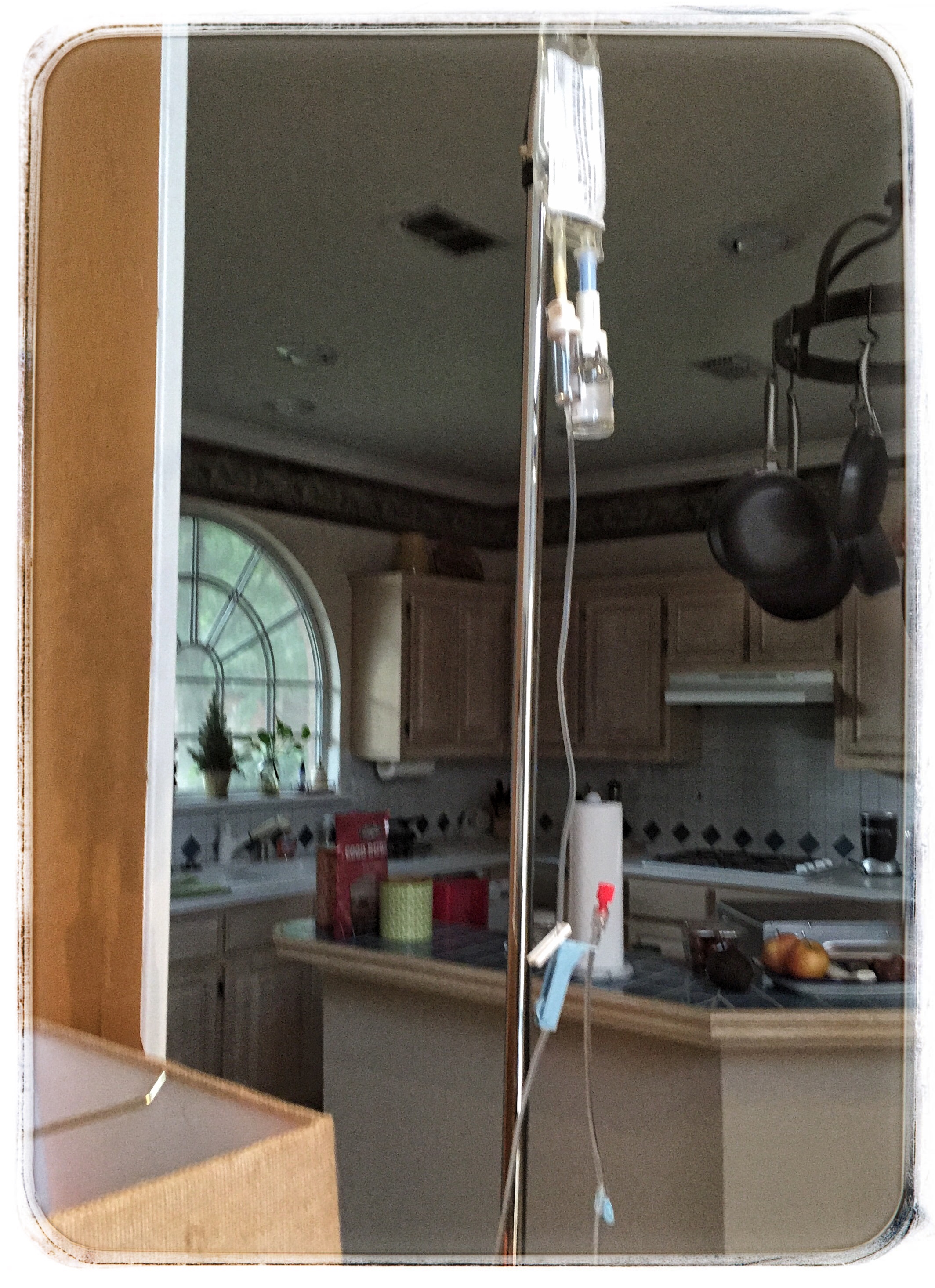
Seven days of IV’s


 IV Antibiotic Infusion Therapy


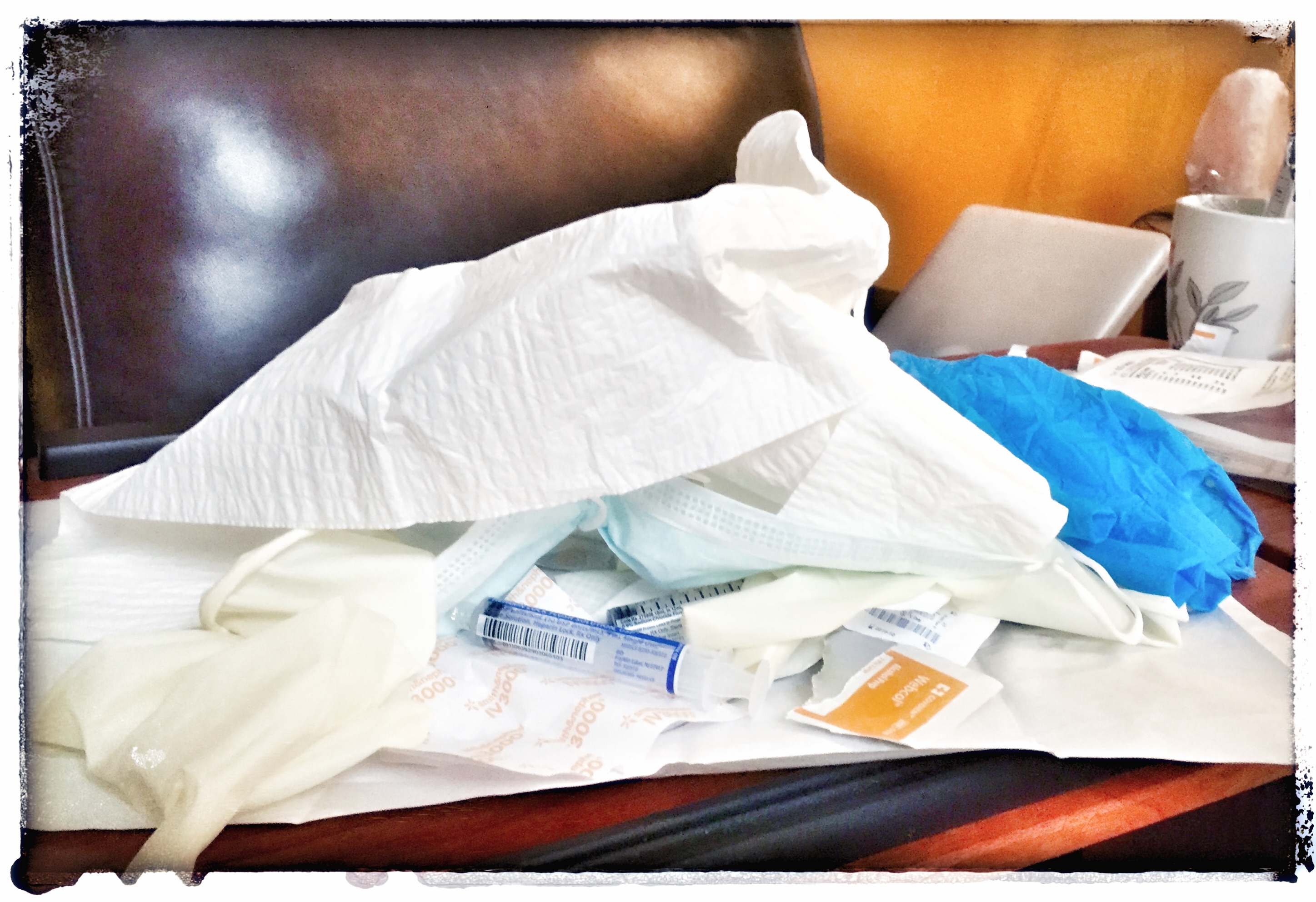
Sterile Living

Medical Waste

Port Inserted


Container for sharps

B12 Shots

Meds first three months

Port Removed


Health and Wellbeing · Men & Womens Health

PAIN COMMUNITY UNITES TO RESPOND TO FEDERAL DRAFT REPORT

May 1, 2019U.S. Pain Foundation

The 90-day public comment period for the Pain Management Best Practices Inter-Agency Task Force’s (PMTF) draft report came to a close April 1, with more than 6,000 individuals and organizations submitting feedback.

Among those to comment was the Consumer Pain Advocacy Task Force (CPATF), a coalition of pain patient-related nonprofits, including U.S. Pain Foundation, which submitted a 25-page joint letter. In addition to U.S. Pain Foundation, the CPATF letter was signed by the Center for Practical Bioethics; CHAMP (Coalition For Headache And Migraine Patients); Chronic Pain Research Alliance; For Grace: Women In Pain; Global Healthy Living Foundation; Headache and Migraine Policy Forum; International Pain Foundation; Interstitial Cystitis Association; RSDSA (Reflex Sympathetic Dystrophy Syndrome Association); and The Pain Community.

“We are very grateful that so many patient organizations joined together to respond to this report with one, unified voice,” says Cindy Steinberg, U.S. Pain Foundation’s National Director of Policy and Advocacy and the only patient advocacy representative on the PMTF. “While the draft report holds a lot of promise, from the patient perspective, we had a number of important suggestions for ways to improve or expand on its recommendations.”

Of note, the CPATF letter commends the draft report’s emphasis on individualized care and encouraged further emphasis of that point. CPATF also urges PMTF to go further and recommend that the Centers for Disease Control and Prevention (CDC) formally revise and reissue their 2016 guidelines on opioid prescribing based on the PMTF recommendations.

Beyond general feedback, the CPATF letter includes specific suggestions on nearly every section of the report. To read CPATF’s full letter, click here.

The PMTF is now working to review the comments received, finalize the report, and submit it to Congress at the end of May. The PMTF will hold its final meeting in Washington, D.C, on May 9 and 10, which will again include a public comment portion and will be live streamed.  The pain community is encouraged to participate. More information about the meeting can be found here.

U.S. Pain Foundation will share further updates once the final report is released.READ THE JOINT LETTER

Health and Wellbeing · Men & Womens Health

CLEARING UP 12 COMMON MYTHS ABOUT MEDICAL CANNABIS FOR PAIN

April 18, 2019U.S. Pain Foundation


Ellen Lenox Smith is Co-Director of Medical Cannabis for U.S. Pain and a U.S. Pain Board Member. She lives with two rare conditions: Ehlers-Danlos Syndrome and sarcoidosis. After years of struggling to find pain relief without side effects or adverse reactions, she discovered medical cannabis.

A retired school teacher, Ellen is now a renowned patient advocate and works tirelessly to encourage safe, fair access to all treatment options, particularly medical cannabis. She has spoken at numerous conferences on cannabis access and been featured widely in the media on the topic. She is also the author of two books: It Hurts Like Hell!: I Live With Pain—And Have A Good Life Anyway and My Life as a Service Dog.

Below, she clears up common myths surrounding medical cannabis for pain.

MYTH #1: ALL  PEOPLE WHO USE CANNABIS MUST BE “STONED” OR “HIGH.”

Truth: this only happens if you use too much medication. People living with pain get pain relief; people using it socially and not in pain, get high! In addition, medical cannabis is made of two components: THC, which causes the mental effects associated with feeling high, and CBD, which produces bodily effects. Various strains of cannabis have different ratios of THC and CBD, which means that not all strains create as much of a “high” feeling.

MYTH #2: EVERYONE WHO USES THE SAME STRAIN EXPERIENCES THE SAME RESULT TO USING IT.

Truth: Each body can have a different reaction to each strain, even if you have the same medical condition. Patience is needed. Don’t give up on your first try–each person must find the strain that best works for their bodies.

MYTH #3: ALL TYPES OF CANNABIS HAVE A LOT OF THC IN THEM AND WILL MAKE ME FEEL STONED.

Truth: There are many strains of the plants to choose from. Some have a higher ratio of THC than others and others have much lower THC and higher CBD. So take time to do your research before deciding which strain might be best for you! The professionals at your local medical dispensary are also a good resource.

MYTH #4: THERE ARE NO RISKS WITH USING MEDICAL CANNABIS.

Truth: While medical cannabis is widely considered to be much safer than many medications, it does come with risks. Be especially careful for when you ingest cannabis, as it will not activate immediately and can take up to even hours before you feel the effect. So if you take a bite of that cookie and think you feel nothing, don’t eat the rest or you risk ingesting too much and being very high, which can cause a bad reaction, like anxiety.

MYTH #5: WHEN I INGEST CANNABIS, IT WILL LEAVE MY SYSTEM QUICKLY.

Truth: ingesting your medication means it not only takes longer to activate but also takes longer before it leaves your system. This is a good reason to take it in small doses to get to your right dose for pain relief and not cause yourself to feel high. If you take too much, don’t panic. It will wear off. but it can take hours.

MYTH #6: USING MEDICAL CANNABIS WILL JUST MAKE ME FEEL TIRED.

Truth: There are two main categories of medical cannabis strains. The indica strains have higher CBD and lower THC counts. They can help with increased mental and muscle relaxation; decreased nausea and acute pain; and increased appetite and dopamine. Indica is typically preferred for night-time use. Meanwhile, the sativa strains have lower CBD and higher THC counts. They can help with anxiety and depression; chronic pain, and increased focus and serotonin, Sativa is usually preferred for daytime use.

MYTH #7: I WOULD HAVE TO SMOKE MEDICAL CANNABIS IF I USED IT FOR PAIN.

Truth: Many do not smoke cannabis for their medicine. You can, for example choose to vaporize, take pills, tinctures, topicals, patches, oil, edibles and even use drinks.

MYTH #8: MY DOCTOR WILL WRITE ME A PRESCRIPTION TO USE MEDICAL CANNABIS.

Truth: In most states, a doctor would need, in most states,  to sign a from identifying and confirming you have a qualifying condition, not a prescription. Typically, you would then use this documentation to apply for a medical cannabis card from your state.

MYTH #9: NO MATTER WHAT STATE I TRAVEL TO, ALL LAWS ARE EQUAL FOR MEDICAL CANNABIS USE.

Truth: Each state presently has their own laws, some only allowing CBD from the hemp plant, three with no laws at all, and the rest with some form of a medical cannabis program established. Educate yourself on your state’s specific laws and be cautious when traveling between states.

MYTH #10: I WILL NEED TO GO TO THE PHARMACY AND ORDER MY MEDICAL CANNABIS.

Truth: In some states, you are allowed to grow your own or have a caregiver grow for you. For others, you go to the dispensary to purchase your medication.

MYTH #11: I WILL HAVE MY MEDICAL CANNABIS COVERED BY INSURANCE.

Truth: Only the country of Germany presently covers the cost of cannabis. For the rest of us, it is not covered–yet. Only once the federal government gets cannabis out of Schedule I and all states allow a medical cannabis program,  will insurance coverage for medical cannabis be possible.

MYTH #12: I AM SURE I WILL BE ABLE TO QUALIFY SINCE I LIVE WITH PAIN.

Truth: Many states have very specific lists of conditions that qualify for medical cannabis use. If your specific condition is not listed as a “qualifying condition” and your state does not include the wording of “chronic pain,” you may have difficulty being allowed into the program. However, some states are beginning to allow the doctor to decide what patient should be using cannabis, which helps many get into the program.

To learn more about medical cannabis for pain and start advocating for access in your state, visit https://uspainfoundation.org/medicalcannabis/. To learn more about Ellen and her work, visit http://ellenandstuartsmith.squarespace.com/.  


Health and Wellbeing · Men & Womens Health

PAIN CONNECTION ADDS FOUR SUPPORT GROUPS AND NEW MONTHLY CALL

May 1, 2019U.S. Pain Foundation


Finding community support is essential to living with chronic pain. With that in mind, Pain Connection, a program of U.S. Pain Foundation, continues to expand its in-person and conference call support group offerings nationwide.

Along with three existing monthly “Pain Connection Live” support group calls, there will now be a morning call on the third Thursday of each month from 10-11 am EST. The first call will be May 16. Existing calls are held on one evening, one afternoon, and one Saturday each month. To learn more or register for a Pain Connection Live call, click here.

In addition, four new in-person support groups have been added in CA, AL, and NJ. All support groups are led by a person with pain who has received intensive training from Gwenn Herman, LCSW, DCSW, Clinical Director of Pain Connection.

Costa Mesa, CA 

Date: Second Tuesday of each month. The next meeting is May 14.

Time: 11 am – 1 pm

Location: Panera Bread at 3030 Harbor Boulevard, Costa Mesa, CA. (Meet against the back wall.)

Contact: Kristie McCurdy, MSN, RN, at CRPSsurvivorsOC@gmail.com

San Francisco, CA

Date: Second and fourth Friday of each month. The next meetings are May 10 and May 24.

Time: 12 – 1 pm

Location: 1701 Divisedero Street, 5th floor conference room, San Francisco, CA. (Elevator available.)

Contact: Cessa Marshal at cessamarshall@yahoo.com or 415-637-1812.

Pell City, AL

Date: The first meeting will be May 2.

Time: 6-7:30 pm.

Location: The Brook Besor Coffee Shop, 4204 Martin St. S., Cropwell, AL

Contact: Melissa Gilliam at mgpainwarrior@hotmail.com or 205-863-1361

Oakhurst, NJ

Date: The first meeting will be May 10.

Time: 11 am-12:30 pm

Location: Wyatt Rehabilitation, 1806 NJ-35, Suite 302- 3rd Floor, Oakhurst, NJ (Elevator available.)

Contact:  Sue Ann Stelfox at 650-455-6713 or sueannstelfox@gmail.com

To learn more about Pain Connection’s other support group offerings, visit its website.

Health and Wellbeing · Men & Womens Health

FDA, CDC REACT TO HARM TO PAIN PATIENTS

May 1, 2019U.S. Pain Foundation

Last month, the Food and Drug Administration (FDA) and Centers for Disease Control and Prevention (CDC) reacted to the unintended harm to people living with chronic pain as a result of policy measures intended to ameliorate the opioid crisis.

On April 9, the FDA issued a Safety Announcement citing “serious harm,” including “withdrawal symptoms, uncontrolled pain, psychological distress and suicide” as a result of sudden discontinuation or rapid dose decreases in opioid pain medication. The FDA will now require changes to the prescribing information for health care professionals that will provide guidance on how to safely reduce or taper patients off opioid medications. The agency states that there is no standard opioid tapering schedule; rather, a schedule must be tailored to each patient’s unique situation considering a variety of factors, including the type of pain the patient has.

The FDA is also warning patients not to suddenly stop taking their opioid medication, as this can result in serious problems. Even when patients gradually reduce these medications, they may still experience withdrawal symptoms such as chills and muscle aches. If these are excessive, patients are encouraged to contact their health care provider.

Feeling the pressure from the FDA action, a letter from more than 300 health care practitioners, and increasing news coverage of harms to people with pain, three CDC Guideline authors, writing in the New England Journal of Medicine, said the Guidelines have been misapplied and applied inflexibly in some instances. However, they also vigorously defended the Guideline, stating that the “medical and health policy communities have largely embraced its recommendations” it has sparked “accelerated decreases in prescribing” and it was rated “high quality by the ECRI Guidelines Trust Scorecard.”

“In contrast to the FDA’s direct warning about widespread and serious harms to chronic pain patients that have already occurred, the CDC authors seem to avoid direct discussion of what has sadly already transpired,” says U.S. Pain National Director of Policy and Advocacy Cindy Steinberg. “ The authors say ‘patients may find tapering challenging’, ‘could face risks related to withdrawal’, and ‘if dosages are abruptly tapered, may seek other sources of opioids or have adverse psychological and physical outcomes’. They go on to say that ‘some clinicians may find it easier to refer or dismiss patients from care’ and ‘Clinicians might universally stop prescribing opioids, even in situations in which the benefits outweigh the risks.’” [Emphasis added in italics]

“Opioid pain medication does not help everyone with chronic pain and for those who are helped, opioids do not completely take the pain away,” Steinberg continues. “However, the fact remains that for millions of pain sufferers, particularly those with severe pain, who take them responsibly and legitimately, they are a lifeline that allows them to have some quality of life and lessens their relentless pain. In the three years since the Guideline was released, thousands of stories have surfaced about forced tapering and patient abandonment. Yet, CDC has largely ignored the suffering of Americans living with pain.”

Authors of the New England Journal of Medicine article did not announce any changes to the Guideline in response to these harms, but said the CDC is evaluating the intended and unintended impact of the Guideline and is committed to updating recommendations when new evidence is available.

While this is a step in the right direction, Steinberg says, the CDC should have enough evidence of harm to revise the Guideline, particularly Guideline 5.

To learn more about U.S. Pain Foundation’s position on opioid prescribing, click here.READ U.S. PAIN’S POSITION STATEMENT

https://www.fda.gov/Drugs/DrugSafety/ucm635038.htm

https://www.fda.gov/NewsEvents/Newsroom/PressAnnouncements/ucm635640.htm

Melinda Sandor

Ambassador-Texas

U.S. Pain Foundation

Health and Wellbeing · Men & Womens Health

What doctors don’t learn about death and dying

IDEAS TED.COM

Oct 31, 2014 / Atul Gawande

Dying and death confront every new doctor and nurse. In this book excerpt, Atul Gawande asks: Why are we not trained to cope with mortality?


I learned about a lot of things in medical school, but mortality wasn’t one of them. I was given a dry, leathery corpse to dissect in my first term — but that was solely a way to learn about human anatomy. Our textbooks had almost nothing on aging or frailty or dying. How the process unfolds, how people experience the end of their lives and how it affects those around them? That all seemed beside the point. The way we saw it — and the way our professors saw it — the purpose of medical schooling was to teach us how to save lives, not how to tend to their demise.

The one time I remember discussing mortality was during an hour we spent on The Death of Ivan Ilyich, Tolstoy’s classic novella. It was in a weekly seminar called Patient-Doctor — part of the school’s effort to make us more rounded and humane physicians. Some weeks we would practice our physical examination etiquette; other weeks we’d learn about the effects of socioeconomics and race on health. And one afternoon we contemplated the suffering of Ivan Ilyich as he lay ill and worsening from some unnamed, untreatable disease.

The first times, some cry. Some shut down. Some hardly notice.

In the story, Ivan Ilyich is forty-five years old, a midlevel Saint Petersburg magistrate whose life revolves mostly around petty concerns of social status. One day, he falls off a stepladder and develops a pain in his side. Instead of abating, the pain gets worse, and he becomes unable to work. Formerly an “intelligent, polished, lively and agreeable man,” he grows depressed and enfeebled. Friends and colleagues avoid him. His wife calls in a series of ever more expensive doctors. None of them can agree on a diagnosis, and the remedies they give him accomplish nothing. For Ilyich, it is all torture, and he simmers and rages at his situation.

“What tormented Ivan Ilyich most,” Tolstoy writes, “was the deception, the lie, which for some reason they all accepted, that he was not dying but was simply ill, and he only need keep quiet and undergo a treatment and then something very good would result.” Ivan Ilyich has flashes of hope that maybe things will turn around, but as he grows weaker and more emaciated he knows what is happening. He lives in mounting anguish and fear of death. But death is not a subject that his doctors, friends or family can countenance. That is what causes him his most profound pain.

“No one pitied him as he wished to be pitied,” writes Tolstoy. “At certain moments after prolonged suffering he wished most of all (though he would have been ashamed to confess it) for someone to pity him as a sick child is pitied. He longed to be petted and comforted. He knew he was an important functionary, that he had a beard turning grey, and that therefore what he longed for was impossible, but still he longed for it.”

When I saw my first deaths, I was too guarded to cry. But I dreamt about them. I had recurring nightmares in which I’d find my patients’ corpses in my house — in my own bed.

As we medical students saw it, the failure of those around Ivan Ilyich to offer comfort or to acknowledge what is happening to him was a failure of character and culture. The late nineteenth-century Russia of Tolstoy’s story seemed harsh and almost primitive to us. Just as we believed that modern medicine could probably have cured Ivan Ilyich of whatever disease he had, so too we took for granted that honesty and kindness were basic responsibilities of a modern doctor. We were confident that in such a situation we would act compassionately.

What worried us was knowledge. While we knew how to sympathize, we weren’t at all certain we would know how to properly diagnose and treat. We paid our medical tuition to learn about the inner process of the body, the intricate mechanisms of its pathologies, and the vast trove of discoveries and technologies that have accumulated to stop them. We didn’t imagine we needed to think about much else. So we put Ivan Ilyich out of our heads.

Yet within a few years, when I came to experience surgical training and practice, I encountered patients forced to confront the realities of decline and mortality, and it did not take long to realize how unready I was to help them.

I began writing when I was a junior surgical resident, and in one of my very first essays, I told the story of a man whom I called Joseph Lazaroff. He was a city administrator who’d lost his wife to lung cancer a few years earlier. Now, he was in his sixties and suffering from an incurable cancer himself — a widely metastatic prostate cancer. He had lost more than fifty pounds. His abdomen, scrotum and legs had filled with fluid. One day, he woke up unable to move his right leg or control his bowels. He was admitted to the hospital, where I met him as an intern on the neurosurgical team. We found that the cancer had spread to his thoracic spine, where it was compressing his spinal cord. The cancer couldn’t be cured, but we hoped it could be treated. Emergency radiation, however, failed to shrink the cancer, and so the neurosurgeon offered him two options: comfort care or surgery to remove the growing tumor mass from his spine. Lazaroff chose surgery. My job, as the intern on the neurosurgery service, was to get his written confirmation that he understood the risks of the operation and wished to proceed.

Death, of course, is not a failure. Death is normal. Death may be the enemy, but it is also the natural order of things.

I’d stood outside his room, his chart in my damp hand, trying to figure out how to even broach the subject with him. The hope was that the operation would halt the progression of his spinal cord damage. It wouldn’t cure him, or reverse his paralysis, or get him back to the life he had led. No matter what we did, he had at most a few months to live, and the procedure was inherently dangerous. It required opening his chest, removing a rib, and collapsing a lung to get at his spine. Blood loss would be high. Recovery would be difficult. In his weakened state, he faced considerable risks of debilitating complications afterward. The operation posed a threat of both worsening and shortening his life. But the neurosurgeon had gone over these dangers, and Lazaroff had been clear that he wanted the operation. All I had to do was go in and take care of the paperwork.

Lying in his bed, Lazaroff looked gray and emaciated. I said that I was an intern and that I’d come to get his consent for surgery, which required confirming that he was aware of the risks. I said that the operation could remove the tumor but leave him with serious complications, such as paralysis or a stroke, and that it could even prove fatal. I tried to sound clear without being harsh, but my discussion put his back up. Likewise when his son, who was in the room, questioned whether heroic measures were a good idea. Lazaroff didn’t like that at all.

“Don’t you give up on me,” he said. “You give me every chance I’ve got.” Outside the room, after he signed the form, the son took me aside. His mother had died on a ventilator in intensive care, and at the time his father had said he did not want anything like that to happen to him. But now he was adamant about doing “everything.”

I believed then that Mr. Lazaroff had chosen badly, and I still believe this. He chose badly not because of all the dangers but because the operation didn’t stand a chance of giving him what he really wanted: his continence, his strength, the life he had previously known. He was pursuing little more than a fantasy at the risk of a prolonged and terrible death — which was precisely what he got.

The operation was a technical success. Over eight and a half hours, the surgical team removed the mass invading his spine and rebuilt the vertebral body with acrylic cement. The pressure on his spinal cord was gone. But he never recovered from the procedure. In intensive care, he developed respiratory failure, a systemic infection, blood clots from his immobility, then bleeding from the blood thinners to treat them. Each day we fell further behind. We finally had to admit he was dying. On the fourteenth day, his son told the team that we should stop.

It fell to me to take Lazaroff off the artificial ventilator that was keeping him alive. I checked to make sure that his morphine drip was turned up high, so he wouldn’t suffer from air hunger. I leaned close and, in case he could hear me, said I was going to take the breathing tube out of his mouth. He coughed a couple of times when I pulled it out, opened his eyes briefly, and closed them. His breathing grew labored, then stopped. I put my stethoscope on his chest and heard his heart fade away.

There’s no escaping the tragedy of life, which is that we are all aging from the day we are born.

Now, more than a decade after I first told Mr. Lazaroff’s story, what strikes me most is not how bad his decision was but how much we all avoided talking honestly about the choice before him. We had no difficulty explaining the specific dangers of various treatment options, but we never really touched on the reality of his disease. His oncologists, radiation therapists, surgeons and other doctors had all seen him through months of treatments for a problem that they knew could not be cured. We could never bring ourselves to discuss the larger truth about his condition or the ultimate limits of our capabilities, let alone what might matter most to him as he neared the end of his life. If he was pursuing a delusion, so were we. Here he was in the hospital, partially paralyzed from a cancer that had spread throughout his body. The chances that he could return to anything like the life he had even a few weeks earlier were zero. But admitting this and helping him cope with it seemed beyond us. We offered no acknowledgment or comfort or guidance. We just had another treatment he could undergo. Maybe something very good would result.

We did little better than Ivan Ilyich’s primitive nineteenth-century doctors — worse, actually, given the new forms of physical torture we’d inflicted on our patient. It is enough to make you wonder, who are the primitive ones?

Modern scientific capability has profoundly altered the course of human life. People live longer and better than at any other time in history. But scientific advances have turned the processes of aging and dying into medical experiences, matters to be managed by health care professionals. And we in the medical world have proved alarmingly unprepared for it.

As recently as 1945, most deaths occurred in the home. By the 1980s, just 17 percent did.

This reality has been largely hidden, as the final phases of life become less familiar to people. As recently as 1945, most deaths occurred in the home. By the 1980s, just 17 percent did. Those who somehow did die at home likely died too suddenly to make it to the hospital — say, from a massive heart attack, stroke or violent injury — or were too isolated to get somewhere that could provide help. Across not just the United States but also the entire industrialized world, the experience of advanced aging and death has shifted to hospitals and nursing homes.

When I became a doctor, I crossed over to the other side of the hospital doors and, although I had grown up with two doctors for parents, everything I saw was new to me. I had certainly never seen anyone die before, and when I did, it came as a shock. That wasn’t because it made me think of my own mortality. Somehow the concept didn’t occur to me, even when I saw people my own age die. I had a white coat on; they had a hospital gown. I couldn’t quite picture it the other way round. I could, however, picture my family in their places. I’d seen multiple family members — my wife, my parents and my children — go through serious, life-threatening illnesses. Even under dire circumstances, medicine had always pulled them through. The shock to me therefore was seeing medicine not pull people through. I knew theoretically that my patients could die, of course, but every actual instance seemed like a violation, as if the rules I thought we were playing by were broken. I don’t know what game I thought this was, but in it we always won.

Dying and death confront every new doctor and nurse. The first times, some cry. Some shut down. Some hardly notice. When I saw my first deaths, I was too guarded to cry. But I dreamt about them. I had recurring nightmares in which I’d find my patients’ corpses in my house — in my own bed.

“How did he get here?” I’d wonder in panic.

I knew I would be in huge trouble, maybe criminal trouble, if I didn’t get the body back to the hospital without getting caught. I’d try to lift it into the back of my car, but it would be too heavy. Or I’d get it in, only to find blood seeping out like black oil until it overflowed the trunk. Or I’d actually get the corpse to the hospital and onto a gurney, and I’d push it down hall after hall, trying and failing to find the room where the person used to be. “Hey!” someone would shout and start chasing me. I’d wake up next to my wife in the dark, clammy and tachycardic. I felt that I’d killed these people. I’d failed.

Death, of course, is not a failure. Death is normal. Death may be the enemy, but it is also the natural order of things. I knew these truths abstractly, but I didn’t know them concretely— that they could be truths not just for everyone but also for this person right in front of me, for this person I was responsible for.

The late surgeon Sherwin Nuland, in his classic book How We Die, lamented, “The necessity of nature’s final victory was expected and accepted in generations before our own. Doctors were far more willing to recognize the signs of defeat and far less arrogant about denying them.” But as I ride down the runway of the twenty-first century, trained in the deployment of our awesome arsenal of technology, I wonder exactly what being less arrogant really means.

You become a doctor for what you imagine to be the satisfaction of the work, and that turns out to be the satisfaction of competence. It is a deep satisfaction very much like the one that a carpenter experiences in restoring a fragile antique chest or that a science teacher experiences in bringing a fifth grader to that sudden, mind-shifting recognition of what atoms are. It comes partly from being helpful to others. But it also comes from being technically skilled and able to solve difficult, intricate problems. Your competence gives you a secure sense of identity. For a clinician, therefore, nothing is more threatening to who you think you are than a patient with a problem you cannot solve.

You become a doctor for what you imagine to be the satisfaction of the work, and that turns out to be the satisfaction of competence.

There’s no escaping the tragedy of life, which is that we are all aging from the day we are born. One may even come to understand and accept this fact. My dead and dying patients don’t haunt my dreams anymore. But that’s not the same as saying one knows how to cope with what cannot be mended. I am in a profession that has succeeded because of its ability to fix. If your problem is fixable, we know just what to do. But if it’s not? The fact that we have had no adequate answers to this question is troubling and has caused callousness, inhumanity and extraordinary suffering.

This experiment of making mortality a medical experience is just decades old. It is young. And the evidence is, it is failing.

As I pass a decade in surgical practice and become middle aged myself, I find that neither I nor my patients find our current state tolerable. But I have also found it unclear what the answers should be, or even whether any adequate ones are possible. I have the writer’s and scientist’s faith, however, that by pulling back the veil and peering in close, a person can make sense of what is most confusing or strange or disturbing.

You don’t have to spend much time with the elderly or those with terminal illness to see how often medicine fails the people it is supposed to help. The waning days of our lives are given over to treatments that addle our brains and sap our bodies for a sliver’s chance of benefit. They are spent in institutions—nursing homes and intensive care units—where regimented, anonymous routines cut us off from all the things that matter to us in life. Our reluctance to honestly examine the experience of aging and dying has increased the harm we inflict on people and denied them the basic comforts they most need. Lacking a coherent view of how people might live successfully all the way to their very end, we have allowed our fates to be controlled by the imperatives of medicine, technology and strangers.

What if there are better approaches, right in front of our eyes, waiting to be recognized?

Featured illustration by Hannah K. Lee for TED.

This excerpt is adapted with permission from Being Mortal: Medicine and What Matters in the End by Atul Gawande (Metropolitan Books).

ABOUT THE AUTHOR

Atul Gawande is a surgeon, public health researcher, and staff writer for The New Yorker magazine.