

When was the last time you saw the sunrise?

Melinda

May is packed with awareness topics and there are too many to list, you can find the entire list HERE.
Melinda
Reference:
https://www.goodgoodgood.co/articles/may-awareness-days-months
Being lost in life is par for the course; while it can feel like you’re the only one who understands it, in truth, everybody does on some level. The COVID-19 pandemic has truly made us all question who we are, and what is important to us. This can lead people to feel lost in their lives, or frustrated with the feeling that they have no control over what goes on around them.
There are so many ways to cope with change, but one surefire way to center calm in your life is to start a garden. You don’t have to have a huge amount of space or much experience – and in this blog, we’re going to show you how.
Psychologists have studied the psychological benefits of gardening for years. Gardening is often an activity that is practiced in rehabilitation facilities, elderly care centers, and mental health recovery centers because it helps people nurture the growth of living things.
If all this sounds good to you, but you only have a small yard or even just a balcony, you might be thinking, ‘There’s no way I can start a garden in such a tiny space.’ Well, luckily, you’re wrong about that!
Firstly, find plants that are easy to grow in pots. These could be herbs, flowers, house plants, or even small vegetables, as long as they are able to grow in a potted environment rather than in the ground. This makes them easier to maintain in a small garden.
Next, you should research through reading books or watching YouTube videos, how to maintain your plants through hydration, the right kind of soil, and the right light levels. This research will help you expand your garden gradually as you cultivate these important skills for life!
If your garden gets out of control, you can contact local lawn fertilization and weed control services to help tame the wild beast!
Having a garden can help alleviate symptoms of anxiety, depression, burnout, or lack of focus. Plus, you’ll have a beautiful little green space that you can keep nurturing for years to come.
This is a collaborative post.
Melinda
Repost
Thank you for joining me for this week’s Friday Quote.

Melinda
It’s the weekend!!!!!!
I’m glad you joined me for another edition of Weekend Music Share. Thank you for stopping by.
Have a great weekend!
Melinda
Welcome back to Weekend Music Share, the place where everyone can share their favorite music.
Feel free to use the Weekend Music Share banner in your post, and use the hashtag #WeekendMusicShare on social media so other participants can find your post.

Melinda
Fewer and fewer companies follow through on their commitments. We had a new grill delivered today and it required two people to haul away the old grill. They only sent one person and my husband had to lift the heavy old grill to the front of the house. I can be a hard ass but if you commit then follow through.
There is no reason for children to have a phone at school. They are a distraction to listening in class. Parents do not need to call to chit-chat or ask questions during school hours. If it’s something pressing, call the Principle. Some will say they need them in case of a school shooting, BS. The kids need to focus on the teacher and the directions given to them from the Safety Plan.
Give kids wings, they will build confidence by making their own choices.
These were heartbreaking news stories. Recently three small children were out after dark, I mean late night. All three didn’t go to the crosswalk and all were hit by cars. None lived. This a lesson for parents, young children do not need to be out alone after dark.
If you notice a different behavior in your kids, watch closely. Has their language changed? or running with a different crowd? Talking about dark subjects? This is a good time to check out their social media accounts and the people they follow. Many times the police have found that social media accounts have clues or even threats. This may give you a better idea of what is happening in their life. Help your child before they ruin their life and the lives of others. Most importantly keep all guns in the house with a safely lock on them and locked in a safe your kids do not know the combination to.
When you call a company ask and write their name down. Over the last month, my husband has been dealing with our new medical insurance company who’s giving a different wrong answer every time he calls. It makes it harder to bump up the call and share who you’ve talked to if you don’t have names. Today he was told that the system was broken. I’m sure that is not what she meant.
Melinda
I’m glad you joined me on Wordless Wednesday and I hope to see you soon.

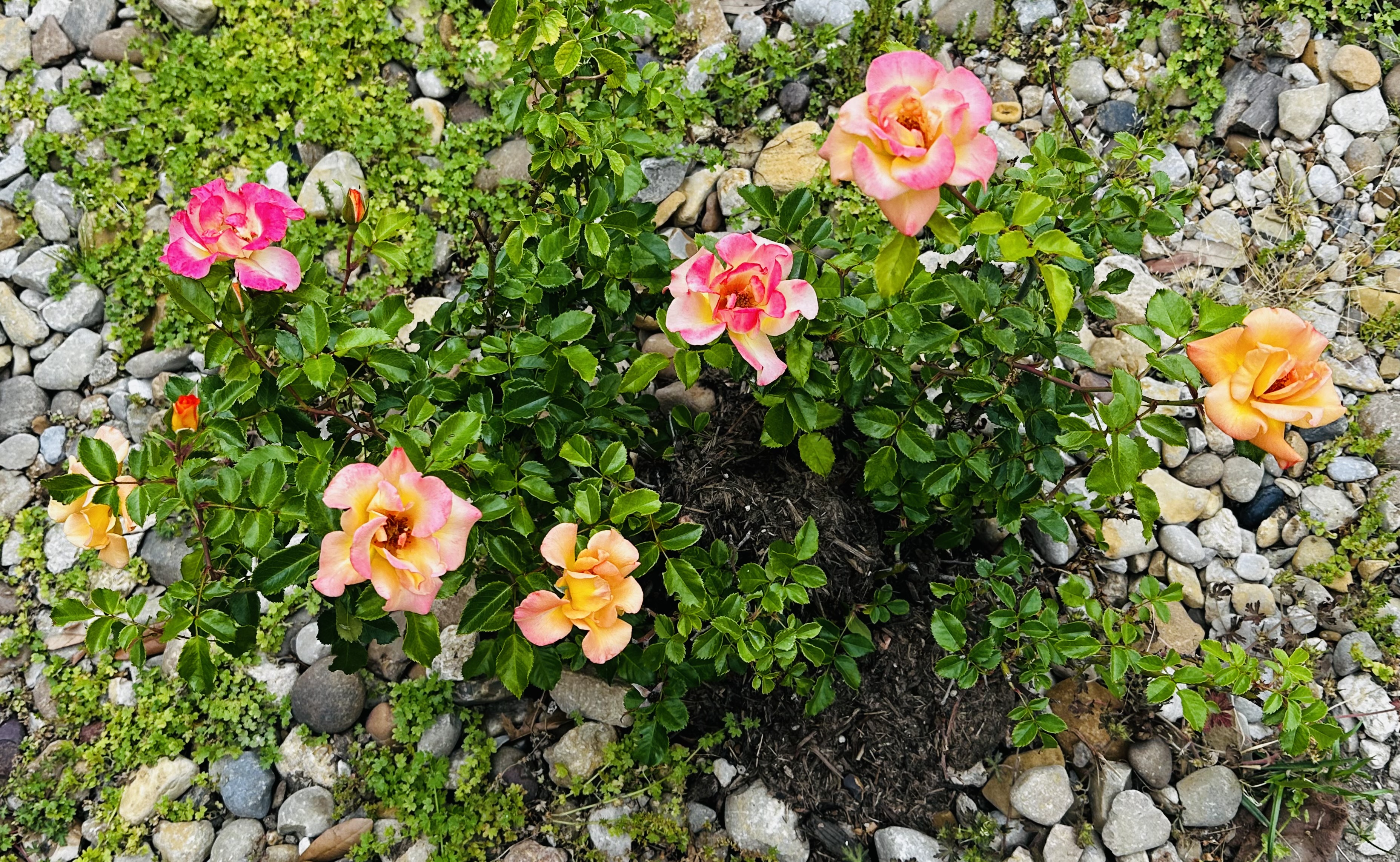
The roses look red but they are bright orange.
Melinda
The media plays a role not only in misinformation about menopause but also in how it portrays women with menopause. Tune out the riff-raff and look for real answers. Menopause has been a woman’s curse long before I knew what it was and how it affected the lives of women. There are thousands of books on the market about menopause and I thought maybe it was time to look at the unconventional ways women deal with the debilitating symptoms.
Acupuncture involves inserting thin needles into specific points on the body to balance energy flow. Some women report reduced hot flashes, night sweats, and improved mood after regular sessions. While scientific evidence is mixed, it might be worth a try if you’re open to alternative therapies.
These practices can help manage stress, improve sleep, and enhance overall well-being. Yoga, in particular, can increase flexibility and strength, which is beneficial during menopause.
Adopting a diet rich in fruits, vegetables, whole grains, and lean proteins can help manage symptoms. The Mediterranean diet, known for its anti-inflammatory properties, can be particularly beneficial.
This technique involves learning to control certain physiological functions, such as heart rate and muscle tension, with the help of a biofeedback device. It can be effective in managing stress and related symptoms.
Some studies suggest hypnotherapy can reduce the frequency and severity of hot flashes and improve sleep quality.
Remember, it’s essential to consult with a healthcare professional before starting any new treatments, especially if you have underlying health conditions.
Understanding the Connection Between Menopause and Heart Rate Changes
Why Does Menopause Increase Your Risk of Heart Disease?
Natural Treatments for Menopause Symptoms
Maybe you can find something that works for you or at least reduces the symptoms.
Melinda
Reference:
https://www.webmd.com/menopause/menopause-natural-treatments
Thank you for all the great feedback on the Blogger Highlight series. I’ve enjoyed meeting each blogger and sharing their blog with you. This week, I highlight The Mindful Migraine.
I’ve had migraines on and off since I was 11 years old. More recently, my ‘episodic hemiplegic migraines’ began to merge together, and I was diagnosed with ‘chronic migraine’. Chronic migraine reduced my ability to parent, work, study, travel and socialize. It is a debilitating condition, which is not yet fully understood and is not currently curable. It’s more than ‘just a headache’ – it’s a ‘full body catastrophe’ – and perhaps not surprisingly, can lead to isolation and depression.
Remember it’s ‘your brain – your pain – your journey’ and since every body and every situation is different, you should always work with your health care support network on which strategies will best suit your individual condition.
M. What is your favorite post and why?
L. My favorite post is probably “The face of (dis)ability” – it aimed to show that people with chronic illness are still capable – we might be down but we’re definitely not out. It was one of the rare posts that I include a photo of myself, and in it, I’m celebrating my successes (showing myself as a uni student and a new blogger) AND acknowledging my limitations (I’m wearing my brain-fog shirt and my invisible disability lanyard). I think it’s a nice reminder that life is complex and there’s often more to everyone than meets the eye.
M. Looking back at your blogging experience, what stands out the most to you personally?
L. By far the greatest joy to me has been the sense of community that Blogland provides. When I first started blogging, I was lonely and felt as if my chronic illness had left me on the outside of my local community (no one I knew had chronic migraines, so no one really “got it”). Reading other blogs, commenting on their posts, and replying to their comments on my blog soon saw a network of bloggers grow around me. Those that had similar experiences helped me feel seen and understood, whilst those who were not annoyed by chronic illness helped me feel part of the wider world. Imagine logging on each morning and hearing from people like yourself, positioned all over the world!! What a wonder!! That same network now helps me stay motivated to keep writing, keep reading, keep encouraging others to speak their truth and be there for others
One of my favorite posts is Foot yoga for migraines. I shook my head at first, then realized it made sense.
Be sure to visit Linda’s blog, say hello, and enjoy her archives.
Melinda
Poor lighting often gets overlooked in the workplace, as we talk about mental health and well-being, and the focus is firmly on creating happier and healthier workplaces. But bad lighting is associated with a range of ill-health effects, both physical and mental, such as eye strain, headaches, fatigue and also stress and anxiety in more high-pressured work environments. As we spend much of the day in artificial lighting, there is evidence that the lack of natural sunlight has an adverse effect on the body and the mind, and can result in conditions such as seasonal affective disorder (SAD).
As we navigate the darkest (and shortest days) of the year, 40% of office workers are struggling to work in poor lighting every day. This has a negative effect on their productivity and wellbeing – according to a new research report,looking at the impact of lighting in the workplace. This is a recent research report by the UK company Staples, where an online survey of 7,000 office workers was conducted in October 2018. The research sample consisted of a sample of desk-based office workers from ten European countries including: United Kingdom (2,000, with 302 in London), Germany (1,000), France (500), Netherlands (500), Sweden (500), Norway (500), Spain (500), Italy (500), Portugal (500) and Finland (500).
80% of office workers, said that having good lighting in their workspace is important to them, and two-in-five (40%) are having to deal with uncomfortable lighting every day. A third (32%) said better lighting would make them happier at work. However, when access to natural sunlight is so limited in the winter, many are feeling stressed and suffering from seasonal affective disorder (SAD), and often spend long hours at their desks which is sometimes their only access to light during the day. The results have also shown that 25% of the surveyed are frustrated at having to deal with poor lighting in their workplaces.
Often just 13-15 mins of exposure to natural light are enough to trigger the release of endorphins or “happy hormones”. Dr. Joe Taravella, a supervisor of pediatric psychology at NYU Lagone Medical center said that SAD “affects anywhere from 5% to 10% of the population:, which is a huge proportion of the population suffering from clinical levels of depression for up to a quarter of the year.
Another research concludes that there is a strong relationship between workplace daylight exposure and office workers’ sleep, activity, and quality of life.
There are no statutory workplace lighting levels in the UK. Regulation 8 of the Workplace Health, Safety and Welfare (WHSW) simply requires that lighting at work is “suitable and sufficient” and that, where possible workplaces are lit by natural light. The emphasis on natural lighting and other related research reflects the consensus that daylight is the best form of light. But, in parts of the northern hemisphere, daylight by itself will not provide sufficient illuminance throughout a working area. This means that “sufficient and suitable” lighting usually needs a combination of natural and artificial lighting, and especially artificial lighting that can be personalized as per the activity, function and individual requirements, and those that can imitate natural daylight.
The research by Staples recommends providing SAD lamps to employees, and to have cold-tone lighting with high illuminance in the mornings for maximum productivity. In this research report, 68% of the surveyed workforce admitted that they would feel more valued by their employers if they considered their health and well-being and invested in suitable lighting.
Personalized lighting options can help create more inclusive work environments. One such way is the use of biodynamic lighting which can then adjust the lighting during the day for the tone and illuminance as per natural daylight levels outside, and also the individual requirements of the user. This way the employees feel more in control of their work environments, which has been shown to increase their levels of happiness and productivity in the workplace.
Some lighting designers have recommended an emphasis on cooler, daylight temperatures, for example by adding more blue to the mix. A trial by the University of Surrey’s sleep research center suggests that certain wavelengths of blue light suppress the sleep hormone that regulates sleep/wake cycles. The trial compared alertness levels among staff working in the blue-enriched light with those on a control floor. It found that first thing in the morning and at lunchtime, alertness levels were the same on both floors. But another measure just before staff left for home found significantly higher alertness on the trial floor. Staff also reported improved sleep patterns, and although not scientifically validated, indicated that visual acuity was better with the blue light, and after four weeks, 92% of people on the floor said they preferred it over the old lighting.
There is sufficient evidence now to show that well-being in the workplace can be hugely improved by providing lighting that mimics natural daylight, by bringing more natural light in with large windows, by providing suitable levels of illumination for visual acuity, and by providing personalized lighting that can be adjusted as per the individual biodynamics as well as the task on hand.
A social and creative entrepreneur, writer, TEDx speaker and organizer, and an inclusivity and diversity consultant, Pragya has extensive experience of working with schools and organisations, running workshops on sexism, female empowerment, feminist parenting, mental health …
Dr. Pragya Agarwal is an inclusivity consultant, campaigner for women’s rights and gender equality, TEDx speaker and CEO of The Art Tiffin. Follow Pragya on Linkedin, Twitter, and Facebook
Melinda
Repost
It’s the weekend!!!!!!
I’m glad you joined me for another edition of Weekend Music Share this week.
Have a great weekend!
Melinda
Welcome back to Weekend Music Share, the place where everyone can share their favorite music.
Feel free to use the Weekend Music Share banner in your post, and use the hashtag #WeekendMusicShare on social media so other participants can find your post.
Thank you for joining me for this week’s Friday Quote.

Melinda
Weight lifting and stretching are useful at any age, but there are specific benefits for older adults.
With aging comes concerns about strength, balance, and mobility. But integrating resistance training and stretching into your routine can keep you feeling healthy and strong.
Not sure where to start? Read on for a primer on how movement can make a difference, plus a full-body workout and stretching routine that you can do at home.
Committing to and maintaining an at-home strength training program can be the first step to preventing — or delaying the onset of — many age-related ailments.
The best part is, it doesn’t have to be complicated or time-consuming.
Your at-home strength training program should:
Combine these 6 strength exercises for an effective and comprehensive full-body workout.
Unless otherwise noted, do 3 sets of 10–12 reps of each of these exercises.
With balance declining as you age, proactively focusing on improving it is key. Start with this one-legged drill to suss out any imbalances you may have:
The squat is a powerhouse exercise, not only for building muscle but for preparing you for daily life. If you ever sit in a chair, you’ll benefit from squatting. Here’s how to do it:
Pushups are one of the most effective exercises to gain upper body strength, and you need no equipment to execute them. Start on a wall, and then try a pushup kneeling if you want more of a challenge. Here’s how to do it:
A strong back is key for good posture, among other things. Use a resistance band here to strengthen those muscles:
A boon for both balance and stability, bird dog will challenge your full body.
An effective exercise for the posterior chain — or the back of your body — glute bridges will build strength in no time. Add a dumbbell to your hips if you need added resistance.
Do these 5 stretches to hit all of the major body parts and help improve your flexibility and mobility.
If not indicated, hold each stretch for about 30 seconds total. As you focus on breathing — deep inhale, deep exhale — try to go deeper into the stretch.
Particularly if you sit a lot, stretching the hamstrings is important to maintain good movement in the hips. Here’s how to do it:
Hip functionality is key to many movements in our daily lives, like walking, so keeping these muscles and joints mobile is important. Try this seated stretch:
Combat the forward-lean posture with this chest-opening stretch:
Another good stretch if you find your shoulders rounding forward, this rotation will target and release your upper body:
Stretch your back and core with this move:
Consistently strength training and stretching, even for short periods 3 times per week, can help tremendously in delaying or preventing many age-related ailments. Start slow and watch your strength, balance, and mobility improve.
Last medically reviewed on October 11, 2024
Melinda
Reference:
I’m glad you joined me on Wordless Wednesday, and I hope to see you soon.
Melinda

Melinda
Thank you for all the great feedback on the Blogger Highlight series. I’ve enjoyed meeting each blogger and sharing their site with you. This week, we highlight Adjunct Wizard. Paul has a varied background that results in great and sometimes quirky posts. He is also the caregiver of his wife, who has Parkinson’s Disease.
I write this for me but I am always interested in other’s thoughts about life and dealing with chronic disease.
My favorite quote: Finish each day and be done with it. You have done what you could. Some blunders and absurdities have crept in; forget them as soon as you can. Tomorrow is a new day. You shall begin it serenely and with too high a spirit to be encumbered with your old nonsense. — Emerson
M. Looking back, what experience shaped you into who you are today?
P. Being fired from a job… makes you a better person by forcing you to understand importance of self.
My little post about it is “Don’t Sit On The Sticker Bushes”
M. What is your favorite post and why?
P. Black Underwear
Why ? That day when I wrote it and later as I refer to it, it is a metaphor for the strong love I have for Cheryl. In the early days of her dementia I felt like I was always scrambling to quickly find out how to help her and be there with her because she could appear “just fine” to her friends and family. I quickly wound up doing all the household chores — it is easy to get lost in all that and forget that the disease was not Cheryl. The laundry that day bought all those thoughts to the fore.
My favorite recent post is Is This Fly Shit or is it Pepper? I could immediately relate to my career. As I said, I’ve had anought Fly Shit to last a life time.
Stop by Paul’s blog, say hello, pull up a seat, and read through his archives; you will find a nice mix of topics.
Melinda
Wow, what a legacy the Eagles have built. I saw them in 1978 on the Hotel California tour, and they have been a favorite band since.
It’s the weekend!!!!!!
I’m glad you joined me for another edition of Weekend Music Share this week.
Have a great weekend!
Melinda
Welcome back to Weekend Music Share, the place where everyone can share their favorite music.
Feel free to use the Weekend Music Share banner in your post, and use the hashtag #WeekendMusicShare on social media so other participants can find your post.
Thank you for joining me for this week’s Friday Quote.

Melinda
Watching an elderly relative suffer due to decreasing independence can be so hard to bear, but luckily you needn’t simply sit on the sidelines for much longer. There are several tips and tricks that you can utilize to help them gain back some of the independence they have lost, and it couldn’t be easier to get started today. So, if you would like to find out more, then read on!

One of the easiest ways to help an elderly relative gain back some of their independence is by adapting their home. Leaving their home means leaving behind most of their treasured possessions along with the memories attached to the property, so avoiding such a scenario can be extremely beneficial for their mental health. Start by tackling the issue of mobility, as getting around safely may be the biggest struggle for your elderly relative. Install grab bars in frequently-traveled areas such as the hallway, as well as around the toilet and shower to ensure they can stand up without the risk of falling. Investing in a fold-up seat to go inside their shower can help to reduce the risk of slips and falls dramatically. Seeking out more ergonomic furniture may also be of benefit for your elderly relative, as getting into and out of bed may be difficult for them. Luckily you can source both beds and chairs that slowly rise up to lift the user onto their feet without any struggle, so this may be an option you wish to explore.
Sometimes the sole reason for an elderly individual moving into sheltered accommodation is a lack of access to support, so making sure your relative can seek help should they need it is absolutely vital. Take some time to identify their weaknesses, and aim to assist them in working around these issues productively rather than simply passing the burden onto someone else. If you find that your elderly relative struggles to make their own meals, don’t let them go hungry or risk their safety using cooking equipment; sign them up for a ‘meals on wheels’ service that provides fresh dishes delivered straight to their door to ensure their nutritional needs are met. If they live alone and need some company, they may benefit from the services of a live-in-care provider. They can move into your elderly relative’s home or work out a visiting schedule that allows them to provide care and attention, performing tasks such as laundry, cleaning, and cooking, as well as assisting with medication and socialization.
Helping your elderly relatives to stay independent has never been so simple when you can take the time to make the most of the brilliant ideas described above. Providing your family with the help they need to thrive in such a rewarding project, and they’ll no doubt appreciate your hard work and dedication. There’s no time like the present to adapt your elderly relative’s home and improve their access to essential support.
This is a collaborative post.
Melinda
Repost
I’m glad you joined me on Wordless Wednesday and I hope to see you soon.

Not one of my best photos but the message shines through. Taken in St. Petersburg, Russia at the Church of the Spilled Blood.
Melinda
IDEAS.TED.COM
A teacher, psychologist, crisis-line supervisor and others share their suggestions for what you can do.
Bullying knows no borders — it occurs in every country in the world — and its impact can last long after the incidents end. For National Bullying Prevention Month, we asked people from the TED community who have firsthand experience of the problem to offer their best advice.
“Don’t think that letting someone else know you’re being bullied or asking them for help is a sign of weakness or that it’s a situation you should be able to handle on your own. Going through it alone isn’t a sign of strength on your part, because that’s what the bully wants. They want your isolation, they want you to feel helpless, and if they think they got you in that position, then they’re often emboldened. That was a mistake I made as a kid. It made things worse. When you don’t reach out, you feel like nobody understands what you’re going through and nobody can help you. Those monologues in your mind start getting louder.”
—Eric Johnson, sixth-grade teacher from Indiana and a TED-Ed Innovative Educator (TEDxYouth@BHS Talk: How do you want to be remembered?)
“Often, kids have this fear of what they call snitching. But if you feel significant stress when you come to school, if it’s too hard for you to come into the building, or if you have the fear that someone will bother you by saying something or touching you inappropriately, then you must tell someone. This is not snitching — you’re protecting yourself.”
—Nadia Lopez, principal of Mott Hall Bridges Academy, The Bronx, New York (TED Talk: Why open a school? To close a prison)
“Bullies tend not to want to bully someone when that person is in a group, so make sure you’re with friends, people you trust and connect with. Knowing you have defenders around you who will stand up for you can really help.”
— Jen James, founding supervisor of the Crisis Text Line (Watch the TED Talk: How data from a crisis text line is changing lives from Crisis Text Line founder and CEO Nancy Lublin)
“I was bullied as a child, and I like to think the experience contributed to my sense of empathy. I want to see people treated with dignity, always. But for those who are being bullied, the key thing for them to remember is that bullying is not a show of strength but a show of weakness on the bully’s part. And if you can pity those who are bullying you — which I know is not so easy to do — then you can defend your inner self from their behavior.”
—Andrew Solomon, professor of clinical psychology at Columbia University Medical Center and author of Far from the Tree: Parents, Children and the Search for Identity and The Noonday Demon: An Atlas of Depression (TED Talk: Love, no matter what)
“Fighting back on the inside can be as important as what happens on the outside. There was a study of 81 adults who were held as political prisoners in East Germany. They were subjected to mental and physical abuse, and decades after release, about two-thirds of the prisoners had struggled or were still struggling with post-traumatic stress disorder; one-third of the prisoners had not. Why? The smaller group had fought back in their own minds. Even though they complied with guards and signed false confessions, they prevailed on the inside in ways no one could see. Secretly, they refused to believe they were defeated, and they imagined that, sooner or later, they’d triumph.”
—Meg Jay, clinical psychologist and associate professor of education at the University of Virginia (TED Talk: Why 30 is not the new 20)
“If you’re being bullied, remind yourself of all the good and beautiful things about you. You, like most of us, are here to make the world a better place. Nobody is liked by everyone, so just because one bully or one group of bullies doesn’t like you doesn’t mean other people don’t see all your amazing qualities.”
–Shameron Filander, sixth grade student and member of a TED-Ed Club in Capetown, South Africa
“Bullies think and think about us to come up with various ways to make us feel down. But whatever reason you’re bullied for, that’s exactly what makes you unique! Do they call you fat? Correct them: you are not fat; you are just easier to see! Do they say you have a big nose? Tell them you breathe better than other people do! Everything about you is unique, like nothing else in the world.”
–Donara Davtyan, college freshman and former member of TUMO TED-Ed Clubin Yerevan, Armenia
“Pause for a moment, and understand that what you’re about to do or about to say can have long-range implications. What you do or say will be how you’re remembered. So think: how do you want to be remembered? As somebody who was kind or mean?”
–Eric Johnson, teacher
“This can be in the moment or afterwards, and it can consist of sending them a text, an anti-bullying emoji, or asking them to sit with you. Stepping into a bullying situation can sometimes be helpful if handled in the right way, but that’s not always right for each situation or each upstander.”
— Monica Lewinsky, social activist (TED Talk: The price of shame)
Melinda
Repost
In this fast-paced social media world, it can be difficult to find the time to look within or back in time. I hope you find these questions interesting. So glad you stopped by today!

Melinda
Reference:
The book 200 Deep Questions
Jun 10, 2021 / Emily Nagoski PhD + Amelia Nagoski DMA
Stocksy
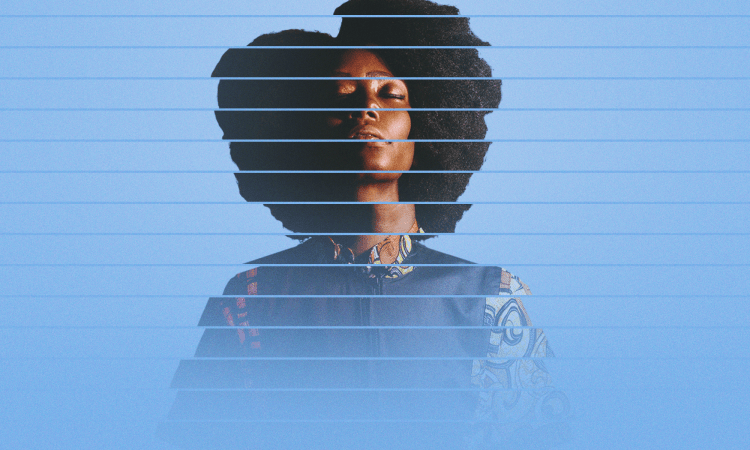
In their book Burnout: The Secret to Unlocking the Stress Cycle, coauthors (and twin sisters) Emily and Amelia Nagoski reveal that completing the stress cycle — finding a way to let our bodies know we’re no longer threatened or in danger and we can stop being stressed — can be the most effective way to avoid burnout and emotional exhaustion. Physical activity or any kind of physical movement is one great way to do this, but there are several other ways.
Here are 6 evidence-based strategies to help you complete your stress cycle:
Deep, slow breaths down-regulate the stress response, especially when the exhalation is long and slow and goes all the way to the end of the breath so your belly contracts. Breathing is most effective when your stress isn’t that high or when you just need to siphon off the very worst of the stress so you can get through a difficult situation.
A simple, practical exercise is to breathe in to a slow count of 5, hold that breath for 5, then exhale for a slow count of 10, and pause for another count of 5. Do that three times — for one minute and 15 seconds of breathing — and then see how you feel.
Casual but friendly social interaction is the first external sign that the world is a safe place.
Casual but friendly social interaction is an external sign that the world is a safe place. People with more acquaintances are happier. Just go buy a cup of coffee and say “Nice day” to the barista or compliment another customer’s earrings. Reassure your brain that the world is a safe, sane place, and not all people suck. It helps!
Laughing together, and even just reminiscing about the times we’ve laughed together, increases relationship satisfaction. We mean belly laughs — deep, impolite, helpless laughter. When we laugh, says neuroscientist Sophie Scott, we use an “ancient evolutionary system that mammals have evolved to make and maintain social bonds and regulate emotions.”
Aarm hug in a safe and trusting context can do as much to help your body feel like it has escaped threat as joging, and it’s a heck of a lot less sweaty
Sometimes, a deeper connection with a loving presence is called for. Most often, this comes from a loving and beloved person who likes, respects and trusts you, whom you like, respect and trust. It doesn’t have to be physical affection (though physical affection is great). A warm hug in a safe and trusting context can do as much to help your body feel like it has escaped a threat as jogging a couple of miles, and it’s a heck of a lot less sweaty.
One example of affection is the “six- second kiss” advice from relationship researcher John Gottman. Every day, he suggests, kiss your partner for six seconds. There’s a reason behind the timing: Six seconds is too long to kiss someone you resent or dislike, and it’s far too long to kiss someone with whom you feel unsafe. Kissing for six seconds requires that you stop and deliberately notice you like this person, you trust them and you feel affection for them. By noticing those things, the kiss tells your body that you are safe with your tribe.
Another example: Hug someone you love and trust for 20 full seconds, while both of you are standing over your own centers of balance. Research suggests this kind of hug can change your hormones, lower your blood pressure and heart rate, and improve mood. It doesn’t have to be precisely 20 seconds. What matters is you feel the stress easing, or what therapist Suzanne Iasenza describes as “hugging until relaxed.”
Of course, affection doesn’t stop with other human beings. Just petting a cat or dog for a few minutes can help complete the cycle too.
Have you had the experience of just barely making it inside your home — or bedroom — before you slam the door behind you and burst into tears for 10 minutes? Then you wipe your nose, sigh a big sigh and feel relieved from the weight of whatever made you cry? You may not have changed the situation that caused the stress, but you completed the cycle.
Have a favorite tearjerker movie that makes you cry every time? Going through that emotion with the characters allows your body to go through it, too.
You might experience completing the stress cycle as a shift in mood or mental state or physical tension, as you brethe more deeply and your thoughts relax.
Engaging in creative activities today leads to more energy, excitement, and enthusiasm tomorrow. Like sports, the arts — including painting, sculpture, music, theater and storytelling in all forms — create a context that tolerates and even encourages big emotions. Arts of all kinds give us the chance to celebrate and move through our big emotions.
It’s like knowing when you’re full after a meal or like knowing when you’ve had an orgasm — your body tells you. You might experience it as a shift in mood or mental state or physical tension, as you breathe more deeply and your thoughts relax.
It’s easier for some people to recognize than others. For some people, it’s as obvious as knowing that they’re breathing. That’s how it is for Emily. Long before she knew about the science, she knew that when she felt stressed and tense and terrible, she could go for a run or for a bike ride and at the end of it she would feel better. She has always been able to feel it intuitively, that shift inside her body.
Don’t worry if you’re not sure you can recognize when you’ve completed the cycle. Especially if you’ve spent a lot of years — like, your whole life, maybe — holding on to your worry or anger, you’ve probably got a whole lot of accumulated stress response cycles spinning their engines, so it’s going to take a while before you get through the backlog.
All you need to do is recognize that you feel incrementally better than you felt before you started. You can notice that something in your body has changed, shifted in the direction of peace.
“If I was at an eight on the stress scale when I started, I’m at a four now,” you can say. And that’s pretty great.
Excerpted from the book Burnout: The Secret to Unlocking the Stress Cycle by Emily and Amelia Nagoski. Copyright © 2019 by Emily and Amelia Nagoski. Used by permission of Ballantine, an imprint of Random House Publishing Group, a division of Penguin Random House LLC. All rights reserved. No part of this excerpt may be reproduced or reprinted without permission in writing from the publisher.
To learn more about the stress cycle and burnout, watch Emily and Amelia Nagoski’s TED conversation:
Emily Nagoski PhD is the author of “Come as You Are: The Surprising New Science That Will Transform Your Sex Life.” She has a PhD in health behavior with a minor in human sexuality from Indiana University, and a MS in counseling, also from IU, including a clinical internship at the Kinsey Institute sexual health clinic. A sex educator for 20 years, she is the inaugural director of wellness education at Smith College.
Amelia Nagoski DMA Amelia Nagoski holds a DMA in conducting from the University of Connecticut. An assistant professor and coordinator of music at Western New England University, she regularly presents educational sessions for professional musicians discussing the application of communications science and psychological research, including “Beyond Burnout Prevention: Embodied Wellness for Conductors.”
The spacing is wacky this morning; the system will not allow me to save the changes.
Melinda
Repost
Jessica Owen from Cherish Editions kindly gifted me a copy of Rachel Townsend’s memoir Finding Frank for an honest review.
Rachel covers several difficult subjects, such as domestic violence, depression, child abuse, alcoholism, and drug addiction. She is raw and honest with the accounts of her life and I can relate on several fronts. I was rooting for her the whole way.
Finding Frank reels you in fast, so find a comfy spot because once you start reading, you will keep turning the pages to see how her life takes the next turn.
Rachel is a counselor and holistic therapist, now based in Cornwall in the UK, having a globetrotter for much of her life. As a counselor, motivated by her life experiences, she specializes in helping with trauma and recovery, and relationship problems. Outside of her profession, her personal experiences shape her prose.
How do you find love when all you’ve known as a child is violence and abuse?
How do you find your way back from the clutches of drug addiction and stop yourself from sinking deeper and deeper into a dark and debilitating depression? How do you carry on when you finally open your heart and then lose the one you love in the most tragic of circumstances?
Rachel’s story is a tale of triumph over adversity. Set in a tropical island paradise in the West Indies, Rachel’s journey takes her away to boarding school in England and on to the Middle East for the school holidays, where she first sets eyes on Frank.
Remarkably, Rachel not only finds a way to make peace with the terrible traumas of her past, but she manages to turn her life around completely and along the way, she finds love… a love she once believed was lost to her forever.
“Finding Frank is a riveting memoir from Rachel Townsend who has overcome insurmountable odds to rise above trauma and blossom into a whole, loving person and respected author. She’s an inspiration for us all. Rachel comes from a background of violence and child abuse, she was abandoned by her mother as a child and uprooted from her island home to find herself in a boarding school in the Middle East. Rachel was guided by the love of her father and made new friends which helped her gain self-confidence. As a young woman, Rachel finds herself spiraling into a dark depression without the tools to cope, the darkness seems to have no end in sight. Rachel wanted love in her life but felt that true love would not come around a second time. Finding Frank is not your typical love story and that’s one of the reasons I love it. Life isn’t like the movies, it’s hard and painful at times. Rachel shows us no matter how hard and painful, you can overcome the past and build a solid future of your dreams. Finding Frank is a must-read, you may find yourself sharing with friends and family too.”
Cherish Editions is the self-publishing division of Trigger Publishing, the UK’s leading independent mental health and wellbeing publisher.
We are experienced in creating and selling positive, responsible, important and inspirational books, which work to de-stigmatise the issues around mental health, as well as helping people who read them to maintain and improve their mental health and wellbeing. By choosing to publish through Cherish Editions, you will get the expertise of the dedicated Trigger Team at every step of the process.
We are proud of what we do, and passionate about the books that we publish. We want to do the very best for you and your book, holding your hand every step of the way.
What makes us different?
Visit About us to find out more.
I hope you’ve enjoyed this review and I look forward to your feedback. Don’t forget to buy your copy today and dive into the world of Rachel Townsend.
Melinda
Repost
It’s the weekend!!!!!!
I’m glad you joined me for another edition of Weekend Music Share this week.
Have a great weekend!
Melinda
Welcome back to Weekend Music Share, the place where everyone can share their favorite music.
Feel free to use the Weekend Music Share banner in your post, and use the hashtag #WeekendMusicShare on social media so other participants can find your post.
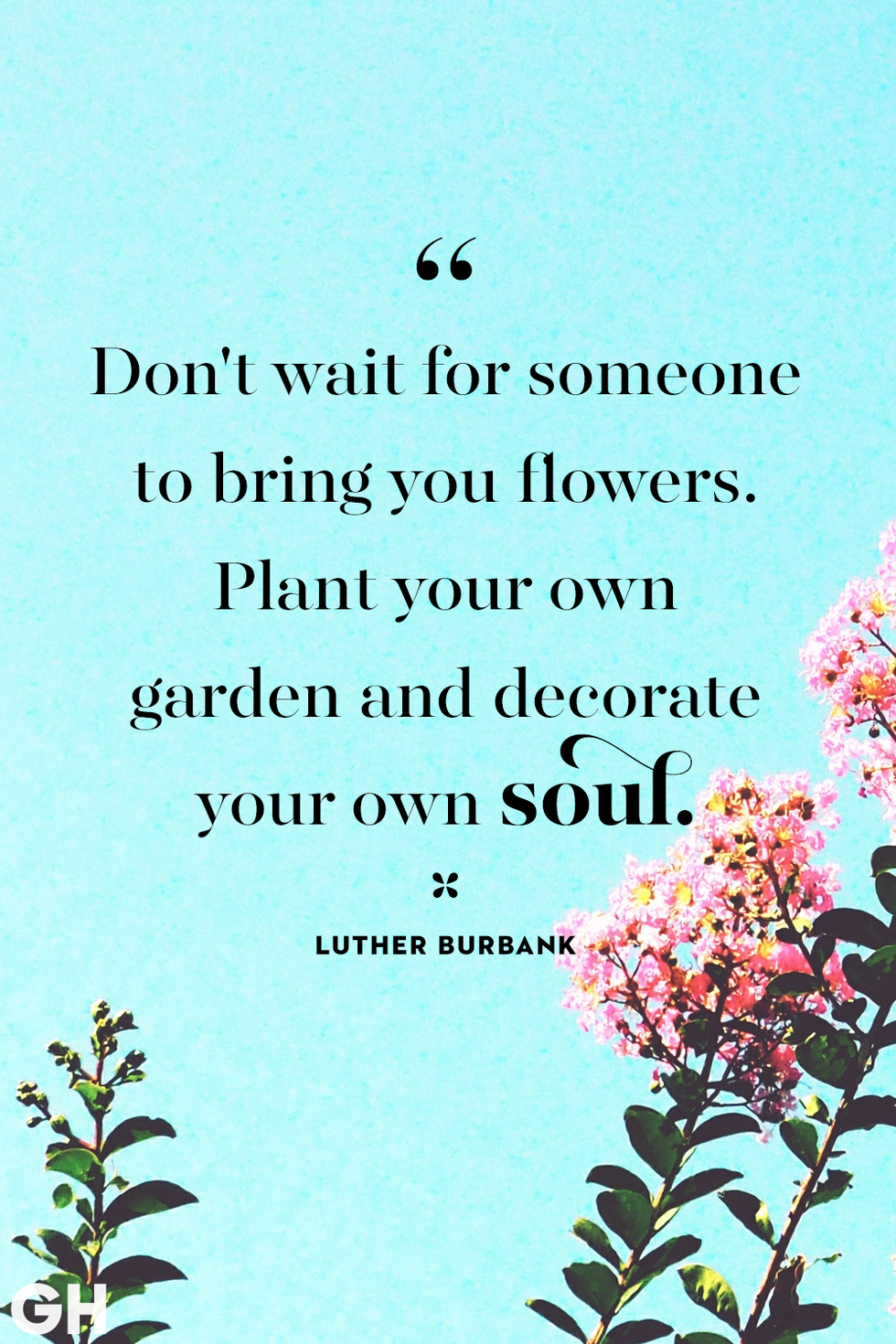
Thank you for joining me for this week’s Friday Quote.
Melinda
No matter whether you have recently gone through a breakup and you want to show your ex what he is missing, you could do with a confidence boost, or you simply have grown bored of your current style, a change of look can be a good thing. If it is something drastic you are after, we have some great suggestions.

One of the easiest and most effective ways to change your look is by changing your hairstyle. Has your hair been a mid-brown shade for as long as you can remember? Why not opt for a vibrant shade of red or a lovely golden honey color? If you are feeling even more daring, throw out the rulebook and go for one of the gorgeous pastel hair shades that are in trend today, such as luscious lilac and pale pink. 2022 has definitely been the year of unique hair trends so far. Check out pearlescent hair and geode hair for two trends that are bound to turn heads.
Nothing will give you a greater confidence boost than investing in a new smile. Cosmetic dentistry services from the likes of Chad Latino DDS mean you can achieve a Hollywood smile. Teeth whitening is a popular service, yet you should also look into gum reshaping or gum contouring, and teeth reshaping if you aren’t particularly happy with the way your gums and teeth look.
Contouring is one of the hottest makeup trends this year and with good reason. You can change the appearance of your face entirely by contouring. There are plenty of video tutorials online to help you out along the way. Contouring is a great way to alter the definition of your cheekbones, the shape of your nose, and other aspects of your face through makeup manipulation, rather than needing to invest in something more drastic.
You will be shocked by how much of a difference this can make. You can change the appearance of your face by altering your eyebrows. Fuller eyebrows can make you appear more youthful, so if you currently have thin, arched eyebrows, switch them up and see how they soften your face.
Celebrities are known for their unique and sometimes wacky sense of style. They make a massive impact because they dare to be different, and if you want to switch up your look entirely, this is what you need to do. However, you may not have the natural flair to do this yourself, and that’s completely fine because you can take inspiration from a particular celebrity instead. Celebrities that are famed for their unique yet amazing style include the likes of Gwen Stefani, Rita Ora, Alexa Chung, and Tilda Swinton. Spend some time researching different celebrities’ lookbooks and choose a celebrity whose style appeals to you most and fits in with your lifestyle.
This is a collaborative post.
Melinda
Repost
NEWS.COM.AU
Sophie Goulopoulos
Trust your gut, as they say!

From about eight weeks old, Angie Kent couldn’t have breast milk. As she grew older, she realised lactose products were “ruining her whole day”, so she listened to her body and made adjustments.
There are so many lactose-free dairy options out there now. But when Angie Kent was growing up, not so much. There wasn’t even much information about lactose intolerance, which she now realises was the reason she couldn’t take breast milk after about the age of eight weeks and why, after noticing how eating regular dairy products brought on discomfort and pain, she made a “conscious effort” to research her symptoms and seek medical advice.
Body+Soul: You’ve spoken often about your journey with being a coeliac, but not of your lactose intolerance – why is that?
Angie Kent: Coeliac disease can be a life-threatening disease for many people and I felt it was important to bring attention to how serious this intolerance is. By comparison, for most people, lactose intolerance symptoms can often be managed.
How does drinking/eating lactose make you feel? What are the major symptoms for you?
Eating and drinking lactose gives me overall discomfort. I feel as if my digestive issues have the power to ruin my whole day. I don’t feel my best, and I don’t feel like I can be relaxed or active due to my physical pain from bloating, toilet troubles, and skin breakouts.
When did you first learn of your intolerance, and how did you get diagnosed?
I was a colicky baby and was not able to have breast milk from eight weeks old. As a child, there wasn’t much education around being lactose intolerant and as I got older I could no longer deal with the pain and needed to do something about it.
I started noticing a pattern after eating dairy and experiencing consistent symptoms, so I made a conscious effort to listen to my body, researched my symptoms, and learnt more about lactose intolerance, and then sought medical professional advice.
How did avoiding lactose affect your social life/general diet/ability to eat what you wanted/mood?
I find catering to my dietary restrictions these days is much easier with the increased number of alternative milk and lactose-free options, as well as the amazing vegan products that are now on the market.
Being lactose intolerant has just made me more conscious of what I am putting in my body, but I don’t feel like I have to make major sacrifices in my life.

How has knowing about your intolerance improved or changed your general wellbeing?
My overall well-being improved when I got a handle on my symptoms and felt more myself again. I certainly know when something my body doesn’t agree with has snuck into my food, because all hell breaks loose with all different types of symptoms. I’m a sensitive soul.
What is the worst thing possible for you to eat/drink for your lactose intolerance?
I don’t consume any dairy milk, yoghurts or creams because of my intolerances but I am a sucker for cheeses! With so many lactose-free dairy products out there, I can now enjoy lactose-free cheese without all the stress on my body physically and mentally. If you’re feeding your gut something it can’t process or handle, your mental health suffers too. It’s important to know your gut is your second brain. Why do you think people say ‘trust your gut’ so often?!
What non-dairy and dairy alternatives are you able to eat with your lactose intolerance?
So many dairy products have lactose free options nowadays that I don’t necessarily have to seek dairy alternatives, my favourite brand is Liddells. But knowing that most coffee shops always have a range of reliable dairy-free alternatives always makes things really easy for me.
What does your average day on a plate look like now?
I am mainly veggie-based so I will make myself a smoothie in the morning with my herbs, supplements powders, dairy-free yoghurt, bananas, blueberries, and almond milk.
For lunch I try to have a salad with lots of greens and maybe some kind of seafood. Dinner I love to make myself a veggie dish or fish curry! The options are endless.
For snacks, I can now snack on some lactose-free cheese singles, avocado, and tomato with rice crackers. I am mad about it! Plus lots and lots of herbal teas.
Melinda
Repost
I was kindly gifted Time To Talk from Maddie Dunne-Kirby at Welbeck Publishing for an honest review. Thank you, Maddie.
Released in April 2021, Time To Talk is available on Amazon
We live in a super-connected world, yet men specifically, struggle to connect and share. This is changing… but not quickly enough. Award-winning podcaster Alex Holmes sets out to accelerate this shift, debunking lingering myths around masculinity, love and connection by exploring what causes this sense of loneliness.
Starting with ‘Real Man Myths’ and features designed to encourage us to open up and share, Alex motivates us to move from:
Sharing his experiences on his podcast and as a young British black man, Time to Talk is a love letter to all the men who have lost their way and to the women that love them.
Alex Holmes is an award-winning podcaster and writer from London. He has been hosting and producing podcasts since 2016 including What Matters with Alex Reads, now named Time to Talk, and Mostly Lit, which was named by the Guardian and the BBC as one of the top podcasts of 2017 and won the Best British Podcast award at the 2018 British Book Awards. He now hosts the Time to Talk podcast, which focuses on mental health.
We can be talking heads at times, just show up, chat and not get down to the meat of the subject. While this type of conversation is essential to everyday life, to live an authentic life you have to be open with your emotions. By taking the conversation down to the next level, past the surface, you can learn more about others and yourself.
Men are often raised being told to not cry, or show emotion, don’t get depressed, basically, men have been told to suck it up and this had caused a major mental health crisis as they walk into the world with these unrealistic and unhealthy goals.
Alex was traveling down the path of life when two major events rocked his emotional state. One was the suicide of an acquaintance and the second the London Riots of 2011. Emotions flooded and many emotions turned to anger and anger started to flow over. Alex knew it was time for a major change in his life. A change in how he looked at his life and how he fits in it
These events sent Alex down the road of self-discovery, he sought out well-known writers, religious thinkers, psychologists,s and many other diverse types of thinkers to uncover who he really was.
Alex sets out to debunk the myth’s that most men are raised by. Today Alex has an award-winning podcast, Time To Talk where he tackles everyday topics with his guest in a safe environment to be open with themselves on what may be holding them back in life.
Time to Talk by Alex Holmes is a great read, one I would recommend to anyone on a self-journey or just interested in where the road may take you.
Welbeck Publishing is an exciting, fast-growing independent publisher based in London, dedicated to publishing only the very best and most commercial books spanning a number of genres and categories, from leading authors and well-known brands to debut talent. We live for books that entertain, excite and enhance the lives of readers around the world.
From building our boutique fiction and narrative non-fiction lists to shaping our world-renowned illustrated reference, gift and children’s titles, our aim is to be a market-leader in every category in which we publish. Our books and products come to life for adults, children, and families in 30 languages in more than 60 countries around the world, selling through a variety of traditional and non-traditional channels. We are constantly looking for new ways to deliver our exceptional content and new ideas to inspire readers and listeners everywhere.
I’m so glad you are enjoying the book reviews. I’ve had the great pleasure to hear from three authors with positive feedback on my reviews.
Do yourself a favor and go buy Time To Talk by Alex Holmes and break down the barriers in your life.
Have a great day.
Melinda
Repost











 lookingforthelight.blog