Fact: The current American flag was designed by a high school student
It started as a school project for Bob Heft’s junior-year history class, and it only earned a B- in 1958. His design had 50 stars even though Alaska and Hawaii weren’t states yet. Heft figured the two would earn statehood soon and showed the government his design. After President Dwight D. Eisenhower called to say his design was approved, Heft’s teacher changed his grade to an A.
Fact: Cows don’t have upper front teeth
They do have molars in the top back of their mouths though. Where you’d expect upper incisors, cows, sheep, and goats have a thick layer of tissue called a “dental pad.” They use that with their bottom teeth to pull out grass. Check out these 13 fun facts about the human body you’ve always wondered about.
Fact: Thanks to 3D printing, NASA can basically “email” tools to astronauts
Getting new equipment to the Space Station used to take months or years, but the new technology means the tools are ready within hours.
Fact: Only a quarter of the Sahara Desert is sandy
Or technically, we peel them upside-down. These random facts will have you eating fruit differently. Naturally, they grow outward from their stems, but that means their bottoms actually face the sky. As they get bigger, the fruits turn toward the sun, forming that distinctive curve. Check out these 21 food myths that are totally untrue.
Fact: There were active volcanoes on the moon when dinosaurs were alive
Most of the volcanoes probably stopped one billion years ago, but new NASA findings suggest there might still have been active lava flow 100 million years ago, when dinosaurs were still roaming.
Fact: Dogs sniff good smells with their left nostril
Dogs normally start sniffing with their right nostril, then keep it there if the smell could signal danger, but they’ll shift to the left side for something pleasant, like food or a mating partner. Learn the real reason dogs follow you everywhere.
Fact: Avocados were named after reproductive organs
Indigenous people of Mexico and Central America used the Nahuatl word āhuacatl to mean both “testicles” and “avocado.” The fruits were originally marketed as “alligator pears” in the United States until the current name stuck. For more random facts, learn what the original word for avocado means about guacamole’s name.
Remember how weird it was to ask questions about sex as a teenager? High school teacher Al Vernacchio answers his students’ questions about everything from DIY birth control to how to tell when a guy really likes you, in an excerpt from his new book.
On the first day of my Sexuality and Society class, I don’t pass around anatomy drawings. I don’t hand out pamphlets about safer sex, although those are stacked on a table near the door. Instead, the first thing I do is establish ground rules. People should speak for themselves, laughter is OK, we won’t ask “personal history” questions, and we’ll work to create a community of peers who care about and respect one another. Only then can we get to work.
I’m all about context. Talking about sexuality, intimacy, relationships, and pleasure can’t be done in a vacuum.
In the back corner of my classroom is an old shoebox with a hole cut into the top of it. Next to the box are scraps of paper and some pencils. This is the Question Box, a place where kids can drop any question they have about human sexuality. I answer the questions both during class time and on a blog I maintain at school.
Here are some actual questions from students and my answers to them. I haven’t done any fancy editing; these are the questions just as the kids asked them. They run the gamut from innocent to downright technical. My answers are exactly as I gave them, to show how even a simple question allows for both information and value clarification to be offered in response. Here goes:
Why is sex so good?
There are two ways to answer this question. From the biological perspective, sex feels good for an important evolutionary reason. If a species, like ours, is going to reproduce sexually, then there’s an advantage if that action also feels good. As I’ve often said, if sex felt like getting your tooth drilled at the dentist, people wouldn’t have it very often, and that could eventually threaten the survival of our species. Our bodies have evolved so that our genital regions, as well as many, many other parts of the body, are sensitive to sexual stimulation.
A part of the body that brings sexual pleasure when stimulated is called an erogenous zone. This does not mean just our genitals. All of us have many places on our bodies that result in sexual pleasure when stimulated. Knowing your own and your partner’s erogenous zones can lead to much more fulfilling sexual experiences. The mechanisms of sexual pleasure involve a combination of nerve impulses, blood flow, and muscle tension. To find out more about this, you might Google the phrase “human sexual response cycle” and look at the work of Masters and Johnson, two famous sex researchers who studied the body changes that happen when people get sexually excited.
WOULDN’T IT BE GREAT IF WE COULD SAY, “THE THURSDAY FOLLOWING YOUR SIXTH DATE IS THE MOST APPROPRIATE DAY TO START HAVING SEX”? OF COURSE, THAT’S NOT THE WAY IT WORKS.
The second reason sex feels good is that humans have developed the emotional capacity to feel love, intimacy, and passion. These emotional states highlight and deepen sexual pleasure.
While pleasure can exist without these emotions, it is much more significant when they are present.
When is someone emotionally and physically ready for sex?
I wish I had an answer that would be right for all people at all times, but the real answer is “it depends.” We are all unique individuals, and our relationships are all unique. Because of that, there can’t be a standard answer to this question. Wouldn’t it be great if we could say, “The Thursday following your sixth date is the most appropriate day to start having sex”? But, of course, that’s not the way it works.
EMOTIONALLY, A PERSON HAS TO BE READY TO FACE OTHER PEOPLE’S RESPONSE, POSITIVE OR NEGATIVE.
I think it’s appropriate to start being sexually active with a sweetheart (and remember: I define sexually active as being involved with someone else’s body for the purpose of giving and receiving sexual pleasure) when intimacy, commitment, and passion are established and both people have pretty equal amounts of these feelings for each other. I don’t think these things develop quickly, so I don’t think sexual activity is appropriate on a first date or early in a new relationship.
I also think people aren’t ready to become sexually active if they can’t talk about it with their partners in a serious way, and also talk about safer sex practices, contraception (if appropriate), and possible positive and negative consequences and how they’d deal with them. Emotionally, a person has to be ready to face other people’s response, positive or negative, to the sexual activity and be willing to share those emotional reactions with his or her partner.
As you can see, I think it takes a lot for a couple to be ready to engage in sexual activity. If any of the above things aren’t in place, I’d say you’re not ready.
Could you use a balloon as a condom?
Short Answer—ABSOLUTELY NOT!!! UNSAFE! UNHEALTHY! DANGER! DANGER!
Longer Answer: OK, I’m calmer now. Condoms are made to be condoms; balloons are made to be balloons. Both can be made of latex, but that doesn’t mean they’re interchangeable. You wouldn’t use a pencil eraser as a car tire even though they’re both made of rubber, would you?
If a person doesn’t feel confident enough to acquire condoms, then maybe they shouldn’t be having intercourse.
Condoms, when used correctly, are an essential tool in reducing the risk of pregnancy and STIs. They work so well because they’re designed for that purpose. No condom substitute (balloon, plastic baggie, sock—whatever) will provide the same level of protection, and some can do more harm than good. So insist on the original! Sometimes people ask about condom substitutes because they don’t know where to get condoms or are embarrassed to get them. Condoms can be purchased at any local drugstore; there are no age requirements for buying condoms and no prescriptions are necessary. Free condoms are available from many health clinics, sexual health agencies, and even some schools (although ours does not provide free condoms at this time).
Here’s an important thing to consider. If a person doesn’t feel confident enough to acquire condoms, then maybe they shouldn’t be having intercourse. Being ready for sexual intercourse means being able to handle all aspects of the situation, including protecting oneself and one’s sweetheart from unwanted consequences. Remember my rule about sexual activity—“ If you can’t look your partner in the eye and talk about it, then you can’t do it with them.” My rule for condoms is, “If you can’t take responsibility for securing condoms, then you’re not allowed to have the kind of sexual activity that calls for using condoms.”
How can you tell if a guy likes you?
I know you’re really hoping for a clear-cut answer here, but that’s just not the way it works, I’m afraid. People can react in all kinds of ways when they like you. Some people get really quiet around you. Others will make sure you notice them. Some will tease you or act annoying. Some will just silently stare at you (yes, that can feel a little creepy).
The best way to figure out if a guy likes you is to ask him! Might it feel awkward to do that? Sure, but it’s also a way to get a clear answer. You might want to resort to the middle-school tactic of asking your friends to ask his friends if he really likes you or not, but that makes the whole thing so much more public than it needs to be. You could try using Facebook or texts to figure it out, but they’re not great ways to get clear information.
Why not try the kind of “I message” we use in class? In an I message, you describe the situation, say what you feel, and say what you want or need. Below are two different I messages you might try (or make up your own!).
#1: “I’m trying to figure something out and I could use your help. I’m feeling a bit confused about what you think of me. I’m wondering, can you be honest with me and tell me whether you like me or not?”
#2: “It’s hard for me to figure out if someone likes me or not. I’d be a lot less anxious if I knew for sure. So, I was just wondering, do you like me?”
Asking such a question might seem scary, but remember, the worst a person can say is no, and you’re absolutely strong enough to hear that and be OK. Believe it! Then go ask him.
Al Vernacchio In his 12th-grade Sexuality and Society class, Al Vernacchio speaks honestly and positively about human sexuality. He is the author of <em>For Goodness Sex</em>.
Here are three common-sense tips to help you feed your hunger and not your emotions, from dietician Eve Lahijani.
This post is part of TED’s “How to Be a Better Human” series, each of which contains a piece of helpful advice from someone in the TED community. To see all the posts, go here.
Imagine if eating were as simple as, say, refueling a car. You’d fill up only when an indicator nudged towards E, you couldn’t possibly overdo it or else your tank would overflow, and you’d never, ever dream of using it as a treat.
Instead, for many of us, eating is anything but straightforward. What starts out as a biological necessity quickly gets entangled with different emotions, ideas, memories and rituals. Food takes on all kinds of meanings — as solace, punishment, appeasement, celebration, obligation – and depending on the day and our mood, we may end up overeating, undereating or eating unwisely.
It’s time for us to rethink our relationship with food, says Eve Lahijani, a Los Angeles-based dietician and a nutrition health educator at UCLA. She offers three common-sense steps to help get there.
1. Reconnect with your hunger.
So many things drive us to eat — it’s noon and that means lunchtime, it’s midnight and that means snack time, we’re happy, we’re anxious, we’d rather not bring home leftovers, we’re too polite to say no, we’re bored, and oh, wow, has someone brought in donuts?!?
Similarly, we suppress our appetite for a myriad of reasons — we’re too busy, we’re sad, we’re mad, nobody else is eating, it’s too early, it’s too late, we’re too excited.
Now try doing this: Eat only when you’re hungry; stop when you’re full. “It may seem obvious to you,” concedes Lahijani. Still, think over your past week: How many times did you eat when you weren’t hungry?
She suggests that we think about our hunger and our fullness on a 0-10 scale, with 0-1 being famished and 9-10 being painfully stuffed (as in holiday-dinner stuffed). She says, “You want to begin eating when you first get hungry, and that correlates with the three or a four on the scale and [to stop] … when you first get comfortably full, a six or seven on the scale.”
The reason you shouldn’t wait until you’re starving (or, 0-2 on the scale) is because that’s when people tend to make nutritionally unsound choices. If you’ve ever gone to the supermarket when you were ravenous, you probably didn’t fill up your cart with produce; you gravitated towards the high-calorie, super-filling items.
Lahijani says, “It’s also wise to eat when you first get hungry because you’re more likely to enjoy your food [and] you’re more likely to eat mindfully … When you let yourself get too hungry, chances are, you’re eating really fast and not really paying attention. In fact, one of the biggest predictors of overeating is letting yourself get too hungry in the first place.”
2. Feed your body what it is craving.
When Lahijani was a stressed-out college and graduate student, her eating took one of two forms: she was either dieting or bingeing. As she says: “Whenever I was on a diet, the diet told me what to eat,”; while on a binge, she’d eat whatever was convenient or go all out on foods forbidden by her then-diet. Developing a different relationship with food meant stepping out of those patterns. “Instead of listening to others’ opinions of what I should eat, I became silent and I tuned into my own body,” she says. “I fed my body what it was craving.”
It turns out Lahijani didn’t crave junk food. She says, “I was actually tasting things for the first time, because my mind wasn’t filled with judgment and guilt. I actually found that my body actually craved nurturing, nourishing foods like vegetables and fruits. I actually liked my sister’s kale and quinoa salad.”
3. Try not to use food as a reward or a punishment.
It’s not surprising that we do this. After all, as children, we quickly learn that rejoicing and parties come with cake, while transgressions result in … no cake. But one of the great things about being an adult is, we can establish our own associations. By all means, let’s continue to mark our birthdays with cake — or with fresh fruit and a stockpot of homemade veggie chili if that’s what you prefer. Or, celebrate in ways that have nothing to do with eating. You can set your own rules now.
When Lahijani’s fraught feelings about food eased, she was surprised to find these effects go beyond eating. “What’s really interesting is to see how making peace with food affected other areas of my life. As I learned how to listen to myself, I became better at listening to others, I became more empathetic,” she says. “As I made a point to trust myself, I became more trusting in my relationships and more vulnerable, and as I became more loving to myself … I learned what it meant to love someone else.”
Earth Day is right around the corner and I can’t think of a better way to start the conversation on how our every day choices impact the planet. There are some great ideas in here and lots of information I didn’t know and I thought I was an informed shopper. Best of all if we buy less not only do we save lots of money we help the planet.
Most of us know that the fashion industry is built on an unsustainable business model powered by overconsumption. Clothing is cheaper than ever, brands release new styles every day and we can get a new wardrobe delivered to our door with the touch of a button.
In fact, between 2000 to 2014, annual clothing production doubled and the number of garments purchased per capita rose 60 percent. But this convenience comes at a high cost.
The fashion industry contributes to around 10 percent of global greenhouse gas emissions — which is more than the aviation and shipping industries combined. It’s also draining precious environmental resources: The industry produces about 20 percent of global wastewater and, what’s even worse, 85 percent of textiles end up in landfills or are incinerated.
The industry is clearly in need of large-scale change, so trying to make a difference with your individual purchases can feel discouraging. But through their everyday buying decisions, consumers can send powerful messages to big corporations and create demand for more sustainable products. If you’re looking to cut down on waste in an already wasteful industry, here are six ways to start:
Choose lower-impact materials
Cotton and polyester — two materials with a high environmental impact — dominate the fast fashion industry. Cotton production relies on pesticides and fertilizers that generate nitrous oxide (N2O), a greenhouse gas with morewarming potential than methane and carbon dioxide. It also requires large amounts of water. In fact, a single cotton T-shirt can take up to 2,700 liters (713 gallons) of water to produce.
Meanwhile, polyester has a massive carbon footprint. “Polyester production for textiles released about 706 billion kilograms (1.5 trillion pounds) of greenhouse gases in 2015, the equivalent of 185 coal-fired power plants’ annual emissions,” according to the World Resources Institute. On top of that, polyester generates microplastics (tiny pieces of plastic that pollute the environment) every time you wash it. An estimated half a million tonnes of these microfibers end up in our oceans each year.
Instead of cotton and polyester, choose lower-impact natural materials, including wool, linen and lyocell (which is made from wood pulp).
Buy less and mend more
Fashion production is projected to rise 81 percent by 2030, according to the 2019 Pulse of the Fashion Industry report, and the only way to move the needle there is to change the model of overconsumption. For the members of climate activist network Extinction Rebellion, which urged people to boycott the fashion industry last year, that can mean buying no new items. For others, it might be as simple as investing in pieces you’ll wear for years and staying away from any trend-focused purchases. It can also mean mending and repurposing your already-used items to make them last longer. If you’re not handy with a needle and thread, it’s your chance to support a local tailor.
Purchase secondhand and vintage
If you still want to add the occasional item to your wardrobe, buying secondhand and vintage can reduce a garment’s carbon footprint by around 82 percent. Thanks to online resellers like Depop, ThredUp and The RealReal, buying used is an increasingly popular and convenient choice. In 2019, secondhand clothing expanded 21 times faster than conventional apparel.
“I don’t buy anything new. I get all my clothes secondhand from flea markets and thrift stores,” said designer Jessi Arrington in a TED Talk. “Secondhand shopping allows me to reduce the impact my wardrobe has on the environment and on my wallet. I get to meet all kinds of great people; my dollars usually go to a good cause; I look pretty unique; and it makes shopping like my own personal treasure hunt.”
There are also fashion rental options like Rent the Runway and Armoire that give you access to special occasion dresses or monthly subscription boxes of designer pieces. While renting can be a great way to wear trendy clothing with less impact, using their in-person drop-off and pickup locations, like Rent the Runway’s swap shops, can combat the environmental cost of packaging, shipping and returning items.
Look into brands’ labor practices
Fashion manufacturers often employ cheap labor to reduce production costs, relying on some 40 million low-wage garment workers in countries across Southeast Asia and Europe, the majority of whom are women.
Many are forced to work long hours in unsafe environments. For example, in 2013, an eight-story building housing several garment factories collapsed in Bangladesh — the second largest clothing manufacturer in the world. More than 1,000 workers died and over 2,500 were injured. Likewise, leather tannery workers are at higher risk of skin and respiratory diseases as a result of repeated exposure to hazardous chemicals without proper safety equipment. Because of huge power imbalances, these workers virtually have no recourse when it comes to negotiating salaries, hours or safety conditions.
Check brand websites to see if they publicly list their supply chain information, or search for it on sites like Fashion Checker. You might also consider reaching out on social media to ask about their labor practices. Not only could this start a conversation, it can also signal to the brand that consumers want supply-chain transparency.
Support Indigenous businesses
Indigenous people comprise less than 5 percent of the world’s population but protect 80 percent of global biodiversity, according to environmental activist Hindou Oumarou Ibrahim. So it’s no surprise that Indigenous design is rooted in sustainability, and using your purchasing power to support Indigenous-owned businesses can elevate the same communities who safeguard these resources.
“Many Indigenous people still carry the knowledge of living in harmony with nature, which is key for our world tackling climate change right now,” says womenswear designer Angel Chang. “However, this knowledge lies with the elders whose wisdom is quickly disappearing. Consumers can support Indigenous artisans by purchasing items that are made in the traditional way, according to the cycles of nature following techniques passed down from their ancestors.”
Champion new scientific technology
Scientists across the world are working on innovative ways to address fashion’s waste problem. Spain’s Ecoalf is creating shoes from algae and recycled plastic. The Amsterdam-based brand GumDrop collects gum and turns it into a new kind of rubber. Other companies are exploring biofabrication methods like “growing” clothes from microbes and producing leather from tissue cells without harming animals.
Natsai Audrey Chieza, the founder and creative director of Faber Futures, says that she believes customers need to demand more than just the technological intervention, and start asking what kind of values drive tech companies.
“We also know that the environmental crises we face cannot be solved with drop-in replacement technologies alone, because this market logic ignores difference, creates monopolies and reinforces dominant power structures, many of which have directly caused and sustained our environmental and social crises,” Chieza says. “Led by a strong desire to transition from a world built on historic and ongoing exploitative models to a more just future, citizens will signal a preference for products from companies built from the ground up to protect both people and planet.”
Growing up in a household of Domestic Violence is traumatic, lonely, and heartbreaking and forever changes the person you are and who you become. I was also emotionally and physically abused by my mother and stepfather which added to my train wreck of a life.
It took years of Therapy and medications to clearly see I was not to blame and even longer to grieve for the little girl whose childhood was ripped away.
Watch the video, and look for the nuances of violence or controlling behavior. At the end of the video, the physical abuse becomes crystal clear. Thank God someone was there to help her getaway.
If you’re in a Domestic relationship that is violent, have a plan for when the day comes when you need to leave.
XX
Tears started my day, who knows what triggered the thought of this post and song.
Original post 4/26/2015
I feel the pain but know I have to smile.
I witnessed my mother beat emotionally and physically every day, it created chaos in my young mind. A tornado burned a hole in my heart. I couldn’t understand the feelings of pain when abused and watching abuse. Child abuse leaves a deep scar in my heart. During a conversation, a friend expressed fear over how the high-conflict divorce was impacting the kids. A volcano erupted in me, I survived Domestic Violence and had no idea. I thank the Army of Angels for being a friend. My eyes were opened during our conversation. The video is heartbreaking, beautiful, and hopeful.
This month is Sexual Assualt Awareness Month and I think more now than ever, it’s important we talk about our trauma and help support survivors in every way we can. I’m a survivor and the pain still lingers today, although I’ve processed the trauma, the pain never goes away.
This video is for everyone to watch and to talk about so that we can educate men and women about sexual assault to help prevent future traumas.
The song by Lady Gaga is for the film Hunting Ground. She sings an emotional song to bring awareness to the violence involved in Sexual Assault.
Hailey Bieber revealed why she deleted her account Twitter during a conversation with a psychologist, speaking about the effect it had on her mental health.
Hailey Bieber is revealing why she deactivated her Twitter account last summer, and her explanation is actually pretty straightforward. Simply put, the model turned YouTuber can only handle so much negativity.
On her latest vlog, the 24-year-old wife of Justin Bieber told psychologist Jessica Clemons, “I think when you’re going through a situation where you just have so many people hounding you with the same thing over and over and over again, it starts to mess with your mind and then you start to question everything and you’re like, ‘Is there something that I’m not seeing that they see… Maybe they’re right?'”
She added that the criticism reached its peak after she married the pop star in 2018, describing how their union “really opened me up to this new kind of level of attention.”
“I think one of the biggest things I struggled with for sure was the comparison aspect of body comparison and looks comparison and behavior comparison,” Hailey reflected, seemingly alluding to the way she and Justin’s ex Selena Gomez were pitted against each other by fans.
In the end, Hailey realized the best thing for her mental health would be to limit her time on social media. She said that she only goes on Instagram during the weekends, and she’s changed her settings so only people she follows can comment on her posts. The model shared, “When I look at my comments now, when I put up a photo or a video or anything, I know it’s only going to be people that I know are only going to be positive and only going to be encouraging and uplifting.”
Regarding Twitter, that’s an entirely different conversation. For Hailey, she decided to just deactivate her account entirely, explaining, “There was never really a time I would go on there that it didn’t feel like it was a very toxic environment. The thought of even opening the app gives me such bad anxiety that I feel like I’m going to throw up.”
“People can say whatever they want on the internet, you know, and then this stuff goes viral because people believe anything that they see on social media,” she said.
Moreover, Hailey has found comfort and healing in her therapist, who frequently reminds her that the criticism “really only exists in your screen.” YouTube
Then, there’s Justin, who has also spoken out about the harsh treatment he endured in his early career. Hailey acknowledged this, sharing, “My husband has helped me so much with it like, I really have to give him credit because he’s been doing this so much longer at this really massive level.”
Hailey spoke out about the loss of privacy she experienced after marrying Justin in the April issue of Elle, revealing she “wanted to hide” during the first months of their marriage. She said, “I was like, ‘I don’t want people so in my business. I feel like everybody’s up my ass.’ I was like, ‘Can there be no anonymity? Can I have any of it back?'”
Sending well wishes to all as you embark on the celebration of Ramadan. May your days be filled with joy, laughter and love of family and friends. May the message lift you spirits and fill you heart.
Fact: Firefighters use wetting agents to make water wetter
The chemicals reduce the surface tension of plain water so it’s easier to spread and soak into objects, which is why it’s known as “wet water.” Find out which of your favorite science “facts” are actually false.
Fact: The longest English word is 189,819 letters long
We won’t spell it out here (though you can read it here), but the full name for the protein nicknamed titin would take three and a half hoursto say out loud.
Fact: “Running amok” is a medically recognized mental condition
The mother spends six months so devoted to protecting the eggs that she doesn’t eat. The babies are the size of a grain of rice when they’re born.
Fact: Cats have fewer toes on their back paws
Like most four-legged mammals, they have five toes on the front, but their back paws only have four toes. Scientists think the four-toe back paws might help them run faster. Do you know any other fun facts about cats?
Fact: Kleenex tissues were originally intended for gas masks
When there was a cotton shortage during World War I, Kimberly-Clark developed a thin, flat cotton substitute that the army tried to use as a filter in gas masks. The war ended before scientists perfected the material for gas masks, so the company redeveloped it to be smoother and softer, then marketed Kleenex as facial tissue instead.
Fact: Blue whales eat half a million calories in one mouthful
These random facts are mindblowing! Those 457,000 calories are more than 240 times the energy the whale uses to scoop those krill into its mouth.
Fact: That tiny pocket in jeans was designed to store pocket watches
The original jeans only had four pockets: that tiny one, plus two more on the front and just one in the back.
Fact: Turkeys can blush
When turkeys are scared or excited—like when the males see a female they’re interested in—the pale skin on their head and neck turns bright red, blue, or white. The flap of skin over their beaks, called a “snood,” also reddens.
Fact: Most Disney characters wear gloves to keep animation simple
Walt Disney might have been the first to put gloves on his characters, as seen in 1929’s The Opry House starring Mickey Mouse. In addition to being easier to animate, there’s another reason Disney opted for gloves: “We didn’t want him to have mouse hands because he was supposed to be more human,” Disney told his biographer in 1957.
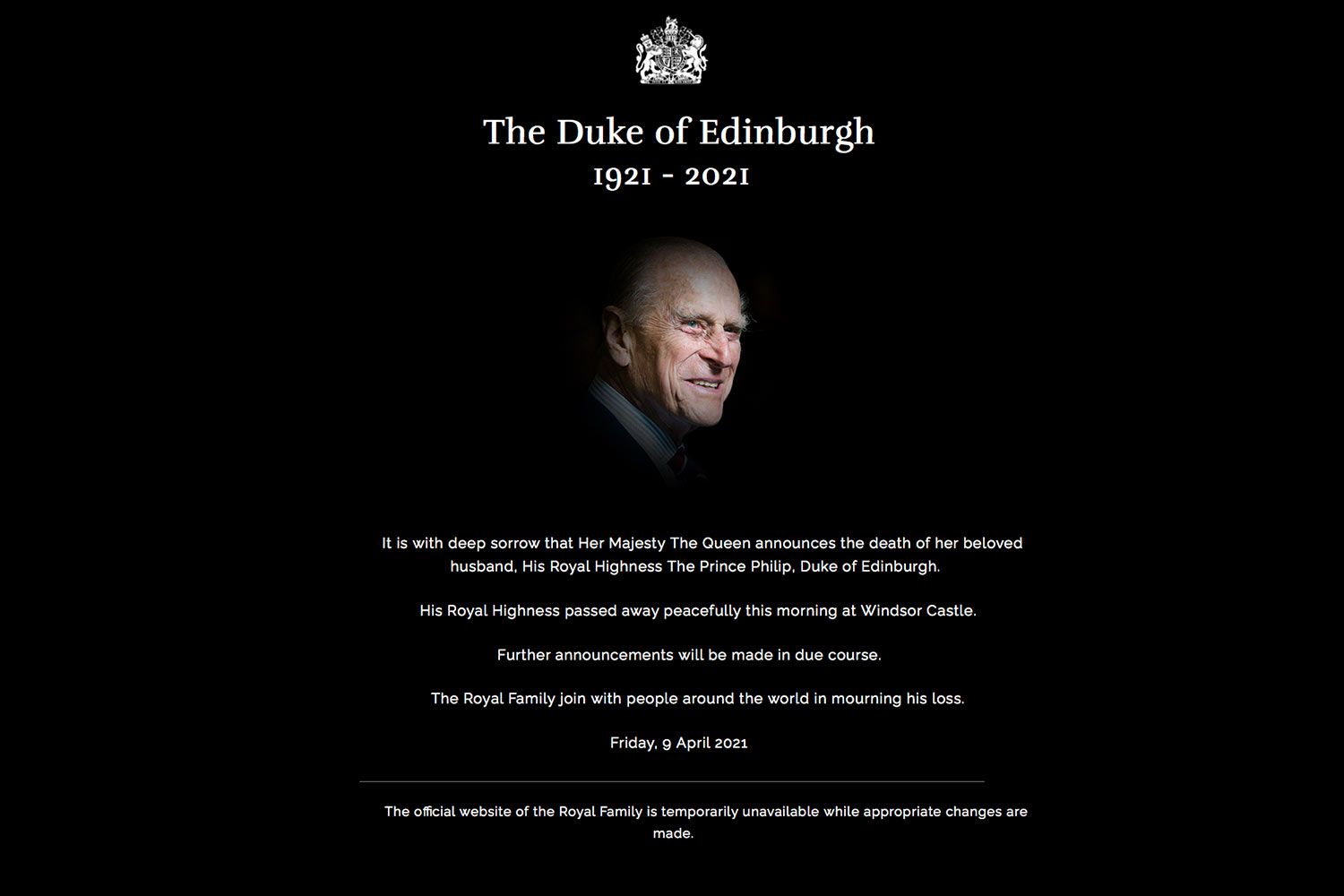
I’ve watched in amazement at this strong man, Prince Phillip, the rock of the Royal family, carry out his duties to his country with such grace and wit.
It takes a strong man, a self-assured man who was a Prince in two countries to give up his titles to marry Princess Elizabeth and have to take her family’s last name. That’s the love of the strongest kind!
Money can be one of the worst things for making you worry; indeed, a lot of people can feel like their mental wellbeing has been effectively ruined over their financial insecurity. It’s a very serious thing – almost half of the people currently in debt also report having mental health issues.
If that also sounds like you, being able to take more control over your finances is key for achieving greater peace and stability in your lifestyle. Of course, learning to live with and/or manage your money worries is only part of the solution, but it’s essential to do. But don’t worry, you don’t have to take this challenge on alone – here are some tips for stopping your money worries from overwhelming you.
Don’t ever let your finances go unchecked; face your fears and confront the problem head-on by keeping up with how your bank account, credit scores, and any other financial platforms you’re a part of our functioning.
Because when you’re aware, you’re in control. You’re able to face the problem, and prevent it from becoming a bigger problem before it ever gets the chance to. And you can make this easy for yourself. For example, if you’ve got car insurance to pay for, be sure to make it easy to check in with by using something like a direct auto insurance account to keep up to date straight from your phone.
Be Realistic
The next step is to be realistic, which can be a hard thing when you’re finding it very hard to face the reality of your finances. However, when you’re realistic, you’ll be able to put together a workable budget, that allows you to take care of yourself and pay for any debt and other financial obligations you have.
Start with your income, and then take away your expenses, both fixed and variable. If this all fluctuates, use a monthly average. Whatever you’ve got leftover is what you can put towards those credit card bills, and use to bump up your credit score bit by bit. Even just a couple of regular debt payments can turn it green again.
Don’t Let Yourself Be Alone
Finally, if you’re someone who has serious money worries, don’t let yourself be alone in facing them. Talk to friends and family about them, or work with a professional such as an advisor, who could help you to see the light in your struggles.
Most of all, make sure you feel supported, and like you’ve got some strength behind you. Even if you need someone to be there with you when you check your bank account for the first time in months, ask someone to come round and sit with you. It could really change how you see your finances.
Money worries can be overwhelming, at their worst. Be sure to reach out for help, and always try to face your fears, as you have the power to take control of a problem like this.
If your only choice is seeing a General Practitioner for chronic illness, you will have to take on the additional responsibility to make sure you’re getting the best healthcare. What you can’t expect is a General Practitioner to be a one-stop-shop, they have 15 minutes per patient and treat the most common illnesses. Once your 15 minutes is up, you have to save questions for the next appointment. And while it may be particularly frustrating to have to leave empty-handed, it can help to get into the right mindset for doing your own research.
If seeing a General Practitioner for all your chronic illnesses, go into each meeting expecting three questions to get answered, if the conversation doesn’t go off track. Go prepared with questions, concerns, or medical issues but don’t expect more than 15 minutes unless your insurance company allows 30-minute appointments. I schedule 30 minutes with my GP on each visit, which lowers my stress level and allows us to talk more in-depth if needed.
If you make multiple visits to your doctor for the same issue make sure to ask for a referral. They are clearly out of their league. I speak from experience, I saw my doctor for 15 years and in that time he may have made two or three referrals. After finally realizing he was not the right doctor for me anymore I changed to a woman.
In the two years I’ve been seeing her she has made over a dozen referrals and each doctor r has found something wrong with me. I value that she doesn’t mess around and see if she can handle something outside of her experience.
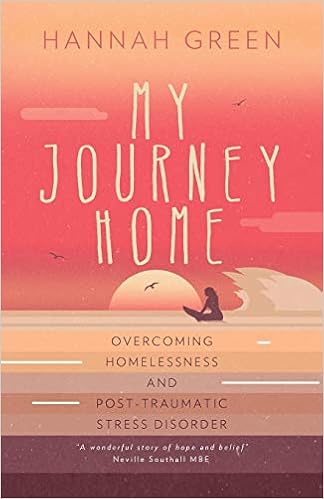
Jessica Owen’s at Cherish Editions and division of Trigger Publishing gifted me a copy of Hannah Green’s book My Journey Home for an honest review. Thank you for the opportunity to read Hannah’s remarkable story.
For years Hannah Green ran from the truth, but after being sexually assaulted and then finding herself with nowhere to live, she was forced to confront the sexual abuse she endured as a child. She experienced homelessness for over a year and was moved from place to place after being let down by multiple different services. She turned to drugs and alcohol until she was introduced to Surfing. It was then that everything changed.
Besides being a fun and active sport, surfing is thought to significantly help those suffering from PTSD by altering the way the brain works. It has been suggested that the activity strengthens the hippocampus’ ability to inhibit the fight-or-flight response, which can improve mood (Frontiers for Young Minds). In taking up this sport and finding her passion, Hannah was slowly able to confront the sexual abuse she had endured as a child and overcome her PTSD.
Hannah says that ‘When you’re in the water, you don’t have the time to think about anything else. It gives you focus, a sense of mindfulness, and something to aim towards. Surf therapy changed my life.’
One Review
‘If you’re going to read one book this year, make it this one. A beautiful tale of hope, belief, determination and pure spirit’ – Neville Southall MBE
My Thoughts
“My Journey Home is a heartbreaking story of a rape victim who is determined to become a survivor by working hard to put the past behind her and build a better life. After suffering many setbacks including homelessness, depression, and PTSD, she seeks out a therapist to help get her life back on track. Right at the time she starts therapy, her story takes a turn for the worse when during EMDR Treatments for the rape she uncovers forgotten memories of child abuse that took place at her parent’s house. It takes an insurmountable amount of strength to open up to her parents about the abuse and to continue to work on resolving her inner pain with the help of her parents and friends. Hannah’s book tackles serious issues and uncovers deficiencies surrounding sexual assault laws. Hannah is one special woman and her story will inspire all.”
About Cherish Editions
Cherish Editions is the self-publishing division of Trigger Publishing, the UK’s leading independent mental health and wellbeing publisher.
We are experienced in creating and selling positive, responsible, important and inspirational books, which work to de-stigmatise the issues around mental health, as well as helping people who read them to maintain and improve their mental health and wellbeing. By choosing to publish through Cherish Editions, you will get the expertise of the dedicated Trigger Team at every step of the process.
Go buy Hannah’s book, My Journey Home today at Amazon.
As teen I wanted to travel the world even though I hadn’t been out of the state where I was born. Reading National Geographic Magazine opened me to other worlds and I wanted to see it all.
As I grew older it was easier to narrow the list down although it’s still grows each year. I’ve been fortunate to mark many things off my list over the years and have had great adventures.
There are so many places to see and new adventures to have. I’m overdue in updated my list to accomodate my health conditions.
My Bucket List as of 2020
Watch artist handcraft a Turkish rug
Learn to double jump rope
Roller Derby
See a grown Hela Monster
Watch baby turtles hatch and return to the sea
Drive Hover Craft
Tango Lessons
Drive Monster Truck
Drive 18 Wheeler
Train and Volunteer to rescue wild animals
Finish Family Tree
Visit the worlds Wineries, extra long stay in France
Volunteer for RAINN as Advocate Speaker for Child Abuse and Sexual Abuse
Watch the Caribou migrate in Canada
Go to the country of Jordan, see the city of Petra.
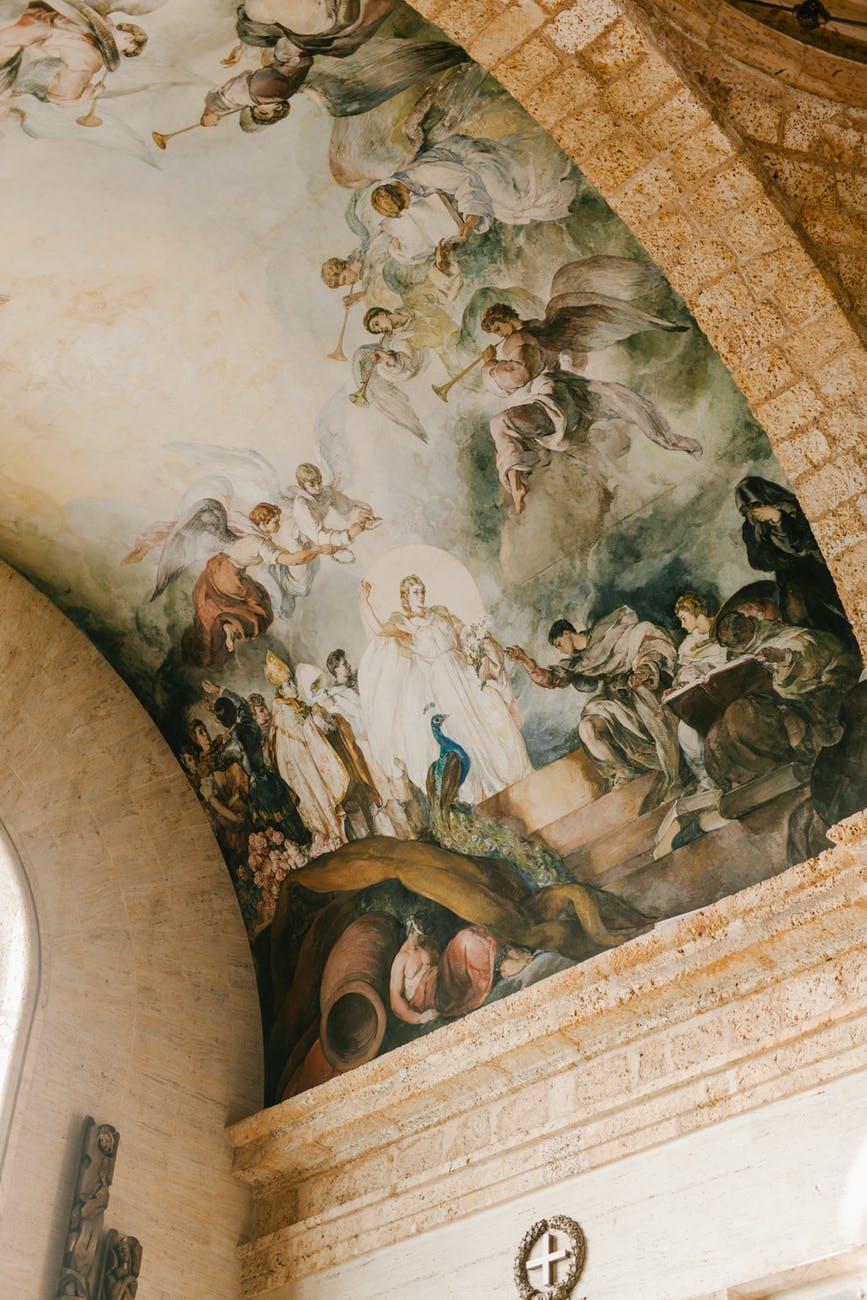
This is one of my treasured photos of Jesus taken at the Church of the Spilled Blood in St. Petersburg, Russia.
Did you know?
Easter, also called Pascha or Resurrection Sunday, is a Christian festival and holiday commemorating the resurrection of Jesus from the dead, described in the New Testament as having occurred on the third day after his burial following his crucifixion by the Romans at Calvary c. 30 AD. It is the culmination of the Passion of Jesus, preceded by Lent, a 40-day period of fasting, prayer, and penance.
This interesting fact will have your taste buds crawling. Unsurprisingly, the attempt to get kids to eat healthier didn’t go over well with the child testers, who were “confused by the taste.” Find out which countries have banned McDonald’s.
Yes, there was a real John Chapman who planted thousands of apple trees on U.S. soil. But the apples on those trees were much more bitter than the ones you’d find in the supermarket today. “Johnny Appleseed” didn’t expect his fruits to be eaten whole, but rather made into hard apple cider.
Scotland has 421 words for “snow”
Yes—421! That’s too many fun facts about snow. Some examples: sneesl(to start raining or snowing); feefle (to swirl); flinkdrinkin (a light snow). Don’t miss these other 11 random interesting facts about snow.
Samsung tests phone durability with a butt-shaped robot
Do these interesting facts have you rethinking everything? People stash their phones in their back pockets all the time, which is why Samsung created a robot that is shaped like a butt—and yes, even wears jeans—to “sit” on their phones to make sure they can take the pressure.
The “Windy City” name has nothing to do with Chicago weather
Was this one of the random facts you already knew? Chicago’s nickname was coined by 19th-century journalists who were referring to the fact that its residents were “windbags” and “full of hot air.”
Peanuts aren’t technically nuts
They’re legumes. According to Merriam-Webster, a nut is only a nut if it’s “a hard-shelled dry fruit or seed with a separable rind or shell and interior kernel.” That means walnuts, almonds, cashews, and pistachios aren’t nuts either. They’re seeds.
Armadillo shells are bulletproof
In fact, one Texas man was hospitalized when a bullet he shot at an armadillo ricocheted off the animal and hit him in the jaw.
What do you think of the Fun Facts? Worth keeping around for a while?
These are some great tips from one of my favorite book-a-zine, Willow and Sage.
Made from stinging nettle plants, organic nettle tea can help relieve seasonal allergy symptoms with its natural antihistamine. You reap all the benefits of antihistamine symptom relief without having to take conventional medicines. You can drink the daily as a preventative or as needed.
Spirulina is a superfood full of amazing plant nutrients, like iron, calcium, vitamin A and C, and protein. While great for overall health, spiraling may be beneficial during allergy season because it is high in antioxidants and has been shown to protect the body from anything that might compromise the immune system. It is high in chlorophyll and is detoxifying. Other superfoods like Kale, turmeric, mace powder, hemp, and flax are great for reducing inflammation and boosting your immune system.
A probiotic can help boost your gut and immune system health, which plays a big part in seasonal allergies. You can digest probiotics by eating fermented items like sauerkraut, and kombucha, or by taking a supplement. Make sure it is a high-quality probiotic from an organic source.
Apple Cider Vinegar is detoxifying and practically a remedy for everything. Taking as little as 1 tablespoon a day can help you feel and be healthier, which will, in turn, reduce your allergy symptoms. Make sure you purchase unfiltered organic Apple Cider Vinegar.
Essential oils, such as melaleuca, peppermint, lavender, frankincense, lemon, and eucalyptus, help with seasonal allergy relief. I like to fill a roller bottle with a carrier oil and 5-10 drops of each chosen essential oil. I apply this to my nose, on my temples, and behind my ears when I begin to feel swollen or puffy, as well as to the bottom of my feet. You can use these as needed as well as preventative.
On April 1, 1700, English pranksters begin popularizing the annual tradition of April Fools’ Day by playing practical jokes on each other.
Although the day, also called All Fools’ Day, has been celebrated for several centuries by different cultures, its exact origins remain a mystery.
Some historians speculate that April Fools’ Day dates back to 1582, when France switched from the Julian calendar to the Gregorian calendar, as called for by the Council of Trent in 1563. People who were slow to get the news or failed to recognize that the start of the new year had moved to January 1 and continued to celebrate it during the last week of March through April 1 became the butt of jokes and hoaxes.
These pranks included having paper fish placed on their backs and being referred to as poisson d’avril (April fish), said to symbolize a young, “easily hooked” fish and a gullible person.
April Fools’ Day spread throughout Britain during the 18th century. In Scotland, the tradition became a two-day event, starting with “hunting the gowk,” in which people were sent on phony errands (gowk is a word for cuckoo bird, a symbol for fool) and followed by Tailie Day, which involved pranks played on people’s derrieres, such as pinning fake tails or “kick me” signs on them.




 YouTube







 lookingforthelight.blog