Health and Wellbeing · Men & Womens Health

Pensamientos de Fibromialgia # 1 Grasa, Sexo y Vergüenza

IMG_0008


Tuve que aceptar la pérdida del control diario una vez diagnosticado con fibromialgia. Me voy a la cama con planes para el día siguiente, cuando llega la mañana, no puedo levantarme de la cama. En el pasado, me castigaba, sentía vergüenza y rabia.

Una ducha dura una hora, es doloroso y agotador. En su lugar, utilizo toallitas de limpieza aprobadas por el hospital para bañarme en los días en que no puedo manejar la idea de una ducha. Me avergüenza decirle a mi marido.

Ayer me afeité la cabeza, cuidar mi cabello requiere demasiada energía. Estoy en casa, solo los doctores me ven. Mi esposo no dice nada, pero me imagino los pensamientos negativos que tiene. ¿Por qué su esposa no puede ser normal como las demás, por qué no podemos salir a comer, por qué no tenemos relaciones sexuales, estoy gorda ……… los pensamientos pueden consumir?

Puedo hacerme preguntas sobre por qué / por qué no todos los días, no lo hago. No es productivo, no está bajo mi control y no ayuda a mi salud. El estrés crea inflamación crea más dolor.

Rezo mucho todos los días.

Melinda

Celebrate Life · Health and Wellbeing · Men & Womens Health · Mental Health

If you’re unhappy with your body, just repeat after us: You are the new hotness

IDEAS.TED.COM

Mar 28, 2019 / +

Too many of us struggle to achieve a body ideal that’s just not obtainable by humans. It’s time to redefine what’s good, healthy and attractive on our own terms, say writers (and sisters) Emily Nagoski and Amelia Nagoski.

The Bikini Industrial Complex. That’s our name for the $100 billion cluster of businesses that profit by setting an unachievable “aspirational ideal,” convincing us that we can and should — indeed we must — conform with the ideal, and then selling us ineffective but plausible strategies for achieving that ideal. It’s like old cat pee in the carpet, powerful and pervasive and it makes you uncomfortable every day but it’s invisible and no one can remember a time when it didn’t smell.

Let’s shine a black light on it, so you can know where the smell is coming from. You already know that basically everything in the media is there to sell you thinness — the shellacked abs in ads for exercise equipment, the “one weird trick to lose belly fat” clickbait when all you wanted was a weather forecast, and the “flawless” thin women who fill most TV shows. The Bikini Industrial Complex, or BIC, has successfully created a culture of immense pressure to conform to an ideal that is literally unobtainable by almost everyone and yet is framed not just as the most beautiful, but the healthiest and most virtuous.

But it’s not just magazine covers, ads and other fictions that get it wrong. The body mass index (BMI) chart and its labels — underweight, overweight, obese, etc. — were created by a panel of nine individuals, seven of whom were “employed by weight-loss clinics and thus have an economic interest in encouraging use of their facilities,” as researchers Paul Ernsberger and Richard J Koletsky put it.

You’ve been lied to about the relationship between weight and health so that you’ll perpetually try to change your weight. But listen: It can be healthier to be 70 or more pounds over your medically defined “healthy weight” than just five pounds under it. A 2016 meta-analysis in The Lancet medical journal examined 189 studies, encompassing nearly four million people who never smoked and had no diagnosed medical issues. It found that people labeled “obese” by the CDC have lower health risk than those the CDC categorized as “underweight.” The study also found that being “overweight” according to the CDC is lower risk than being at the low end of the “healthy” range as defined by the US federal government and the World Health Organization.

Another meta-analysis even found that people in the BMI category labeled “overweight” may live longer than people in any other category, and the highest predictable mortality rate might be among those labeled “underweight.” Taking it further, newer research is suggesting that doctors warn their middle-aged and older patients against losing weight, because the increasingly well-established dangers of fluctuations in weight outweigh any risk associated with a high but stable weight.

Authors (from left) Emily and Amelia Nagoski. Photo: Paul Specht.

Our culture has primed us to judge fat people as lazy and selfish. And it goes deep. Amelia conducts a children’s choir, and she has to teach her kids to breathe. At ten, eight, even six years old, they already believe that their bellies are supposed to be flat and hard, so they hold their stomachs in. You can’t breathe deeply, all the way, without relaxing your abdomen, and you can’t sing if you can’t breathe. So Amelia has to teach children to breathe.

Please: Relax your belly. It’s supposed to be round. The BIC has been gaslighting you.

We’re not saying the people or companies that constitute the BIC are out to get you. Frankly, we don’t think they’re smart enough to have created this system on purpose. But they recognize there’s money to be made by establishing and enforcing impossible standards.

We all encounter the BIC every day. So how can we make it through the fray?

One strategy: Play the “new hotness” game.

When we reconstruct our own standard of beauty with a definition that comes from our own hearts and includes our bodies as they are right now, we can turn toward our bodies with kindness and compassion. Well, easier said than done.

Amelia is vain about pictures of her conducting, in which she inevitably has her mouth wide open and her hair is a sweaty wreck. Emily watches herself on TV and worries that her chin is too pointy because one time, somebody said it was. (We are identical twins.)

Neither of us has ever had the skinny proportions of a model, and we watched our mom — who was model-thin before she gestated two seven-pound babies at the same time — look at her reflection in mirrors and cry at what she saw there. What she saw there is very much like what we see in our own reflections now.

Which is why we play the “New Hotness” game, a way to let go of body self-criticism and shift to self-kindness. One day, Amelia was at a fancy boutique, trying on gowns for a performance. Attire for women conductors is hard to find: solid black with long sleeves, formal yet not frumpy is an unlikely combination. Finding all of this in her size is even more difficult.

She tried on a dress that looked so amazingly good she texted Emily a dress selfie, with a caption paraphrasing Will Smith in Men in Black II: i am the new hotness.

And now “new hotness” is our texting shorthand for looking fabulous without reference to the socially constructed ideal. We recommend it. It’s fun.

Maybe you don’t look like you used to, or like you used to imagine you should, but how you look today is the new hotness. Even better than the old hotness.

Saggy belly skin from that baby you birthed? New hotness.

Gained 20 pounds while finishing school? New hotness.

Skin gets new wrinkles because you lived another year? New hotness.

Hair longer or shorter, or a different color or style? New hotness.

Mastectomy following breast cancer? New hotness.

Amputation following combat injury? New hotness.

The point is, you define and redefine your body’s worth, on your own terms. It’s not necessary to turn toward your body with love and affection — love and affection are frosting on the cake of body acceptance, and if they work for you, go for it. But all your body requires of you is that you turn toward it with kindness and compassion, again and again, without judging all your contradictory emotions, beliefs and longings.

No doubt after you finish reading this, you will go out into the world and notice the diversity of bodies around you. And you will still have reflexive thoughts about the people who don’t conform to the aspirational ideal, envious thoughts about the people who do, or self-critical thoughts about the ways the world tells you that you fall short. And then you might even have emotional reactions to your emotional reactions: “Darn it, I shouldn’t think that!”

Change happens gradually. Your brain has been soaking in the BIC for decades; any time you step outside your door, you’re back in it; any time you turn on a TV, you’re back in it; and any time you put clothes on, you’re back in it. Just notice it, as you’d notice a fleck of dust floating through the air. Smile kindly at the mess. And know what’s true: Everyone is the new hotness. You are the new hotness. So is she. So are they. So are we.

Excerpted from Burnout: The Secret to Unlocking the Stress Cycle by Emily and Amelia Nagoski. Copyright © 2019 by Emily and Amelia Nagoski. Used by permission of Ballantine, an imprint of Random House Publishing Group, a division of Penguin Random House LLC. All rights reserved. No part of this excerpt may be reproduced or reprinted without permission in writing from the publisher.

Watch Emily Nagoski’s TED talk here:

Health and Wellbeing · Men & Womens Health

Chronic Illness​ & Mental Illness


adult alone despair emotion
Photo by Ana Bregantin on Pexels.com

When dealing with severe pain it’s easy to forget you have a mental illness that requires as much attention, if not more. It’s critical to have the right doctors, I see a Pain Management Doctor for my Chronic Illnesses, a Psychiatrist for my Mental Health and a General Practitioner for everything else. The doctors are not trained to do each others job, a General Practitioner is not qualified to treat chronic Illnesses, including mental illness.

If your only choice is seeing a General Practitioner for chronic or mental illness, you will have to take on additional responsibility to make sure you’re getting the best healthcare. What you can’t expect is a General Practitioner to be a one-stop shop, they have 15 minutes per patient and treat the most common illnesses. Once your 15 minutes is up, you have to save questions for the next appointment.

If seeing a General Practitioner for all your chronic illnesses, go into each meeting expecting three questions to get answered, if the conversation doesn’t go off track. Go prepared with questions, concerns or meds issues but don’t expect more than 15 minutes unless your insurance company allows 30-minute appointments. I schedule 30 minutes with my GP on each visit, that lowers my stress level and allows us to talk more in-depth if needed.

I’m an Ambassador for the U.S. Chronic Pain Foundation Inc., in the latest newsletter, they offered information on chronic illness and mental illness. They are ahead of the curve making mental health information available to those with other chronic illnesses.

Please visit their site, maybe become a Junior Ambassador yourself. http://www.uschronicpainfoundation.org.

Melinda


U.S. Chronic Pain Foundation Inc. Offers

MENTAL HEALTH AND SOCIAL SUPPORT WEBINARS

Chronic pain and the risk of suicide: A staggering crisis and what to do about it” with Robert Rosenbaum, PhD, Daniel Lev, PhD, and Gwenn Herman, LCSW, DCSW
From ow to om: Using mindfulness to reduce pain and stress” with Gwenn Herman, LCSW, DCSW
ChronicBabe 101: A Q&A with Jenni Grover about thriving with chronic pain” with Jenni Grover
“Pain reduction through grounding: An exclusive movie showing”  with Laura Koniver, MD
“Don’t let pain limit you: Tracking, empowerment, and Ouchie” with Rachel Trobman


Health and Wellbeing · Men & Womens Health

Go Bag : Preparing For The Unexpected — Guest Blogger Invisibly Me

Have you ever had unexpected trips to hospital / the emergency department before? Maybe you know what it’s like to be caught off guard. Life gets thrown into disarray, best laid plans go out the window, and you’re left feeling totally unprepared. When you need to rush off to A&E, where do you start? I’ve […]

via Go Bag : Preparing For The Unexpected — Invisibly Me

Health and Wellbeing · Men & Womens Health

Is Your Diet Contributing To Fibro Fog? — Guest Blogger Fibroflair.com

Without even realising, we could be eating our way into fibro fog.

via Is Your Diet Contributing To Fibro Fog? — Fibroflair.com

Health and Wellbeing · Men & Womens Health

Exfoliante de avena de lavanda terapéutica

Willow y Sage de Stampington


love romantic bath candlelight
Photo by Breakingpic on Pexels.com


Este exfoliante de alivio de picazón es terapéutico en muchos niveles. Contiene azúcar para ayudar a exfoliar, aceites para ayudar a hidratar, y harina de avena para ayudar a aliviar cualquier irritación. Los brotes de lavanda de tierra son opcionales, pero añaden algunas cualidades de spa-sí, por favor.

Lo que se necesita

1 taza de avena cortada en acero
Blender/procesador de alimentos
1 TB. brotes de lavanda seca
Mortero y mortero
1/2 taza de azúcar
1 TB. aceite de almendras dulces
1/4 taza de aceite de aguacate
1 TB. aceite de coco suavizado
Aceite esencial de lavanda
Tazón
Frasco/recipiente hermético
Para hacer añadir la avena cortada en acero a una licuadora o procesador de alimentos y pulse hasta que la avena tenga una textura en forma de polvo. Tritura los cogollos de lavanda en un polvo usando el moteados & Pestle. Combine la avena, las flores, el azúcar y los aceites juntos en un tazón. Almacenar en frasco hermético o recipiente.

Melinda

Health and Wellbeing · Men & Womens Health

Therapeutic Lavender Oat Scrub

Willow and Sage by Stampington

love romantic bath candlelight
Photo by Breakingpic on Pexels.com


This itch-relief scrub is therapeutic on so many levels. It contains sugar to help exfoliate, oils to help hydrate, and oatmeal to help alleviate any irritation. The ground lavender buds are optional but they do add some spa-like qualities-yes, please.

You Will Need

  • 1 cup steel-cut oats
  • Blender/Food Processor
  • 1 TB. dried lavender buds
  • Mortar & pestle
  • 1/2 cup sugar
  • 1 TB. sweet almond oil
  • 1/4 cup avocado oil
  • 1 TB. coconut oil softened
  • Lavender essential oil
  • Bowl
  • Airtight jar/Container

To Make 

Add the steel-cut oats to a blender or food processor and pulse until the oats have a powder-like texture. Grind the lavender buds into a powder using the motar & pestle. Combine the oats, flowers, sugar, and oils together in a bowl. Store in airtight jar or container.


Health and Wellbeing · Men & Womens Health · Moving Forward

From One Sarcastic Little Shit To Another – Happy Mother’s Day — Guest Invisibly Me

This day can be difficult and painful for many; I don’t want to be insensitive covering Mother’s Day so please feel free to avoid this post if it may be triggering. There are many who don’t have a relationship with their mothers, and those who have traumatic ones. Then there are those who have said […]

via From One Sarcastic Little Shit To Another – Happy Mother’s Day — Invisibly Me

Celebrate Life · Health and Wellbeing · Men & Womens Health

I Believe in You #WATWB Two Year Anniversary

We Are the World Blogfest


Welcome to #WATWB # 22! We are sharing stories about people doing good work and bringing hope to the world.  To learn more about this monthly blogfest, visit


I saw Kevin Laue on television with a group of kids playing basketball. It was amazing to see the faces, looks of children feeling like they belonged for the first time. He is very upbeat and is making a difference in our youth across the country.

Melinda

Believe in you Tour

Our mission is for every student in America to have someone who believes in them. That’s why we’ve created the Believe In You Challenge. The Challenge is for students to attend a school activity they never have before. Swim meets. Track meets. Plays. Choir concerts. Pick it, grab your friends, and go. Show each other that support! Share your acceptance of this Challenge using hashtag #BelieveInYouChallenge. If not you, then who?

Believe in you Video Series


 Just Click on Video

STEP UP. IF NOT YOU, WHO?

Believe in You is an episodic series designed to educate students and staff about the incredible power of believing in yourself, despite the challenges and trials that life may present. Hosted by Kevin Laue, and starring personalities from around the country who have overcome personal challenges to accomplish the extraordinary.

Each episode comes with an accompanying lesson plan to use with your students!
Contact your sales partner to learn more about the Believe in You program.


~~~GUIDELINES~~~

  1. Keep your post to below 500 words.
  2. All we ask is you link to a human news story on your blog on the last Friday of each month, one that shows love and humanity.
  3. Join us in sharing news that warms the cockles of our heart. No story is too big or small, as long as it goes beyond religion and politics, into the core of humanity.
  4. Place the WE ARE THE WORLD BLOGFEST Badge on your sidebar, and help us spread the word on social media. Tweets, Facebook shares, G+ shares using the #WATWB hashtag through the month most welcome. More We Are the World Blogfest signups mean more friends, love and light for all of us.
  5. We’ll read and comment on each others’ posts, get to know each other better, and hopefully, make or renew some friendships with everyone who signs on as participants in the coming months.
  6. Add your post HERE so we can all find it quickly.
Health and Wellbeing

Fibromyalgia Thoughts #1 Fat, Sex & Shame

IMG_0008


I had to accept the loss of everyday control once diagnosed with Fibromyalgia. I go to bed with plans for the next day, when the morning rolls around, I can’t get out of bed. In the past, I would beat myself up, feel shame and anger. 

A shower takes an hour, it’s painful and exhausting. Instead, I use hospital approved cleansing wipes to bathe on the days when I can’t handle the thought of a shower. I’m embarrassed to tell my husband. 

I shaved my head yesterday, taking care of my hair takes too much energy. I’m housebound, only doctors see me. My husband doesn’t say anything but I imagine the negative thoughts he has. Why can’t his wife be normal like others, why can’t we go out to eat, why don’t we have sex, I’m fat………the thoughts can consume. 

I can ask myself questions about why/why not every day, I don’t. It’s not productive, not within my control and doesn’t help my health. Stress creates inflammation creates more pain. 

I pray a lot every day. 

Melinda


Health and Wellbeing

The Importance of Having a Fibro Family for Support-Please Join Our Fibro Family! — Guest Fighting With Fibro

The past two weeks have been really exciting for me, with so many readers or other Bloggers reaching out, commenting and emailing. It’s been SO great!! When I started blogging, I really had one goal: to try to use my experience of living with multiple chronic illnesses to help others-I somehow had to create a […]

via The Importance of Having a Fibro Family for Support-Please Join Our Fibro Family! — Fighting With Fibro

Health and Wellbeing · Men & Womens Health

An Olympic training approach to managing bipolar disorder — Guest Shedding Light on Mental Health

Guest Amy Gamble from http://www.sheddinglightonmentalhealth.com

I was talking with a friend at the National Council on Behavioral Health’s annual conference in Nashville. We had just watched a movie about Andy Irons a world-class surfer who had bipolar disorder and died at 37. It was an emotional documentary. I felt sad. But the emotion that got my attention was anger. […]

via An Olympic training approach to managing bipolar disorder — Shedding Light on Mental Health

Health and Wellbeing · Men & Womens Health · Survivor

The Healing Power of Telling Your Trauma Story

Psychology Today  March 6, 2019

Seth J. Gillihan Ph.D.

Think, Act, Be

When we’ve survived an extremely upsetting event, it can be painful to revisit the memory. Many of us would prefer not to talk about it, whether it was a car accident, fire, assault, medical emergency, or something else.

However, our trauma memoriescan continue to haunt us, even — or especially — if we try to avoid them. The more we push away the memory, the more the thoughts tend to intrude on our minds, as many research studies have shown.

If and how we decide to share our trauma memories is a very personal choice, and we have to choose carefully those we entrust with this part of ourselves. When we do choose to tell our story to someone we trust, the following benefits may await. (Please note that additional considerations are often necessary for those with severe and prolonged experiences of trauma or abuse, as noted below.)

1. Feelings of shame subside. 

Keeping trauma a secret can reinforce the feeling that there’s something shameful about what happened — or even about oneself on a more fundamental level. We might believe that others will think less of us if we tell them about our traumatic experience.

When we tell our story and find support instead of shame or criticism, we discover we having nothing to hide. You might even notice a shift in your posture over time — that thinking about or describing your trauma no longer makes you feel like cowering physically and emotionally. Instead, you can hold your head high, both literally and figuratively.

2. Unhelpful beliefs about the event are corrected.

Many people experience shifts in their beliefs about themselves, other people, and the world following a traumatic event. For example, a person might think they’re weak because of what happened, or that other people can never be trusted. When we keep the story inside, we tend to focus on the parts that are most frightening or that make us feel self-critical.

I’ve often been struck during my work with trauma survivors by the power of simply telling one’s story to shift these unhelpful beliefs. These shifts typically don’t require heavy lifting by the therapist to help the trauma survivor recognize the distorted beliefs. Instead, there’s something about opening the book of one’s trauma memory and reading it aloud, “from cover to cover,” that exposes false beliefs.

For example, a person who was assaulted might believe they were targeted, because they look like easy prey; through recounting what actually happened, they may come to see that it was due to situational factors (“wrong place, wrong time”), rather than something personal and enduring about themselves.

Telling the trauma story to a supportive therapist is one of the key components of Cognitive Behavioral Therapy (CBT), which is one of the most effective treatments for post-traumatic stress disorder (PTSD). I recently explored the latest findings on PTSD treatment research with psychologist Dr. Mark Powers, Director of Trauma Research at Baylor Scott and White Health. As we discussed, effective CBT typically doesn’t require an intensive examination of the survivor’s beliefs and evidence for those beliefs, as is often done in CBT for other conditions. Instead, insights about the truth of what happened emerge just through talking about what happened and what it means.

3. The memory becomes less triggering. 

Revisiting a trauma memory can be very upsetting, triggering strong emotional and physical reactions and even flashbacks to the event. Those reactions can stay in place for years if we have unprocessed trauma memories, especially when we’re trying to avoid thinking about the trauma.

Through retelling the story of what happened, we find that our distress about it goes down. The first time, it’s likely to be very upsetting, even overwhelming, and we might think we’ll never be able to tolerate the memory. With repeated retelling to people who love and care about us, though, we find the opposite — that the memory no longer grips us. As Dr. Powers noted, we find that the memory no longer controls us. It will never be a pleasant memory, of course, but it won’t have the same raw intensity that it once had.

4. You find a sense of mastery.

As we talk about our trauma, we find that we’re not broken. In fact, as Dr. Powers pointed out, we can come to see that our reactions to trauma actually make sense. For example, it’s understandable that our nervous systems are on high alert, since they’re working to protect us from similar danger in the future.

Many trauma survivors I’ve worked with described the strength they found as they faced their trauma and told their story. They said they felt like they could face anything, as they saw their fear lessen and found greater freedom in their lives. It takes courage to tell your story, and witnessing your own courage shows you that you’re not only strong, but also whole.  

5. The trauma memory becomes more organized.

Trauma memories tends to be somewhat disorganized compared to other types of memories. They’re often stored in fragments, disconnected from a clear narrative and a broader context. Existing research suggests that these differences are detectable in the brain, with unprocessed trauma memories showing less involvement of areas like the hippocampus that provide context to our experience.

Recounting the trauma begins to organize the memory into a story of what happened. We can see that it has a beginning, a middle, and an end, and that it happened at a specific place and a specific time. We can better understand the events that led up to it, and our own reactions at the time and in the aftermath. By putting a narrative frame around it, the memory can become more manageable and less threatening.

6. You begin to make sense of the trauma.

The biggest benefit from sharing our trauma stories may come from starting to make sense of a senseless event. “As humans we gravitate toward processing and trying to make sense of our experience,” Dr. Powers said, and that need is especially pronounced following a trauma. “That’s why treatment is often geared toward finding a sense of meaning.”

While PTSD treatment shares elements with the treatment of anxiety, such as phobias, Dr. Powers pointed out that it focuses more on meaning than does treatment for anxiety. “We don’t see the same type of drive to make sense of one’s fear in panic disorder or spider phobia,” he said. “The person doesn’t tend to say, ‘I really need to understand my fear of spiders.’ But that does seem to happen in PTSD, that our brains need to process what happened.”

Accordingly, effective therapy for PTSD includes not only revisiting the trauma memory, but also exploring its possible meanings. The meaning doesn’t come “off the shelf,” of course, but can only be arrived at by each individual. According to Dr. Powers, “At best we can help guide them through that discovery process.”

Important Considerations

It probably goes without saying that not everyone is the ideal person to share your trauma with. Some people may have a hard time hearing it based on their own trauma history. Others might respond with blame or criticism, or other non-validating responses. Choose carefully so that the person is likely to meet your story with understanding and compassion.

Timing is also important. It may take time before you’re at the point where you’re able to put the trauma into words. Be patient with yourself, recognizing that “not now” doesn’t have to mean “never.” Again, you get to decide when, where, and how you tell your story, which is a crucial part of owning the events of your life.

A Note About Complex PTSD

As noted above, the points raised here are based for the most part on work with discrete types of trauma — for example, a one-time car accident or violent assault. Other considerations may be necessary for those experiencing more complex forms of PTSD, such as those with a history of severe childhood maltreatment. The National Center for PTSD provides additional information on complex PTSD.


 

Health and Wellbeing · Men & Womens Health

Justin Bieber Opens Up About Mental Health on Instagram

Teen Vouge

Justin Bieber Opened Up About Mental Health on Instagram
Getty Images

“Been struggling a lot. Just feeling super disconnected and weird.”

 Justin Bieber got real about mental health again — and asked his fans for their continued support. In an Instagram post on March 10, the singer-songwriter expressed that he wanted to update his fans on what he’s been going through, in hopes that it will “resonate” with his followers. “Been struggling a lot. Just feeling super disconnected and weird,” he wrote, adding that he always “bounces back” so he isn’t worried. Still, he said that having his fans’ support and positivity is helpful, adding that he’s been “facing my stuff head-on.”
Health and Wellbeing · Men & Womens Health

Thoughts on job hunting: Getting back into the ​job market

working woman person technology
Photo by Startup Stock Photos on Pexels.com


You’re ready to re-enter the job market after a ten-year hiatus, raising children, completing Ph.D. or traveling the world, you will need a resume. You may ask how to explain the time taken off work and how it applies to the current position.

Grab a notepad and think of all the skills it takes to do whatever you were doing. Multitasking, planning, coordinating multiple schedules, meet tight deadlines. You get the point, all of the daily demands require skills to accomplish the task.

Include the dates of the time off with a brief explanation and then beef up the time-space with the skills required to stay on track. Men are now taking paternity leave and it’s still new in the mainstream job market. This where you can talk about the culture of company, diversity, paternity leave, time off for children’s doctor’s appointments, whatever the case. Don’t make it sound like heaven on earth or they will question why are you leaving. I might give a brief explanation of why you chose to take paternity leave vs your wife but it’s not required or really their business. Chances are they will ask, you need to have a pat answer. You need to know in your gut what type of job fits with your lifestyle.

Where appropriate, dress for your next job, not the one you’re interviewing for. You want the employer to see you in the company’s future. Make sure shoes are shined, this one gets missed a lot. Do research on the company, read the annual report, do an Internet search for any scandals or layoffs you need to know about. Does their mission statement meet with yours.


DIY · Health and Wellbeing · Medical · Men & Womens Health

Throat got You down? Updated!

alone bed bedroom blur
Photo by Pixabay on Pexels.com


Magnolia Issue #10

Throat Soother

1 large lemon

Ginger root, fresh 2″ knob

Turmeric root, fresh 2″ knob

2 cinnamon sticks

1 Tbsp. apple cider vinegar

1/2 cup honey

Slice

lemon, ginger, and turmeric paper-thin using a mandolin or sharp knife. Layer slices in a half-pint jar. Break cinnamon sticks lengthwise into several pieces and tuck them in jar. Add apple cider vinegar.

Pour

Pour honey into the jar, covering the other ingredients. Place jar in the refrigerator. The honey becomes thin syrup and read to use in 12 hours.

To Use

Stir up 1/4 cup into a hot tea or water: or take 1-2 tsp. syrup each hour as needed to soothe sore throat or cough. Shake the jar occasionally. Keep Refrigerated for up to three weeks.

BONUS Grannies Recipe

Mix equal parts honey, whiskey and lemon. Refrigerate in a pint jar, leave a spoon in and take a spoonful or two every time your throat needs it.

Super Bonus Gramps Recipe

Keep the bottle of Black Velvet on the nightstand, when you wake yourself up coughing, take a sig.

Health and Wellbeing

22 Lesser Known Facts About Fibro — Fighting With Fibro

Thank you for the information packed post. Reblogged from Fighting With Fibro.

If you’re like me, you’re always trying to stay apprised of new information surrounding your illness(es). Sometimes, it seems like I never see anything new and oftentimes, it seems the data I read is just somehow recycled; one site to another. So I spent some time (okay, a lot of time) gathering facts that, maybe, […]

via 22 Lesser Known Facts About Fibro — Fighting With Fibro

Health and Wellbeing · Men & Womens Health

Thoughts on Job Hunting: Interview Tips

Interview Tips

If a job requires a resume, always take an extra copy. Take it out at first of interview and lay in lap. The greatest interview is being able to give examples of tasks or projects. As your interviewer doesn’t want to read what you’ve already written, give day-to-day details. If you pitched in while someone was on maternity leave to cover their duties instead of bringing in a temporary.

Don’t use negative language or say negative things about past employer or employee. use more positive words or keep your mouth shut. Like “I was ready for more responsibility and a position wasn’t available”.

Always, ask the person interviewing if they are aware of other positions in the company or other employers in the area. If they say yes, always get their complete name with the job title. You have a 50% more chance of getting an interview if referred.

Always write a thank you note, not an email, for their time and how you look forward to working with them. You can even have the card ready and drop off at the post office by job site.

If you are very shy, have closed in body language or speech very soft, you need to practice more than an anyone. I would recommend you take job interviews for jobs you don’t want so you can work on your presentation. Spend hours in front of mirrow if needed to project confidence.

Melinda


Health and Wellbeing · Men & Womens Health · Moving Forward

Thoughts on Job Hunting

For many Spring Break is time to job hunt before the next school year starts. I worked in the Recruiting/Consulting/Staffing business for 30 years. I wanted to share some lessons that helped me and got me fired twice.

Drawing the Line

It can be difficult to draw the work/friend line for extroverted people, you may think your new lunch mates are your friends. They are not your friends, they are people you don’t know and can’t trust. Don’t get become a pawn at any level. 

Honest

If you make a mistake be the first to bring it to light, there are no secrets. If you don’t own up to the error, the story can get blown out of proportion and you can’t crawl out. 

Once example early in my career, I was 21, owned a house and lived penny to penny. The VP of the company was coming to town to ensure everyone had read the new Employment Manual. The manual was given to me two hours before she arrived and my boss strongly recommended I say I’ve read the manual. I knew I would get fired if I told the truth and my life would get very difficult.

When the VP asked me if I’d read the manual, I said the manual was given to me this morning and I’m on chapter x. She probably didn’t know I was fired, being the low man on the pole. I’m no do-gooder or high on morals but I cared more about the truth in this case. My boss wasn’t going to push me. Luckily, I was hired by the business next door the same day. Politics suck and when your new is the time people target you. 

Professionalism

Always drive to the site before the interview. Have an alternate route if the weather might be an issue. More important than arriving 10 minutes early is doing your homework.

What does the company do, how long have they been in business, look at their website to see the stated corporate mission. Are they moving in the direction you want to go? Know what their key product or services are. You can find this information in the Annual Report if a public company.

Have solid questions, why is the position available, what is growth potential, what is their responsibilities. Ask them to draw you an overview of the departments they manage. Be sure to ask about their career growth and what is most important in the position.

Do not talk dollars, ask How is the package set up? Is there travel involved? When & if use your knowledge of the company to drop a line to let them know you did your homework. 

Dress Code

Always dress for the next job you want. Dress conservative, comfortable and not tight or constricting. Women should wear light make-up unless the interview is for a cosmetic company. Wear comfortable heels, no four-inch heels. One great way to see the companies dress code is to go by at close of business. 

Dress Code is always relative to the job, if working in the warehouse you don’t wear a dress. Men should wear a jacket at a minimum unless the job doesn’t require one. I always gave a candidate who came to interview in sport coat extra points. It can indicate they are eager to advance their career. 

Don’t wear an outfit you have not tried on, that will start your day in a panic. 

Do Not Gossip

Gossip is disruptive, looked at as distrust and immature. Remove yourself from the toxic conversation or toxic people. 

Do Not Go Over Bosses Head

No matter how bad, unethical your boss is don’t go over their head unless you want to get fired. A mistake I made and was fired for. 

Don’t run your personal business from work. 

Don’t spend time texting, using company copy paper or taking office supplies home. If you have time to chat on the phone or text your neglecting work. We all have the occasion to make a doctor’s appointment or send a text, if you are habitual expect to be fired. 

I am hardcore when it comes to getting a job and keeping a job. I’ve been told many times I expect too much and can’t be pleased. That may be true, I take it as a compliment because I’m driving the process not lagging behind. 

Good Luck!

Melinda


Celebrate Life · Health and Wellbeing · Men & Womens Health

Yo no….. Soy yo

Health and Wellbeing · Men & Womens Health

How to change your relationship with food — and stop eating your feelings

Ideas.Ted.Com

Mar 4, 2019 /


Here are three common-sense tips to help you feed your hunger and not your emotions, from dietician Eve Lahijani.

This post is part of TED’s “How to Be a Better Human” series, each of which contains a piece of helpful advice from someone in the TED community. To see all the posts, go here.

Imagine if eating were as simple as, say, refueling a car. You’d fill up only when an indicator nudged towards E, you couldn’t possibly overdo it or else your tank would overflow, and you’d never, ever dream of using it as a treat.

Instead, for many of us, eating is anything but straightforward. What starts out as a biological necessity quickly gets entangled with different emotions, ideas, memories and rituals. Food takes on all kinds of meanings — as solace, punishment, appeasement, celebration, obligation – and depending on the day and our mood, we may end up overeating, undereating or eating unwisely.

It’s time for us to rethink our relationship with food, says Eve Lahijani, a Los Angeles-based dietician and a nutrition health educator at UCLA. She offers three common-sense steps to help get there.

1. Reconnect with your hunger.

So many things drive us to eat — it’s noon and that means lunchtime, it’s midnight and that means snack time, we’re happy, we’re anxious, we’d rather not bring home leftovers, we’re too polite to say no, we’re bored, and oh, wow, has someone brought in donuts?!?

Similarly, we suppress our appetite for a myriad of reasons — we’re too busy, we’re sad, we’re mad, nobody else is eating, it’s too early, it’s too late, we’re too excited.

Now try doing this: Eat only when you’re hungry; stop when you’re full. “It may seem obvious to you,” concedes Lahijani. Still, think over your past week: How many times did you eat when you weren’t hungry?

She suggests that we think about our hunger and our fullness on a 0-10 scale, with 0-1 being famished and 9-10 being painfully stuffed (as in holiday-dinner stuffed). She says, “You want to begin eating when you first get hungry, and that correlates with the three or a four on the scale and [to stop] … when you first get comfortably full, a six or seven on the scale.”

The reason you shouldn’t wait until you’re starving (or, 0-2 on the scale) is because that’s when people tend to make nutritionally unsound choices. If you’ve ever gone to the supermarket when you were ravenous, you probably didn’t fill up your cart with produce; you gravitated towards the high-calorie, super-filling items.

Lahijani says, “It’s also wise to eat when you first get hungry because you’re more likely to enjoy your food [and] you’re more likely to eat mindfully … When you let yourself get too hungry, chances are, you’re eating really fast and not really paying attention. In fact, one of the biggest predictors of overeating is letting yourself get too hungry in the first place.”

2. Feed your body what it is craving.

When Lahijani was a stressed-out college and graduate student, her eating took one of two forms: she was either dieting or bingeing. As she says: “Whenever I was on a diet, the diet told me what to eat,”; while on a binge, she’d eat whatever was convenient or go all out on foods forbidden by her then-diet. Developing a different relationship with food meant stepping out of those patterns. “Instead of listening to others’ opinions of what I should eat, I became silent and I tuned into my own body,” she says. “I fed my body what it was craving.”

It turns out Lahijani didn’t crave junk food. She says, “I was actually tasting things for the first time, because my mind wasn’t filled with judgment and guilt. I actually found that my body actually craved nurturing, nourishing foods like vegetables and fruits. I actually liked my sister’s kale and quinoa salad.”

3. Try not to use food as a reward or a punishment.

It’s not surprising that we do this. After all, as children, we quickly learn that rejoicing and parties come with cake, while transgressions result in … no cake. But one of the great things about being an adult is, we can establish our own associations. By all means, let’s continue to mark our birthdays with cake — or with fresh fruit and a stockpot of homemade veggie chili if that’s what you prefer. Or, celebrate in ways that have nothing to do with eating. You can set your own rules now.

When Lahijani’s fraught feelings about food eased, she was surprised to find these effects go beyond eating. “What’s really interesting is to see how making peace with food affected other areas of my life. As I learned how to listen to myself, I became better at listening to others, I became more empathetic,” she says. “As I made a point to trust myself, I became more trusting in my relationships and more vulnerable, and as I became more loving to myself … I learned what it meant to love someone else.”

Watch her TEDxUCLA talk here:

Health and Wellbeing

Learning about the Endocannabinoid System — My Wellness Journey

A great reblog by My Wellness Journey. Please check out her site where you will find other fascinating posts.

One of the most interesting things I have learned about in the past few months is that all humans (and living creatures) have an Endocannabinoid system which is naturally present inside of our bodies. Apparently this system was discovered in the 1980’s. The science behind this fascinates me. All throughout our body systems we have […]

via Learning about the Endocannabinoid System — My Wellness Journey

Health and Wellbeing · Men & Womens Health

Frugal Friday [ 08/03/2019 ] — Invisibly Me

Special Thanks to Invisibly Me for the Reblog

Happy Friday, everyone! Breathe a sigh of relief as the weekend is here, you’ve survived another week, and tomorrow is a new day to start afresh. Here are just a couple of finds for this issue of Frugal Friday – Enjoy & have a restful weekend 🙂 Free Letter Samples & Templates Citizens Advice have […]

via Frugal Friday [ 08/03/2019 ] — Invisibly Me

Health and Wellbeing

Herramientas de belleza 101: limpiar o tirar

Willow and Sage de Stampington

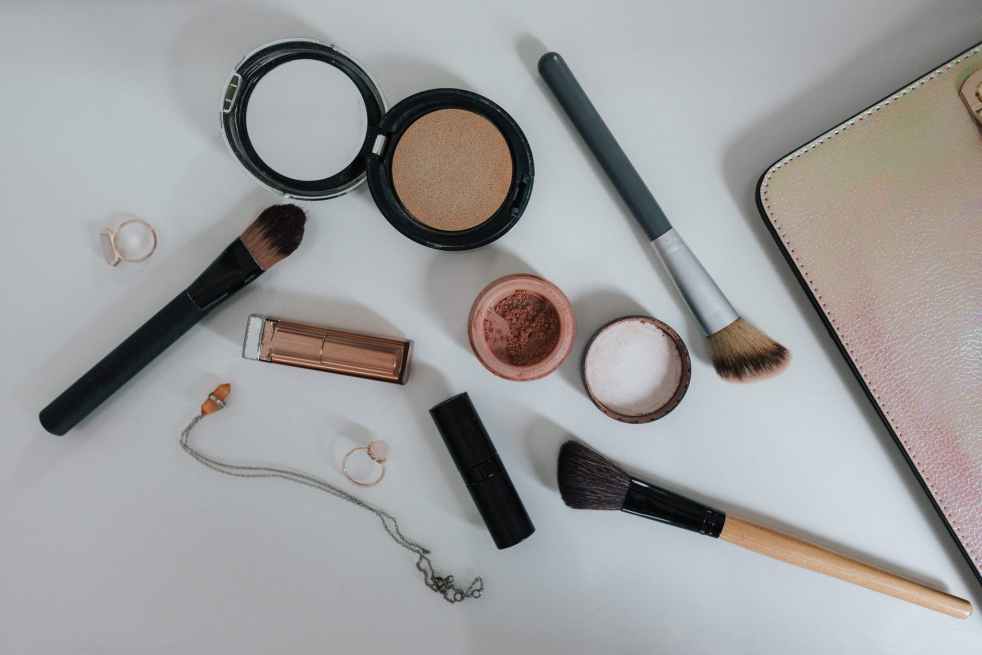
Si alguna vez has notado que la piel o el cuero cabelludo actúan, puede deberse a la falta de herramientas de belleza limpias. Limpiar adecuadamente sus herramientas diarias no sólo elimina el maquillaje sobrante, el aceite y la suciedad y mantiene las herramientas utilizables más tiempo, sino que también reduce la posibilidad de que las bacterias causen brotes, erupciones e infecciones. Siga esta hoja de trucos para la piel sana, de aspecto feliz.

Pincel de maquillaje

Limpieza: una vez a la semana

Con: champú suave del bebé

Lanzamiento: cuando es frágil, deshilachado o maloliente

Esponja del maquillaje:

Limpieza: una o dos veces por semana

Con: jabón sulfato-libre

Lanzamiento: cada tres meses/cuando se desgarro

Rizador de pestañas:

Limpieza: una vez a la semana

Con: alcohol del frotamiento y redondo del algodón

Tirar: Reemplace la almohadilla de goma cada cuatro a seis meses

Pinzas:

Limpieza: después de cada uso

Con: alcohol del frotamiento y redondo del algodón

Lanzamiento: cuando se produce óxido

Cepillo:

Limpieza: una vez a la semana

Con: champú clarificante

Tirar: cuando está dañado o maloliente

Health and Wellbeing

Beauty Tools 101: Clean or Toss

Willow and Sage by Stampington

If you’ve ever noticed your skin or scalp acting out, it might be due to lack of clean beauty tools. Properly cleaning your everyday tools not only removes leftover makeup, oil, and dirt and keeps the tools usable longer, but also reduces the chance of bacteria causing breakouts, rashes, and infections. Follow this cheat sheet for healthy, happy-looking skin.

Makeup Brush

Clean: once a week

With: gentle baby shampoo

Toss: when brittle, frayed, or smelly

Makeup Sponge:

Clean: once or twice a week

With: sulfate-free soap

Toss: every three months/when torn

Eyelash Curler:

Clean: once a week

With: rubbing alcohol and cotton round

Toss: replace rubber pad every four to six months

Tweezers:

Clean: after every use

With: rubbing alcohol and cotton round

Toss: when rust occurs

Hairbrush:

Clean: once a week

With: clarifying shampoo

Toss: when damaged or smelly

Health and Wellbeing · Men & Womens Health

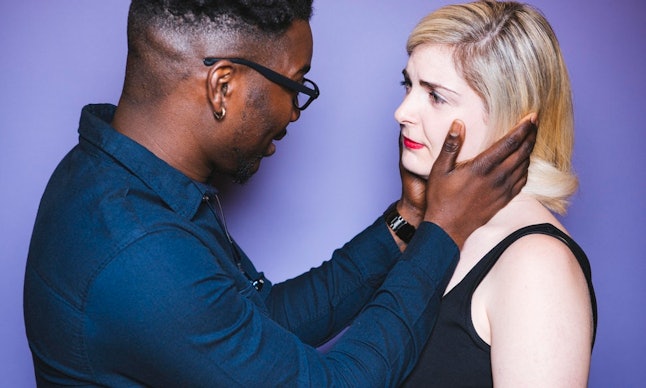
7 Signs You Have An Intense Emotional Bond With A Toxic Person

Bustle

By

When you’re in an unhealthy relationship, the best and obvious thing for you to do is leave. But sometimes that’s easier said than done. If you’re in a trauma bond, therapists say it will make leaving that situation even harder

“A trauma bond is an intense emotional bond between people that usually forms as a result of a toxic or abusive dynamic,” Samantha Waldman, MHC, an NYC-based therapist who specializes in trauma and relationships, tells Bustle.

A past history of abuse or exposure to it can make a person more likely to form trauma bonds. For instance, people who experienced some form of neglect or abuse from childhood may normalize this behavior as an adult because it’s what they “learned.”

As Dr. Connie Omari, clinician and owner of Tech Talk Therapy, tells Bustle, trauma bonding includes the tendency for a person to connect with others based off the needs of their own traumatic experiences. “Because trauma involves some unmet emotional or psychological need, the relationship serves as a way to meet this need, even when it’s not done so appropriately,” she says. “It looks very dysfunctional and typically includes one or more forms of abuse.”

These bonds aren’t limited to romantic relationships. You can form a trauma bond with friends, family members, and even co-workers. When you’re in a trauma bond, you’ll find yourself continually drawn to someone even though they cause you significant pain.

It’s easy to mistake unconditional love for something more toxic like trauma bond. So here are some signs you may be in a trauma bond with a toxic person, according to experts.

1: “Crumbs” Of Love And Affection Make Your Day

Ashley Batz/Bustle

“When we find ourselves in relationships where we feel starved for love and support, small and rare instances of affection, what some call ‘crumbs of love,’ can feel deceptively satisfying,” Waldman says. For example, if a toxic person typically belittles their partner, a compliment from them would feel meaningful and special. The “affection-starved” partner would then hang on to these singular instances hoping that they will experience it again. These little crumbs of affection basically keep them hooked.

2: There’s A Predator-Prey Dynamic In Your Relationship

Ashley Batz/Bustle

A relationship built off a trauma bond usually resembles a game of “predator and prey.” According to Dr. Omari, the “predator” or abusive person will intentionally seek out and exploit the vulnerable one’s need for connection. Because of this, some form of abuse may be present in the relationship such as psychological abuse, sexual abuse, or financial manipulation. “The abused person may or may not even be aware of the abuse,” Dr. Omari says. “But they will maintain the relationship because they falsely think it satisfies their need for connection no matter how unhealthy it is.”

3: You Secretly Crave The Drama Your Relationship Provides

Andrew Zaeh for Bustle

“More recent research shows that the bonding actually occurs because we can become addicted to the hormonal and emotional roller coaster our abuser has put us on,” Kati Morton, LMFT, licensed therapist and author of Are u ok?: A Guide to Caring for Your Mental Health, tells Bustle. So even if the abuse is bad, the love and attention you get afterward feels good to the point that it makes you forget. According to Morton, your brain can get so used to this “up and down emotional ride” that it starts craving it. “The rush of the stress hormone cortisol, and a flood of the feel-good chemical dopamine can trigger the reward center in our brain, which can cause you to think you’re in love with your abuser,” she says. This is more likely to happen when younger or less mature.

4: You Feel Like You Can’t Leave Them

Andrew Zaeh for Bustle

When you’re in a trauma bond, you’ll feel stuck in the relationship and won’t see any way out of it. According to Morton, when you try to leave, you’ll feel an intense longing to see that person again. “The pain of that longing will always bring you back,” she says. While it may be difficult, it could be worth it to speak to a professional or loved ones to help you out of the relationship.

5: You Worry About Doing Things That Will Set Them Off

Andrew Zaeh for Bustle

If there’s abuse involved, you may find yourself walking on eggshells around them. According to Morton, one major sign of a trauma bond is worrying that you may do or say something to set them off. Even if you know this person is doing hurtful things to you, leaving is difficult because you’re afraid they may not only hurt you but themselves. Once again, talking to a professional or loved ones can help you get out of this situation safely.

6: You Stay Because You Feel Like Your Partner Is The Only One Who Can Fulfill Your Needs

Andrew Zaeh for Bustle

Trauma bonding can feel like love because you’re so attached to this person regardless of what they do to you. But as Dr. Omari says, it’s very different. “The motivation for trauma is intended to serve the unmet need in the victim involved,” she says. You’re so attached to this person that you feel like you can’t get your needs met anywhere else. You’re validated by your partner’s “approval.”

7: You Brush Off Their Bad Behavior Even If It Causes Others Concern

Andrew Zaeh for Bustle

“Your friends and family may be disturbed by some things that your partner has said or done to you, but you don’t think it’s that big of a deal,” Morton says. If people around you have mentioned that you need to get out of the relationship, but you ignore them or pretend to not know what they’re talking about, you’re likely in a trauma bond.

“A person can break the cycle of trauma bonding by being honest with themselves and setting boundaries,” Dr. Omari says. “Unfortunately, this is very difficult to do alone. If you find yourself in a relationship that’s based off your own trauma, you should be diligent about trying to end that relationship and to work on yourself.” A trauma-focused therapist can be a great resource. It may not be easy to break out of the cycle, but you can do it.

Editor’s Note: If you or someone you know is experiencing domestic abuse, call 911 or the National Domestic Violence Hotline at 1(800) 799-SAFE (7233) or visit thehotline.org.