Celebrate Life · Health and Wellbeing · Men & Womens Health · Mental Health · Moving Forward

Blogger Highlight-Katie Anna Banana

Thank you for all the great feedback on the Blogger Highlight series, I’ve enjoyed meeting each blogger and sharing their site with you. This week I highlight a new blogger, Katie Anna Banana

https://katieannabanana.wordpress.com

I started blogging to add some creativity to my day. I have some things to share, and I hope you’ll let me share them with you!

I am a reflector. Nowadays it’s difficult enough for me to think about the week ahead, let alone the past. What’s for dinner, what bills are due? I think it’s important to reflect, I believe I’ve shared my views on that before, and there is no better time to do that than the New Year.

Wishing only the best for myself, my loved ones, and my dear WordPress followers in 2022.

Please check out her site and the great posts she’s written. 

Melinda

Celebrate Life · Health and Wellbeing · Men & Womens Health · Mental Health · Moving Forward

Practical Steps To Take After A Relationship Breakdown

Whether initiated by yourself or not, the breakdown of a relationship can be hard. You might find yourself in a difficult transition period. A period of adjustment while you get used to how your life looks and feels now. To help you in this transitional phase here are some practical steps you can take after the breakdown of a relationship

Photo by Karolina Grabowska on Pexels.com

Consider your living arrangements 

If you have been living with your partner one of the first things you might want to think about is how you are going to manage this going forward. It can be a difficult subject that requires a lot of consideration and reason on both parts, especially if your finances/home aren’t legally protected. It is most important to put your mental health and wellbeing first, so ensure the steps you take to protect your health. It might be that the best step is to start looking for properties for rent, moving back in with parents temporarily, or if there are children involved, consider arrangements such as bird nesting to help ensure stability for all. It might be a difficult situation to be in but it will become easier as time goes by, especially if logic and sensibility can prevail. 

Avoid a rebound 

A rebound can seem like a great idea. At a time when you may be feeling emotionally low and in need of a self-esteem boost, looking for some additional attention can seem like the remedy you need. However, it is important to remember that the high you might experience from your rebound will wear off and the feelings you are left with may do more harm than good. A rebound relationship can also seem like a good idea to help numb some of the pain you might be experiencing from the loss of a relationship. Masking the pain does not however make it go away. It is important to work through the thoughts and feelings you are experiencing after losing a loved one to help you move on healthily. 

Be wary of social media 

Social media can be a painful place to spend your time in the aftermath of a relationship. This can be especially true if you share mutual friends. It can be painful to see your former partner out and about and all over social media and if you find it upsetting then take steps to protect yourself. Come off social media for a while or block or ‘hide’ your former partner so you cannot see their updates. While it can be tempting to follow their escapades and be apprised of what they are up to it can prove to have a damaging effect on your mental health and wellbeing. So, be kind to yourself and be very wary of how you use social media post-breakup. 

Do it in your own time

There is no time scale in which you should move on or get over a relationship and don’t be pressured into thinking otherwise. Allow yourself all the time you need to fully heal from your relationship breakdown. 

This is a collaborative post.

Melinda

Health and Wellbeing · Men & Womens Health

What to Do In a Dental Emergency

Hopefully, you never have to deal with a dental emergency. But as with any other serious or urgent situation in life, it’s important that you know what to do if you ever are faced with a dental emergency. Whether you need help, a friend, a family member, a child, a stranger, or anyone else, having a good idea of a dental emergency protocol can help the person receive the help and assistance that they need as quickly as possible. Here’s some information that will help you to achieve this!

Photo by Robert Golebiewski on Pexels.com

What Is a Dental Emergency?

A dental emergency is any dental issue that needs immediate attention. Most often, dental emergencies are situations where you need to visit an emergency dentist in order to alleviate severe dental pain, stop bleeding or save a tooth. Severe infections or abscesses that need to be treated are also dental emergencies. If you feel in pain, have experienced an injury, or have any other worrying symptoms, do not hesitate to follow the steps below.

Prevention

We should all visit the dentist once every six months for a general checkup. This will give out dentists the opportunity to take a look around our mouths and determine if our teeth, gums, and tongue are healthy or not. They can identify warning signs of issues and can book treatment to resolve issues before they worsen. If your teeth feel fine and look fine, it’s still important to visit your dentist to check in on your wellbeing. This can help to prevent small issues from worsening into dental emergencies, such as infections or major decay and tooth ache. You can also prevent dental emergencies stemming from sports or activities that you may engage in, such as rugby, hockey, and more, by having a custom mouth guard created. This will protect your teeth in situations where you could be at higher risk of experiencing an injury.

Dealing With a Dental Emergency


There are countless situations in life that can lead to a dental emergency, from injury to the rapid worsening of a dental-related condition. If you are in unbearable pain or have a severe injury, you may need to visit A&E for direction and pain relief. If your pain or situation is more manageable and you are experiencing any of these issues, and the incident or pain is occurring during your regular dentist’s opening hours, you should start out by calling your regular dentist. They may have an emergency appointment free and will get you in to see a dentist quickly. If the incident is outside of regular working hours, you should call a reliable emergency dentist who operates through the night.

Knocked-Out or Broken Tooth

If a tooth has been knocked out or has been broken, you should:

  • Put the tooth or teeth in milk
  • Pack your tooth socket—where the tooth came out of your mouth—with gauze, a cotton ball, or even a teabag
  • Rinse and save pieces of chipped or broken teeth

Your dentist may be able to repair or save the teeth.

Hopefully, some of the information above has helped you to see what you need to do in cases of dental emergencies. Keep the information in mind should you ever need it!

This is a collaborative post.

Melinda

Celebrate Life · Health and Wellbeing · Men & Womens Health

Autism Awareness Month

The core symptoms of autism are:

  • social communication challenges and

  • restricted, repetitive behaviors.

Symptoms of autism may:

  • begin in early childhood (though they may go unrecognized)
  • persist and
  • interfere with daily living.

Specialized healthcare providers diagnose autism using a checklist of criteriain the two categories above. They also assess autism symptom severity. Autism’s severity scale reflects how much support a person needs for daily function.

Many people with autism have sensory issues. These typically involve over- or under-sensitivities to sounds, lights, touch, tastes, smells, pain and other stimuli.

Autism is also associated with high rates of certain physical and mental health conditions.


What are the signs of autism?

The autism diagnosis age and intensity of autism’s early signs vary widely. Some infants show hints in their first months. In others, behaviors become obvious as late as age 2 or 3.

Not all children with autism show all the signs. Many children who don’t have autism show a few. That’s why professional evaluation is crucial.

The following may indicate your child is at risk for an autism spectrum disorder. If your child exhibits any of the following, ask your pediatrician or family doctor for an evaluation right away:

By 6 months

  • Few or no big smiles or other warm, joyful and engaging expressions
  • Limited or no eye contact

By 9 months

  • Little or no back-and-forth sharing of sounds, smiles or other facial expressions

By 12 months

  • Little or no babbling
  • Little or no back-and-forth gestures such as pointing, showing, reaching or waving
  • Little or no response to name

By 16 months

  • Very few or no words

By 24 months

  • Very few or no meaningful, two-word phrases (not including imitating or repeating)

At any age

  • Loss of previously acquired speech, babbling or social skills
  • Avoidance of eye contact
  • Persistent preference for solitude
  • Difficulty understanding other people’s feelings
  • Delayed language development
  • Persistent repetition of words or phrases (echolalia)

  • Resistance to minor changes in routine or surroundings
  • Restricted interests
  • Repetitive behaviors (flapping, rocking, spinning, etc.)
  • Unusual and intense reactions to sounds, smells, tastes, textures, lights and/or colors

If you have concerns, get your child screened and contact your healthcare provider

Support

Melinda

References:

https://www.autismspeaks.org/what-are-symptoms-autism

Celebrate Life · Health and Wellbeing · Men & Womens Health · Moving Forward

Happy Earth Day! Tread Lightly

What can we say about Mother Earth? She’s the best and we have to tread lightly to keep the planet healthy for future generations.

April 22

Earth Day is an annual event celebrated around the world on April 22 to demonstrate support for environmental protection. First celebrated in 1970, it now includes events in more than 193 countries.

Earth Day was the brainchild of Sen. Gaylord Nelson of Wisconsin, a staunch environmentalist who hoped to provide unity to the grassroots environmental movement and increase ecological awareness.

Nelson—whose efforts in Congress included legislation protecting the Appalachian Trail and banning DDT—hired Denis Hayes, a Harvard grad student. Together they organized the first Earth Day.

Today, Earth Day is widely recognized as the largest secular observance in the world, marked by more than a billion people every year as a day of action.

Many important environmental events have happened on Earth Day since 1970, including the signing of the Paris Agreement.

Thanks largely to the momentum created by Earth Day, the early 1970s saw the passage of the most important environmental legislation in US history, including both the Clean Air and Clean Water acts.

What can You Do?

Beach Cleanups

Recycle

Reduce Waste

Reuse

Carpool

Reduce plastic usage

Plant trees

Reusable straws

Use your own coffee mug when going to a coffee shop

Use reusable water bottles instead of plastic water bottles

These are just a few off the top of my head. There are so many ways we can reduce our footprint so that we can continue to celebrate Earth Day.

Melinda

References:

en.wikipedia.org

Celebrate Life · Fun · Health and Wellbeing · Men & Womens Health · Mental Health

Everyday Magic 4/21/2022

I’m so glad you are enjoying Everyday Magic. I find it a good place to wind down and ask some important questions. 

Bella and Grace by Stampington

“She stood in the storm and when the wind did not blow her way, she adjusted her sails.”

-Elizabeth Edwards


Enjoy your day! 

 Melinda

Celebrate Life · Health and Wellbeing · Men & Womens Health · Mental Health · Moving Forward

How to Accept and Move Forward After Losing a Loved One

Experiencing grief is difficult for everyone. From losing pets to seeing parents or friends pass away, no one ever feels truly ready for it. Grief can manifest in a variety of ways. Some of these can be positive, but there are also negative reactions that can make things worse for you and those around you. While you shouldn’t forget about your loved one, it is still important to accept what has happened and find ways to move forward and continue your life, because that’s what they would have wanted. 

Photo by Sebastian Voortman on Pexels.com

Accept Your Pain 

One of the most important steps to acceptance and moving forward is to understand your emotions, which can be difficult if you have never encountered grief before. You will have a myriad of conflicting feelings; you might wonder if there is anything you could have done to change things, or regret not making the most of your time together. This is all part of the grieving process, and the sooner you accept your pain, the sooner you can start to feel better. This is not always an easy fix, and you may need to speak with other people to come to terms with it, but finding acceptance and coping with it positively will make things easier. 

Celebrate Their Life 

You may feel like you didn’t get a proper chance to say goodbye to your loved one, and this can raise several issues as you feel you’ve sorely missed out on something you’ll never get to do. If you are looking for ways to overcome these feelings, you can find ways to celebrate their life. Consider what they loved to do and do it yourself. You can throw a huge party or sit with your family and reminisce. Whatever you do, you will celebrate and honor their memory. 

Support Yourself 

It’s easy to get so wrapped up in grief that you completely ignore yourself. Some people can feel guilty that they are still alive when their loved one is not. But, it isn’t beneficial to ignore your well-being. Make sure you maintain a consistent sleep schedule, a good diet, and exercise, as these contribute to a better quality of life. They can also help release positive chemicals in your brain that allow you to cope with your grief. 

Consider The Next Steps 

As much as you don’t want to finalize your loss, you will need to think about the next steps. This could include the will or even selling their property and possessions. An estate sale can be difficult and even confusing, so working with companies like Clearly Quick Estate Liquidators can take the stress out of the entire process. You will get the chance to keep what matters to you, and the liquidators can do the rest of the work, so you don’t have to. 

Acceptance and Progress

The idea of moving forward can feel insensitive. But, these techniques do not mean you will ignore how your loved ones have influenced your life. You will still keep them in your thoughts whatever you do, but you will no longer allow the grief to impact your life. Instead, you can live the life the thief would have wanted you to, and you get the chance to make them proud. 

This is a collaborative post.

Melinda

Celebrate Life · Fun · Health and Wellbeing · Men & Womens Health · Mental Health

Gardening Tips To Help You Grow The Perfect Yard

Everyone should make it a goal to include nature in their lives, and anybody can grow a garden of their own. For example, your windowsill may be a great place to grow herbs and other oxygen-giving plants to keep your apartment vibrant and smelling good. If you have a lot of room, or perhaps a backyard, you can be more creative. You don’t need to employ a landscaper to create a tranquil haven in your yard. Here are a few pointers to help you get started on the path to a successful garden.

Photo by Lisa Fotios on Pexels.com

What Kind Of Garden? 

Before you can begin transforming your blank yard into a paradise, you must first have a general idea of how you want your garden to be when you’re done. Make a rough drawing of how you want your yard to look using ideas and inspiration you find online, on TV, or as you go around your neighborhood. The idea is to focus on the fundamentals so that you can improve your garden. 

Try not to over-plan the appearance of your garden – half the joy is developing how it looks as things start to grow; it really is an organic process a lot of the time, but a general idea to get you started is always useful. 

Do Your Research 

Every plant, whether it’s a flower, a shrub, a tree, or fruits and veggies, needs to be properly cared for. Before you add new vegetation to your garden, do some research since certain plants might take over and damage what you currently have. 

Most importantly, know how to care for your plants: you don’t want to kill them, thinking you’re doing the right thing. Vegetables, for example, necessitate special care and constant attention – as well as a lot of practice – in order to yield a good harvest. Some plants don’t need anything at all, so you might do more harm than good when you water them. Know what you’re planting and how to take the best care of it. 

Keep On Top Of Maintenance 

After doing your research, it’s time to put what you’ve learned to good use. A thriving garden requires regular maintenance. The seasons throw varying demands on you for plant management, ranging from trimming and tree removal to growing your seedlings inside during the winter to help optimize the summer months and feeding and watering during dry periods. Maintaining your plants will pay off in the future, giving you the most beautiful backyard that is a joy to behold and something you can be proud of. 

Add Decorations And Furniture 

Once you’ve established the foundation of your garden, you can next begin to add to it. Inspiration and spontaneity come into play here. This is true for both new plants and new décor and furnishings. Having a place to sit and relax in your garden is an essential part of the experience. If you have enough room, you can even turn that seating arrangement into a location to dine or hold gatherings.

This is a collaborative post.

Melinda

Health and Wellbeing · Men & Womens Health · Mental Health

How to Get Better Sleep for a Healthier Life

Think about all the factors that can interfere with a good night’s sleep — from work stress and family responsibilities to unexpected challenges, such as illnesses. It’s no wonder that quality sleep is sometimes elusive.

While you might not be able to control the factors that interfere with your sleep, you can adopt habits that encourage better sleep.

It’s well-established that sleep is essential to our physical and mental health. But despite its importance, a troubling percentage of people find themselves regularly deprived of quality sleep and are notably sleepy during the day.

Creating Good Sleep Hygiene

  • Creating a Sleep-Inducing Bedroom
  • Optimizing Your Sleep Schedule
  • Crafting a Pre-Bed time Routine
  • Fostering Pro-Sleep Habits During the Day

Know How Much Sleep Your Body Needs

Age group Recommended amount of sleep
Infants 4 months to 12 months 12 to 16 hours per 24 hours, including naps
1 to 2 years 11 to 14 hours per 24 hours, including naps
3 to 5 years 10 to 13 hours per 24 hours, including naps
6 to 12 years 9 to 12 hours per 24 hours
13 to 18 years 8 to 10 hours per 24 hours
Adults 7 or more hours a night

In addition to age, other factors can affect how many hours of sleep you need. For example:

  • Sleep quality. If your sleep is frequently interrupted, you’re not getting quality sleep. The quality of your sleep is just as important as the quantity.
  • Previous sleep deprivation. If you’re sleep deprived, the amount of sleep you need increases.
  • Pregnancy. Changes in hormone levels and physical discomfort can result in poor sleep quality.
  • Aging. Older adults need about the same amount of sleep as younger adults. As you get older, however, your sleeping patterns might change. Older adults tend to sleep more lightly, take longer to start sleeping and sleep for shorter time spans than do younger adults. Older adults also tend to wake up multiple times during the night.

This is a Pre-Bedtime routine, NOT bedtime! It’s an important time to unwind and prepare your mind and body for sleep, starting at least 30 minutes before bedtime.

I have found that 45 minutes to an hour is best for me and have been using the pre-bedtime routine for several years now. I get better sleep overall and wake more rested. It’s not a solve all your sleep problems answer but it sets you up for the best chances of a quality night’s sleep.

Here are a few ideas

Meditate

Pray

Roll essential oils on your pulse points

Use an ultrasonic diffuser for essential oils *Lavender is calming

Play white noise

NO electronics or reading

Lights out

Blackout Curtain

Sleep Mask

Slather on luxurious body cream or beard oil

Hand, foot, face, or undereye mask

CBD Oil/Delta 8 Gummies


Create a Sleep Environment

All of these items are important for quality sleep

Room Temp

Pillow

Mattress

Sleep and wake up at the same time every day

No exercise 3-4 hours before bedtime

No caffeine later in the day

Not much water after 7pm

Ambient noise like a fan or air purifier

Limit alcohol intake

Limit daytime naps or nap early

Nice aroma like lavender

“I love sleep. My life has the tendency to fall apart when I’m awake, you know?”

– Ernest Hemingway

Try to resolve your worries or concerns before bedtime. Jot down what’s on your mind and then set it aside for tomorrow.

Stress management might help. Start with the basics, such as getting organized, setting priorities and delegating tasks. Meditation also can ease anxiety.

Know when to contact your doctor

Nearly everyone has an occasional sleepless night — but if you often have trouble sleeping, contact your doctor. Identifying and treating any underlying causes can help you get the better sleep you deserve.

Melinda

References:

https://www.mayoclinic.org/healthy-lifestyle/adult-health/in-depth/sleep/art-20048379

https://www.sleepfoundation.org/sleep-hygiene/healthy-sleep-tips

Health and Wellbeing · Men & Womens Health

I’m in Love with Pipette

I’ve discovered a line of products that so far have surpassed my expectations, and it’s a baby product line called Pipette. It all started with my dry peeling cracking hands. I was on a mission and my supply cabinet didn’t have what I needed. 

My hands had never been so bad before and nothing worked. I saw an ad for Pipette balm and decided to try it. Wow, it has a Vaseline-like feel but is not as greasy and soaks into the skin to a degree. I still only use it at night.

Then I noticed they had a Balm Stick which is a great idea for little places and when you don’t want to get your hands all balmed up. I use it on my legs but it’s great anywhere.  I have it just on my palms right now. 

Pipette has a complete line of baby products and a few products for mothers. I also really like the Eczema Cream. It is so creamy but absorbs nicely and lasts a long time. 

I know many of you have skin challenges like I do and are always on the lookout for new products. 

I bought all of mine from Amazon but they have a website as well. Maybe they have a product for your skin challenges. 

Melinda

Men & Womens Health

Primary Immunodeficiency Awareness Month

Your immune system helps your body fight infections. People with primary immunodeficiency (PI) have an immune system that does not work correctly. This means that people with PI are more likely to get and become severely ill from infections.

There are more than 400 types of PI that vary in severity, which affects how early they are detected. In some cases, a person with a mild form may not find out that they have PI until adulthood. In other cases, the disorder causes problems in infancy and is found soon after birth. All states include testing for one type of PI called severe combined immunodeficiency (SCID) as part of newborn screening. Treatments can help the immune system work better. Which treatment works best depends on the type of PI a person has.

Signs of PI include

People with PI are more likely to have autoimmune disordersexternal icon and certain blood disorders. Because your immune system protects your body against cancer, people with PI are more likely to have certain cancers. In some cases, PI is due to a genetic disorder that involves other health problems, such as 22q11.2 deletion syndrome  (also called DiGeorge syndrome)external icon.

PI often has an underlying genetic cause and can run in families. Sharing your family history of PI with your doctor can be important for your and your children’s health or if you are pregnant or planning a pregnancy. Your doctor may refer you for genetic counseling.

Early diagnosis can help prevent or delay some of the health problems caused by PI. Left untreated, some types of PI can result in serious health problems, including organ damage, and even death. Even with treatment, most PI do not have a cure. Taking steps to prevent infection is very important if you have PI. These steps include

  • Washing your hands the right way
  • Taking good care of your teeth
  • Maintaining healthy habits, including being physically active, eating healthy, and getting enough sleep
  • Avoiding exposure to people who are sick and crowds
  • Asking your doctor which vaccinations are safe for you. In some cases, people with PI cannot have live vaccines such as rotavirus, chickenpox, oral polio, and measles, mumps, rubella. Newborn screening for SCID can find babies with this PI early, before they receive these vaccines.

Treatments vary, depending on the type of PI, and can include

Talk to your doctor if you think that you or your child has signs of PI. Your doctor might refer you or your child to a clinical immunologist, a doctor who specializes in the immune system. You can use the American Academy of Allergy, Asthma, and Immunology’s Find an Allergist/Immunologist toolexternal icon to find a doctor near you. If you have been diagnosed with PI, your doctor might refer you for genetic counseling and testing. Some types of PI run in families, so be sure to share information about your diagnosis with your family members.

More Information

Reference:

https://www.cdc.gov/genomics/disease/primary_immunodeficiency.htm

Celebrate Life · Health and Wellbeing · Men & Womens Health · Mental Health · Survivor

Blogger Highlight-My Traumatic Secrets and Healing Journey

April is Sexual Assualt Awareness month and I can’t think of a better way to celebrate than to introduce you to a very brave woman and mother, Christine.

Keep your eyes peeled for a new Blogger Highlight next week.

My Trauma Secrets and Healing Journey

Telling my story while on my healing journey

Overactive brain

I can’t stop thinking about my sexual trauma without actually thinking about it. I feel the filth and pain from all of those events. I think it’s time to confront it. But I’m afraid of who I’ll be when I’m done.

Read the rest of the post here.

Sometimes life is messy, downright ugly and it happens to good people. I love the way Christine is so raw with her emotion and doesn’t edit herself. We see the authentic person.

Please check out her site for more great posts.

Melinda

Looking for the Light

@lookinglight

Celebrate Life · Health and Wellbeing · Men & Womens Health

He Has Risen!

Jesus has risen! 

I pray your day is filled with love and surrounded by the people you care about the most. 


This photo was taken at the Church of the Spilled Blood in St. Petersburg, Russia. You’ve probably seen it before, it’s one of my favorites. Jesus looks so real, you can reach out and touch him. You can also imagine his tremendous suffering.

No matter your religion you can celebrate the life of a great man and prophet. If you’re a Christain you can thank God for sending his only son to take away our sins.

Peace be with you.

Melinda

Celebrate Life · Fun · Health and Wellbeing · Men & Womens Health · Mental Health

Stream of Consciousness Saturday #SOCS Prompt is “nose/noes/knows”

Our prompt for Stream of Consciousness Saturday is “nose/noes/knows.” Use one, use ’em all, bonus points if you use all three. Have fun!

After you’ve written your Saturday post tomorrow, please link it here to this week’s prompt page and check to make sure it’s here in the comments so others can find it and see your awesome Stream of Consciousness post. Anyone can join in!

To make your post more visible, use our beautiful SoCS badge! Just paste it in your Saturday post so people browsing the reader will immediately know your post is stream of consciousness and/or pin it as a widget to your site to show you’re a participant. Wear it with pride!!

To start with I’m not sure what noes is so let’s look it up. As it turns out I knew that word well growing up. There were always lots of noes around our house and they meant no! No, you can’t have another piece of candy or dessert, no you can’t sleepover and another multiple no is can we have a dog? Noes!

I think people’s nose is an important characteristic of a person’s face and there are so many types. There are people I know who don’t like their noses but I think mine is ok. I’ve never had an aversion to noses, it what’s makes us all different.

What do I know? Well, it’s Saturday and I’ve been working in the garden. Planting more flowers for my Spring extravagaza! My husband and I planted a Mandeville on a trellis again this year and it turned out the prettiest flower in the whole garden last year. We planted our tomatoes except for the ones from seed, they’re not quite big enough yet.

What else do I know? I thank you for reading this post on your Saturday. I hope your day is filled with sunshine and love

Melinda

Here are the rules:

1. Your post must be stream of consciousness writing, meaning no editing (typos can be fixed), and minimal planning on what you’re going to write.

2. Your post can be as long or as short as you want it to be. One sentence – one thousand words. Fact, fiction, poetry – it doesn’t matter. Just let the words carry you along until you’re ready to stop.

3. I will post the prompt here on my blog every Friday, along with a reminder for you to join in. The prompt will be one random thing, but it will not be a particular subject. For instance, I will not say “Write about dogs”; the prompt will be more like, “Make your first sentence a question,” “Begin with the word ‘The,’” or will simply be a single word to get you started.

4. Ping back! It’s important, so that I and other people can come and read your post! For example, in your post you can write “This post is part of SoCS:” and then copy and paste the URL found in your address bar at the top of this post into yours.  Your link will show up in my comments for everyone to see. The most recent pingbacks will be found at the top. NOTE: Pingbacks only work from WordPress sites. If you’re self-hosted or are participating from another host, such as Blogger, please leave a link to your post in the comments below.

5. Read at least one other person’s blog who has linked back their post. Even better, read all of them! If you’re the first person to link back, you can check back later or go to the previous week by following my category, “Stream of Consciousness Saturday,” which you’ll find below the “Like” button on my post.

6. Copy and paste the rules (if you’d like to) in your post. The more people who join in, the more new bloggers you’ll meet and the bigger your community will get!

7. As a suggestion, tag your post “SoCS” and/or “#SoCS” for more exposure and more views.

8. Have fun!

For more streams, rules, and tips for Stream of Consciousness Saturday, visit our host, Linda at:

Linda G Hill

Have a great weekend.

Melinda


Celebrate Life · Health and Wellbeing · Men & Womens Health · Mental Health

Selfie

I have had an aversion to how I look in photos most of my life, it’s a body dysmorphic thing. This isn’t the worst shot but it makes me realize for the first time how thin my upper lip is. 

I’m smiling at you! Yes, you! Have a great weekend.

Melinda

Celebrate Life · Fun · Men & Womens Health · Mental Health

Animal Funnies

I didn’t have a lot planned today since I had an appointment but wanted to bring you a laugh. Today is the first Therapy appointment I’ve had since the Pandemic started so I’m very excited. I thought animal videos would get a good laugh.

Funny Animals GIFs - 150 GIFs to Try Not to Laugh!

Funny Animals GIFs - 150 GIFs to Try Not to Laugh!

Funny Animals GIFs - 150 GIFs to Try Not to Laugh!


Men & Womens Health

Autism Acceptance Month

Autism Acceptance Month, previously named Autism Awareness Month, in April aims to celebrate and promote acceptance for the condition that occurs in one in every 54 children as of 2020 in the United States. Autism, a complex developmental condition affecting the patient’s ability to interact, communicate, and progress, has not one but many subtypes. First held in the year 1972 by the Autism Society, Autism Acceptance Month emphasizes the need for public awareness to promote acceptance, celebrate the differences, and be more inclusive toward autistic individuals around us.

HISTORY OF AUTISM ACCEPTANCE MONTH

Every April, the Autism Society works to build an inclusive community where autistic individuals are embraced and supported to achieve the highest quality of life possible. The Autism Society was founded in 1965 by Bernard Rimland and remains one of the few grassroots organizations in the autistic community. Driven by the fact that autism is the fastest-growing developmental disability in the world, the Autism Society hosted one of its first nationwide efforts of an awareness campaign called National Autistic Children’s Week in 1972, which subsequently evolved into the Autism Awareness Month earmarked in April. In 2021, Autism Awareness Month was renamed Autism Acceptance Month to foster acceptance and ignite change.

The Autism Society deeply understands the need to foster awareness and acceptance to ignite change and a healthier lifestyle through improved opportunities for people with autism. It works every day to improve the lives of affected individuals and families. The organization caters to more than 600,000 people living under the “autism onslaught,” using tools like community partnerships with organizations, digital and print resources, along with events and referrals to spark empathy and inclusivity in the general public. Besides educating masses for better systems-wide change and acceptance, their affiliate program stretches across more than 75 networks and advocates for exclusive services for the autistic community.

With the autism diagnosis rate increasing fast, we take these 30 days to celebrate the differences of-, learn more about-, and empower autistic individuals.

HOW TO OBSERVE AUTISM ACCEPTANCE MONTH

  1. Find out and participate in local groups activities

    There are many events lined by local autism awareness organizations in your city. Reach out to one of the local groups, get a timetable of the events planned for the month, and make sure you bring along your children to participate. These can range from fundraisers to Awareness Walks while enjoying the spring weather.

  2. Read autism books to your children

    The key mission of Autism Acceptance Month is to educate the new generation in fostering acceptance and kindness towards the autistic community. “Ella Autie,” a story of a 4th grader battling society with autism is a great way to educate your kids during this month and start important conversations.

  3. Donate to Autism Awareness Organizations

    In the light of the pandemic, the autism community continues to face the worsts of challenges. Make it a goal to donate as much as you can to your local Autism Awareness Organizations or the Autism Society of America to further their efforts, and encourage their unrelenting support for the community.

Melinda


References:

https://nationaltoday.com/autism-awareness-month/


Men & Womens Health

Stress Awareness Month

Stress can be debilitating, and it can cause and/or aggravate health problems. And since stress is a normal part of human existence — nobody is immune to it — it’s important to arm ourselves with knowledge so that we recognize when stress rears its ugly head. (Amazingly, we don’t always notice it’s happening to us.) Stress Awareness Month happens each April. It’s important to learn some strategies for coping with this particular silent scourge. You’ve come to the right place for that. Let’s get started!

4 STRESSFUL FACTS YOU NEED TO KNOW

  1. Stress can help — sometimes

    According to the National Institute of Mental Health, “stress can motivate people to prepare or perform and might even be life-saving in some situations.”

  2. It’s sickening — literally

    People under stress – especially those prone to chronic stress — are more susceptible to a variety of ailments, from headaches and insomnia to high blood pressure and heart disease.

  3. Stressed? Here’s why

    A survey by the American Psychological Association found that the five factors most often cited as a source of stress were money, work, family, economic outlook and relationships.

  4. America’s highest and lowest stress states

    A report on WalletHub found that the most stressed-out states in America are Louisiana, New Mexico and West Virginia. The least? Minnesota, North Dakota and Utah.

WHY STRESS AWARENESS MONTH IS IMPORTANT

  1. It reminds us to pay attention to our health

    According to the official website, “Stress Awareness Month is a national, cooperative effort to inform people about the dangers of stress, successful coping strategies, and harmful misconceptions about stress that are prevalent in our society.”

  2. It’s going strong

    Stress Awareness Month has been an ongoing campaign of awareness and education since 1992.

  3. Because we’re all feeling it

    A recent survey found that about two-thirds of U.S. workers report engaging in behavior such as drinking or crying regularly in order to deal with stress.

I know from my own life that when I was at my most stressed, I was not my best. I was often sick, and had many challenges with my mental health.

Not to mention stress can kill you!

Melinda

References:

https://nationaltoday.com/stress-awareness-month/


Men & Womens Health

RAINN (Rape, Abuse & Incest National Network) Day (13 April)

Eight out of 10 sexual assaults are committed by someone who knows the victim.

That’s a frightening thought and when I look at my own story I can say is true in both assaults. The digital age we live in gives sexual predators so many options to lure us into situations we don’t want. Don’t think you know someone online, you don’t.

Millions of women in the United States have experienced rape.

  • As of 1998, an estimated 17.7 million American women had been victims of attempted or completed rape.5

Young women are especially at risk.

  • 82% of all juvenile victims are female. 90% of adult rape victims are female.6
  • Females ages 16-19 are 4 times more likely than the general population to be victims of rape, attempted rape, or sexual assault.3
  • Women ages 18-24 who are college students are 3 times more likely than women in general to experience sexual violence. Females of the same age who are not enrolled in college are 4 times more likely.7

Read more statistics about campus sexual violence.

Millions of men in the United States have been victims of rape.

  • As of 1998, 2.78 million men in the U.S. had been victims of attempted or completed rape.5
  • About 3% of American men—or 1 in 33—have experienced an attempted or completed rape in their lifetime.5
  • 1 out of every 10 rape victims are male.8​

Transgender Students Are at Higher Risk for Sexual Violence

21% of TGQN (transgender, genderqueer, nonconforming) college students have been sexually assaulted, compared to 18% of non-TGQN females, and 4% of non-TGQN males.17


Sexual Violence Can Have Long-Term Effects on Victims

The likelihood that a person suffers suicidal or depressive thoughts increases after sexual violence.

  • 94% of women who are raped experience symptoms of post-traumatic stress disorder (PTSD) during the two weeks following the rape.9
  • 30% of women report symptoms of PTSD 9 months after the rape.10
  • 33% of women who are raped contemplate suicide.11
  • 13% of women who are raped attempt suicide.11
  • Approximately 70% of rape or sexual assault victims experience moderate to severe distress, a larger percentage than for any other violent crime.12

People who have been sexually assaulted are more likely to use drugs than the general public.11

  • 3.4 times more likely to use marijuana
  • 6 times more likely to use cocaine
  • 10 times more likely to use other major drugs

Sexual violence also affects victims’ relationships with their family, friends, and co-workers.12

  • 38% of victims of sexual violence experience work or school problems, which can include significant problems with a boss, coworker, or peer.
  • 37% experience family/friend problems, including getting into arguments more frequently than before, not feeling able to trust their family/friends, or not feeling as close to them as before the crime.
  • 84% of survivors who were victimized by an intimate partner experience professional or emotional issues, including moderate to severe distress, or increased problems at work or school.
  • 79% of survivors who were victimized by a family member, close friend or acquaintance experience professional or emotional issues, including moderate to severe distress, or increased problems at work or school.
  • 67% of survivors who were victimized by a stranger experience professional or emotional issues, including moderate to severe distress, or increased problems at work or school.

Victims are at risk of pregnancy and sexually transmitted infections (STIs).

  • Studies suggest that the chance of getting pregnant from one-time, unprotected intercourse is between 3.1-5%13, depending on a multitude of factors, including the time of month intercourse occurs, whether contraceptives are used, and the age of the female. The average number of rapes and sexual assaults against females of childbearing age is approximately 250,000.1 Thus, the number of children conceived from rape each year in the United States might range from 7,750—12,500.12 This is a very general estimate, and the actual number may differ. This statistic presents information from a number of different studies. Further, this information may not take into account factors which increase or decrease the likelihood of pregnancy, including, but not limited to: impact of birth control or condom use at the time of attack or infertility. RAINN presents this data for educational purposes only, and strongly recommends using the citations to review sources for more information and detail.

I’m taking a self-defense course to give me more peace of mind. We can’t be too careful and we certainly can’t be too careful talking with our kids.

Melinda

References:

https://www.rainn.org/statistics/victims-sexual-violence

Health and Wellbeing · Men & Womens Health · Mental Health

The Clearing App Provides Pain Management On Your Time

Clearing puts you in the driver’s seat when it comes to your pain with 24/7 access to the Care-Team, making healthcare available on your time. No more waiting in line, calling for an appointment, or having to wait until the doctor is available. Clearing gives you access at your fingertips backed by a highly qualified medical team of specialists. 

Clearing is Recommended by America’s top pain management doctors

The Medical Advisory Board has 150+ Combined years of professional medical experience

Doctor’s Representing 10 of America’s leading hospitals

465+ Combined medical papers on chronic pain

How we work with our advisors

  • They review our clinical protocols to make sure clinicians at Clearing provide top-notch, comprehensive care.
  • Our advisors tune us into what’s next, from new conditions to the latest scientific breakthroughs in pain relief.
  • They partner with clinicians at Clearing on best practices for everything from behavioral habits to psychological impact.
 

81% of Clearing patients feel substantial, noticeable relief within 5 weeks*.

*Based on aggregate patient data.

The doctors, the treatments, and the support you deserve, from the comfort of home

Here are a few types of Pain Clearing Supports

Arthritis

Fibromyalgia

Wrist Pain

Sore Ankles

Back Pain

Shoulder Pain

Feet Tingles

For a comprehensive list go to Clearing here.


It’s time to take control of your pain.

I dove in headfirst and joined Clearing to get first-hand knowledge about the App. I want to understand the process, and how Clearing works.  

The Signing Up Process

I provided a medical history overview that includes a detailed description of the pain for each area of the body I highlight.

You’re asked specif questions about each area of the body including some visual exercises to see if they cause pain. 

Patients are then partnered with a medical doctor as a part of their Care Team and once the medical information is reviewed, your doctor lays out your program via email from your team.

Your entire Care Team works side-by-side with you to fine-tune your plan and track your personal goals and progress.

Meet my Health coach Hadley. 

I’m Hadley, a Health Coach at Clearing. I’m so excited to partner with you.

You can count on me for:
• Weekly Check-Ins
• Accountability
• Support

We’ll work through the hard times, celebrate every win, and figure it all out, together.

Others on my Care Team

Dr. Jacob Pain Doctor

Ava Care Coordinator 

Upon Sign Up I received:

Home Exercise Program which is a 20-minute program designed for my target area. 

1:1 Meet with Health Coach

Prescription Compound Cream

Community: Join the Clearing: The Journey to Chronic Pain Relief group!

The monthly plan includes the Medical Review, Home Exercise Program, a 1:1 meeting with Health Coach, Prescription Compound Cream, Chronic Pain Relief Group plus 24/7 access to your Care Team. 

  • Extras include their Highly concentrated CBD Cream and Proprietary Neutraceuticals. Find out more here. 


Joining Clearing was easy, it only took a few minutes, was stress-free, and put me in touch with a Care Team as soon as I completed the process. Dr. Vydyanathan reviewed my medical information, put together my care plan and my prescription pain cream shipped the next day and arrived within a week. 

My pain cream was formulated for arthritis, neuropathy, and muscle spasms. I applied the cream to my legs, it’s a nice consistency, light menthol smell and it went to work. I noticed a significant difference in the number of muscle spasms and my neuropathy did not bother me as usual. 

Clearing is an opioid-free solution. The types of therapy offered can include nutraceuticals, a prescription compound cream, CBD cream, targeted exercises, and access to pain specialists who can guide you toward better pain management.

The Clearing alternative 

To sum it up, we know opioids have their place, but we will not be prescribing them at Clearing. Instead, we will be doing everything we can to match you with opioid-free options for long-term relief, so that treatments are as safe and supportive as possible. Our personalized, whole-body treatment plans combine non-opioid medications, personalized exercises and stretches, and high-touch care from a team of specialized providers delivered via our telehealth platform. 

If you’re ready to take the next step in your pain journey, get started now with a trial.

Melinda

Looking for the Light

@lookinglight

Celebrate Life · Health and Wellbeing · Men & Womens Health · Mental Health

Depression: How To Cope When Everything Is Going Wrong

Things going wrong in life is a normal part of the journey. They aren’t always going to pan out how you hope. However, when you have depression, it can be more challenging to process. Even minor disruptions can feel like a disaster. 

Depression makes life harder. It can feel like an enormous effort just getting through the day. When something goes wrong, particularly if it is serious, then it can derail you entirely. 

Unfortunately, life will throw curveballs at you from time to time. Therefore, it’s critical to know how to respond if you are living with depression. Here are some tips. 

Photo by Engin Akyurt on Pexels.com

Breathe

Breathwork is something that yogis and sages have been doing for millennia, and for good reason: it really works. When you take time to do a series of deep breaths from the stomach, you’ll notice that it fundamentally changes how you feel. You go from feeling tense to a more relaxed state. 

Meditation practices that focus on breathing can help people get through stressful times. When things go wrong, just lying down, closing your eyes, and doing some deep breathing can really help. 

Tell Other People How You Feel

If you’ve never had depression before, it is hard to really understand the complexities of it. You have a lack of energy, fatigue, and disturbed sleep. It’s hard to just perform daily tasks. 

When things go wrong, it creates anger and frustration. Because your life is so difficult already, adding more hassle makes it feel even more unbearable. 

If you are struggling, tell other people how you feel. Explain what your symptoms mean and how they affect you. Get them to understand where you are coming from. 

Look For Help

When things go wrong in your life, you don’t necessarily have to live with it. In many cases, you can get help. 

For instance, if you get a citation, look for a traffic ticket fighter who can prevent money from draining your bank account. Or, if you have a problem with your boss, find an advocate who can make your case. 

When it comes to asking for help, be kind to yourself. Let other people give you support. In many cases, it’s something that they want to give to you. 

Seek Out The Positives In The Situation

Life might seem dreadfully serious all the time, but changing your perspective can help tremendously. Seeing the funny side of a situation can change how you feel in a profound way and actually lessen the suffering when things go wrong. Use bad times as a learning opportunity: a springboard for new things in your life. 

Do One Thing At A Time

Lastly, if you’re feeling overwhelmed by things going wrong in your life, fix one thing at a time. Don’t attempt to do everything all at once. 

Take some time to prioritize what you can actually fix first and then move down the list. Do each task one step at a time. Break it up into chunks and get other people to help. 

This is a collaborative post.

Melinda

Celebrate Life · Health and Wellbeing · Men & Womens Health · Mental Health

Blogger Highlight Peaceful Hearts Rise

Thank you for all the great feedback on the Blogger Highlight series, I’ve enjoyed meeting each blogger and sharing their site with you. This week I highlight a new blogger, Peaceful Hearts Rise

Peaceful Hearts Rise

I am on a healing journey from childhood trauma, sexual abuse, and domestic violence in an intimate partner/long-term marriage.


If you are going through the same thing or know someone; I’m sorry…but…please know we have a voice, our story to tell, we will survive and we will thrive!


I hope that by sharing my story that someone out there will know he or she is not alone and that we can heal and become free as the butterfly and strong as the oak tree.

“I am here. You are here. We have a voice. Our story matters. Silent no more.”

 
I love her raw poetry, it moves me. Please check out her site today. 

Melinda

Celebrate Life · Health and Wellbeing · Men & Womens Health · Mental Health

Book Review The Packing House by G. Donald Cribbs

I want to say a special thank you to Managing Editor Soraya Nair of Trigger Publishing for sending me an advanced copy of The Packing House by G. Donald Cribbs for review.

About the Author

G. Donald Cribbs has written and published poetry and short stories since high school. Donald is a graduate of Messiah College in English and Education and has a master’s degree in Clinical Mental Health Counseling.

He is also a licensed professional counselor (LPC). He and his wife and four boys reside in central Pennsylvania where the author is hard at work on his next book, tentatively titled, UNPACKING THE PAST, the sequel to his debut novel, THE PACKING HOUSE (2022), by Cherish Editions.

Having lived and traveled abroad in England, France, Belgium, Germany, China, and Thailand (you can guess where he lived and where he visited), the author loves languages and how they connect us all. Coffee and Nutella are a close second.

Blurb

When 16-year-old Joel Scrivener has a raging nightmare in study hall and someone records it on their phone, he awakens to a living nightmare where everyone knows his secret, one that he’s suppressed for ten years. Reeling as the whole school finds out the truth, Joel takes to the woods, leaving the bullies and his broken home behind.

However, life as a runaway isn’t easy, as Joel’s hallucinations and nightmares follow him into the wilderness. To stop them once and for all, he pieces clues together with flashes of the images that play endlessly inside his head—will he figure out the identity of the person who caused his nightmare before it’s too late?

My Thoughts

“It has been said, “Time heals all wounds.” I do not agree. The wounds remain. In time, the mind, protecting its sanity, covers them with scar tissue and the pain lessens. But it is never gone.
—Rose Kennedy”

Excerpt From
The Packing House

I have to agree with Rose Kennedy, time doesn’t heal all wounds. My upbringing involved growing up in a domestic violence household with an alcoholic step-father, I was abused by both parents, and became a became drug addict as a teen. The trauma of abuse especially sexual abuse stays with you. You push it to the back and move on. Move on is a relative term and certainly applies here. 

Repressed memories are traumatic and please seek therapy right away if you are dealing with repressed memories. You will need some guidance. 

What is your worst nightmare? For Joel Scrivener, it comes to life right in the middle of class with a room full of students. He fell asleep and during that time had a nightmare that was a repressed memory. Some even took their phones out to film him in the nightmare screaming for someone to get off of him! Now everyone knows. 

This is a story about survival, luck, and good endings. 

G. Donald Cribbs is a great storyteller, he keeps it moving and yet fills in all the blanks. The Packing House is a very fast read and keeps you eager to turn the next page. 

I would recommend this book to anyone but to all parents of teens for sure 

Trigger Publishing

TriggerHub.org is the first mental health organization of its kind. We are bringing mental health recovery and balance to millions of people worldwide through the power of our books.

We have built a first-class resource of curated books produced and published in-house to create a unique collection of mental health recovery titles unrivaled in quality and selection. We work with experts, psychologists, doctors, and coaches to produce our books, but we also work with real people looking to share their stories to reach out to others and provide hope, understanding, and compassion. These brave authors also aim to raise awareness of mental health’s “human” face and its impact on everyday lives. 

Melinda

Looking for the Light

@loookinglight

Men & Womens Health

Parkinson’s Awareness Week (10 – 16 April)

April is Parkinson’s Awareness Month. This year, we want everyone to take action to impact the future of Parkinson’s disease (PD). Whether that means learning how to navigate your own future with Parkinson’s or helping us create a world without PD, together we can make a difference.

HISTORY OF PARKINSON’S AWARENESS MONTH

Parkinson’s disease is a neurodegenerative disease that primarily affects dopamine-producing neurons in a certain part of the brain. It is a mobility disorder caused by a degenerative neural system dysfunction. Symptoms appear over time. At a summit in Luxembourg on April 11, 2005, the red tulip was unveiled as the global symbol of Parkinson’s disease.

Tremors, movement, and balance difficulties, limb rigidity, and delayed muscle action are all symptoms of this slowly advancing illness. While each person’s reaction to the disease differs, the consequences are frequently serious. There is no cure for this disease, and additional research is required. Although awareness, medications, and information can help those who are impacted by the condition, they are not a cure. Symptoms are used to diagnose typical cases, with motor issues being the most common complaint. Approximately 10 million people in the world have Parkinson’s.

The Parkinson’s Foundation has a weekly informative podcast. They have fitness classes for patients, as well as educational seminars. Exercise can greatly stem the symptoms of Parkinson’s. Aerobic exercise helps build new pathways in the brain to replace those that were damaged. This leads to the improvement of motor symptoms. April is Parkinson’s Disease Awareness Month because it is the birth month of James Parkinson. He was the London physician who published “An Essay on the Shaking Palsy” in 1817. He was the first physician to describe Parkinson’s disease.

My great uncle had Parkinson’s, or they didn’t have a name for it then but we’re sure it was Parkinson’s. I was about nine years old when I met him and he couldn’t feed himself and his hands shook all the time.  I would feed him and rub his hands in hopes it would help the tremors.

Look at Michael J Fox, he’s done more for Parkinson’s since he was diagnosed. Michael shows us how to live and the struggle is real.

Melinda

Reference:

https://www.parkinson.org/parkinsons-awareness-month

https://nationaltoday.com/parkinsons-awareness-month/

https://healthprep.com/parkinsons-disease/parkinsons-disease-overview/?utm_source=bing&utm_medium=search&utm_campaign=370437808&utm_content=1269936612451449&utm_term=what%20is%20parkinsons%20disease&msclkid=591b0964b7dc1d78c8826b35587bb859

Celebrate Life · Fun · Health and Wellbeing · Men & Womens Health · Mental Health

Stream of Consciousness Saturday #SOCS Prompt is How

Our prompt for Stream of Consciousness Saturday is: “how.” Use the word “how” in your post. Bonus points if you start your post with it. Enjoy! Thanks, Linda!

After you’ve written your Saturday post tomorrow, please link it here to this week’s prompt page and check to make sure it’s here in the comments so others can find it and see your awesome Stream of Consciousness post. Anyone can join in!

To make your post more visible, use our beautiful SoCS badge! Just paste it in your Saturday post so people browsing the reader will immediately know your post is stream of consciousness and/or pin it as a widget to your site to show you’re a participant. Wear it with pride!!

How in the world am I going to keep up with all the new plants in the garden?, as I brush the dirt off the computer. At least no replacing them next year. That is the objective. 

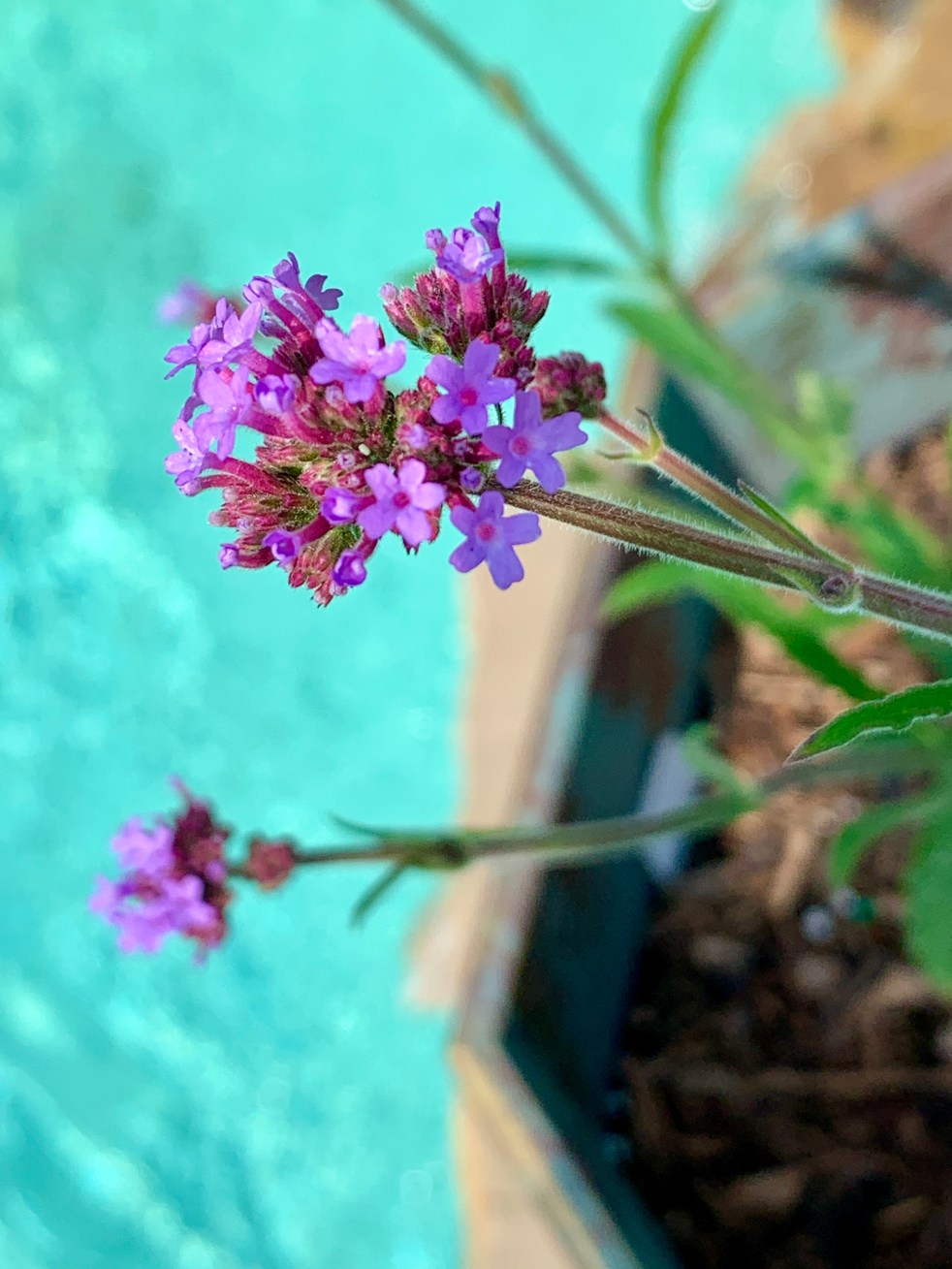
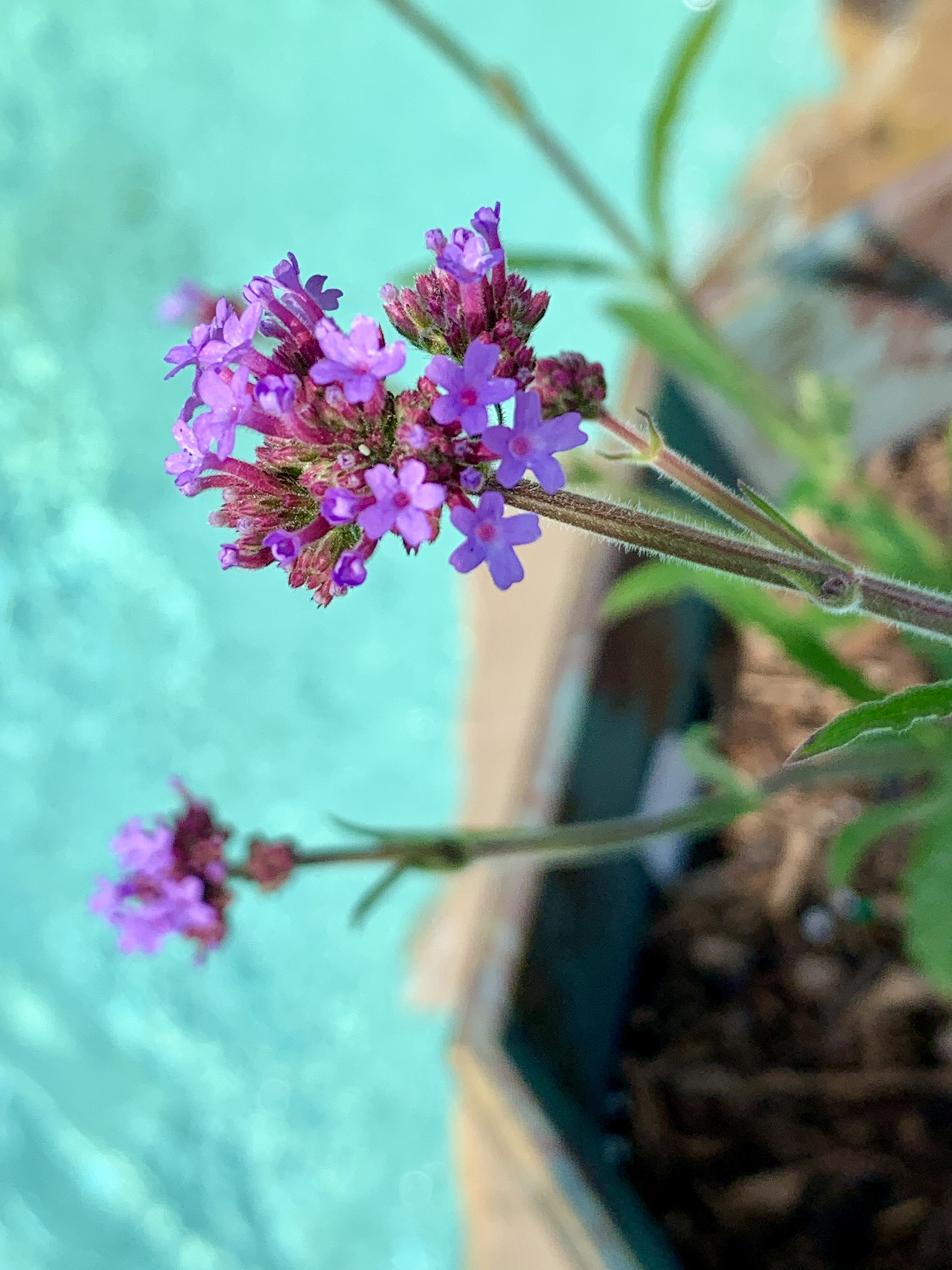
This year we decided to turn our flower pots to all Perrinialls and I bought all new plants.  Two roses, a Gardenia, two Hydrangeas, two verbenas, and I forget from there. I had to buy larger pots for a few plants. We also had to move the Peony to the east side of the house as the spot we had it in was too much sun. I look forward to its fragrant blooms. 

I’ve planted two of the four Rosemary plants and planted the Gardenia this morning. 

The watering has already started and it’s nowhere near summer but with new plants, you have to keep your eyes on them.

We lost all of our shrubs in the great storm of 2021 and so this year we have new scrubs, I can’t wait till they are a little larger It’s hard to see the effect I’m going for now. For the first time, we planted some bulbs that you leave in the ground, no digging up for me. They look like large purple balls. I can’t wait, they are peaking thru now. 

I’m eager, just four more plants to get in the pots and I’ll be Spring ready! 

Melinda

Here are the rules:

1. Your post must be stream of consciousness writing, meaning no editing (typos can be fixed), and minimal planning on what you’re going to write.

2. Your post can be as long or as short as you want it to be. One sentence – one thousand words. Fact, fiction, poetry – it doesn’t matter. Just let the words carry you along until you’re ready to stop.

3. I will post the prompt here on my blog every Friday, along with a reminder for you to join in. The prompt will be one random thing, but it will not be a particular subject. For instance, I will not say “Write about dogs”; the prompt will be more like, “Make your first sentence a question,” “Begin with the word ‘The,’” or will simply be a single word to get you started.

4. Ping back! It’s important, so that I and other people can come and read your post! For example, in your post you can write “This post is part of SoCS:” and then copy and paste the URL found in your address bar at the top of this post into yours.  Your link will show up in my comments for everyone to see. The most recent pingbacks will be found at the top. NOTE: Pingbacks only work from WordPress sites. If you’re self-hosted or are participating from another host, such as Blogger, please leave a link to your post in the comments below.

5. Read at least one other person’s blog who has linked back their post. Even better, read all of them! If you’re the first person to link back, you can check back later or go to the previous week by following my category, “Stream of Consciousness Saturday,” which you’ll find below the “Like” button on my post.

6. Copy and paste the rules (if you’d like to) in your post. The more people who join in, the more new bloggers you’ll meet and the bigger your community will get!

7. As a suggestion, tag your post “SoCS” and/or “#SoCS” for more exposure and more views.

8. Have fun!

For more streams, rules, and tips for Stream of Consciousness Saturday, visit our host, Linda at:

Linda G Hill

Have a great weekend.

Melinda