

Chilling
Melinda

Chilling
Melinda
Living with a chronic condition can be difficult – it can even be overwhelming – and it’s definitely going to be a challenge, no matter how the condition might actually affect you and manifest itself. It could be anything from arthritis to diabetes to asthma to eczema or perhaps chronic pain, but if it’s affecting your life, then you need to do something about it.
You might think that’s not possible, especially if you understand your condition well, but the fact is that although it might not be possible to actually cure the condition and you might always have it, you can do things to reduce the impact of the symptoms and make life at least a little easier for you. If you can stop a chronic condition from ruining your life, then it’s got to be with trying. With that in mind, keep reading to find out more about what you might be able to do.

The first thing you’ll need to do if you want to stop a chronic condition from ruining your life is to understand it – thoroughly. We don’t mean just a vague idea of what you’re suffering from – we mean that you need to really know it, inside and out. You need to educate yourself about everything you can that links to your illness, including its symptoms, triggers, and treatments.
Of course, to do this, you’ll need to only look at the most reliable sources when it comes to eczema treatments or anything else you need to know about, but that’s a good thing. True, it’s going to mean it takes longer to get the information you need, but it also means that you’ll be being as thorough as possible so you weed out any sources and information that aren’t reliable. In the end, you’ll have a good idea of what’s true and what isn’t, and that’s going to serve you well when it comes to stopping the condition from ruining your life.
It’s also a good idea to find support groups so you can talk to others about the condition you all share because even if you don’t get any more information, the support can make a lot of difference, and knowing there are people you can talk to if you’re having a bad day or who you can help if you’re able to is a wonderfully positive and empowering things. Plus, don’t forget doctors and other medical experts. You might think you want to do it all by yourself, but the fact is that doctors are going to have a lot of good information for you, and they’ll be able to point you in the right direction when it comes to learning more. Plus, seeing a doctor means you won’t ever have to (or be tempted to) self-medicate, and staying away from that dangerous path is a good thing.
If this sounds like a terrible idea, don’t worry – it’s not as bad as you might think, and it’s well worth thinking about once you know more about what we’re saying. The crucial thing to remember is that acceptance doesn’t mean resigning yourself to the fact that you’re going to be unwell and potentially limited forever. It doesn’t mean giving up on trying to reduce the symptoms or finding a cure. What it means is that rather than fighting against it, you accept that this condition, whatever it is, is part of your life – but it’s not the thing that makes you you, and it’s not the thing that defines you.
So what we’re saying is that you need to accept that you’re unwell, but you mustn’t become a victim – you need to essentially shift your thinking from negative to as positive as you can (which might not be easy, but when you start, it becomes easier). Begin by not dwelling on the things you can’t do and instead focus on what you can do and what you can control in your life, make sure you do more of the things that bring you joy, and it’s definitely going to help because even if you’re still suffering, you’re not letting the problem ruin your life.
Maybe you don’t put your own self-care first because you don’t want to look weak and admit you need some time to read or recharge. Maybe you don’t do it because you’ve got a lot of other people to look after. Maybe you’re too busy at work. Maybe you really just don’t know what you can do that means you’re enjoying some self-care. Whichever of these issues it is, or even if it’s some other reason entirely, it’s time to change your thinking – self-care has to come first.
The fact is that when you’re managing a chronic condition, self-care is non-negotiable, so you need to add more to your life whenever you can. The great thing about self-care is that there are so many different ways it can be done, so you might start by ensuring you get enough sleep, that you exercise regularly (even a little is good), or that you eat a balanced diet. Perhaps self-care for you means getting a chance to read or listen to music. Maybe it’s about going for a walk or enjoying your favorite hobby or having a spa day. It doesn’t matter what it is, as long as you include it in your life because when you do, you’ll be happier and less stressed, and that’s going to help you realize that your life is good and that your chronic condition, even at it’s most difficult, isn’t going to ruin it.
Something else that can help you if you’re suffering from a chronic condition and you don’t want it to ruin your life is to set yourself some realistic goals to work towards. They can be as big or as small as you want (although if they are big, it’s best to split them into smaller goals so you don’t get overwhelmed by everything you have to do).
Once you reach a goal, celebrate, and keep moving forward – always move forward. You’ll need to be flexible and sometimes those goals will have to change and be adjusted, but as long as you’re always working towards something, you’ll have hope, and that means your life is definitely not ruined.
This is a collaborative post.
Melinda

Melinda
Growing up in a family of military veterans gave me a snippet of what war is and what it isn’t. War is simple to explain.
The country that was attacked has the right to retaliate in whatever way they choose and for how long.
It’s simple.
Melinda
Here are a few products I’m loving with right now. I hope you find a product to add to your household or self-care routine. The list may also give you ideas for a surprise for friends, and family. Most products are found on Amazon.

Not only do I use this at night but also at nap time! It’s worth the investment and by only using a few spays at a time, it lasts a long time. Don’t forget to share with your bedmate.
This is my favorite body cream, it’s from a company built on ethics, and it’s a great price point. There are many fragrances to choose from and everything else you need to pamper.
This fragrance is out of this world and a bit on the pricey side. Treat yourself to a new fragrance. On the less expensive side, I buy the below.
They have many fragrances to choose from but this is my favorite from this company.
Who doesn’t love a smooth massage without leaving home? High-quality brand and with little maintenance it will last a long time.
I love this brush because it has a stiff and soft side. The ergo styling does make a difference in my wrist pain. It fit my needs and it was less than $10.
It is great to keep these around the house and office for when you need to reduce stress. They help me fall asleep by rolling a line down both sides of my neck and a dab under my nose. Essential oils also help if you roll on the lower parts of your body, the smell will go right up to you.
You don’t have to spend a fortune on a nice Essential Oil Diffuser, of course, there are more elaborate ones on the market. My life is about simplicity and this one has served me well for over 5 years.
I have not found a better essential oil mix to add to my Diffuser. It’s a great fragrance anywhere you have a Diffuser but this blend sets me up for a good night.
Melinda
Thank you for all the great feedback on the Blogger Highlight series, I’ve enjoyed meeting each blogger and sharing their site with you. This week we highlight Kelly’s Quest.

I read some of her posts last week and her site is a slice of heaven! Please stop by and say hello.
Melinda

Melinda
In this fast-paced social media world, it can be difficult to find the time to look within or back in time. I hope you find these quotes and questions interesting. So glad you stopped by today!
Continue reading “Deep Thoughts”Grief is one of the most powerful emotions a person can experience. It’s also something that everyone has to deal with at some point in their lives. We love, we live, and we die. Then we’re left to pick up the pieces.
The fact is, grief hurts. It’s natural for it to hurt, and it’s natural for different people to have different experiences of this pain. But that doesn’t mean that every experience of grief is healthy. It’s easy to get sucked into a hole of grief that doesn’t stop hurting and that stains the rest of your life.
While it might not be as simple as “moving on”, it is possible to manage your grief. Here are some tips to help.
In some cases, you might find the grieving process begins before your loved one has passed away. Usually, this is due to a long illness that can only ever result in death. If you act as a caregiver, it can be hard to balance this grief with the practical parts of caring for your loved one.
Sometimes you have to compartmentalize. This means that, when you’re actively caring for them, you focus on the practical side of things. But you still need to allow yourself to process your grief.
But you should also try to find the joy in being a caregiver. It’s hard work, physically, mentally, and emotionally. But it allows you to spend time with someone you love and it allows you to demonstrate how much you love them, even if they can’t always recognize it.
Unfortunately, life goes on for all of us, even when we lose someone we love. Everything else doesn’t grind to a halt, even if we feel like it should. We have work, family responsibilities, chores, and bills.
Some people prefer to throw themselves into literally anything else so that they don’t have to think about their grief. Still others find it impossible to concentrate on anything else.
Even if you’re in the former camp, you still need to give yourself time to grieve. It hurts, but it needs to hurt. Don’t feel ashamed because you aren’t able to stop hurting after a few months, but also don’t feel guilty when you manage to have a moment without thinking about the person you lost.
Let yourself hurt and cry and grieve, but let yourself live as well.
Part of processing grief healthily includes talking to people you trust. If you’ve lost a family member or friend, you and your loved ones can help each other by talking about your shared grief. You aren’t being a burden, you’re just being human.
In some cases, you may feel as though you need to talk to someone else. That’s what grief counseling consultation is for. You can talk to someone who is experienced and trained to help you, but who also won’t be hurt by your feelings.
This is a collaborative post.
Melinda
I was not born into money and any money had to be made by me. Sometimes, I would think “If I had money, this would all go away.” The great thing is this encouraged me to jump out there and set the world on fire.
My first job was a paper route at 10 years old, just several blocks around my house, producing money that made me feel more in control and it felt great.
I worked my way into sales which is a natural fit for me, and I worked hard but always had my eye on the goal, more money. I joined a 2B company as a National Trainer with 15-20 offices. I had arrived at the top! Not really. I traveled 5-6 days a week, ran errands the entire weekend, and spent no time with my ex-husband. This job was the beginning of the breakdown in our marriage.
During those few years, my salary was between $250K-$350K, plus adding bonuses like money and exotic trips, I was riding high. I spent money like crazy, and never thought about my long-term future.
A few years later, I won a lawsuit and became a multi-millionaire. It was short-lived after paying the taxes and the lawyer and the settlement isn’t so large. Shortly after the settlement, I had Brain Surgery and took some time off to recover by remodeling and upgrading our house. While our marriage fell apart and we divorced.
I never asked myself if I was happy, fulfilled, and living a good life. I wasn’t and set out to make major changes. First I started focusing on the future while maintaining a fun life. After the divorce, I no longer had big money. It was a time for discovery.
I matured from the divorce and started writing down what made me happy or what I thought would. I started by giving a bit to charity and other ways to find joy and spent some time thinking about the type of man that I wanted in my life if the chance came again. I was open but already 38 years old.
Learning how to get in touch with myself happened after I married my husband. I have learned what “in sickness and in health means.” He’s had my back, loved me when I was in very dark places and mean, and has shown that love for over 23 years.
Our focus changed to what we want in our future and retirement, what number would give us a comfortable retirement. To do that you have to make sacrifices which in the beginning was hard for me but now, I would not go back to my high-rolling days.
Money didn’t give me joy, it flamed my ego which affected my marriage.
Money didn’t keep my Bipolar Disorder under control, I did.
Money didn’t keep my Grandparents from dying.
Money will not protect you from harm, death, illness, or stress.
I love our comfortable life watching TV together every night, and catching up on the day while sharing a meal. My husband washes his own clothes which makes it easier on me, takes care of the dogs, and cooks most of the time and in Summer he’s great about watering my plants.
What my journey taught me is money is great but it’s icing not the foundation of a great life.
Melinda
It is a big responsibility to help someone with a chronic illness. Depending on the severity of the situation, there will be many changes to your life and theirs. This is true for a professional caregiver, family member, or good friend. There are also some common mistakes that people make when trying to help. Don’t worry; most of us are in an impossible situation when caring for someone. From being aware of what to say to looking after yourself, here are some care tips.
Many chronic illnesses can take a turn in an instant. Epileptic seizures, diabetic comas, and falling over because of a back injury are some examples. Knowing what to do as fast as possible can mean the difference between helping someone or serious consequences. A CPR and first aid certification may not sound like much, but it will be helpful in the case that something bad happens. It’s all about a fast response. Speed and skill do save lives!
Even with the best intentions, we can say things we really shouldn’t. You may even make ableist remarks without realizing it, which could upset or offend the patient. This would be classed as discrimination in a court. So be careful what you see. Here are some common examples:
It is best to keep your opinions to yourself when caring for someone with a chronic illness. Even with the best intentions, you may say something that can be taken the wrong way. It can also be more challenging to care for someone when there is some kind of tension between you.
As a caregiver, you are not bound by the same confidentiality rules as a doctor. However, that doesn’t mean the entire world needs to know about the issues a patient has. It is hard enough for most people with chronic conditions. One survey found that 56% of people with epilepsy feel it is a stigma. And 35% have faced direct discrimination. The private conditions of patients should remain just that. If they want to tell people, then it is up to them and not caregivers.
Engagement is a key factor when it comes to caring for most patients. Because of the debilitating symptoms of chronic illnesses, it is even more vital for chronic patients. Many chronic illnesses come with stigmas and some cannot live a normal life. This causes issues like depression. Yet, often, all it takes is for someone to be a good friend and just listen to what a patient has to say. Communication can also help you become a better caregiver to the patient.
We live in a world where we have almost been conditioned not to touch people. There are very good reasons for this. But as a caregiver, the art of touch can be a skilled way to reassure and encourage someone. Appropriate touching includes a gentle tap on the elbow with some kind words. Holding a patient’s hand through pain provides reassurance. And even a gentle hug can make someone’s day. These cause genuine hormonal changes that make someone feel better.
No two chronic illness cases are the same, even for patients with the same condition. This is because everyone is different. All situations are different; medication requirements will be different, and living arrangements will be different. It always helps to discuss specific needs with the patient, their family, and other caregivers if the patient cannot speak for themselves. This also includes any boundaries that must be respected between the patient and the caregiver.
Taking on the role of a caregiver is not an easy task. It requires dedication to the life of another, as well as your own. Therefore, self-management is vital for getting the job done well.
It is challenging to help someone with a condition you don’t understand or know nothing about. You don’t need to become a doctor. But learning about a specific chronic illness means you know what to expect, understand what can happen, and how to assist when a situation arises.
Most chronic illnesses require a lot of medication. Pain medication, heart stabilizers, and anticonvulsants are common. Misuse of medication is dangerous and will cause severe problems to a patient’s health. It is vital you organize medication and follow the script.
It’s an old saying, but you can’t take care of someone else without first taking care of yourself. Poor self-care poses a threat to a patient. Focus, attention, and mood will be affected by a poor diet, for example. Ensure you turn up in as good a state as you can to be a good caregiver.
You can also offer support to patients by teaching self-care with a chronic illness. They cannot rely on someone else 100%.So helping them learn about their own illness and the medication they need will help them become a little more independent for the times they are alone.
Becoming a caregiver means giving up some parts of your life. A patient with a debilitating chronic illness may depend on you for many things. In some cases, it can be like having two lives with double the work. Therefore, it helps to address your own personal feelings about the situation. If you are not invested emotionally, it can be hard to do the job correctly. Taking on too much is a common mistake. Get help from another caregiver if you can’t emotionally cope.
We tend to stay quiet most of the time as no one likes being questioned too much. However, questions are vital when caring for someone with a chronic illness. Otherwise, how else do you know what to do in a given situation? The questions don’t need to be complex. A simple “What do you need right now?” is more than enough to meet the needs of a patient. The trick is to limit the intrusion and use your better judgment as to when to ask the patient a pertinent question.
As a caregiver, you can learn a lot about an illness. And this is an excellent thing to do. It will help you become a better carer for a patient. However, you must remember that you are not a medical expert! Some healthcare professionals don’t communicate well, and this can be stressful. However, learning to work with them is the best thing for the patient. If you feel that there is a lack of expert care or a course of action that is harming a patient, you can report this.
Your own self-care is essential as a caregiver. But what about the patient? Yes, helping a patient with self-care is a necessary part of the job. Some chronic illness patients also experience mental health issues, around 37% in fact. This can affect how well they look after themselves on a day-to-day basis. Helping with personal hygiene, getting some outdoor time, and meal preparation will help form an enhanced self-care plan and gain a little more independence.
Offering medical advice should only be limited to medical health professionals. But even general advice won’t help the situation. Offering advice, even if it is well intended, can make a patient feel worse. So, you must be careful about what you say to a patient. Here are some ideas:
It can be hard not to offer advice, as it is a very human thing to do. However, most patients just want to talk and have someone listen. You will be a better friend and caregiver by doing just that. A patient will appreciate you engaging on their level and listening to what they have to say.
There are various symptoms that come with chronic illnesses. And they are pretty easy to spot when you understand what they are. However, there are some hidden symptoms that can be more challenging and indicate a patient’s issues are getting worse. Observation, conversation, and asking questions will help. Some of the common signs that a chronic illness is getting worse include stress and anxiety, not getting good sleep, and loss of focus and concentration.
You need to be prepared to act fast with CPR or first aid when assigned to help someone with a chronic illness. It also helps to learn about the condition, understand medication, and take care of yourself. These help spot the symptoms that a chronic condition might be getting worse.
This is a collaborative post.
Melinda
In this fast-paced social media world, it can be difficult to find the time to look within or back in time. I hope you find these quotes and questions interesting. So glad you stopped by today!
IDEAS TED TALKS
May 1, 2019 / Nora McInerny
I quit my job shortly after my husband Aaron died in 2014 following three years with brain cancer. It made sense in the moment, but I needed money to keep my son and myself alive so I went to a networking event to hopefully make connections. I was introduced to a successful woman in her early 70s who everyone referred to as a “legend.” She wanted to meet me for coffee and I thought, “What could she possibly see in me?”
What she saw in me was herself. She had been 16 when her boyfriend died. He was her first love and they were teenagers in a different era, when it was perfectly plausible that you would be married after high school. Instead, he went to the hospital one day and never came back. She learned later that he’d died of cancer, which his parents had kept secret from him and from his friends. They didn’t know how to talk about it, and they didn’t want him or his friends to worry.
This boy had died decades ago. She was married, a mother and a grandmother. And she told me about his death as if it had happened weeks ago, as if she were still 16, still shocked and confused that her beloved was gone and she’d not had a chance to say goodbye. Her grief felt fresher than mine did, because I didn’t feel anything yet.
The only guarantee about grief is that however you feel right now, you will not always feel this way.
Time is irrelevant to grief. I cannot tell you that it will feel better or worse as time goes by; I can just tell you that it feels better and worse as time goes by. The only guarantee is that however you feel right now, you will not always feel this way.
There are days when Aaron’s death feels so fresh that I cannot believe it. How can he be gone? How can it be that he will forever be 35 years old? Likewise, there are days when his death feels like such a fact of my life I can hardly believe that he was ever not dead. I thought I would be able to control the faucets of my emotions — that certain days (his birthday, his deathiversary) would be drenched in meaning, and most days would not.
I wish that were the case; I wish we could relegate all our heaviest grieving to specific days of the year. It would certainly be more efficient. Instead, I know that I have some friends who will understand perfectly when I call them to say that the entire world feels heavy, that I’ve been crying for reasons I can’t quite explain other than that I am alive and Aaron is not, and the reality of that happened to hit me in the deodorant aisle, when I spotted Aaron’s favorite antiperspirant. I bought a stick for myself, so that my armpits and his armpits would be forever connected.
In 2017, Lady Gaga released her Joanne album, named for an aunt who died before she was even born. The titular song is 100 percent guaranteed to make you cry, and it’s written about someone Lady Gaga never even met. In her Netflix documentary, Gaga: Five Foot Two, she plays the song for her grandmother and bawls uncontrollably. Her grandmother listens to the song, watches Gaga weep, and thanks her for the song. She does not shed a tear. Their grief — even for the same person — is different. The roots of grief are boundless. They can reach back through generations. They are undeterred by time, space or any other law you try to apply to them.
The woman I met had lived far more of her life without that boyfriend than with him. Time had not healed that wound, and it never will.
A common adage is “time heals all wounds.” It is true physically, which I am grateful for because I am typing this while hoping the tip of my thumb fuses back together after an unfortunate kitchen accident involving me attempting to cook a potato. But it is not true mentally or emotionally. Time is cruel. Time reminds me of how long Aaron has been gone, which isn’t a comfort to me.
The woman I met for coffee had lived far more of her life without that boyfriend than she had with him. Her grandchildren were now the same age she’d been when she lost him. Time had not healed that wound, and it never will. If you’re still sad, that’s because it’s still real. They are still real. Time can change you, and it will. But it can’t change them, and it won’t.
And here’s some advice for the grief adjacent. For you, time marches on, steadily and reliably. A year is just a year. A day is just a day. You are not aware of the number of days it’s been since they took their last breath or said their last word. You’re not mentally calculating when the scales of time tip, and more of your life has been lived without them than was lived with them.
We do not move on from the dead people we love or the difficult situations we’ve lived through. We move forward, but we carry it all with us.
You may be tempted to tell the grieving to move on. After all, it’s been weeks. Years. Decades. Surely this cannot still be the topic of conversation. Surely, at this point, they must have moved on? Nope.
But, you may be thinking, “This person has gotten married again or had another baby! They have so many good things in their life, this one awful thing can’t possibly still be relevant … can it?”
We do not move on from the dead people we love or the difficult situations we’ve lived through. We move forward, but we carry it all with us. Some of it gets easier to bear, some of it will always feel Sisyphean. We live on, but we are not the same as we once were. This is not macabre or depressing or abnormal. We are shaped by the people we love, and we are shaped by their loss.
“Why are they still sad?” you may think. Because this is a sad thing, and always will be.
Excerpted from the new book The Hot Young Widows Club: Lessons on Survival from the Front Lines of Grief by Nora McInerny. Reprinted with permission from TED Books/Simon & Schuster. © 2019 Nora McInerny.
Nora McInerny has a lot of jobs. She is the reluctant cofounder of the Hot Young Widows Club (a program of her nonprofit, Still Kickin), the bestselling author of the memoirs “It’s Okay To Laugh”, “Crying Is Cool Too”, and “No Happy Endings” and the host of the award-winning podcast “Terrible, Thanks for Asking.” McInerny is a master storyteller known for her dedication to bringing heart and levity to the difficult and uncomfortable conversations most of us try to avoid, and also for being very tall.
Melinda
We all hear the statistics, the horrific stories, and the number of innocent deaths. I thought I would take a different approach to Child Abuse Awareness.
The world children/teens live in today is crazy, addictive, and controlled by Social Media/friends. Preparing your child/teen for this world has to start early and can be done in a natural more conversational way.
All those “conversations” you would like to avoid can be easily taught through their activities. Kids are fighting and saying bad things to each other on TV, take a minute to mute the show and reinforce that behavior is not acceptable and we don’t act like that. Quick conversations, not ones that get them bored and waiting to watch the show. Those little conversations will build up in the kid’s mind.
While your teen watches the news or a TV program with you, look for opportunities to ease into a learning experience. If the story is about sexual assault and they are of the age to understand, open a conversation with some low-key questions but don’t bombard them, maybe 1-2 questions. Pick the right time to ask more, and keep it as a normal conversation and not an inquisition. There are so many questions to ask but you have to approach it naturally unless more is needed.
The one key to teaching children is that if you are smoking or drinking, and living in a violent home life Please don’t tell them not to do the same. You’ve already set an example.
I feel for all parents who are dealing with this crazy world of Social Media. Form a small group of mothers to discuss safety and security with, you can learn from each other.
Melinda
When I wrote about Data Breaches and Identity Theft in the past I never dreamed it would happen to me. These breaches are happening every day and our identity is at risk if enough personal information is released.
I’ve received many of these letters as I’m sure you have to, they are getting more sophisticated and you must know what exact information was released. In the past companies were pretty vague about what data is missing but I think the laws may have changed.
The letters that followed included what type of information was taken which is essential.
Two weeks ago I received a letter from Orsini Pharmaceuticals that all of my private information was involved in the breach! Wow, I a waiting target for Identify Theft. If I had not read the fine print my life could have been ruined by Identity theft.
I have spent hours every day since receiving the letter alerting the necessary companies, changing every password, some I had to change my user name as well. I will look over my shoulder from now on.
I haven’t heard of this company and after a visit to their website, it was clear I had not taken any of their medications. WTF! Why did they have my info in the first place? Did someone share it with them or did they buy the list?
I started reading the press releases about the breach and found that the breach happened three months ago but I’m just hearing about it. Interestingly many people were offered 1-2 years paid protection but I wasn’t. Lawsuits are flying in every direction, that is a thought for another day.
My plan is to write Tom Cappetta, Vice President, Pharmacy Operations, and ask him several questions, most importantly why they had my information. It’s a question I deserve to know yet will not get an answer on. I’m also asking for 2 years of total protection.
We’ll see where the letter takes me.
Melinda
Thank you for all the great feedback on the Blogger Highlight series, I’ve enjoyed meeting each blogger and sharing their site with you. This week we highlight the blog Willowdot21.
This is my chance to display my poetry and pros . In a way it is mainly for my own expression of the pent up feelings and stress that usually pins me into a corner on a daily basis! My profile tells you all you need to know about me , my poems and stories, I think tell you even more. I hope you can enjoy my work, feel free to drop in at any time you are always welcome.
We have followed each other for a long time and enjoyed her posts and conversations so much that it was time to tell you. about her post.
She participates in several challenges each week which are fun to read. Get on over there!
Melinda
Originally posted in 2022
You’re stupid, that’s what my mother always said to me growing up. Stupid, like an idiot, like a person that can’t do anything? Is that what you mean? I would think to myself. This was not a rare occurrence but daily. She wanted me to believe it and it pissed her off that I would not give in.
One morning I walked into our kitchen and she yelled at me “You stupid slut!” She didn’t like the jeans I had on. So she proceeds to berate me and walk toward me. I’m 12 years old and have not hit her back until this day.
She comes over and grabs my hair and starts yelling and yelling while hitting me and pushing me. I snapped and hit her right in the head. Like lightning out of nowhere, in comes my step-father who is 6’2″ and 220 and he hits me right in the mouth. Busting up my entire mouth since I had braces, and blood all over my face.
Think about it, a grown man hitting a 90-pound 12-year-old girl with a mouth full of braces. I’m not sure I said a word the whole time, just let it play out like the other times only today was the first time he hit me.
I walked to my room and by lunch, I was black and blue. Of course, I couldn’t go to school because the teachers would see the damage, and our storybook life would end. My step-father came home from work with a hamburger for lunch and I couldn’t eat. What the hell was he thinking!

I was able to go to school three days later and still had visible marks around my mouth. I acted like nothing was wrong until my music teacher called me into the hall and asked what happened to my mouth. I said the door hit me, and she was insistent that I go see the School Counselor. I told her that I would not go talk to anyone and she stood me down in that hallway until I went to the counselor’s office.
Walking through the counselor’s door, I said I had to call my Granny first. I had never told them my mother was abusing me. So I wanted her to know that I was in trouble. She would know what that meant for me. More beatings. She had her suspicions but never could pin down anything concrete
The next day Child Protective Services showed up at school and I got called out of class for extensive questioning. Now it was going to get very ugly and I would be on the losing end.
I told them everything that happened and that hitting me was commonplace. I answered their questions as they filled out the forms and that was it. Until one day after school, two women showed up at our house. Now it’s really going to get ugly.
They come in and my mother is so calm and cool. She asked them why they were there and what the problem was. My life took a dive for the worst and I thought it couldn’t get any worse. My mother proceeded to tell them that I was mentally unstable and that she was in the process of having me committed to the State Mental Hospital. They leave completely satisfied while I wait in my room. She had lied to them right out the door.
After my step-father hit me what could she do to make it hurt worse? Kill me? She knocked me around the room and set off a chain of events. Not long after that fateful day, I got permission to live with my dad who was 50 miles away. I packed up a few belongings, told my brother goodbye, and off in silence I went.
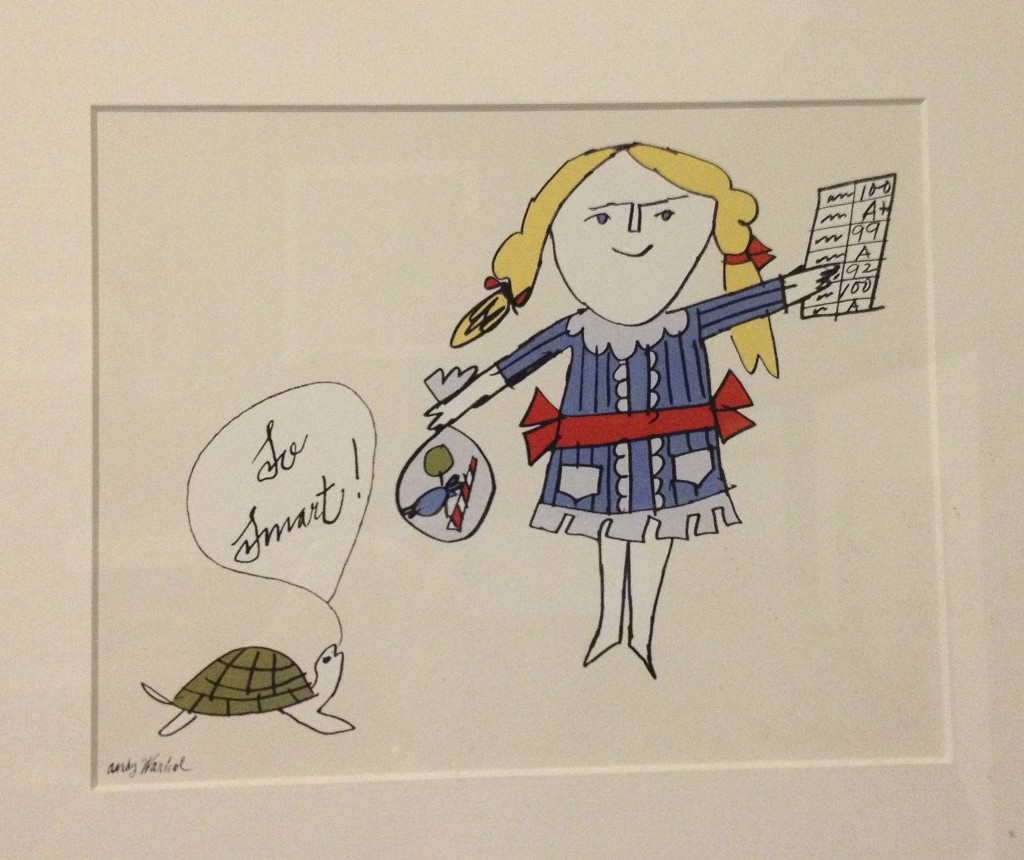
I bought this Warhol years ago, it hangs in my office and it’s a positive reinforcement.
Melinda
I woke to the sound of knocking at the door
I grabbed my robe and was surprised who was at my door
My ex-boyfriend and BFF
He had come over to check on me since I wasn’t at work
I head to the bathroom to brush my teeth
He lightly grabbed my hand and took my robe off
We stand there for a minute
He leads me to the bedroom
We were totally silent
We dressed and he walked out the door
I never asked if he loved me but I know he did
I was 19 and still in love with him
Melinda

Dealing with the aftermath of sexual assault is a long and often difficult journey, but you know what? Every long journey starts with a single step, and you can start to heal, when you are ready, by making a small move on the journey to recovery.
That being the case, here are some of the most vital steps to help you heal after you have been assaulted. Start where you can, do not rush yourself and, most of all, be kind to yourself every step of the way.
The first step is often the hardest: acknowledging what happened. It’s okay to feel a storm of emotions—anger, sadness, confusion—it’s all normal. Recognizing your feelings is not about finding immediate peace but about giving yourself permission to feel whatever you need to feel. You’re not ignoring the wound; you’re starting to treat it.
Healing is not a journey you should walk alone. Reach out to friends, family, or support groups who can provide emotional scaffolding on your healing journey. Sometimes, just talking about what happened with someone who listens without judgment can bring immense relief. If opening up to loved ones feels too daunting, organizations and helplines can offer support with confidentiality and care.
Navigating the emotional aftermath of sexual assault can feel like trying to solve a Rubik’s cube, blindfolded. This is where professionals such as therapists or counselors come in—they’re trained to help you work through complex emotions and trauma. Think of them as guides in a tangled forest who can help you find your way through.
It’s always hard to decide whether or not you want to report your sexual assault, but if you think it would be an empowering thing for you to do, and you feel like you will be able to talk to the police and deal with the sexual assault defense team okay then it could be a milestone that will help you start to get on the rod to recovery. Just make sure you have lots of support when you make that report, and throughout the ongoing process. If you don’t feel you can report, then do not beat yourself up about it – you need to do what’s right for you.
Healing is not only about dealing with the trauma but also about taking care of your overall well-being. Create a self-care routine that nourishes both your body and mind. Whether it’s yoga, reading, or spending time in nature, find activities that bring you peace and a sense of normalcy. Self-care is your personal recharge button—press it regularly.
After an assault, your sense of personal space and safety can feel violated. Setting boundaries is a way to reclaim control. Be clear about what you are and aren’t comfortable with—this could be with people, places, or activities. It’s okay to say no; it’s okay to need space. You’re the boss of your boundaries.
On the road to recovery, every small step is a victory worth celebrating. It could be as simple as getting through a day without a flashback, or as big as attending a social event. Acknowledge and celebrate these milestones. They are signs of your strength and resilience.
Recovery is possible, but take it one step at a time and look after yourself!
This is a collaborative post.
Melinda
I had some shocking support show up at my treatment this morning, like Adele, The Eagles, and my friend Blake Shelton. Blake reminded me that I have protection every day with this song!
Thank you for all the messages of support, I took them with me in my heart.
Melinda
I’ve started filling my travel bag and getting all the small items ready like a large bag of grapes for the cooler along with 2 huge Smartwaters and a bag of dry snacks. My travel bag barely fits a blanket, travel pillow, and a couple of small items. Which forces me to take 3 bags, crazy but I’m not dragging down a suitcase.
The first treatment is between 4-7 hours, and I am preparing for anything including barf bags. Maybe I’ll get lucky and not have to use them.
I’ll be back as soon.
Whatever your religion or beliefs, please say a prayer for me, I need strength.
Thank you!
Melinda

A home garden offers loads of benefits beyond boosting your home’s curb appeal and increasing your property’s value. It plays a significant role in improving your physical and mental health. It also helps reduce your expenses (depending on what you grow in your garden) and establish sustainable measures in your home. But if you’re new to gardening and thinking about creating one for your home for the first time, the last thing you want to do is jump right into planting a garden. Here are some things you need to do before you start a home garden.

The first thing you want to do is consider the best place to grow your garden. Of course, this will depend on your home and how much space you have. Be sure that your ideal spot offers at least 6 hours of direct sunlight daily. Therefore, it would be best if you took the time to observe your preferred spaces to figure out which spots receive the most sunlight. If you have too much shade in your yard, all hope is not lost, as there are two options you can try. On the one hand, you can remove the source of shade, depending on what it is. On the other hand, you can consider growing indoor plants that thrive with little sunlight instead.
After deciding on the best spot, clear the ground of weeds, dead trees, stumps, etc. You can hire experts to remove some of these stubborn obstacles if necessary. You can visit websites like duvaltreeandbobcat.com for experienced and safe tree removal services.
The next thing you want to do is decide on what plants you want to grow. Would you like to create a vegetable garden to supplement your grocery needs? Or do you want to spruce up your curb appeal with lush flowers? Knowing the purpose of the garden will help you decide what to grow in it. If you want to grow a garden for food, think about what vegetables, fruits, or herbs you need the most. Also, consider which food items are difficult or expensive to purchase and see if you can grow them. If your garden is for curb appeal, think about what plants or flower pieces you love the most and can thrive in your location.
Gardening can be very relaxing, but it can also be very tasking, especially if you don’t have the right garden tools. You can take advantage of many tools, facilities, and equipment in the modern gardening world to make growing your plants easier. Of course, you don’t need to invest in a comprehensive range of garden equipment when you’re a beginner. You only need the basic and most essential tools, such as a rake, hand trowel, hoe, spade, garden fork, and pruning shears. Also, before considering gardening, be sure you’re willing to devote the time and effort a home garden demands.
This is a collaborative post.
Repost
Melinda

Every year is better than the last production. It’s been planted there for over 25 years and has not once fertilized. The smell is out of this world!
The rose blooms at least twice a year due to the crazy weather here.
Melinda
Thank you for all the great feedback on the Blogger Highlight series, I’ve enjoyed meeting each blogger and sharing their site with you. This week we highlight the blog of Feel Something Poetry.

My name is Maranda Russell. I’m a 41 year old poet. I like to write and share poetry that is emotional, direct, and thought-provoking. I hope you’ll follow me! I do have some poetry books available on Amazon if you are interested in reading an entire book of mine!
I discovered Maranda when she started following me last week and I can say she loves writing.
Melinda














 Looking for the Light