Have an Awesome day!


Charity Navigator tracks information on all charities and how the money is spent or is the overhead to high. It will show how much is spent on administrative cost, those mailers every week after you’ve begged to take you off list. This is the best place to confirm the charity you support is spending your money as you would.
Christa is a Survivor of Sexual Assault, her story is hard to read and yet she comes out on top. She was able to more forward and rebuild her life. She has the strength like many of you. She turned to RAINN.org for support.
I support RAINN and want to share a postcard with the good news of how many SURVIVORS were helped in 2018. The bad news is many are not receiving the support due to long hotline wait times. Please consider RAINN when you give this season. You can donate at donate.rainn.org/2018. Thank you for reading and your continued support. Melinda
More than 260,000 SURVIVORS and their loved ones this year have turned to RAINN’s victim services programs to seek help–a record and the need continues to increase.
Unfortunately, because of hotline wait times that have reached 5 1/2 hours, thousands of survivors have left before we were able to be there to provide support. We need your help to be there for the survivors today and everyday.
This month, your gift will go twice as fast to ensure SURVIVORS get the help they need. When you give to RAINN through December 31st, a group of generous donors will match your gift, dollar for dollar.
By Mike Bundrant
~ 3 min read
I wrote an article recently on the various ways in which passive-aggressive behavior can undermine and destroy relationships. And it certainly can do just that.
But as I was outlining the behaviors and language typically associated with the passive-aggressive personality, I couldn’t help but feel that several of the traits and habits seemed out of place. At the very least, they seemed to require a separate category of their own.
Passive-aggression is described as the indirect expression of anger and hostility, and is largely considered a learned behavior in response to an environment or upbringing in which these ‘negative’ feelings are not permitted. Veiled insults and criticisms, a generally sullen or negativistic attitude, stubbornness, sabotage, and deliberately failing to take care of required tasks are all ways in which the passive-aggressive person might express their underlying hostility towards another as a means of control or manipulation.
But what of those of us who struggle to express any strong emotions, such as jealousy, worry, fear, hurt feelings, even love?
In a culture where appearing strong, independent and capable at all times is considered a marker of success, expressing emotionality is often viewed as weakness, neediness, or ‘softness’. As a result, many are hesitant to reveal their true feelings and emotional needs out of a fear of judgement, reprisal or rejection. We don’t want to appear as though we don’t have it all together.
Carrying this fear of expression into our personal relationships can lead to many of the same behaviors and language associated with passive-aggression, but without the underlying desire to control or manipulate.
For example, if a man believes it is a sign of weakness to express insecurity, fear or sadness, he will likely feel far too vulnerable to show these emotions, and so his need for reassurance or consolation may go unmet. He may eventually resent his partner for not meeting his buried and unexpressed needs, engaging in passive-aggressive behavior such as childishness or stubbornness, or he may become detached and ‘emotionally unavailable’ in order to avoid his painful feelings.
Girls and women are often taught that it is unacceptable to express anger or assertiveness, and as a result may feel that it is unattractive or undesirable to communicate these feelings or needs. Instead of addressing their anger in a healthy way, or of stating their needs in a direct and tactful manner, they may instead engage in nagging, complaining or passive-aggressive tactics such as withdrawing affection or giving the cold shoulder.
Learning to express our strong emotions and needs in our close relationships can be intimidating. Our culture does not encourage vulnerability, and yet it is this very vulnerability that leads to healthy, strong relationships in which trust and non-judgement make us feel safe enough to do so.
Taking that first leap into the unknown and frightening territory of vulnerability can be daunting, but it is the only way to overcome our fear and give voice to our very personal, very normal feelings and needs.
Healthy expression of our emotions and needs, without judgement (from self or others) and without demands or accusations, is vital to creating strong, healthy relationships. Though many of us have been taught that it is unwise and unsafe to be open and vulnerable with others in this way, it is only by having the courage to do so that we create the safe, supportive and resilient relationships we deserve.
Department of Defense Safe Helpline is excited to share that their program, Building Hope & Resiliency: Addressing the Effects of Sexual Assault has been redesigned. Building Hope & Resiliency: Addressing the Effects of Sexual Assault is a self-guided, online, anonymous, educational program that seeks to help individuals begin to recover, heal and build resiliency within themselves after sexual assault. In 2015, the Secretary of Defense directed the development of a self-guided educational program to assist members of the Department of Defense (DoD) community, including cadets and midshipman, who have experienced prior sexual trauma. Recognizing the impact that trauma can have on an individual’s performance, this program is part of a comprehensive effort to enhance individual and collective resilience and improve readiness across the Total Force.
The program features definitions, helpful information about coping mechanisms, practical relaxation exercises, and links to resources and referrals for on-going support. Also included is a brief, optional self-assessment for survivors to gauge how effective their current coping strategies are and whether they may benefit from additional support and resources. Learn more about the program here.
Safe Helpline launched in February 2011 and is operated by the Department of Defense Sexual Assault Prevention and Response Office (DoD SAPRO) through a contract with RAINN (the Rape, Abuse & Incest National Network)—the nation’s largest anti-sexual violence organization. DoD SAPRO is responsible for the policy and oversight of the Department’s sexual assault prevention and response program. SAPRO works hand-in-hand with the Services and the civilian community to develop and implement innovative prevention and response programs.
DoD Safe Helpline provides anonymous, confidential, specialized support, information and resources to help empower sexual assault survivors in the DoD community as they take the next steps in their healing process. Safe Helpline services are available worldwide, 24/7—ensuring access to help, anytime, anywhere.
RAINN.ORG
Christa is a Survivor of Sexual Assault, her story is hard to read and yet she comes out on top. She was able to more forward and rebuild her life. She has the strength like many of you.
“When you speak with a survivor of sexual assault, imagine that they are a loved one who has gone through this. How would you want them to be treated?”
Christa Hayburn was sexually assaulted by a superior at the Police Department where she served as a law enforcement officer.
For the next two years she did not report the assault to the department for fear of losing her job. When she experienced an unrelated injury and found out that she could no longer work as a police officer, she finally felt that she could report the assault to the Internal Affairs Department. After turning in a written description of the assault, she was taken to an interrogation room and questioned by two detectives for 6-8 hours.
“They whisked me away as soon as they saw that this involved a person in a position of power. That day was very retraumatizing.”
Christa says the department and the city did not take her report seriously or take measures to ensure that the perpetrator could not sexually assault others. After filing her report, Christa faced retaliation from the city. They expressed doubt about Christa’s medical reports regarding the injury that prevented her from continuing to serve on the police force, and appointed a private investigator to follow her.

Over the next four years, Christa fought against city officials to make sure that her report of sexual assault was investigated appropriately and that her injury was taken seriously. She eventually resigned from the department. Later, two more women reported being sexually assaulted by the same perpetrator, who had been promoted to deputy inspector.
Christa filed a federal retaliation lawsuit against the city, entering an extended legal process. She ultimately decided to discontinue the case for the good of herself and her family. “The day before my deposition I read through my internal affairs report and saw all the transcripts attacking me and attacking my credibility…trying to find flaws in me and my story,” says Christa. “I thought to myself—I’m done. How much more can I put myself through? When do I say, ‘enough is enough? That’s when I started a journey of setting boundaries for myself.’”
Christa is disappointed in the way her case was handled and believes that police departments need to have more training about how to work with survivors and those who have experienced trauma. At the department where she worked, Christa says that “Not only are these incidents happening, but then the institution goes after the victim and protects the perpetrator.”
As a law enforcement officer herself, she saw her role as someone who should act with integrity to protect and serve her community. “I’ve led my life following the law. It’s so disheartening to see the department not following the standards of honor and integrity they hold others to.”
Christa is thankful that she can continue to help survivors through sharing her own story and letting others know they are not alone. “Who am I? I had no position of power within the police department. But I knew that consistently telling my story would help someone else.” Christa served as a star witness for another victim of the same perpetrator, and her testimony helped win the case.
Because of the sexual assault, Christa has experienced PTSD, depression, and suicidal ideation. She found therapy and medication helpful in getting her through some particularly difficult periods of her healing, but regaining her sense of self has been most crucial. ”What’s been helpful for me has been learning who I am again. My identity was ripped away from me, and I had to relearn who Christa Hayburn was.”
She has also found meditation, exercise, and spending time outdoors to be helpful. “I’ve learned to treat myself with more self love than I have ever done in my life. I make sure to do things with my family, go out in nature, cook, spend time with my pets, spend time with friends—just be a normal human.”
Christa’s advice for other survivors is to not be afraid of relying on a support system of people you trust during the healing process. For Christa, her husband has been her greatest advocate. “He’s walked through this journey with me—through some ugly points. We are still together, and he is my biggest supporter,” says Christa. “I know what it’s like to have that support from someone, and that’s why it’s so important for me to give that support to others. If they can feel heard, then they’ll pass it on. It’s a ripple effect of love, compassion, and empathy.”
Christa finds strength, purpose, and healing in being an advocate for other survivors. “I never wanted to be a victim of my circumstances. I had to be an advocate for others and through that, for myself.” Christa recently worked with city officials to create a bill that would require all city workers to regularly receive sexual harassment training. “Being part of that was wonderful.”
Christa now works at a crisis center for sexual assault survivors where she finds fulfillment and continued healing through helping others and sharing her story. “I’m so glad I can be there for survivors. I will continue to advocate for change until true change takes place across the country. People in these institutions have to take sexual assault seriously and be more supportive of those who come forward.”
“Having the opportunity to share this is truly a gift—no one talks about it,” Christa says in regards to speaking about sexual assault within police departments. “But this is something we desperately need to talk about so that we can offer support and create true change in these communities.”
Christa’s hope for the future of sexual violence is that no one will have to fear coming forward to share their story. “No healing can be done when you’re afraid of losing everything from under you.”
“I’ve learned to step outside of my experience and realize that I have the ultimate control over my story and what the ending to that story looks like. The moment I realized that, I got my power back.”
Happy Wednesday everyone, and welcome to the final Wellness Wednesday of 2018! My son is coming home for Christmas, so I’ll be taking a little break for the last week of the year. Thanks so much to everyone who gave me input last week about our upcoming Wellness Wednesday posts. You all gave me some […]
via [Wellness Wednesday] Discovering Our ‘Why’ For Wellness Changes — Reclaiming HOPE
The recipe is provided by Willow and Sage by Stampington by Kari Peters.
Honey is an humectant, with means that it draws water to itself, helping to helping to keep your skin moisturized. It’s antibacterial, antifungal and antiviral, making it the perfect spot treatment as well as mask. Honey is suitable for all skin types.
You will need
To make
Apply about one tablespoon of honey to your clean face. Start by dabbing some on your forehead and both checks. Slowly begin to massage in to your skin, taking care around the eyes area. Massage face your face for a couple of minutes to help circulation, and then let the mask set for a minimum of five minutes before washing off.For extra benefits let the mack set for 15-20 minutes.
2000
Vice President Al Gore reluctantly concedes defeat to Texas Governor George W. Bush in his bid for the presidency, following weeks of legal battles over the recounting of votes in Florida, on this day in 2000.
1951
After meeting with FBI Director J. Edgar Hoover, President Harry S Truman vows to purge all disloyal government workers.
1972
Astronaut Gene Cernan climbs into his lunar lander on the moon and prepares to lift off. He is the last man to set foot on the moon.
Birthdays
1925
Dick Van Dyke, actor, singer, producer; (The Dick Van Dyke TV series, Mary Poppins)
1934
Richard D. Zanuck, film producer; won Academy Award for Best Picture in 1989 (Driving Miss Daisy)
1985
France sues the United States over the discovery of an AIDS serum.
1951
Ted Nugent, singer, songwriter, musician, actor.
“I don’t have a photograph, but you can have my footprints. They’re upstairs in my socks.” ― Groucho Marx NSFW My Secret Obsession I must confess to you, my dear reader, my judge, and jury. I have an obsession. Ahh, see. You caught me in a lie already. I have many obsessions. There, that’s better. […]
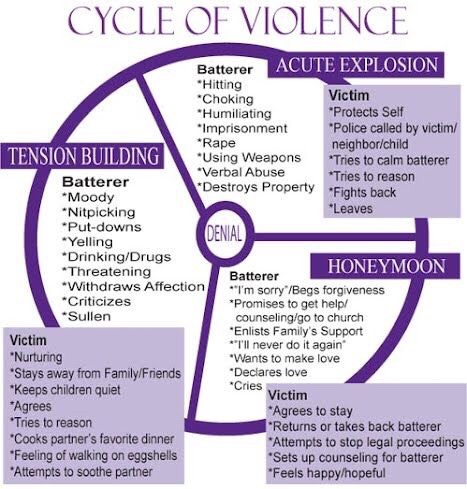
Thank you AOA for providing great information on the cycle of violence. M

This is real….
Please encourage any loved ones in this cycle to seek help and support from a domestic violence center or hotline…
Pray….
Love…
Support….
Children are affected deeply…..
~AoA
Sky Sports
Friday 16 November 2018 07:48, UK
Cleveland Cavaliers forward Kevin Love says some types of masculinity portrayed in the NBA are “outdated” and “dangerous” and stop men from getting help for depression and anxiety.
The five-time All Star has personal experience after he suffered a panic attack during a game last November and realised he needed help and started seeing a therapist.
“I know from experience that this is not easy,” he told Reuters.
“So opening up about it and allowing myself to be vulnerable can affect a lot of people in a positive way and hopefully create some change.”
He said athletes were in a perfect position to break down stigmas associated with men and mental health. “Athletes … are looked at as superhuman so having them open up can have a big impact.”
Love is hoping to spread the message that seeking help is a sign of strength with a web series called “Locker Room Talk” where he interviews athletes like Michael Phelps, Channing Frye and Paul Pierce about their own mental health.
“Michael Phelps being able to speak out about mental health in the way that he does is very powerful”.
Love spoke out about his mental health after San Antonio Spurs guard DeMar DeRozan said he was suffering from depression.
“Without DeMar DeRozan I know for a fact that I wouldn’t be sitting here as soon as I am today,” Love added.
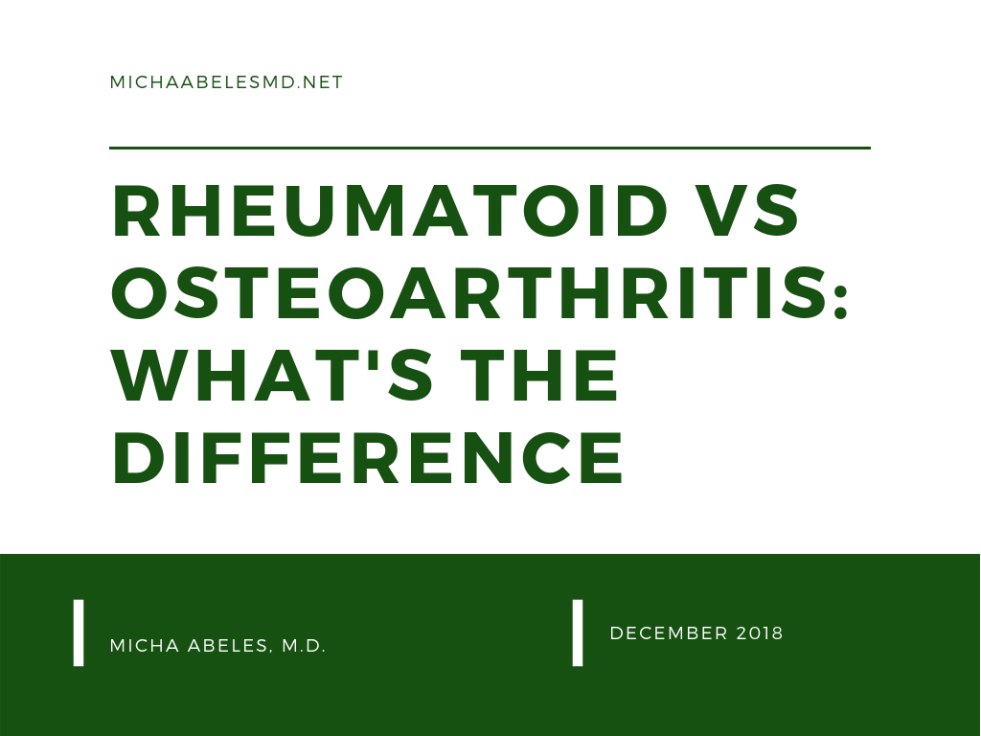
Great information from Micha Abeles MD.
The post clarifies some of my questions. M
Osteoarthritis (OA) and rheumatoid arthritis (RA) are both forms of inflammation of the joints but they are actually very different types of a broader condition called arthritis. There are many forms of arthritis, including gout, but RA and OA are two of the most common, affecting a combined 32 million people in the United States alone. Despite their similarities, the diseases have different causes and symptoms that can vary quite a bit in spite of some overlap.
What Is Osteoarthritis?
OA is a degenerative joint disease affecting the cartilage. Also known as wear-and-tear arthritis, it’s caused by a breakdown in cartilage of the joints that leads to pain and inflammation as bone rubs against bone without the protective cushion of the cartilage. OA may begin in a single joint and get progressively worse. This disease is most common among older adults with 70% of people over 70 showing some evidence…
View original post 308 more words
Eight months after the end of the Civil War, the 13th amendment is ratified by the required number of states, abolishing slavery in the US. Its passage was secured after intense lobbying by President Abraham Lincoln, whose Emancipation Proclamation had declared slaves free, but their status after the war was still uncertain.
1965
The stop-motion animation special airs on NBC as part of General Electric’s ‘Fantasy Hour.’ Created by Arthur Rankin and Jules Bass and filmed in Japan, the show will become a holiday classic for generations, moving to CBS in 1972.
1993
Schindler’s List hits theaters. Famed director Steven Spielberg recently said that audiences could gain more out of watching his 1993 holocaust movie “Schindler’s List” today more than any other time thanks to the current political climate.

I thank you Mr. President for your service to America, you offered us a strong shoulder to lean on. M

No matter what I do my candles always end in a tunnel. you know the one, wax inches above where the wick is. I found this great article in the December’s Real Simple magazine. I’m anxious to see if my luck with the tunnel issue.
Abigail Cook Stone the founder of Otherland Candle Company says trim the wick to 1/8 inch every time you light the candle. It helps the wax burn slower at a more even pace and avoid soot build up around glass. “A good rule of thumb is to burn your candle an hour for every inch the candle is wide.” says Kristen Pumpfrey, Creative Director of PF Candle Company. So if the candle is two inches wide, two hours should do it. “Blow out candle gently ( to prevent wax splatter” or use a sniffer to extinguish.
You can find the information in Real Simple on page 33 of the December edition
M
Sending wishes of happiness and health on this joyous occasion. I hope you have the pleasure of spending time with family and friends. Breath in the joyous sunshine of this special observance.
Melinda
Thank you Lily for another great post. With a chronic illness we have to remind ourself to move forward but not over do it. It’s a tough balancing act for me.
Hi, friends. In the first installment of this series, I discussed falling, and today’s topic is fatigue. Have you ever felt plagued by chronic exhaustion due to disability, insomnia, stress, etc? Let’s discuss!
View original post 525 more words
What’s the most stressful part of the holidays? Chances are it’s not the crowds, long to-do lists, or even the financial strain. My clients, friends, and colleagues resoundingly say that dealing with difficult family members and their over-the-top drama is the most stressful part of the holidays.
For most of us, the holiday season means lots of social events – Thanksgiving with your folks, Christmas dinner with your in-laws, the office holiday party, and additional religious gatherings.
It’s a blessing to celebrate when we enjoy each other’s company and treat each other with respect and kindness. On the other hand, it’s draining to spend time with people who exude negative energy, always seem to have a problem or crisis, and demand your attention. Often, overly dramatic people, such as these, want to suck you into their negativity vortex.
When you visit your family, do you feel like you’ve stepped into an episode of The Real Housewives or Big Brother? If so, you know exactly what I mean by overly dramatic behavior – it’s intense, loud, aggressive, childish, inappropriate, or a huge emotional reaction. It frequently includes crying, yelling, gossiping, “emotional dumping”, and acting like everything is a crisis or emergency.
Being around other people’s dramatic behavior is mentally exhausting and anxiety provoking. It can feel like a dark cloud looming over you and shifting a joyful occasion to one of upset and negativity. Sometimes you can almost feel it in the air; you can sense when others are amped up or on high alert (especially if you’re an empath or highly sensitive person), which is why it’s so draining to be around other people’s drama.
Dramatic behavior is attention-seeking behavior and when we react and get drawn into it, we’re rewarding this behavior and sending the message that it’s an effective way to get our attention. Drama tends to build on itself, pulling people in and becoming contagious. It’s hard work to protect yourself from the natural instinct to react.
Here’s how to create an invisible bubble around yourself to keep other people’s drama out of your physical and mental space.
Remembering that you can’t make people behave differently is always the first line of defense. When you interact with people with this in mind, you’re less likely to give unwanted advice, engage in arguments, or be disappointed that Aunt Mary is once again having a fit before the turkey’s even on the table.
Spend some time reflecting on when drama has occurred and who has caused it in the past. Often there are patterns and repeat offenders and recognizing when you’re most vulnerable can help you prepare and create a plan to use the following strategies when you’ll need them the most.
The key to dealing with drama-makers is to stay calm and not feed into it. They are looking for you to react — and react in a big way. They truly want you to drop everything and focus on them. Your goal is to let the drama wash over you like a wave, but not pull you under. Deep breathing, grounding exercises, mantras, and other anxiety-reducing strategies can help.
Sometimes you need to put some space between you and the drama. Plan to take some breaks: go for a walk, play with the kids, or volunteer to run to the store to buy more whipped cream. I assure you that it’s perfectly reasonable to retreat to the bedroom (or even the bathroom) for 15 minutes so you can regroup.
The drama isn’t about you – no matter what anyone says. Another helpful thing to keep in mind is your drama-loving relative is projecting their issues, traumas, and insecurities onto you. Yes, it’s hard to not take things personally if you’re used to being blamed and singled out as the problem. Try thinking about what your relative’s behavior reflects about him or her instead of what it means about you.
This is a 12-step saying that means focus on yourself and don’t get overly concerned about what others are doing. You shouldn’t take responsibility for solving other people’s problems (chances are you can’t anyway). However, when you think you can or should intervene, you’ll get sucked into other people’s drama. Even though it’s hard to sit by and watch other people in pain, don’t make it your job to fix or change the situation. If someone tries to draw you in, you can even say, “I’m working on staying in my own lane.”
Your dramatic relative probably lacks boundaries, which means you’re going to need super clear and consistent boundaries yourself. They feel entitled to highjack conversations, make demands, and think everyone’s plans should revolve around them. It’s your job to draw a line and let them know what’s acceptable behavior and what you’re willing to do. Don’t compromise your health, emotional well-being, or ability to enjoy the holiday in order to satisfy their unreasonable demands.
Whenever possible, enlist support. This can be another family member who would also like to remain drama-free. Or it can be a friend who’s willing to debrief with you or lighten your load so you can fit in some extra self-care before the big day.
This year, I created a new digital workbook to support you in dealing with family drama and holiday stress. It focuses on developing individualized coping strategies so you can go into the holidays with a new sense of confidence and a toolbox of new skills for coping with difficult family members.
I hope these tips will help you protect yourself from whatever toxic drama tries to intrude on the peace and enjoyment of your holiday season.
With gratitude,
Sharon
©2018 Sharon Martin, LCSW. All rights reserved.
Photo by Caleb Woods on Unsplash.com
Sharon Martin is an emotional wellness speaker, writer, and licensed psychotherapist. Her San Jose based practice specializes in helping over-stressed, high achieving adults and teens learn to embrace their imperfections and grow happiness. Her personal journey of overcoming perfectionism and people-pleasing traits, inspired her passion for this work. Sharon is the author of Setting Boundaries Without Guilt: A Workbook to Move You From Doormat to Empowerment. Sharon also enjoys teaching blogging and writing classes for therapists. You can find her on Twitter, instagram, and her website.

Thank you for sharing in depth details of your first visit to a Neuropathic doctor. Have a great day.

So I visited the ND ( Naturopathic Doctor ) a week ago. It was “different” for lack of better words. I wouldn’t say it was a bad experience. It was just different and new to me. I found it odd, I guess. But I am also very interested in this technique. I guess this would constitute a paradigm shift for me. It’s like my usual way of thinking about medical science is being replaced by alternative ways of healing. I am learning that healing the body is not only through an avenue of medicine. Rather I am learning that there are natural ways to heal through diet, exercise and healthier natural alternatives. I have learned that running to an MD is not always the best answer. Unfortunately, I have learned this quite a few times in my life experiences. So with this new way of looking at health and healing…
View original post 776 more words
Thank you sharing the detailed information un this often misunderstood illness. Have a great day. M

October is Dysautonomia Awareness month. I wanted to do a post to raise awareness so I thought I’d share with you all five fast facts about Dysautonomia.

View original post 105 more words
Special Thanks to Pushed by Pain
Listen… I am not in pain because I am depressed. I am depressed because I am pain. It is not difficult to understand.
A short update on my tumble-down stair’s, I would say it was a Perfect 10! HaHa! My diagnosis after two days of appointments, broken right elbow, shattered left wrist and left orbital bone fracture. When the Orbital bone flexed it took in muscle with it, reason for my crazy eyeball pain. It could work itself out and it’s the lowest of priorities.
The left wrist was an hour surgery, sounds crazy with all the veins in the area. I have a t-plate drilled on for support, luckily today’s technology is flexible vs metal.
My right arm is the only “functioning” arm. I get to write you! A huge shout out to everyone for the get well notes, hugs and prayers, your words have kept my mood up and looking forward.


You’ll see less of me for a while but know I’m reading. Have a great weekend.
M
Guest Writer for Invisibly Me
Today I wanted to share a great guest post to illustrate some of the psychological treatment options available when it comes to depression. Please kindly note that any opinions expressed are of that of the writer, not necessarily myself. Depression is a common problem characterized by a worsening of your emotional state, how you think […]
via [ Guest Post ] What Depression Treatments Are Available to Me? — Invisibly Me

I had a burst of energy Saturday, thinking of all I could get done. The priority is prepping for new store opening. Instead of surrounding myself in luxury I fell down the stairs.
Eight stairs exactly. I landed on head and neck with the rest of my body pinning me down. Breaking my neck was the first thought, how do I get out of this and not move my neck.
What about my back. I can’t recall getting up. It’s scary when some thing happens and you’re alone, no one hears your tears.
A broken left orbital bone, nose, shattered wrist and arm, battered to pieces everywhere else. I am totally blessed, no broken neck or back. God sent the message my husband needed to hear, I can no longer live in a two-story house.
Have a great evening,
M :)
Hi Cindy! Enjoying the colors of the rainbow.

Is really so pretty!
The historic old pubs are lovely,
and fun to explore,
on a good, old-fashioned Irish pub-crawl.
You are guaranteed to make friends because the people are warm, friendly, and often just a tad tipsy!
Dublin is a vibrant, colorful city,
justifiably proud,
of its artistic and literary history.
I am still home at The Holler, but it’s cheers to you from beautiful Dublin~
This video always makes me smile! I love watching people dance to their own beat.
The multiple quotes are to keep me focused on how anger get’s in the way of every move we make, every person we talk to, how we love. My health is spiraling and I’m getting mixed messages from doctor’s. Big Surprise for my Chronically Ill followers. I know many of you understand and my thoughts are with you.
We all carry anger, no matter how small, it can feel magnified towards other’s. M


Really? Yesterday morning I awoke to a text message from my sister Sherry who also lives with bipolar disorder. She wrote, “I hate bipolar illness.” It didn’t take long for my wheels to start to turn. Of course you hate this illness. I hate bipolar too. I don’t like how it interrupted my life and […]
via No one wants to have a mental illness — Shedding Light on Mental Health