Vital Field has introduced a Balance FreqenCell to help you find peace of mind and overcome addictions.
What if there was a genuine way to shackle that one secret gremlin that takes a toll on your life?
Introducing the Balance FrequenCell – the perfect accompaniment to a mindset that has already decided to change but lacks an energetic kick in the proverbial butt to complete the mission.
The Balance Cell leverages an energetic cocktail of neurotransmitters and Amazonian herbs to help the brain regulate unnecessary peaks and troughs in GABA, dopamine, and oxytocin. By only working with subtle fields, we don’t mess with the chemicals but manage to nudge the energetic system towards more balance.
Tested over two years in labs and users in Europe, we are confident today that at least 80 percent of users will experience a significant benefit in balancing their life better.
Commitment, the will to change, and discipline must come first thought. It’s never easy, which is why the Balance Cell may give the friendly support we sometimes need to reach the next level… of balance.
Just stopping one addiction with hardcore discipline doesn’t usually work, as the body tends to find another replacement addiction. Addictions are a multispectral menu, from the chemical variety (e.g., alcohol, drugs, painkillers, food) to the gadget (e.g., cellphone, computer, video console), mental (e.g., negative emotions), and behavioral variety (e.g., excess exercise, or no exercise at all) – but for the energetic mind-body they all represent the escape from the present.
TheBalance Cell is a tool to help you journey back to the center, the place where you can stay still, present, calm, and energized.
Ah, the joys of summer: The withering heat and school vacations, when your kids give you minute-to-minute updates on their boredom levels. Isn’t summer supposed to be fun and relaxing? If you’ve got summer depression, it isn’t.
For some people, summer depression has a biological cause, says Ian A. Cook, MD, the director of the Depression Research Program at UCLA. For others, the particular stresses of summer can pile up and make them feel miserable.
Especially hard is that you feel like you’re supposed to be having a great time. Everyone else seems so happy splashing in the water and sweating in their lawn chairs. So why can’t you? And more importantly, what can you do to make this summer easier? Here’s what you need to know about summer depression.
Summertime SAD. You’ve probably heard about seasonal affective disorder, or SAD, which affects about 4% to 6% of the U.S. population. SAD typically causes depression as the days get shorter and colder. But about 10% of people with SAD get it in the reverse — the onset of summer triggers their depression symptoms. Cook notes that some studies have shown that in countries near the equator – such as India – summer SAD is more common than winter SAD. Why do seasonal changes cause depression? Experts aren’t sure, but the longer days, and increasing heat and humidity may play a role. Specific symptoms of summer depression often include loss of appetite, trouble sleeping, weight loss, and anxiety.
Welcome back to Weekend Music Share; the place where everyone can share their favorite music.
Feel free to use the ‘Weekend Music Share‘ banner in your post, and don’t forget to use the hashtag #WeekendMusicShare on social media so other participants can find your post.
I stumbled upon my diagnosis of Lyme Disease in 2013 after my Neurologist spent a year giving me every test she could to find the answer to my symptoms. When I say stumbled upon, I mean it. When she shook her head and referred me to a Rheumatologist, I decided to take to the Internet. I had all the test results, and every test was abnormal so I started searching for different combinations of my abnormal results. After a few attempts, I landed on the list of autoimmune illnesses that included Lyme.
I made the deduction of other illnesses based on the previous testing and the symptoms didn’t fit. After landing on Lyme, my research began. It took no time to figure out what was wrong.
This is the easiest part of having Lyme disease, from here it’s a nightmare to get treatment. First and foremost insurance companies don’t cover the cost of IV Antibody Therapy. The only cost covered by insurance was prescriptions. Thank goodness because the total cost would really blow your mind.
For 18 months we flew to Washington, DC every month to start a new protocol. Every appointment with my Lyme doctor cost 6K plus. Add that number up and you see how devastating the cost is.
We took out a home loan for the cost but not everyone is able to do that. None of the cost for my doctor visits or the treatments was covered by insurance.
My treatment ended in 2017, unfortunately, many new conditions were caused by Lyme that plague me today.
Today I thought about how long ago we took out the loan and what we still owe. We paid our house off over the weekend but it’s not paid for until this loan is paid. It’s not the same type of paid-off when you have a home loan.
It still chaps me that the CDC and insurance companies are turning their back on Lyme patients, even today!
I’m so appreciative of Communications Director Nassia Bitha at Vitalfield for sending me the Weight Loss Frequencell and all the others she’s sent over the years.
About Vital Field
Our mission is to help people achieve good health and a pain-free life with safe, natural, non-invasive and non-chemical methods. Frequencell Inc. (a Delaware corporation based out of Los Angeles, USA) provides treatments for health and chronic pain, based on the results of over 30 years of scientific research, development and clinical trials.
This post contains affiliate links that don’t cost you moe to use and help fund my coffee habit.
Weight Loss Cell
The Weight Loss Cell supports your energetic point of view, getting rid of excess weight. Its specific frequencies stimulate the metabolism and fat burning, as well as reduce the feeling of hunger. The 528 Hertz frequency, the so-called Love frequency, is also included in the device: this frequency has incredible proven potential and supports self-love and self-acceptance.
Important note:
The Weight Loss Cell is designed to work complementary to your existing weight loss regime by creating an environment that maximizes the results of your efforts.
Results
I put my Frequencell on my front lower right rib as instructed on Saturday, June 11th. I have been on my journey now for two months and in the last week have had problems getting below 12-13 pounds down. Monday the 13th, I broke the barrier down to 14 pounds.
If you have sensitive skin like I do you may want to look for a tape for sensitive skin. I did feel some discomfort after 12 hours of wearing the tape provided by Vital Field.
It’s now July 28th and I’ve now lost 18 pounds. That is a pretty good clip for someone who is not exercising or on a diet. I’ve cut out snaking except for Jello, cut my meals in half, and still eat two pieces of chocolate a day.
I believe it’s the combination effect that has helped me pass the 14-pound barrier.
The Frequencell works differently for everyone and not all will see results but the research has shown excellent results.
You can check out the Vital Fileds site to see the complete collection of Frequencells with detailed information on each.
Here’s the review on Vital Fields Pollen Frequencell. Which worked beyond belief.
Trafficking is an unforgivable crime. Many young girls and boys are trafficked from a young age, some are even kidnaped or sold by their families. It must be horrific, heartbreaking, and hard to overcome the emotional toll it takes.
World Day Against Trafficking in Persons, observed on July 30 every year, is a holiday set aside for the sensitization of global citizens to the human trafficking pandemic. Human Trafficking involves recruiting, transporting, and possession of human individuals through coercion or other fraudulent means to exploit them for profit. Anyone can be a victim of this heinous act regardless of age or background, and human trafficking is present all over the world.
Human trafficking is a global pandemic that stemmed from the era of slavery and is still very much prevalent today. It can be defined simply as the unlawful act of transporting or coercing people to benefit from their work or service, which is typically in the form of forced labor or sexual exploitation. The act is a crime against the person because it violates the victim’s rights of movement through coercion as well as the fact that the victim is being commercially exploited.
Human trafficking particularly targets women and children, and may not always involve the movement of the person from one place to another. And though labor trafficking and sex trafficking are usually treated separately in the general trafficking discourse, one thing that victims of both forms of trafficking have in common is that their trafficking began with a migration to a seemingly better environment. The United Nations Convention for the Suppression of the Traffic in Persons and of the Exploitation of the Prostitution of Others was adopted in 1949 and came into effect in 1951. The convention was a legal turning point in human trafficking as it was the primary legally binding instrument on the subject.
Please keep your eyes open, especially if in the Healthcare of Law enforcement. If something doesn’t look right, it may not be. Like on television, see if you can connect with the person directly without the others around them knowing. Like holding a sign to see if they need help, or if seeing the person head towards the bathroom by themselves, try to slip them a note that asks for a yes or a no.
I don’t know that these are suggested methods, just the only ones I’ve seen and know it will be hard to get to the person in need of help.
Melinda was diagnosed with fibromyalgia, Lyme disease, chronic fatigue syndrome, bipolar disorder and dementia.
A few years later, she launched her blog, Looking for the Light, to share her story, advocate for her causes and hopefully, help a few along the way.
Read her story below!
Hello Melinda, thank you for agreeing to talk to Carenity.
First of all, could you tell us more about yourself?
I’m a lively woman going on 60 years old who has been married to her sweetheart for 20 years. I love my blog, photography, helping others, advocating for my causes like mental health and chronic illnesses. And I can’t forget my two dogs.
You have several illnesses. Could you tell us which ones? When were you diagnosed with each of them? What were the first signs of each?
I have fibromyalgia, Lyme disease, chronic fatigue syndrome, bipolar disorder and dementia.
Lyme disease was very difficult to diagnose, it took me 1.5 years which is quick compared to many. It caused my fibromyalgia, chronic fatigue syndrome and dementia. This was 2015.
As for my mental illness, I was diagnosed at 19 years old.
What is life like with fibromyalgia, Lyme disease, chronic fatigue syndrome, bipolar disorder and dementia? Do you receive comprehensive care, or do you see several specialists? How do you feel about your current management? What are your treatments?
Life can be a total challenge some days and not so bad others. One thing I believe in is self-care. This extra hour or so a day helps me get in touch with my body, to nourish it, unwind and help my body regenerate. I see several specialists and have a varied treatment plan. The treatment plan that can change the most is for my mental illness.
According to you or to the doctors, is there a link between your conditions?
Lyme disease was caused my fibromyalgia, chronic fatigue syndrome and dementia. The rest have not been linked.
On a daily basis, which condition requires the most follow-up or is the most disabling? Why?
My mental illness requires the most attention because I must be aware of my moods throughout the day, take medication several times a day and keep my doctor informed if having a problem with medication.
Do you have a family history of any of your conditions?
I have a family history of dementia, but it was caused by a stroke.
Do you feel supported by your family and friends? Do they understand your daily life with the disease?
Yes! The key to that is taking my husband or another person with me to my critical appointments. That way I have two sets of ears, someone to take notes, who can mention a symptom I may have forgotten or help me clarify what the doctor is saying.
What is the impact of your conditions on your private and professional life? What misconceptions do you frequently hear about your so-called “invisible” diseases?
I don’t really hear anything about invisible illness, but my lifestyle doesn’t allow me to interact with many people. Personally, the biggest toll has been on my freedom and the intimacy with my husband.
Shortly after, you decided to launch your blog “Looking for the Light”. Why did you make this choice? What messages do you want to convey to your readers?
The mission of the blog was to share my story, advocate for my causes and hopefully help a few along the way. The key message I have for everyone is to keep moving forward.
What are your plans for the future?
Continue on as I’m already retired, work and family caused me to leave my career early.
Finally, what advice would you give to Carenity members who, like you, are affected themselves or have a loved one affected by one or many invisible chronic illnesses?
The key is understanding, if you care about the person, do your homework, learn about the illness. Don’t judge when they have to bow out or cancel plans. And if it’s a partner I highly recommend including them in your doctors’ appointments. This has helped me so much.
There’s no trying to repeat or ask questions about what the doctor said because they are right there and since they are hearing from the doctor’s mouth, you don’t have to tell them.
Any last words?
Be honest with yourself and your loved ones! There will be those that don’t listen, that’s their problem. Communicate how you’re doing without the complaining tone. If you’re struggling either physically or mentally you need to reach out. Both can cause depression.
Many thanks to Melinda for sharing her story with us on Carenity!
Learn more about World Hepatitis Day and how viral hepatitis impacts millions of people worldwide.
World Hepatitis Day (WHD) is recognized annually on July 28th, the birthday of Dr. Baruch Blumberg (1925–2011). Dr. Blumberg discovered the hepatitis B virus in 1967, and 2 years later he developed the first hepatitis B vaccine. These achievements culminated in Dr. Blumberg winning the Nobel Prize in Physiology or Medicine in 1976. Organizations around the world, including the World Health Organization (WHO) and CDC, commemorate WHD to raise awareness about viral hepatitis, which impacts more than 354 million people worldwide. WHD creates an opportunity to educate people about the burden of these infections, CDC’s efforts to combat viral hepatitis around the world, and actions people can take to prevent these infections.
Viral hepatitis — a group of infectious diseases known as hepatitis A, hepatitis B, hepatitis C, hepatitis D, and hepatitis E — affects millions of people worldwide, causing both acute (short-term) and chronic (long-term) liver disease. Viral hepatitis causes more than one million deaths each year. While deaths from tuberculosis and HIV have been declining, deaths from hepatitis are increasing.
The vision of CDC is to eliminate viral hepatitis in the United States and globally. CDC collaborates with international partners to help countries experiencing high rates of infection to prevent, control, and eliminate viral hepatitis.
Since the war on Opioids began, fewer and fewer prescriptions for pain medication have been written yet the number of Fentanyl overdoses continues to rise exponentially. Like many other crises in our country, lawmakers point the finger instead of solving the problem.
Instead of more law enforcement and stiffer jail terms to deal with the street drug crisis they keep pounding on doctors about writing prescriptions for millions of pain patients every day.
The problem has gotten so bad that more doctors have stopped writing pain med prescriptions, others refusing to give pain meds after surgery, and two weeks ago I read where a woman who was dying of cancer who was refused pain medication.
This is what happens when pain patients aren’t taken care of. Recently in Tulsa, OK a man went into his surgeon’s office and killed him and three others. The man had back surgery early in May and had been calling the office repeatedly due to his pain levels. He called that morning again trying to get some pain relief. A couple of hours later four people are dead. I later heard a doctor on the news saying that the man should have been on pain medication for at least another month for the type of back surgery he had. I think we’ll see more of these types of crimes as the DEA pushes harder on doctors to stop writing pain prescriptions.
I know there are always a few bad apples and yes, there were and are doctors out there who are overprescribing but not enough to create this monster on our hands. I believe overall doctors are professional when it comes to pain management, not only from the stories I’ve heard but from my own experience as a pain patient.
I’ve only had two pain management doctors and they were the polar opposite but had measures in place to manage your medication. Both doctors required face-to-face appointments with the doctor to refill your prescription and most required a urine sample. The urine sample is how you know and control what your patients are taking. They test for many drugs, not just pain medication.
It’s not just doctors, pharmacies have gotten into the action! It stems from a bill that was spearheaded by Elizabeth Warren that stated among other things that doctors could write a two-week prescription. Why this was in there is beyond me because I’ve had doctors write two weeks or fewer prescriptions before. Not to mention that doctors know how they can write prescriptions. This is how lawmakers knowingly or not open the door to interpretation by other non-lawmakers.
CVS took it upon itself to conquer the opioid crisis by setting its own initiatives on how to tackle the problem. One of the issues was pharmacists started to decide on their own to only fill for two weeks at a time or make the person wait until they had only one day left to pick up their medication. You can see the huge problem here. CVS finally pays for its poor judgment with a small slap on the wrist.
This is an example of how far back the problems go and it started long before. Here’s a post I wrote in 2017 about CVS’s policy on Opioids. CVS was hit with an individual lawsuit and after years of litigation has to pay $1,190,000 in damages including $550k for pain and suffering + $300k for future medical expenses for taking matters and the law into their own hands.
Please read the reference material, it is a good look inside the problem.
We’re all tired of hearing about the problem, getting no answers, and our government blindly doubling down but we have to keep raising our voices or nothing changes and only gets worse. If you are not treated properly by a doctor of any type, write to the State Medical Board and your state representatives.
When many people think of car costs, the first thing that pops into their heads is the purchase price. That’s far from all you’ll have to pay for it, however. You’ll have to put quite a lot of money into maintaining it.
These car expenses add up quickly, especially with older cars. It can often seem like a money sink. Figuring out how to stop wasting money on your car can be difficult. Your car will need some TLC, but you might want to spend much money on it.
Thankfully, there are more than a few ways you can do so. While you’ll need to put some time into it, it’ll be more than worth the effort. Three particular ways are suggested, as they’re quick and easy ways to look after your car.
How To Stop Wasting Money On Your Car: 3 Top Ways
1. Buy Parts Online
Perhaps the most obvious way to spend less on your car is to buy auto parts online. These will usually be much more affordable than the ones you can get at a mechanic’s. Since they’ll be the exact same parts, there’s no reason not to take this route.
You could save quite a bit of money on this, especially if you’re able to replace any parts yourself. While this approach involves spending a bit of time waiting for parts, the savings are worth the wait.
2. Change The Air Filter Yourself
Your car’s air filter needs to be changed regularly. You could be surprised to hear that focusing on this is one of the better ways to figure out how to stop wasting money on your car. You can do this yourself, with the car owner’s manual showing you how and when to do so.
Buying the air filter online – as recommended above – lets you save a significant amount of money on the fix. Replacing the air filter doesn’t take much time. If you’re good with your hands, it should only take you a few minutes to do so.
3. Shop For Prices
As much as you could DIY many of your car repairs, there comes a point where you’ll need to hire a mechanic to take care of things. Many people simply go to the first mechanic they can think of – or the closest one to them – and stick with that. Doing this costs more than you’d think.
Instead of taking this approach, you should shop around for prices. Depending on the issue at hand – and several other factors – the mechanics mightn’t even need to see your car before giving you a quote. While this could vary when you get there, taking this approach gives you an idea of how much each mechanic costs.
Choosing a more affordable option helps you stop wasting money on your car.
How To Stop Wasting Money On Your Car: Wrapping Up
Figuring out how to stop wasting money on your car is a difficult process. Your car will need some maintenance and attention. Depending on how you go about it, that could prove costly. With each of the above strategies, however, it’s something you won’t need to worry about.
Thank you for all the great feedback on the Blogger Highlight series, I’ve enjoyed meeting each blogger and sharing their site with you. This week I highlight a new blogger, Books & Poems Cofee & Teas.
I‘m an elderly lady with three grown children, two teenage granddaughters, two great grandkids, and two cats. I love to listen to the news, while I work on my four blogs and my poems website. I paint ( watercolors ) and I read, write poetry, and eat lots of junk food and love my morning cup of coffee. I do container gardening on my deck and porch. I have rheumatoid arthritis and fibromyalgia and I’m somewhat housebound but still very positive. I like to watch old and new movies that are clean funny and sad but with a happy ending.
I want to say a special thank you to Laura Sebright, Marketing & Ecommerce Executiveat Trigger Publishing for sending this very interesting book for review.
About the Author
On October 18th 2014, Adelaide was in a bike crash that would change her life. She went through the driver’s side window of a car that pulled in front of her, suffering injuries that almost killed her – and emotional trauma that would continue for years to come. In addition to facing the physical injuries and PTSD, Adelaide worried about how the crash would affect her ability to cope with her bipolar II. After an arduous recovery, she returned to riding, eventually qualifying to become a professional triathlete. She is an advocate for cyclists’ safety and strives to help others who have suffered life-threatening crashes. Adelaide lives with her husband Kennett and their dog Maybellene.
Blurb
When the red Fiat pulled out in front of Adelaide, she squeezed her bike’s brakes so hard that she left 50 feet of skid marks along the highway. The last thing she remembers is being lifted into the ambulance and someone saying, “Her face is peeled off.”
She spent five days in a medically-induced coma, during which surgeons picked glass from her face, reconstructed bones and inserted a stomach tube. She spent another six days unable to talk, at times gasping for air, enduring leech treatments to keep her necrotizing lip alive, and fearing a crippling bipolar episode. Without knowing what neurological damage or permanent disfigurement she’d be left with, her boyfriend Kennett proposed to Adelaide daily in the hospital, until she became conscious. But her recovery would extend far beyond the hospital and the visible physical injuries.
DEGLOVED is about perseverance as well as failure, written to give hope to those living with mental illness, and anyone who has had a traumatic event thrust upon them, which threatened to destroy their lives.
My Thoughts
Where do you go after an accident almost cost took your life? For Adelaide, it’s moving forward slowly with an eye on recovery and sharing her story to help others. Not only was she in a coma, but also had reconstructive surgery, leech treatments, and fears that her Bipolar Disorder will pop its ugly head.
When you suffer from a traumatic injury it can cause PTSD and slow the recovery process. It can be more complicated if you have a mental illness, like Bipolar Disorder. For me, stress is a huge trigger for my Bipolar Disorder and it’s something I have to keep an eye on. It can throw me into depression very quickly.
Degloved is a book of tragedy and triumph with great lessons to learn about life after unsurmountable odds. Adelaide is a strong person and her perseverance against the odds gave her life back. She’s also a walking example of what our body can do when it comes back from hell.
Adelaide pushes herself thru unimaginable odds to go on to not only compete again but is now a professional Triathlete.
This book is for anyone who has been involved in a traumatic event or knows someone that has. The book is great for caregivers.
I recommend the book hands down. It’s a great read and a very inspiring story.
Trigger Publishing
TriggerHub.org is the first mental health organization of its kind. We are bringing mental health recovery and balance to millions of people worldwide through the power of our books.
We have built a first-class resource of curated books produced and published in-house to create a unique collection of mental health recovery titles unrivaled in quality and selection. We work with experts, psychologists, doctors, and coaches to produce our books, but we also work with real people looking to share their stories to reach out to others and provide hope, understanding, and compassion. These brave authors also aim to raise awareness of mental health’s “human” face and its impact on everyday lives.
National Schizophrenia Awareness Day on 25 July shines a light on the everyday challenges faced by hundreds of thousands of people living with a diagnosis of schizophrenia in the UK and millions more worldwide. It also looks at how we can tackle some of the stigma and discrimination surrounding this much-misunderstood illness.
in 100 people will experience schizophrenia. In fact, it was a diagnosis of schizophrenia that led to the launch of our charity, which was founded 50 years ago. Much has improved since then, but while attitudes to mental health have changed, the stigma surrounding schizophrenia remains stubbornly high. Some of this is rooted in a lack of understanding of the condition, so we want to tackle this by setting out the signs, symptoms, and outlook for people affected. And the good news is that while people with lived experience tell us about some of the struggles they face, there is also much to celebrate and feel positive about.
What is schizophrenia?
Schizophrenia is a very complex condition that can affect how a person thinks, feels, and experiences the world around them. Schizophrenia doesn’t mean split personality – the term actually means schizo (to split) and phrene (the mind). While schizophrenia is an official diagnosis, people can often experience very different symptoms. The most common symptoms can include:
Audio hallucinations (hearing voices)
Delusions
Disorganised thinking
Changes in body language or emotions
Audio hallucinations (hearing voices)
Delusions
Disorganised thinking
Changes in body language or emotions
If you think you or someone you love has the symptoms of Schizophrenia, see a Psycotrist right away. There are several mental illnesses that mimic certain symptoms of Schizophrenia so your doctor can help decern what the condition may be. Do not go to the general practitioner, they do not have the skills to handle mental illness. I can’t stress this enough. Dealing with a GP can set you back years on getting the right treatment and may cause your illness to get worse. See the right doctor for the illness.
You can read my book review of Hope and Learning Our Journey with Schizophrenia by Linda Snow-Griffin. This book was an eye-opener for me, I thought I knew about Schizophrenia but boy was I wrong.
In this fast-paced social media world, it can be difficult to find the time to look within or back in time. I hope you find these questions interesting. So glad you stopped by today!
Hi! So glad you are enjoying the Today in History each Sunday.
1911
American archeologist encounters Machu Picchu ruins
On July 24, 1911, American archeologist Hiram Bingham gets his first look at the ruins of Machu Picchu, an ancient Inca settlement in Peru that is now one of the world’s top tourist destinations.
Tucked away in the rocky countryside northwest of Cuzco, Machu Picchu is believed to have been a summer retreat for Inca leaders, whose civilization was virtually wiped out by Spanish invaders in the 16th century. For hundreds of years afterwards, its existence was a secret known only to the peasants living in the region. That all changed in the summer of 1911, when Bingham arrived with a small team of explorers to search for the famous “lost” cities of the Incas.
After 17 months and many miles of travel, Brigham Young leads 148 pioneers into Utah’s Valley of the Great Salt Lake. Gazing over the parched earth of the remote location, Young declared, “This is the place,” and the pioneers began preparations for the thousands of followers of …read more
“Eye Of The Tiger” from “Rocky III” tops the U.S. pop charts
Whether it’s Oliver Stone setting a scene from Platoon to Adagio for Strings by Samuel Barber,or Quentin Tarantino setting a scene from Reservoir Dogs to “Stuck In The Middle” by Stealer’s Wheel, filmmakers often depend upon certain passages of music to produce specific emotional …read more
During her imprisonment at Lochleven Castle in Scotland, Mary Queen of Scots is forced to abdicate in favor of her one-year-old son, later crowned King James VI of Scotland. In 1542, while just six days old, Mary ascended to the Scottish throne upon the death of her father, King …read more
At 12:51 EDT on July 24, 1969, Apollo 11, the U.S. spacecraft that had taken the first astronauts to the surface of the moon, safely returns to Earth. The American effort to send astronauts to the moon had its origins in a famous appeal President John F. Kennedy made to a special …read more
The thought for this post came as I was starting my laundry and folding his. We normally do our own laundry. Mostly because I’m picky and stopped doing his when so sick with Lyme. This post is my own personal experience, it’s not fact. I did run most by my husband and he agreed. He’s a part of the group this post is talking about.
In 59 years I’ve learned so much about life and myself. I continue to believe there’s much more to come. Here are some things I would say to my younger self. Keep in mind I came from a trauma-filled childhood which includes, emotional and physical abuse, sexual abuse, domestic violence, divorce, and alcoholism. I believe that is the reason for my drug and alcohol abuse.
Learn to have more fun.
Work harder on friendships.
Don’t take advantage of people.
Stand up for what is right, no matter the consensus.
Focus on learning who you are before you get into a serious relationship.
Don’t be afraid to be wrong, own it.
Hug my grandparents more often.
If a person disrespects you once they are liable to do it again.
Don’t focus on finding forever man, let it happen.
If a relationship is confrontational, you don’t need it.
Have more long-term goals.
If a boy/man hits you, run in the other direction and never let it happen again.
Be more open-minded.
Seek therapy sooner for childhood trauma.
If you commit, you need to come thru or have a solid reason why you can’t deliver. Take all responsibility seriously.
Don’t gossip and don’t assume you know someone. We all have a past.
Spend more time on school work.
What you dislike in someone else may be the same thing you do. Look inside first.
Learn more from my grandparents about their lives.
There is a reason for everything, you may not understand it at the time, you may find out later or you may never understand why but there is a reason. Growth.
Don’t drive while drinking or doing drugs.
Look at the reason you drink so much. Was it because I was trying to cope with trauma.
Don’t let infatuation or lust make you think it’s love.
Don’t try to be like someone else, figure out who you are.
Money is not the road to happiness, it’s great but being rich doesn’t mean you’re happy.
Have more aspirations. as a teen.
Save, Save, Save more money, there’s always something popping up, and be prepared.
Don’t hold a grudge or hang onto the bad situations in life.
Accept that there are “no should’s” in life.
Noone but your family owes you anything, and even that has a limit.
Welcome back to Weekend Music Share; the place where everyone can share their favorite music.
Feel free to use the ‘Weekend Music Share‘ banner in your post, and don’t forget to use the hashtag #WeekendMusicShare on social media so other participants can find your post.
I want to give a special thanks to Editor Andrea Marchiano of Cherish Editions for sending me an advanced copy of 365 Quotes to Accelerate Your Career and Find Balance for review.
Blurb
Dr James Espey OBE is ready to be your mentor. His second book 365 Quotes to Accelerate Your Career and Find Balance in Your Life contains the wisdom gleaned from his half-century career in business and marketing. It’s all presented in short, easy-to-digest quotes from James, as well as from other figures who have inspired him along the way.
James says, “I believe that in the modern world, people are looking for short, pertinent, succinct bits of advice. That is why I decided to write this book: to give you guidance and to encourage you to make the right decisions on your journey through life.”
What people are saying
“A unique take on the wisdom of quotes. Entertaining and makes you think!” Neville Isdell, former global chairman and CEO of The Coca-Cola Company
“James has spent his career observing, thinking and summing things up succinctly. These quotes provide moments to reflect and be guided by someone who has seen around a few of the bends in the road ahead.” Peter Bauer, CEO of Mimecast
“James’s ability to draw a quote or a one-liner to sum up a ‘situation’ – tricky, funny or even just routine – has always been a feature of his management and leadership. This unique, spontaneous communication style provides inspiration to all who deal with him.” Michael Keiller, former CEO of Morrison Bowmore Distillers Ltd ”
Excerpt From 365 Quotes to Accelerate Your Career and Find Balance in Life James Espey OBE This material may be protected by copyright.
My Thoughts
In a work environment, it can be difficult to have a mentor, this book is what is missing to help you chart the course. 365 Quotes to Accelerate Your Career and Find Balance is a book I wished was available during my career. No matter where you’re at in life/career this book will help you ask yourself some tough questions that can propel your career and in turn life.
The chapters are divided based on where you are in your career, like helping you build your brand. I like Part 3 Personal Values the best because I believe that this is the foundation of who we are as a person which spills over to who we are at work.
In Chapter 11
“If you do not manage your time, time will manage you. Ten ways to make the most of your working day:”
I love this quote and was so lucky to learn this early in my career from my mentor. The quote is followed by 10 solutions to accomplish this goal. Time management can be difficult to manage and the solutions are easy to understand and implement.
I highly recommend this book to anyone and would make a great graduation gift.
Cherish Editions
Cherish Editions is the self-publishing division of the TriggerHub group, the world’s leading platform for books that encourage mental health recovery and wellbeing.
We are experienced in creating and selling positive, responsible, important and inspirational books, which work to de-stigmatise the issues around mental health, as well as helping people who read them to maintain and improve their mental health and wellbeing. By choosing to publish through Cherish Editions, you will get the expertise of the dedicated TriggerHub Team at every step of the process.
Thanks for stopping by today, I appreciate your comments each week.
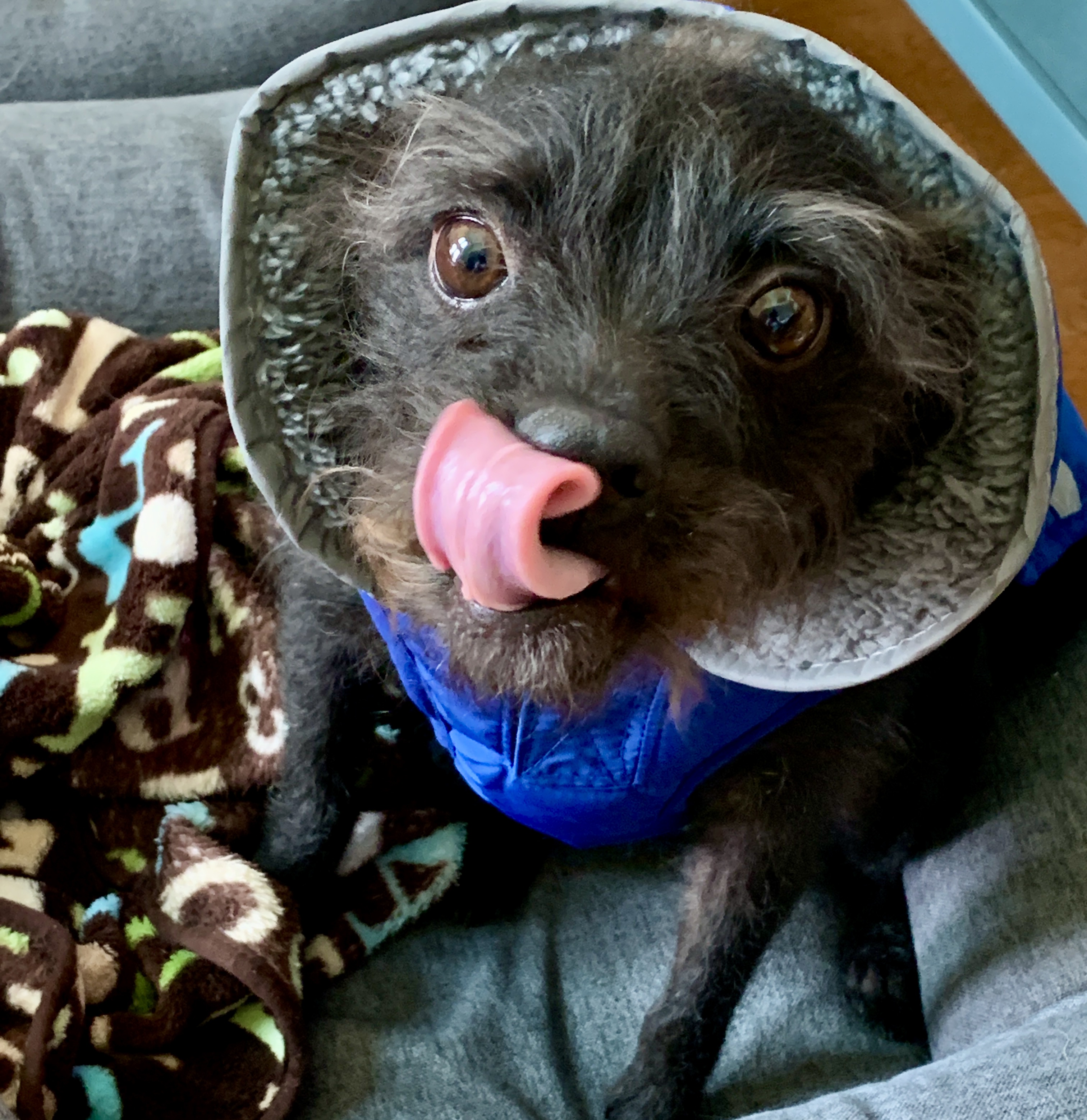
Jet (Gorilla Billy) is sleeping and his tummy looks like a gorilla. Billy comes from the fact he acts like a billy goat by climbing on you when laying down.
Setting boundaries is no more than communicating what you expect from the other person. All people need boundaries in their life. Some boundaries are harder to set than others say like the Internet and Cell Phones for that raging hormone peer-pleasing teen.
The difficulty with setting boundaries gets harder when your children are adults however if you’ve set clear boundaries growing up it isn’t a problem, maybe a conversation or to reclarify.
As a teen I was raised by my grandparents so I skipped a generation, meaning my parents were from deep poverty and the war generation. I went to live with them at 14 years old as a troubled teen. Boundaries were clearly needed.
Here are just a few
No phone calls after 9PM
In bed by 10PM
No leaving the house after 9PM
Curfew was midnight sharp!
Doors to the room were left open unless needed for privacy
Could only drive the car to take Granny shopping, run family errands, to school and back, basketball, special school dances, to write for school or local newspaper.
Once I started working I had to pay Gramps $8 a week for gas and the extra $50 a year it cost to add me to the insurance policy.
No sleepovers
Had to meet every date and friends
Today’s challenges
The biggest challenge faced by a pre-teen and teen is the Internet and Social media. Neither was around in my day. I didn’t buy my first computer until 1991.
If you start setting boundaries very early in life with will be much easier to set them with an emotional teen. One of the biggest challenges is peer pressure at this age and you will have to stand on what is appropriate for your specific child, are responsible enough, and is there a reason.
Now there are a few things to remember, I grew up in a strict environment and believe the boundaries and consequences are appropriate for a healthy relationship.
You have the opportunity to set boundaries are soon as your child is a toddler and the more boundaries as they get older. Be prepared for meltdowns, calling names, which is another boundary to set, and being mad at you.
If you want to try to be a friend to your child all their life you can stop reading here. I don’t buy into that style of parenting.
One of the first things that might come up is what language is appropriate to use in the house, for example calling names.
We’ll eat at dinner time and not in the bedroom. Even if your child is studying, they need a break from the books and this is your time to communicate with your child. How was their day?
A big bone of contention is the Internet and Cell phones. This is where you will get the most push because this is one huge peer pressure in your pre/teen’s life.
If your child is under 16 years old, but the computer is in an open but quiet part of the house to use. After they reach 16 or are very mature and responsible for their age you can move into their bedroom. The key here is, having a tracking device and blocking sites and apps they can use. Also, give them a limit to how long they have per day to use the computer. If the whole time is taken up for doing school work, too bad they have to wait until the next day.
The other teaching experience is learning responsibility and this can be done by boundaries. If you give your child an allowance, determine how much they should pay you for the computer and phone. Make them save for it. If they don’t save, it’s not that important or they are not responsible enough.
My granny knew how bad I wanted a camera, she said if I would save half she would pay for the other half. That was so appreciated because I didn’t expect it. Those lessons from my grandparents set me up for some great lessons in life.
Like I said, I’m strict and believe that many problems today are created by the Internet and children’s exposure at too young of an age.
Cell phones are another battle with children. There is so much peer pressure. You have to decide if the phone is needed, are they responsible enough to keep up with it or buy a new one themselves. Same if they lose it. If the child is working, I would have them pay a portion of the bill.
Make sure you buy the lowest Data plan, put a tracker on, and block sites. You are to have the code to the phone at all times and be free to read text. This is not only setting boundaries it’s teaching them responsibility.
A crucial part of setting boundaries is there will be times when they need to be broken, that’s life and you have to monitor the reasons. If there is a mass shooting, they can use all the data they have in one day! The key is communication and understanding why they ran out of data if it’s not apparent. It’s critical that you let your child know you are monitoring their computer and phone activity. If you sneak around you’ll have a hard time gaining their trust again. If they know up front, they have to make wise decisions or not be smart enough to try. It’s that simple.
As your children move out and learn to spread their wings, you’ll have to set new boundaries. But that’s for another post.
We all know that we can’t do everything alone. At some point in our lives, we will need the help of professionals to get us through a tough time. Here are four professionals you may need and how they can help you:
A therapist can help you work through your problems by talking to them about what is going on in your life. They can help you figure out how to deal with your stressors and make positive changes in your life. A therapist can also provide you with tools and resources to help you cope with your problems. If you need help finding a therapist, many resources are available online. Mental health problems can be very serious and should not be taken lightly. If you are feeling like you are struggling, please reach out for help.
Maybe It’s A Water Problem?
You’re starting to notice that things just don’t seem quite right. Your once bright and airy home feels a little musty and damp. You notice some water spots on the ceiling, and your wood floors seem to be warping. Then you realize that you have a water problem. Water damage can come from various sources, including leaks in your plumbing, heavy rains, or even flood waters. No matter where the water comes from, it’s important to get it cleaned up as soon as possible to prevent further damage to your home. That’s where a water damage cleaning and restoration company comes in. They have the experience and the equipment to quickly and efficiently remove all the water from your home, dry it out, and restore it to its pre-water damage condition.
Are The Lights Flickering?
If your lights are flickering or going out completely, it’s time to call an electrician. Many times, homeowners try to fix electrical problems themselves and end up making the situation worse. A professional electrician will be able to quickly diagnose the problem and make the necessary repairs. In addition to repairing electrical problems, electricians can help you upgrade your home’s electrical system. If you’re planning on adding new appliances or making other changes to improve your home’s energy usage, an electrician can ensure your electrical system is up to the task. No matter what your electrical needs are, an electrician can help.
Where Did The Money Go?
A financial planner can help you save for retirement, plan for large expenses, and make the most of your money. They can also offer guidance on investments and insurance. If you’re unsure where to start when saving or investing, a financial planner can be a valuable resource. When choosing a financial planner, it’s important to find someone who is a fiduciary. This means they are legally required to act in your best interest. You can also look for someone who is certified by the Certified Financial Planner Board of Standards. A financial planner can help you get your finances in order and prepare you for the future!
These are only a few examples of the type of professionals you may need at some point in your life. So, if you find yourself in a difficult situation, don’t hesitate to reach out for help. There are people who can and will help you get through whatever problem you’re facing!
Anyone can experience depression whether it’s situational, like the COVID crisis, chronic pain, illness, or mental illness. I have Bipolar Disorder, which means although my moods can swing from highs to lows, most of the time I’m depressed. I was first diagnosed at 19 years old but didn’t seek treatment until 28 years old after my father committed suicide.
A few examples of what depression has looked like for me
Your family sends someone over to check on you since they haven’t heard from you in days/weeks
Sleep for 22 hours a day
Don’t shower for weeks
Can’t remember when you ate
Your mailbox is so full the postman stops delivering mail
Emotional eating or buying
Feel deep guilt over lying to family and friends for years trying to hide your depression
You are numb, empty inside
It’s been eight months and five new prescriptions and still no improvement
The doctor tells you if you cancel another appointment he will fire you and you almost drive off the freeway on the way home
To depressed to take your medication no matter how bad you want to
Drink to much
Have a detailed plan on how you will commit suicide
The normal mood is depression, you are taking medication just to get you above the line to normal happy
Taken over 60 medications or combinations of medicines
Had 21 Electro Shock Treatments
Spent multiple weeks, multiple times in a Psychiatric hospital
Divorced because husband didn’t believe you were depressed
Cut off contact with everyone in an effort not to have to explain what’s going on or where you were
Lose your job on the third day because you can’t get out of bed
Don’t fill your prescriptions because you can’t drive one mile
These are a few examples of the struggles I’ve had with Bipolar Disorder for 40 years. The blessing is I have an exceptional Psychopharmacologist and Therapist who I’ve been seeing for 30 plus years. My doctor has been tough on me, never allowed me to make excuses, and taught me how to explain my feelings in an effort to prescribe the right type of medication. He strongly recommended I seek out therapy which I did and have never looked back.
Therapy doesn’t help control my depression but allows me to process the anxiety, guilt, and emotions I have from being depressed.
There is light
There is light at the end of the tunnel, sometimes you can’t even see a glimmer but there’s always light at the other end.
Please don’t try to deal with your depression alone, even if it’s situational depression, like a death or divorce, everyone needs emotional support. Go talk to someone.
Keep a log of your feelings by day the best you can in order to share those raw emotions with a Psychiatrist or Therapist. Raw feelings will help me get to the root of any issue much quicker than going to an appointment saying I’m depressed without clear examples.
If your general physician is prescribing your medication and you are still experiencing depression please seek out a professional with specialized training. A general doctor doesn’t have the in-depth knowledge of medications or about ongoing depression to get you to the other side.
A Psychopharmacologist is the best type of doctor if you have long-term or complex depression. They are a Psychiatrist with extra years of training in brain function among other things. The reason he has meant so much to me is he can determine what part of my brain needs stimulation and can prescribe very specific medications. They are more expensive and your insurance may not pay the entire amount but it’s worth every penny. I would not be alive today if it weren’t for my doctor.
If you don’t suffer from long-term depression I would start with a Psychiatrist and go from there.














































 Looking for the Light