

Month: September 2022



Friday Quote 9/16/2022
Hey! So glad you stopped by today, I look forward to your comments each week.

Melinda

5 Tips for Starting a Mental Health Practice
If you’re reading this, then you may be considering starting a mental health practice. This is an exciting endeavor, but it’s also a lot of work. There are many things to consider before you get started. This blog post will discuss tips that will help you get your practice off the ground and running smoothly!

1: Do your research
Before you do anything, it’s important to do your research. Learn about the different types of mental health practices, what services they offer, and what their target market is. This will help you determine what type of practice you want to start and what services you need to offer. It’s also important to research the competition in your area. This will give you an idea of what you’re up against and how you can stand out from the rest. Consider animal therapy as another form of treatment!
2: Build a practice that meets your needs
When you’re starting a mental health practice, it’s important to build one that meets your needs. You need to consider what type of clients you want to work with, what services you want to offer, and what your ideal practice looks like. This will help you narrow down your options and make sure that you’re creating a practice that is right for you.
You can also talk to your home builder about designing a secluded office in the back of your home.
3. Build a website
In today’s world, having a website is essential for any business. This is your chance to show potential clients who you are and what you can offer them. Make sure that your website is professional and easy to navigate. Include information about your practice, your services, and how to contact you. You should also consider creating a blog or podcast to help promote your practice.
Creating a social media presence is also important. Use platforms like Twitter, Facebook, and LinkedIn to connect with potential clients and promote your practice.
4. Develop a marketing strategy
If you want your mental health practice to succeed, you must develop a marketing strategy. There are many ways to market your practice, so it’s important to find the ones that work best for you. You can use traditional methods like print ads and direct mail, or you can get creative and use social media or online advertising. Whichever methods you choose, make sure that your marketing is consistent and professional.
5. Get the word out
Once you have your website up and running, it’s time to start promoting your practice. Make sure that your friends and family know about your new business. You can also promote your practice through local events and speaking engagements. Get involved in your community and let people know what you do!

Starting a mental health practice is a lot of work, but it can be an incredibly rewarding experience. Use these tips to get started on the right foot and set yourself up for success! Do your research, build a website, develop a marketing strategy, and get the word out about your new business. With some hard work and dedication, you can make your mental health practice thrive!
This is a collaborative post.
Melinda

Mini Me Health Update
Life has been full of surprises over the last three months. Here’s a snippet of what is going on.
Rheumatologist
I saw a new Rheumatologist to asses all the joint and leg pain I was having. She basically dismissed me saying that unless the test come back with something, she would not need to see her. Then the admin calls to tell me to see my immunologist and that my kidneys weren’t working properly. I see the doctor’s report and found out I have Sjogren’s Syndrome and they didn’t even tell me. Time for a new Rheumatologist.

Tardive Dyskinesia
My Tardive Dyskinesia is still a problem. I’ve been on Ingrezza for two months but have experienced little change. I guess I don’t fall into the percentage of people who get relief in two weeks. The side effects are brutal. I fall very easily and have many dizzy spells throughout the day. At $7500 a month you would expect miracles, right?
Dementia
The Lyme virus went to my brain and continues to wreak havoc. My memory has been much worst this past month. I can be thinking or saying something and mid-sentence I forget what I’m talking about. I have been looking inward to decide if this is the next level downward. I’ve decided to kill myself before I lose all of my memory. I’ve been wondering if now is the time. It may be selfish but I think it’s better for my husband. I was a caregiver to my granny and she had dementia. The day she forgot me was a sad day. Dying slowly, every day the hospice nurse does everything for her. My granny didn’t know anything and was laying in a bed waiting to die. I don’t want that for my husband.
My doctor has scheduled me to see a Neurologist to talk about the newest medication available and the side effects. When I hear brain bleed I get a bit nervous but I’ll listen to him. The monitoring while on the drug is crazy, you have to have a PET scan every month.
Brain Surgery
I had my first brain surgery when I was 14 years old. The doctors would not remove the tumor because it had grown thru my skull and I was so young. In 1997 I had the surgery, boy I don’t recommend it. They took out about a quarter of my skull and replaced it with surgical material to make up for the loss of the skull. Fast forward, the material used has shifted and is pushing on my skull. I have an appointment to see a Neuro Surgeon to see if another surgery is needed. Surgery is very pain full, I had close to 75 staples in my head. I don’t want to go thru that again. Maybe he can do a smaller procedure than last time. Did you know it takes forever for your hair to grow back after it’s shaved?
Mental Illness
I had to stop one of my meds due to the Tardive Dyskinesia and we’re making changes to the amount of each drug I already take. I’ve increased three medications so far. I’m hoping to not have to start a new med. So far this approach is working. I was spiraling for a couple of weeks but we’ve increased the dose on another med and I’m feeling better. I’ve talked with my doctor more in the past three months than all of last year
You’re up to date.
What have you been going thru?
Melinda

Does You Know How To Close My Facebook Account?
I’m exhausted after looking everywhere on Facebook to see how to close my accounts. Do you know where to go to close a Facebook account?
I appreciate any help you can give! They make it so hard to contact them.

Thanks!
Melinda

Lymphoma Awareness Day 15th
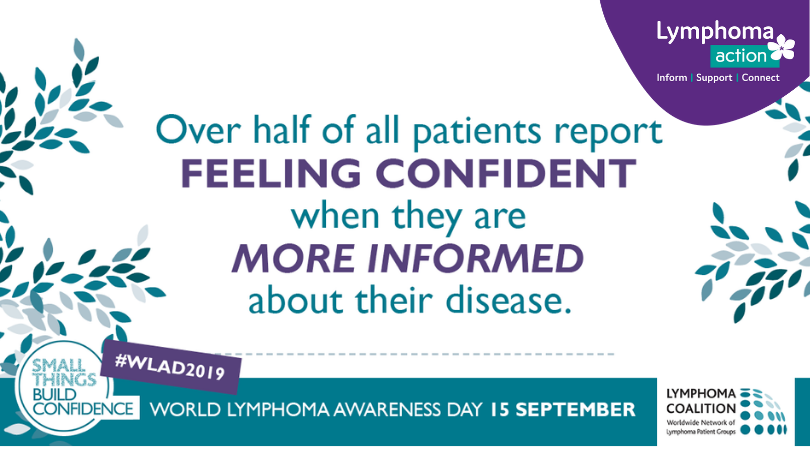
World Lymphoma Awareness Day takes place on 15 September every year to raise awareness of lymphoma – the most common blood cancer.
This year the campaign is encouraging people around the globe to share key facts about lymphoma – not only so more people are aware of the disease, but because research shows that people affected feel more confident when they are more informed.
Lymphoma is cancer of the lymphocytes (white blood cells).
Over 580,000 people are diagnosed with lymphoma each year worldwide.
Symptoms of lymphoma can be: unexplained weight loss, fatigue, swollen lymph nodes, itching, night sweats and unexplained fever.
The most common lymphoma symptom is painless swelling in the lymph nodes.
Lymphoma symptoms can be overlooked because they can be similar to less serious illnesses, such as the flu.
Symptoms do not determine the lymphoma subtype. Subtype is determined through testing with a specialist.
There are no screening tests for lymphoma.
Fatigue is the most common physical condition of lymphoma, regardless of subtype.
People experience fatigue before diagnosis, during treatment and after treatment is completed.
Over half of all patients report feeling confident when they are more informed about their disease.
If you experience any of the symptoms please reach out to your Physician or Cancer doctor right away. Time is of the essence.
Melinda
References:
https://lymphoma-action.org.uk/10-facts-about-lymphoma-world-lymphoma-awareness-day

Medications And Treatments For Muscles Spasms
I found a list of medications most commonly prescribed for muscle spasms. It’s extensive and I think you’ll find it educational. The off-label uses and what is at the local store are not on the list below. See if your doctor has tried everything for your spasms.

A spasm may be a muscle contraction caused by abnormal nerve stimulation or by abnormal activity of the muscle itself.
A spasm may lead to muscle strains or tears in tendons and ligaments if the force of the spasm exceeds the tensile strength of the underlying connective tissue. This can occur with a particularly strong spasm or with weakened connective tissue.
A hypertonic muscle spasm is a condition of chronic, excessive muscle tone (i.e., tension in a resting muscle). This is the amount of contraction that remains when a muscle is not working. A true hypertonic spasm is caused by malfunctioning feedback nerves. This is much more serious and is permanent unless treated. In this case, the hypertonic muscle tone is excessive, and the muscles are unable to relax.
A subtype of spasm is colic. This is an episodic pain caused by spasm of smooth muscle in a particular organ (e.g., the bile duct). A characteristic of colic is the sensation of having to move about, and the pain may induce nausea or vomiting.
Muscle spasms — in which a muscle tenses and cramps spontaneously — may be acute and they can also appear in a chronic form. If muscle spasms become chronic, they may cause pain and interfere in a person’s everyday activities.
Muscle spasms generally occur due to the overuse of the muscles, or they are associated with muscle tear and strain. Dehydration or an imbalance in electrolytes are two other frequent causes of muscle spasms. Even something as simple as not warming up before exercising can lead to muscle spasms.
Every muscle in the body can be affected by spasm. People who have to deal with chronic muscle spasms are advised to consult a doctor in order to receive proper treatment. The underlying cause of chronic muscle spasms must be identified.
List of centrally acting SMRs
| Generic name | Brand name | Form | Generic available |
| carisoprodol | Soma | tablet | yes |
| carisoprodol/aspirin | not available | tablet | yes |
| carisoprodol/aspirin/codeine | not available | tablet | yes |
| chlorzoxazone | Parafon Forte, Lorzone | tablet | yes |
| cyclobenzaprine | Fexmid, Flexeril, Amrix | tablet, extended-release capsule | tablet only |
| metaxalone | Skelaxin, Metaxall | tablet | yes |
| methocarbamol | Robaxin | tablet | yes |
| orphenadrine | Norflex | extended-release tablet | yes |
| tizanidine | Zanaflex | tablet, capsule | yes |
List of antispastics
| Generic name | Brand name | Form | Generic available |
| baclofen | Lioresal, Gablofen, Lioresal | tablet, injection | yes |
| dantrolene | Dantrium | tablet | yes |
| diazepam | Valium |
List of antispastics
| Generic name | Brand name | Form | Generic available |
| baclofen | Lioresal, Gablofen, Lioresal | tablet, injection | yes |
| dantrolene | Dantrium | tablet | yes |
| diazepam | Valium |
Treatment for muscle spasms
Chronic muscle spasms generally lead to muscle soreness and pain. In the majority of cases, patients would be recommended to have plenty of rest. The rest is not supposed to last longer than a few days, since regular but light physical movement helps.
A person may deal with muscle spasm by increasing a certain physical routine gradually. Furthermore, if one’s physical activity leads to muscle spasms, it can be replaced with an easier or less intense activity.
In people who have already suffered from muscle spasms, there is an increased chance for spasms to reoccur. To prevent the recurrence of muscle spasm, one may perform simple exercises such as stretching in order to increase the flexibility and elasticity of the joints and muscles.
The affected muscle can be wrapped in a comfortable bandage as it heals. This can successfully prevent internal muscular bleeding and the onset of repeated series of muscle spasms. And finally, there is one more way how to deal with muscle spasms. Home remedies for muscle spasms and cramps include relaxation techniques. Massage, heat therapies, and cold compresses are not supposed to be applied during the very attack of muscle spasm. They may be applied only after the spasms have subsided.
If you suffer from repeated muscle spasms, it is advisable to seek medical care for proper diagnosis and, where relevant, treatment. Should your muscle spasms not be caused by simple overexertion but instead by an underlying medical condition, you will want to be aware of the cause, so that you can receive treatment or learn how to best manage your muscle spasms.
I suffer from chronic muscle spasms, which bother me the most at bedtime. Maybe because all the chatter is gone. I take Methocarbamol, and cream for pain from Clearing to treat my spasms but I see there are several that are extended-release medications so I’ll talk with her about that.
What medication have you taken for muscle spasms?
Melinda
References:

Wordless Wednesday*Pink
Thanks for stopping by today, I appreciate your comments each week.



Melinda
What You Need To Stay Healthy-Eyes
Your eyes help you see and navigate in your day-to-day life, so protecting them is paramount. Often, your eyes are even the first to show issues within the body, such as diabetes and high blood pressure.
By understanding why it is important to take care of your eyes, you may be more likely to take steps toward improving your eye health.
One of the top reasons to care for your eyes is to reduce your risk for age-related macular degeneration (AMD) and cataracts. How can you do this? While there’s no concrete evidence on what can prevent these eye problems, some research has indicated that consuming an antioxidant-rich diet may help.
According to the American Optometric Association (AOA), here are some of the best antioxidants for your eye health:
- Lutein and zeaxanthin
- Omega-3 fatty acids
- Vitamins C and E
- Zinc
How to Take Care of Your Eyes Daily
There are several ways to protect your eye health. First and foremost, you’ll want to schedule a comprehensive eye exam with an Independent Doctor of Optometry (or optometrist). It’s best to have one of these appointments per year to mitigate issues with your vision and ensure your eyes are in the best possible condition.
But what can you do before next year’s eye exam? You can take preventive steps to protect your eye health. Here are some simple tips on how to take care of your eyes daily:
- Choose your eyewear accordingly. Wearing blue-light glasses while on the computer and UV-protective sunglasses while outdoors may be positive for your eyes. After all, blue-light glasses may help with digital eye strain, and UV-blocking sunglasses can limit your exposure to harmful sunlight.
- Rest your eyes. Try for at least eight hours of sleep per day. You may need more or less, depending on your age and activity level. Also, in addition to sleeping, you can rest your eyes by taking frequent time away from the screen.
- Sterilize your contacts. Debris can accumulate on your contact lenses, so it’s best to keep them clean to avoid getting an eye infection. Wash your contacts as often as the packaging explains, or opt for daily wear contacts if it’s too time-consuming to follow a regular cleaning schedule.
Why should you take care of your eyes?
Your eyes are critical to your everyday life beyond your vision. Why is it important to take care of your eyes? Taking steps to promote your eye health and safety can deter specific eye diseases and injuries. It can also help you identify changes in vision faster.
Here’s how to take care of your eyes daily:
- Select the right eyewear for different activities.
- Give your eyes plenty of rest. (And get some for yourself, too!)
- Clean your contacts often, or choose a kind that you can throw away.
What is so important about eye care?
To your health.
Melinda

What Do Your Books Say About You?
It’s always interesting to me to look at the books people have. You can learn so much about them. I’ve included a few photos of my books. See if you can guess what I’m into.



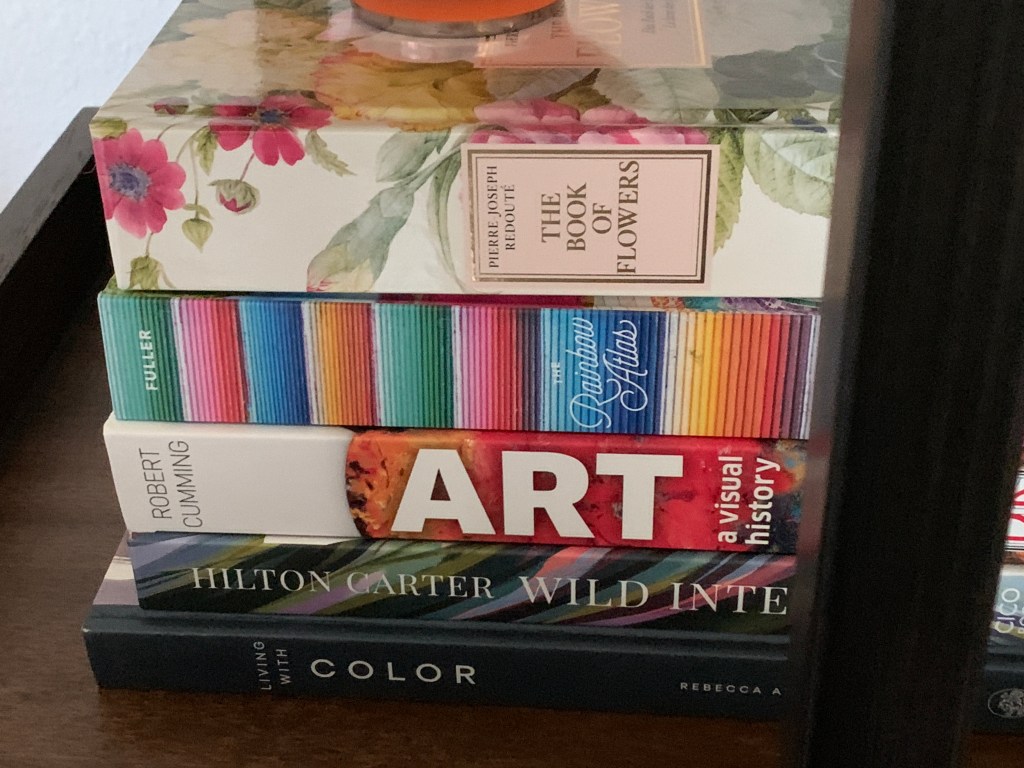


What do your books say about you?
Melinda
Rheumatoid Arthritis Awareness Week 13th – 19th
Rheumatoid arthritis is the most common type of arthritis and it is an autoimmune disease that affects that 1% of the whole earth population, which is equivalent to over 75 million people, which are suffering from this disease. It is chronic, which means long-lasting disease with intermittent periods of remission and exacerbation. It is mistakenly known that this disease only affects the joints of the small hands and fingers, but that is false because it can affect other joints and organs as well, including the heart and soft tissues. That is why it is important to understand rheumatoid arthritis, its symptoms, causes, how to recognize it and treat it before the disease reaches its irreversible stages.
Coping with Invisible Symptoms
RA is often not a visible disease. Most symptoms like joint pain and stiffness, overwhelming exhaustion, low-grade fevers, and malaise (a general feeling of unwellness) are “invisible.” Meaning, others cannot tell that you are suffering when they look at you.
Coping with an invisible disease like RA is often frustrating and may trigger feelings of depression and isolation. Besides addressing symptoms under the care of your doctor, it’s helpful to engage in acts of self-care.
For instance, regular exercise has been found to help ease RA-related fatigue and prevent loss of joint motion. Exercise also releases “feel good” chemicals called endorphins, improves muscle strength, and reduces bone loss. If your joint symptoms make physical activity difficult, ask your doctor for a referral to a physical therapist. They can help devise a gentle exercise program that is tailored to your needs and symptoms.
In fact, research suggests that consuming omega-3 fatty acids can help calm joint inflammation in patients with RA. Foods rich in omega-3 include fatty fish (like mackerel and salmon), walnuts, and flax seeds. Of course, be safe and check in with your doctor or nutritionist first before changing your diet.
Lastly, since stress can negatively impact your RA symptoms, try to take time each day to relax and unwind. Consider taking a warm bath, calling a friend, or practicing yoga, meditation, or guided imagery.
All said, don’t get down if your strategies sometimes fail you. Remain motivated but also be kind to yourself. If you need to rest for a few days, allow yourself to do that.
Rheumatologists are the type of doctor most patients seek treatment from. It’s a debilitating disease in the advanced stages that can truly wreak havoc on your hands. Daily self-care is a very important part of taking care of yourself. If you have symptoms of RA please contact a doctor right away, the earlier the better.
To better health.
Melinda
References:
Everything You Need to Know About Rheumatoid Arthritis – Symptoms,Signs,Causes, and Treatments

It’s Weird When Your Ex-Husband Dies
I received a letter on Friday from the Probate Court that my ex-husband died. We’ve been divorced since 1999 but we were friends. It was a shock and why am I included in this official letter? I haven’t seen him in over 20 years.
I’m choosing to remember all the good memories we made and the joy I felt.
Our first:
First New Years’ Eve party
First Dive in Cozumel
Big shark encounter
Traveling the World
There were many more. On my first trip to Cozumel, the electricity went out right after I was heading to the shower. First I had to find someone with towels, I went back to the room ready to get all the salt off of me. We had to put a small flashlight on a beam to take a shower. This is not the Ritz type of country.

This was an annual event for Toys for Tots where thousands of bikers come together to ride across town to the center where the toys are collected by the Marines. We bought a big white teddy bear and tied it to the back of my seat. It was my first time attending and it was a blast. You can see by the smile on my face.
This song is appropriate for the occasion.
Born To Be Wild
We spent 13 years together and shared a lifetime of memories. He was a good man.
I pray you did not suffer, and that someone was always at your side.
You’ve joined your father and grandparents in Heaven, I know it will be a big occasion.
Peace
Melinda

Blogger Highlight-Thirty-Four
Thank you for all the great feedback on the Blogger Highlight series, I’ve enjoyed meeting each blogger and sharing their site with you. This week I highlight a new blogger, Thirty-Four.

Thirty-Four
Just another girl trying to make her way through life.
I am a daughter, friend, student, the middle child of seven siblings, auntie, godmother and a child of God. I also have an Eating Disorder. Anorexia Nervosa; binge purging subtype. Major depressive disorder, chemical dependency issues, severe anxiety disorder, OCD, self-harm and suicidal ideation. But I am MORE than my diagnoses! Currently in the middle of a relapse, but relapses are a part of RECOVERY! This is a snapshot of my journey through this crazy thing called LIFE!
Thirty-Four is a new blog and I look forward to seeing her journey.
Melinda

God Save the King!
America has an interest in where the Monarchy goes from here and no better person than Prince Charles to lead the way forward. He’s spent his life in dedication to his mother the Queen of England. His life has been spent watching and learning. He couldn’t have had a better teacher.

King Charles III is probably the most experienced King to date. I have confidence he will lead the Church and Monarchy forward with the knowledge of history and a nob to the contemporary.
I know the world is mourning and also knows brighter days are ahead. King Charles III will flourish in his new role and be a great mentor to the Prince and Princess of Wales.
Let’s give King Charles III a chance to add his touch as he honors the past.
God Save the King!
Melinda

Today in History September 11, 2022
Hi! So glad you are enjoying the Today in History each Sunday.

2021
Attack on the United States
At approximately 8:46 a.m. on a clear Tuesday morning, an American Airlines Boeing 767 loaded with 20,000 gallons of jet fuel crashes into the north tower of the World Trade Center in New York City. The impact left a gaping, burning hole near the 80th floor of the 110-story skyscraper, instantly killing hundreds of people and trapping hundreds more in higher floors. As the evacuation of the tower and its twin got underway, television cameras broadcasted live images of what initially appeared to be a freak accident. Then, 17 minutes after the first plane hit, a second Boeing 767—United Airlines Flight 175—appeared out of the sky, turned sharply toward the World Trade Center, and sliced into the south tower at about the 60th floor. The collision caused a massive explosion that showered burning debris over surrounding buildings and the streets below. America was under attack.
1971
Donny Osmond has the #1 hit on the U.S. pop charts with “Go Away Little Girl”
Donny Osmond began his professional career in the early 1960s, as the dimpled, five-year-old frontman of the family barbershop quintet. These days, he is still a reliable Las Vegas nightclub draw; an occasional above-the-marquee star of touring Broadway musicals; and an on-again, …read more
1777
The Battle of Brandywine begins
On September 11, 1777, General Sir William Howe and General Charles Cornwallis launch a full-scale British attack on General George Washington and the Patriot outpost at Brandywine Creek near Chadds Ford, in Delaware County, Pennsylvania, on the road linking Baltimore and …read more
1987
“Fatal Attraction” premieres
The thriller Fatal Attraction, about a married man who has a fling with a woman who then becomes obsessed with him and stalks his family, premieres in U.S. theaters on September 11, 1987. Fatal Attraction, which starred Michael Douglas and Glenn Close, was a box-office hit and …read more
1965
1st Cavalry Division arrives in South Vietnam
1st Cavalry Division (Airmobile) begins to arrive in South Vietnam at Qui Nhon, bringing U.S. troop strength in South Vietnam to more than 125,000. The unit, which had a long and storied history, was the first full U.S. Army division deployed to Vietnam. The division consisted …read more
Have a great day!
Melinda

Where Were You On September 11, 2021?
Most people remember where they were and what they were doing. This was the worst terrorist act in America. The scene was hard to watch, with people jumping off buildings. I didn’t know the buildings would fall, wasn’t thinking that day. I was rushing out the door to catch a plane to Russia. The airport shut down right as I arrived.

I watched the footage every day and keep a journal of my thoughts. The first thing I wrote was “This is World War III”. I talked with my gramps about my thoughts and tried to pull his thoughts out but Soldiers who’ve seen battle don’t want to talk about the brutal memories.
The country rallied together to help like I’ve never seen. My only complaint is the Soldiers that came back from Afagastan didn’t get the parades.
This day still leaves a hole in my heart, thinking about all the death and firefighters who have become ill from working the fire.
Sending Peace and Love.
Melinda

Pain Awareness Month
When painful symptoms first arise, patients and their health care providers work together to see if they can identify and address the underlying cause. For many conditions and injuries, however, there is no precise medical or surgical cure. As time passes, in addition to other diagnoses or even without an identifiable cause, patients may be diagnosed with chronic pain. Treatment goals will then shift from resolving the pain to reducing and managing it.
Typically, pain is considered chronic when it persists for six months or more. But for some patients, chronic pain can last for years or even a lifetime. There are many possible causes for long-term pain, including injury, such as involvement in a car accident, or underlying disorders or diseases, like fibromyalgia or arthritis.

The type of pain experienced can be as varied as the reasons behind it. Pain can be felt as burning, stabbing, aching, pulsing, and many other sensations. These sensations can occur anywhere in the body, and can range from mild to severe, from intermittent to continuous, and from distracting to disabling. Over time, chronic pain can become a disease in and of itself, creating notable changes in the body, particularly the nervous system.
Because each individual person with pain is so unique, it can be challenging to manage pain effectively. There is no one-size-fits-all approach to treatment, and pain management is usually aimed at reducing pain, not eliminating it. Working alongside health care providers, most people with pain will need to engage in a process of trial and error to find a treatment plan that works for them. Typically, successful pain management requires finding a combination of multidisciplinary, multimodal therapies that reduce pain enough to improve quality of life and increase function.
Mental Health
Chronic pain, especially severe pain, can have an enormous impact on your emotional health. Research has shown that people with pain are significantly more likely to experience anxiety, depression, and suicidal thoughts. Remember that you are not atypical, oversensitive, or weak for experiencing emotional distress because of pain. These are normal, reasonable responses to physical suffering and its associated limitations.
Unfortunately, despite the widely recognized psychosocial effects of pain, caring for mental health often takes a backseat to treating physical symptoms. But stress levels exacerbate chronic pain, and chronic pain exacerbates stress levels. This does not mean the pain is “all in your head.” It simply means that the mind and body are linked. Taking care of your emotional well-being can help improve your pain, or, at the very least, help you cope with your pain.
Self-management
Sleep
An estimated 50 percent to percent of people with chronic pain have ongoing sleep difficulties.[1] Studies show that inadequate sleep, however, can exacerbate pain.[2] Here are some tips for ensuring you get a good night’s rest despite pain.
- Establish a routine.Going to bed and waking up at the same time every day—even on the weekends—reinforces the natural sleep-wake cycle in your body. You can also help reinforce bedtime by establishing a wind-down routine, e.g. by taking a bath, meditating, reading or listening to soothing music.
- Create a restful environment. Turn on white noise, use ear plugs, invest in comfortable bedding, and keep the room temperature cool. Exposure to light is especially important: dim or turn off the lights in your house 30 to 60 minutes before going to bed. The light from cell phone and TV screens can also interfere with circadian rhythms, so shut down all devices as you prepare for bed.
- Watch what you eat and drink. Caffeinated products—like tea or coffee, chocolate—anything containing nicotine, or any other stimulants should be avoided for at least four to six hours before you plan to go to sleep. Even alcohol, which initially makes you feel tired, makes it harder to get high-quality sleepy. Furthermore, heavy meals and too many fluids before bed might keep you up because you are uncomfortable or need to use the bathroom.
- Get tired! Napping during the day can interfere with sleep at night. If you must, limit your snooze to 30 minutes, and give yourself at least four hours between the nap and bedtime. In addition, exercising during the day helps tire out your body and can foster better sleep at night. Try to work out at least a few hours before bed, if possible.
Still struggling? Ask your doctor about meeting with a sleep specialist.
Reduce stress
Pain increases stress, and stress increases pain. But you can break this cycle by proactively trying to reduce stress wherever possible. Multiple studies have shown that reducing stress and relaxation techniques can improve overall health and wellbeing, and may even reduce pain or improve the perception of pain.[3],[4]
Some examples of stress reduction techniques and strategies include:
- Meditation
- Relaxation techniques such as breathing exercises, progressive muscle relaxation, visual imagery, and mindfulness
- Music, art or dance therapy
- Journaling
- Exercise
- Support groups
- Counseling and cognitive behavioral therapy
Generally speaking, reducing stress with chronic pain also requires:
- Pacing yourself to allow for sufficient rest and recovery;
- Learning to say no and putting your health first;
- Focusing on the things you can do and not what you can’t;
- Communicating clearly with your loved ones about your needs and challenges;
- Letting go of guilt and shame surrounding pain.
For more advice on managing stress when you have pain, find a psychologist, counselor or life coach in your area.
My Pain
My chronic pain started when I was diagnosed with Lyme Disease. Since then the pain has increased in many areas of the body, some days it’s hard to walk. Bursitis, Arthritis, and Fibromyalgia have entered my life and it can be exhausting. Sleeping at night is hard, laying down puts pressure on my trigger points, and the pain flares up. I constantly wake up in pain, Laying there until going back to sleep or get up.
I’m not on pain medication at the moment but have a referral to see someone. I’ve been off pain medication for a year but it’s not worth living in pain. Managing pain often includes medication and that has to be monitored closely. Pain medication is addictive, it is made worse when your doctor fires you or you fire them without notice and have no withdrawal plan. What I do is not take the full amount prescribed, saving them in case I have to do self-withdrawal. It may not the best method but I’ve fired a doctor, it was hell coming off everything with only two weeks of medication.
One of my self-care techniques is to take a nap most afternoons. This gives my body a rest, and it helps ease the mind. That doesn’t mean I sleep, most of the time it’s just resting.
What do you do to manage your pain?
Melinda
References:

Fun Facts
Hi, thanks for stopping by today. I love hearing your comments each week. We learn some interesting things, don’t we?

George W. Bush was once a cheerleader.
In total, there are 205 bones in the skeleton of a horse.
Coca-Cola once bought all the website URLs that can be read as ahh, all the way up to 62 h’s.
Each year there are more than 40,000 toilet-related injuries in the US.
Strawberries can be red, yellow, green, or white.
Enjoy!
Melinda
Reference:

Smile


World Suicide Prevention Day 10th
An estimated one million people per year die by suicide or about one person in 10,000 (1.4% of all deaths), or “a death every 40 seconds or about 3,000 every day”. As of 2004 the number of people who die by suicide is expected to reach 1.5 million per year by 2020.[8]
Physical and especially mental health disabling issues such as depression, are among the most common of the long list of complex and interrelated factors, ranging from financial problems to the experience of abuse, aggression, exploitation, and mistreatment, that can contribute to the feelings of pain and hopelessness underlying suicide. Usually, substances and alcohol abuse also play a role. Prevention strategies generally emphasize public awareness of social stigma and suicidal behaviors.[1][45][5][6]
The best thing you can do is armor yourself with information and take action when you recognize signs or symptoms of depression, suicidal thoughts, or self-harm, indicating that someone is at risk of contemplating or attempting suicide.
Start the Conversation
It can be hard to know when someone may be thinking about suicide, explains Doreen Marshall, PhD, Vice President of Mission Engagement at the American Foundation of Suicide Prevention.
Take notice of changes in behavior, expressions of hopelessness, changes in mood, or difficulty with daily activities that could indicate the presence of a worsening mental health condition, and don’t be afraid to ask someone if they have been having thoughts of suicide, especially if they’re experiencing significant life stressors.
While mental health professionals have education, tools, and resources to support individuals struggling with their mental health, Dr. Marshall says we all play a critical role in suicide prevention. Having an open, authentic conversation about mental health with loved ones is a great first step.
This may not be easy, of course, but Dr. Marshall offers some useful tips:
- When someone is struggling, just listen to them.
- Let others share at their own speed.
- Don’t pass judgment or offer advice; just be present.
- Understand that we all experience mental health differently, and that’s OK.
- Following the conversation, check back in and offer to connect them to professional help if they need it.
Seek Support
If you’re concerned about what you’re noticing or become aware that you or someone you know is having thoughts of suicide, Dr. Marshall says it’s important to reach out to a mental health professional for support.
Mental health looks different for everyone, but we all need support. No matter if it’s a loved one, a neighbor, a therapist, or a community organization, it’s important to have a reliable network of people who are there when life gets hard.
This World Suicide Prevention Day, open the lines of communication. If you know someone who is struggling, reach out to them. If you, yourself, are struggling, open up to a loved one or a mental health expert. Starting the conversation is an important first step in getting help.
If you are having suicidal thoughts, contact the National Suicide Prevention Lifeline at 988 for support and assistance from a trained counselor. If you or a loved one are in immediate danger, call 911.
For more mental health resources, see our National Helpline Database.
Keep your ears and heart open.
Melinda
References:
https://en.wikipedia.org/wiki/World_Suicide_Prevention_Day
https://www.verywellmind.com/what-is-suicide-prevention-day-5197556
#Weekend Music Share-Bad Company – Shooting Star – Live at Wembley Don’t Miss!
I’m so glad you dropped by today, thank you. I hope you have a great weekend.
Welcome back to Weekend Music Share; the place where everyone can share their favorite music.
Feel free to use the ‘Weekend Music Share‘ banner in your post, and don’t forget to use the hashtag #WeekendMusicShare on social media so other participants can find your post.
Melinda
Friday Quote 9/8/2022
Hey! So glad you stopped by today, I look forward to your comments each week.
Melinda

Queen Elizabeth dies September 8, 2022
I’m at a total loss for words, I wasn’t expecting the Queen to die today. Of course, we’ll never know what she was really suffering from but thank God she’s out of pain. We mourn for her loss and welcome a new King, King Charles III.
The UK will stay in the morning for 10 days and her household staff for 30 days. It’s improper to have a Coronation so soon after grieving so we won’t see the official ascension probably into next year. This means King Charles III can’t wear the crown till after the official ceremony.
Queen Elizabeth was one of a kind and she broke thru many glass ceilings.

I’m hopeful of King Charles III will carry on but with his own style. He’s not the Queen and will not slide right into her chair. He will have his own personality and ways of performing his duties.
We also now have a Queen Consort and Prince and Princes of Wales to pick move forward Price Charles’s work.
I live in America and have followed the Royal family for as long as I can remember. The Queen will be missed by the world.
Rest in Peace.
Melinda

Book Review for Monkey Mind by Keith Naylor
I want to send a special thank you to the Managing Editor of Trigger Publishing, Soraya Nair for sending me Monkey Mind by Keith Naylor to read and review.
Publication date: 26/07/2021
ISBN: 106 pages
Blub
Can you pinpoint the exact moment that your struggle with mental health started? Keith Naylor attempts to do so in his book Monkey Mind, but he’s not the only one on this trek back in time. He’s also got Tonky – the Tonkin snub-nosed monkey that chatters away in his brain – to help him uncover the causes for his depression, anxiety and post-traumatic stress disorder. Retracing Keith and Tonky’s steps might help you understand your own journey with mental health, too.
My Thoughts
This quote is in the Introduction and I love this, it’s a great life quote.
“Be true to yourself. You can be whatever you like, but don’t let your mind hold you back.”
You know that old saying, “I have a monkey on my back? The book Monkey Mind reminds me of the saying only in this case the monkeys are weighing down Kieth’s brain and raising the level of negative self-talk. He takes us on the journey to find answers to when his struggles with mental health started.
Kieth is an only child and doesn’t remember his birth except for what he could get from his father and family members. He was born with a deformity to his leg and had to wear a full leg cast until grade school. He no longer requires a cast but does have a limp if overly tired and is conscious of his leg being different.
Tonky is the name of Kieth’s monkey, and Tonky can keep him from sleeping for nights on end. My monkey keeps me up while trying to go to sleep, she can be so busy that I don’t fall asleep for hours or have to get out of bed.
As for early trauma Kieth not only had to wear a cast to straighten his leg, his favorite Guinea Pig was killed and he was bullied unmercifully at school. This was his early start in the world. As we all know there are many hardships along the way and Kieth has more than his share.
Kieth continues to struggle as he looks for the perfect job, each time being let down. He joins the RAF and finds out he’s not made up for all the yelling and insults from his superior. He continues to take us on his journey for answers.
This book is for anyone who has a monkey on the brain that continues to ask questions. or interferes with your daily activities. We all have an inner talk, it can be positive or negative talk. I would recommend this book to anyone who has anxiety, depression, or trauma in their background.
Monkey Mind is also a great resource for parents who see their child struggling. It can help you understand what children go thru, since getting them to share their inner demons can be hard.
Trigger Publishing

TriggerHub.org is the first mental health organization of its kind. We are bringing mental health recovery and balance to millions of people worldwide through the power of our books.
We have built a first-class resource of curated books produced and published in-house to create a unique collection of mental health recovery titles unrivaled in quality and selection. We work with experts, psychologists, doctors, and coaches to produce our books, but we also work with real people looking to share their stories to reach out to others and provide hope, understanding, and compassion. These brave authors also aim to raise awareness of mental health’s “human” face and its impact on everyday lives.
Melinda

Just Pondering
Bella Grace Field Guide by Stampington
A perfect day doesn’t have to include anything over the top. It can be simply be made up of all the ordinary things that fill our hearts with joy.
What does a perfect day look like for you?
Melinda

Introducing Vital Field’s Vagus Frequencell the Superhero Cell that Fights Stress at the Source
After years of research, Vital Field has introduced a Vagus Nerve Fregencell that is said to fight stress at the source. I haven’t had a chance to wear mine, I’m still wearing another Freqencell for review. I’ll have a review at a later time.

This post contains affiliate links that don’t cost you more and help feed my coffee habit.
Get to know your body:
Vagus, the largest cranial nerve, wanders through the entire body and there is hardly a structure that is not connected to it in some way. It is imperative for the reactions of our vegetative or autonomic nervous system. Together with the sympathetic and parasympathetic nerves, the vagus nerve regulates our behavior during stress.
In the course of evolution, two parts have developed: A posterior and an anterior. While the posterior part keeps the entire body autonomously stable, the anterior part learns and is largely responsible for the perception of social elements and security. It is likely that communication has only become possible because of this. If the posterior part reacts autonomously, it means that it works independently. It ensures that all internal processes are maintained.
And what is the “the smart vagus” you keep hearing in every wellness & health article? Well, the anterior part is not autonomous, it learns. That is why it is also called the “smart” vagus. It will help you with the initial assessment of people and situations. Of course, it cannot do this alone. Remember that all structures in the body always work together for mutual benefit. The vagus nerve plays a crucial role in this. It mediates and controls, reacts to non-verbal language as well as to sounds, faces, and smells. In this way, everything affects our nervous system, our hormonal system, and our immune system. Because our body adapts itself seismographically – across all systems. With messenger substances, the challenges of life are appropriately answered in a biochemical way. Feels big? It is.
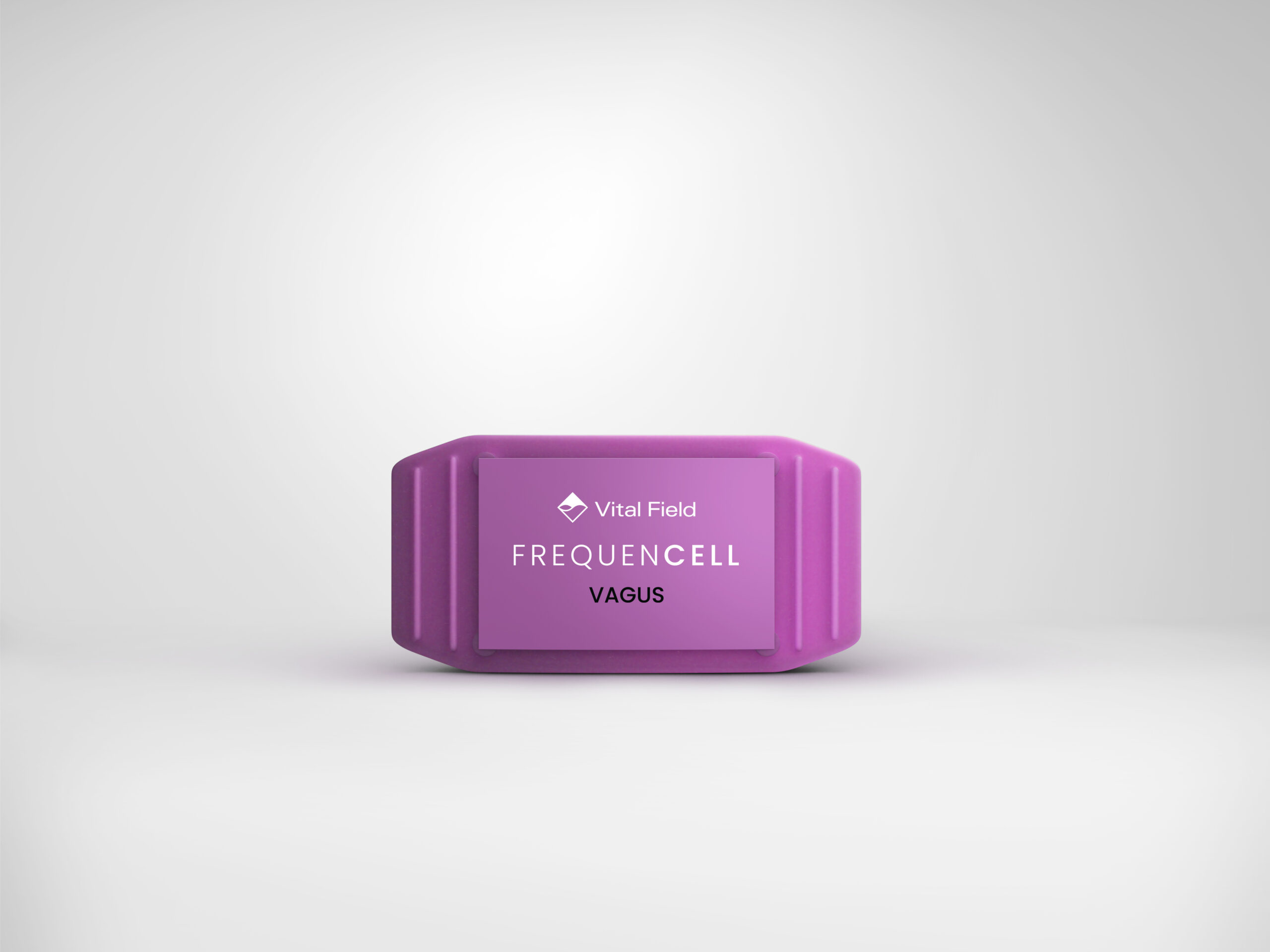
The cumulative expert knowledge and the science of using precisely targeted frequencies for health management and pain management are now, for the first time in history, available to end-users worldwide. Vitalfield applications don’t replace or compete with traditional medicine or conventional treatment methods. They are intended to provide an alternative treatment to pain and health, when conventional methods fail to provide significant results on their own. With zero negative side effects reported and over 80% reported satisfaction from customers, we are confident in offering a full money-back guarantee if our product does not work for you.
Since Vitalfield products are safe, natural, non-invasive and non-chemical, it’s worthwhile to see if our product can reduce your pain and improve your life.
You can check out one of my reviews of a Vital Field product here, I’ve tried and been completely happy with each product I’ve tried.
Be sure to use discount code Light20 for 20% off all of your Vital Field purchases.
Melinda
References:
https://vitalfield.com/all-products/
World Alzheimers Month
Each September, people unite from all corners of the world to raise awareness and to challenge the stigma that persists around Alzheimer’s disease and all types of dementia.
During World Alzheimer’s Month, we call on everyone, from individuals to large organisations, including every Alzheimer and dementia association globally, to support World Alzheimer’s Month by getting involved in some way.
As outlined in our World Alzheimer Report 2019, many people still wrongly believe that dementia is a normal ageing. This alone highlights how important public awareness campaigns, like World Alzheimer’s Month, are for changing perceptions and increasing existing public knowledge around dementia and Alzheimer’s disease.
This year’s theme, ‘Know Dementia, Know Alzheimer’s,’ continues on from the 2021 campaign, which focused on diagnosis, the warning signs of dementia, the continued effect of COVID-19 on the global dementia community and more.
Today, it is believed that “Alzheimer’s disease (AD) is the most common form of Dementia among older people. Dementia is a brain disorder that seriously affects a person’s ability to carry out daily activities.
AD begins slowly. It first involves the parts of the brain that control thought, memory and language. People with AD may have trouble remembering things that happened recently or names of people they know. A related problem, mild cognitive impairment (MCI), causes more memory problems than normal for people of the same age. Many, but not all, people with MCI will develop AD.
In AD, over time, symptoms get worse. People may not recognize family members or have trouble speaking, reading or writing. They may forget how to brush their teeth or comb their hair. Later on, they may become anxious or aggressive, or wander away from home. Eventually, they need total care. This can cause great stress for family members who must care for them.
AD usually begins after age 60. The risk goes up as you get older. Your risk is also higher if a family member has had the disease. No treatment can stop the disease. However, some drugs may help keep symptoms from getting worse for a limited time.”
My experience
I completely understand the struggle of Dementia, not only do I have it but so did my granny. Her’s was caused by a massive stroke. The side effects were instant and very disturbing. Granny knew something was wrong with herself and didn’t want to live that way. She often bangs her head on the wall. As she progressed, one day while gramps was out running an errand, she thought he left her at someone’s house. She didn’t recognize her home or photos in the living room. From there isn’t wasn’t long before she needed hospice care.
My Dementia is caused by Lyme disease, the virus went to my brain and caused havoc. It’s like my memories have been erased by machine gun holes. I have good days and lots of bad days which I can’t remember much, for that matter what I’m doing. I take two drugs to help slow the progression.
There is research on how to set your house up for Dementia patients so they won’t hurt themselves or walk out of the house.
Wordless Wednesday*Burgundy Mum
Thanks for stopping by today, I appreciate your comments each week.


Melinda

Can You Spot Depression? Do You Know How To Talk To Someone In A Crisis?
When talking with family and friends, can you pick up on their comments about potential red flags or how to have a conversation about depression to learn more?
I’ve suffered from depression since childhood. The statements belove are some comments that need to grab your attention to ask more questions. It can be simple like how are you doing? or what can I do to help? The helping is often in the asking, asking provides some affirmation that they are noticed.

Here’s a list of warning signs to listen for
Nobody cares about me.
All I do is sleep.
I feel like I’m carrying the world on my shoulders.
Nothing matters.
Ghosting everyone.
They or their house looks more untidy than normal.
Cuts on their hands or arm (could be expressing her feelings by cutting herself. This is a delicate case.)
Loses or gains weight very quickly. ( could be medication side effects which are very frustrating.)
Won’t look you in the eye.
Lack of enthusiasm.
How are you managing?
Find Your Words has a great post that covers the topic of identifying depression and how to get the conversation going.
Everyone is different and so is their communication style. The main thing is doing something to help. Let them talk and you find a time to gently probe.
These are some questions
How are you?
What can I do for you?
Have you seen your doctor?
Are you planning on hurting yourself?
Are you under a lot of stress at work? What’s going on?
What action can I take right now?
Who can I call?
How are you feeling?
Do you want to go for a walk or get a coffee?
What’s going on?
These are just a small number of questions. I hope this will help you, a family member, or a friend. To get the best help from your inner circle is to let them know what are some of the comments you make, or other things you do to show your depression. This gives them the opportunity to know when you need support.
Depression is a complex disorder and anyone can be depressed sometime in their life. If your depression is ongoing, make an appointment with your Psychiatrist. You need the assistance of a doctor who has the right skills to help you.
Melinda
References:
What you can say

Stay away from negative people: They have a problem for every solution —Guest Blogger psychologistmimi

Negativity does not have many positives to it. Sometimes negativity can be associated with skepticism which can be good to ensure a mote robust group decision-making process. However, let’s distingush between negativity and negative people. Negativity can either be a temporary or longheld state. Yet, negative people are forever in that state and hardly ever […]
Stay away from negative people: They have a problem for every solution — psychologistmimi
 lookingforthelight.blog
