Thank you for all the great feedback on the Blogger Highlight series, I’ve enjoyed meeting each blogger and sharing their site with you. This week we highlight a new blogger, Chronic Reflections.
Chronically ill and mostly housebound with CFS/ME. Mom to an adult daughter. Recovering perfectionist. Interested in history, current affairs, social justice, sustainable living, and the Arts. Hobbies include writing, reading, word puzzles, listening to music, watching good TV and classic movies, playing casual computer games, and sleeping.
I watch a lot of streaming television shows as well as movies. Hence, in general, I avoid advertisements. Yesterday, I happen to be watching Buffy The Vampire Slayer again. The television series; not the movie. The only way to watch it is on Hulu streaming service where I am exposed to commercials. Sigh. And, they […]
Stress and anxiety are common experiences that can have a significant impact on your daily life. While some stress is normal and even necessary, too much stress can lead to problems. Understanding the causes of stress and anxiety can help you find ways to manage these feelings and improve your overall well-being.
There are many possible causes of stress and anxiety. Some people may be more prone to these feelings due to their genes or brain chemistry. Others may experience stress and anxiety in response to specific life events or circumstances. And still, others may have a medical condition that contributes to these emotions.
Some Of The Most Common Causes Of Stress And Anxiety Include:
Major life changes, such as starting a new job or getting married
Financial problems
Relationship difficulties
parenting concerns
Health issues
Workplace stressors
Terrorism, natural disasters, and other global events
In many cases, stress and anxiety can be caused by a combination of factors. For example, someone who is dealing with a serious illness may also be experiencing financial stressors. Or someone who is going through a divorce may also be facing work-related challenges.
While some amount of stress and anxiety is normal and even beneficial, as it can help you to stay alert and motivated, too much can have negative consequences. Prolonged periods of stress can lead to physical health problems such as heart disease, high blood pressure, digestive issues, and sleep problems.
When it feels like the world is against you and everything is going wrong, it can be difficult to cope. Stress and anxiety can leave you feeling overwhelmed, exhausted, and hopeless. But there are ways to manage stress and anxiety and regain control of your life.
Here Are Some Tips To Help You Keep Stress And Anxiety At Bay:
1. Understand what causes your stress and anxiety
Are you someone who internalizes stress and worries a lot? Do you have trouble letting go of things? Are you constantly comparing yourself to others? Identifying the root cause of your stress and anxiety is the first step in learning how to manage it. Once you know what’s triggering your feelings of stress and anxiety, you can start to address them.
2. Challenge your negative thoughts
Negative thinking is one of the main contributors to stress and anxiety. If you’re constantly putting yourself down, ruminating on past failures, or worrying about the future, it’s no wonder you’re feeling stressed out! Start by challenging your negative thoughts. When you catch yourself thinking something negative, ask yourself if it’s really true. Chances are, it’s not.
3. Practice relaxation techniques
There are a number of different relaxation techniques you can try to help ease stress and anxiety. Deep breathing, progressive muscle relaxation, and visualization are all effective ways to relax your mind and body. Experiment with different techniques to see what works best for you.
4. Get moving
Exercise is a great way to relieve stress and boost your mood. Even just a few minutes of physical activity can make a big difference. Taking a brisk walk, going for a swim, or taking a yoga class are all great options.
5. Connect with others
Isolation can make stress and anxiety worse. Make an effort to connect with friends, family, or a support group. Talking about your stress and anxiety can help you feel better and may give you some helpful perspectives.
6. Make time for yourself
It’s important to make time for activities that make you happy and help you relax. Whether it’s reading, listening to music, spending time in nature, or taking a yoga class, find an activity that brings you joy and stick with it. Making time for yourself will help reduce stress and improve your overall well-being.
7. Be patient
Learning how to manage stress and anxiety takes time. Be patient with yourself, and don’t expect overnight results. Remember that you’re not alone in this journey and that you can get through this. With a little effort, you can start to feel better and live a more peaceful life.
8. Avoid unhealthy coping mechanisms
It’s also important to avoid unhealthy coping mechanisms, such as alcohol or drug misuse. These can actually make your stress and anxiety worse in the long run. In addition, they can also lead to other health problems. On the other hand, it can be extremely positive to find good coping mechanisms for the things that are affecting your mental health. For example, talking to a professional about penis augmentation procedures or arranging CBT sessions.
9. Make lifestyle changes
Lifestyle changes can also help reduce stress and anxiety. This might involve simplifying your schedule, getting more sleep, eating a healthy diet, or buying Delta 8 Gummies to take the extra edge off. Again, the key is to find what works for you and stick with it. Implementing these changes can be difficult, but the results are worth it.
10. Seek professional help
If you’re struggling with stress or anxiety, it’s important to seek help from a qualified mental health professional. He or she can help you identify the causes of your emotions and develop an effective treatment plan. Treatment may include medication, therapy, lifestyle changes, or a combination of these approaches.
With proper treatment, most people are able to manage their stress and anxiety and live relatively normal lives. However, if left untreated, these conditions can have serious consequences. For example, people with untreated anxiety disorders are at an increased risk of developing depression, substance abuse problems, and even suicidal thoughts or behaviors.
If you’re struggling with stress or anxiety, don’t hesitate to reach out for help. There are many resources available to you, including mental health professionals, support groups, and hotlines. With the right help, you can overcome these challenges and start living the life you want to live.
In Conclusion
There are a variety of things that can cause stress and anxiety. It’s important to identify your triggers and find healthy coping mechanisms. If you’re struggling to manage your stress and anxiety on your own, don’t hesitate to seek professional help. Finally, be sure to take care of yourself both physically and mentally. When you do, you’ll be better equipped to deal with whatever comes your way.
You look up and it’s October, pushing November, where did the time go? I’m doing an annual check of how I’m doing at Looking for the Light. I’ll keep it short, please take a minute to give your feedback.
National Bullying Awareness Month is something I can relate to. In my day bullying was just that bullying, calling people names, playing pranks, hazing, and fist fighting. The norm, but today it’s a whole new ballgame because of the Internet, and social media.
When you are abused as a child and live in a domestic violence home you don’t trust anyone, I didn’t want anyone to know, not even my grandparents. My mother was good at keeping the bruises hidden so no one would know. For this reason, I didn’t make many friends and was not very social.
When I was in 6th grade I was bullied to the extreme. The girls, about 4-6 people would follow me walking home. They normally stay a short distance behind me calling me names of all sorts. If the bullying wasn’t damaging to a 6th grader’s ego, one day two of the girls came up close behind me and hit me over the head with a coke bottle then started kicking me. It left a huge bump and it hurt but I didn’t cry until I got home.
The worst was the girl I lived next to when younger said to meet in her backyard for a fight. When I arrived there were at least 25 people there to watch me get my ass kicked. They all joined in calling me names and then out of nowhere she hit me upside the head, that was only the first blow. I knew if I got into a physical fight I would pay for it at home so I barely defended myself. After what seemed like forever it was over.
I knew better than to say something but I needed something for my head, it was bleeding. I told my mother and stepfather. Boy what a mistake, my alcoholic stepfather was tanked and went to kick the father’s ass. Oh boy, would I get more beatings for that at school? Luckily, he was too drunk to drive and that was the end of that. No compassion, no advice, nothing.
That was bullying then, today the landscape has changed and bullying hits you from any direction from faceless people. They are cowards, hiding behind the wall of the internet they troll you. From the news stories, I hear it can be relenting. I’ve known friends from WordPress who were hassled so bad they shut their site down and started over. I understand because someone started stalking me for seven months, even hacking my computer, it was frightening not only because of the fallout but were they nearby and watching me? That seven months took a toll on my health and I couldn’t go anywhere by myself for fear of being followed.
That is one way people bully you today. Don’t even get me started on social media. I have a very strong feeling about the role parents play in a child/teen’s life. I’m not going to get on my bandwagon but will say if parents aren’t monitoring their children’s Internet and phone activity, they are making a big mistake and doing their children no favors.
Here are some facts
Prevent Bullying Every Day
As reported on the 2019 Indicators of School Crime and Safety report, about 20% of students ages 12-18 reported being bullied in 2017. Among students ages 12-18 who reported being bullied during the school year, 15% were bullied online or by text. National Bullying Prevention Awareness Month is a month-long observance to educate and raise awareness about bullying and cyberbullying prevention. Addressing and preventing bullying is something that everyone can do, every day.
Address Bullying At School
Educators and teachers can create a safe, supportive learning environment and a classroom culture of positivity, inclusiveness and respect. They can reward students for positive social behavior. Schools can communicate bullying policies at their school to parents, students, teachers and staff and follow through on them. Monitoring bullying ‘hot spots’ around the school campus can also help prevent bullying.
Talk About Bullying At Home
Parents and caregivers can talk with their children about their school and digital life, and the many roles children can play in bullying. By asking open-ended questions, they can talk about their children’s experience and communicate expectations about appropriate behavior – in person and in their digital world. Parents are the primary role models for their children, and when they model the behavior they expect from their children, they teach through actions.
Get Help
Youth who experience bullying can reach out to a trusted adult to talk about it and get support. If they’re being cyberbullied, they can capture screenshots. They can block the people who are bullying. If they witness bullying, they can change the conversation and deflect it. If they feel they can do it, they can stand up for the person being bullied, either on their own or with friends as a group. If they don’t feel safe doing that, they can reach out to the person being bullied to let them know that they don’t agree with it. If youth witness cyberbullying, they shouldn’t participate or share the posts or texts. They can learn more about how bystanders are essential to bullying prevention. They can also talk to a trusted adult for advice.
Check out these videos on how to handle different bullying situations.
The holidays are here — a time for family, friends and festivities. But it’s also a season of consumerism, which is costing our planet a hefty price.
This year, the world has seen the biggest increase in ship emissions in over a decade (along with endangered whales getting struck by congested cargo ships.) In the US alone, returned packages will generate around 15 million tons of carbon pollution (equivalent to 3.2 million cars driven on the road for one year). And then there are the environmental harms caused by the gifts themselves, which could include polluting fast fashion items, plastic toys made from fossil fuels, or sweet treats that are driving deforestation.
But it is possible to show your loved ones you care while also caring for our collective home. We asked TED speakers to share planet-friendly gift recommendations, and here are 16 ideas for a merry — and more sustainable — holiday season.
[Editor’s note: One of the greatest gifts you can give is the gift of lifelong learning. For your favorite curious soul, consider sending them a TED Membership, where they can enjoy exclusive programs and events throughout the year as well as access to a global community of like-minded people. Learn more here.]
1. Digital subscriptions for the mind, body and soul
I love the ritual of presents, and I’ve found that digital subscriptions are great gifts. Here are three:
1) An annual gift subscription to Duolingo (Plus or Family), because learning another language is a beautiful gift to ourselves and to the world. It creates stronger bonds and connects with other cultures.
2) An annual subscription to Body Groove. During the pandemic, I learned that dancing at home does wonders, physically and mentally. We need to keep strong!
3) An annual subscription to a magazine that will introduce you to great writing and emerging voices. Because in an age marked by existential struggles — climate, COVID, inequality — we need fiction and non-fiction. We need the power of stories to help us expand our imaginations and transcend our everyday lives. — Monica Araya (TED Talk: How cities are detoxing transportation)
2. Sustainable alternatives to frequently purchased products
Some of the most impactful gifts are those that can replace “sleepwalk consumption” products — the things we buy repeatedly without much thought. Luckily, many of these products can be replaced with sustainable alternatives, and many companies have made delightful, whimsical and giftable versions of them. By giving a beautiful sleepwalking product as a gift, you could change one person’s — or one family’s — impact over the rest of their lives. Here are a few ideas: 100 percent Slave-Free Chocolate, “Give” Holiday Edition Toilet Paper, Oatly Chocolate Milk, Brew Dog Beer Advent Calendar, Bite Toothpaste or Dirty Labs Laundry. — Mariana Prieto (TED Talk: Why animals need design)
3. Tree saplings
If you live in the UK, why not give your loved one a pack of 105 tree saplings to plant, thereby helping save the planet by removing more carbon dioxide from the air and providing valuable new habitats? They can be obtained from The Woodland Trust — and the best thing is that they’re free. I helped plant 210 saplings last week! And if you don’t live in the UK, there may be a similar scheme where you are, but even if there isn’t, give someone some trees anyway. — Ian Firth (TED Talk: Bridges should be beautiful)
4. Outdoor gear
Being that change is certain but not predictable, I’ll suggest a gift from BioLite, which offers great products for outdoor adventures and off-the-grid and emergency energy. I love Biolite’s awesome commitment to serving both campers and people who still lack access to reliable power, and the company has also won the prestigious 2021 National Design Award from the Cooper Hewitt, Smithsonian Design Museum. I’m getting my pal who has frequent outages an Alpen Glow 500, so she can charge her devices with it too. — Wendy Brawer (TED Talk: How green is my city?)
5. A parks pass
My planet-friendly gift recommendation for any Americans on your list is an annual pass to the US National Parks. It’s a great gift, because what could be more fun than spending time outdoors with your loved ones learning about the beautiful planet we live on? The money also goes towards the National Parks Service, which has conservation as an essential part of its mission (and has since its founding in 1916). — Zoe Pierrat (TED-Ed Lesson: Earth’s mysterious red glow, explained)
6. Refurbished antiques
My favorite climate-friendly gifts are refurbished antiques. It’s a wonderful way to repurpose a once-functional item from the past into a beautiful gift. I am also an environmental science teacher, so every year I create a bulletin board that suggests other green holiday ideas to my students because there are so many ways to offset your carbon footprint. — Kim Preshoff (TED-Ed Lesson: What’s a smartphone made of?)
7. A mushroom garden
My sustainable holiday gift recommendation is a mushroom grow cube that allows you to easily grow a delicious, sustainable food source from your kitchen, basement, bathroom — wherever is convenient for you. It’s fun to watch them grow (quicker than you would expect!) with very little effort, and they come in several mushroom varieties. You can get them from a variety of sources online, but to make the gift more sustainable, you can look into a local mushroom grower online or get them in person at your local farmers’ markets. (For example, here is a local mushroom grower near me in Maryland.) — Noah Bressman (TED-Ed Lesson: The fish that walk on land)
8. A giant of a plant
Most of us have enough stuff, so this holiday season, why not give a gift that will create a legacy? While the Archangel Ancient Tree Archive won’t sell you their certified champion Giant Sequoia seedlings, they will plant one for you — or even an entire forest. What better gift can you give than one that will be around for thousands of years? — Camille Seaman (TED Talk: Connection and purpose: tales of polar photographer)
9. A vegan dessert
The Brave Robot cake mix uses a non-animal whey protein that replaces the equivalent of three eggs! It produces an animal-free yellow cake that doesn’t use aquafaba, flax seeds or other traditional egg replacements that can mess with flavor or texture. The protein is made by reprogramming microflora to produce the same whey found in cow milk — it’s cellular agriculture in action! — Isha Datar (TED Talk: How we could eat real meat without harming animals)
10. A map of your town or city
Who doesn’t love a good map? Humans have been using them ever since our ancestors started drawing on cave walls. My planet-friendly gift recommendation is a map of your city or town. If you want, circle your favorite places that are accessible on foot, bicycle, bus and metro, such as parks, vistas, buildings and shops. You could give it in either digital or paper form — and bonus points if you can find an old map at an auction site or local map store and get it framed. Maps can help people rediscover the amazing diversity of their natural and built environment, support local business and help keep everyone’s footprint local. — Robert Muggah (TED Talk: The biggest risks facing cities — and some solutions)
11. Support a local theater or bookstore
While we fight climate change, we can still do the things that are most important, like hugging grandmothers, meeting friends and celebrating holidays. A ticket to a local theater might be one of the most climate-friendly gifts, and it strengthens the community.
Here in Iceland, a book has been the most popular Christmas gift for the last century. We have what is called jólabókaflóð, or the Christmas book flood. Most books are published in November and December to become Christmas gifts, and for most people, there is no holiday without going to bed with a new book.
So I would recommend giving a book, perhaps by a local author from a local bookstore. The book can last decades, and it never becomes obsolete. You can pass it on; it is not run by evil algorithms; does not monitor your behavior; give you likes; or collect your data in energy-intensive data farms. A good book lets you dive into other people’s minds — and at best, it can change your life. — Andri Snær Magnason (TED Talk: On time and water)
12. Wildflower seeds
Native wildflower seeds make a wonderful gift. As they bloom, they become the foundation of local ecosystems for pollinators and birds, while improving soil health and preventing erosion. They won’t break your bank, and your recipient will smile every time they see them. — Jeff Kirschner (TED Talk: This app makes it fun to pick up litter)
13. Zero-carbon fashion
We know the fashion industry has disproportionately negative impacts on the environment — it is responsible for 20 percent of our water pollution, 10 percent of carbon emissions, and every time we wash synthetic fibers, we are contributing to microplastic pollution. That’s why I created a company that produces clothing made by hand with only three ingredients — sun, plants and mountain water — and without using any electricity, chemicals, plastics or fossil fuels. Another clothing and textile company that’s aiming to do things more sustainably is Rough Linen. They create beautiful linen products from natural fibers, including sumptuous bathrobes, PJs, aprons, tea towels and so much more, and all products are handmade in the US. With each gift, you can remind your cherished giftee that our consumer choices can impact industries. — Angel Chang (TED Talk: How ancient textiles can help the future)
14. A local experience
Personally, I try to move away from purchased items for my giftees, as consumerism results in significant carbon emissions and awe-worthy amounts of waste. Instead, I try to spend money on shared local experiences that bring joy and create shared memories. These can be regionally specific and vary considerably in price; however, the plentiful availability of virtual workshops does make this a highly accessible gift idea. In the past, my giftees and I have learned the art of falconry as well as how to scuba dive, race sled dogs, zip line, blow glass, metalsmith, cook pasta, taste whiskey, bead jewelry and sew. Last but not least, we’ve visited baby goats and learned to make cheese and garden! — Anne Madden (TED Talk: Meet the microscopic life in your home — and on your face)
15. A day out in nature
Give the gift of learning to reconnect with nature, which is at the heart of solving our environmental crisis. Create a homemade “nature experience gift card” to suit your loved ones’ interests — creating a personalized day out in nature that’s organized by you. Depending on where you live and what you enjoy doing with them, it could be a mountain hike, a walk on a quiet beach, a visit to a botanic garden, or a picnic in a local park. While you are there, invite them to sit quietly; observe the sounds, smells and feel of the surroundings and the visual beauty; and simply notice what happens. — Carol Farbotko (TED-Ed Lesson: Where will you be able to live in 20 years?)
16. A workshop or course
How about giving a gift that gives back? I’m thinking of a gift that can build someone’s skills to pursue a life of purpose and dignity. These resources already exist in us today, but we don’t utilize them enough. Why not gift someone a workshop or course that enhances their skills so they can be confident, empowered and encouraged? I like to gift a basic survival skills course that will teach them to deal better when in crisis. Your giftee will thank you for it! — Rumaitha Al Busaidi (TED Talk: Women and girls, you are part of the climate solution)
Can having less stuff, in less room, lead to more happiness? Writer and designer Graham Hill lays out three rules for editing your life:
Thank you for all the great feedback on the Blogger Highlight series, I’ve enjoyed meeting each blogger and sharing their site with you. Each week I highlight a new blogger, this week is Peace From Panic.
Embracing, Advocating & Discovering Happiness in Mental Health
Thank you for visiting my blog! My name is Jeni Driscoll. I’m a mom with a wonderful husband and two beautiful daughters, both in their 20s.
I’ve had panic attacks since I was ten years old. At that time, I had no idea what was wrong with me. I never told anyone because I didn’t know how to describe my scary and weird sensations. I thought there was something really wrong with me that could never be fixed.
Stigma prevented me from talking about my problem. I finally reached out for medical help when I was in my early 30s. My diagnosis: panic disorder with agoraphobia.
I’m now recovered. Anxiety no longer rules me.
I learned so much from her blog. Be sure to check Jeni’s blog.
I’ve lived in the hell of Domestic Violence. Instead of giving you statistics, I want to share some thoughts and experiences. In this post, I also share ideas on how to proactively prepare for the day you leave.
This chart is great to use for teaching tweens/teens and as a reminder for yourself. If children are taught early, you can help them see the warning signs, and help them gently with the words to break off the relationship before it goes any further. Teens can be a handful but early learning will help.
There are resources on the Internet on how to listen to your child if you are worried about them. Talking to a therapist about coping skills and how to teach your children about abusive relationships will help immensely.
Feelings you may encounter
Anger
Confusion
Fear
Explosions
Self-Hatred
Low Self Esteem
Chaos
Running Away
Suffocated
Followed
My world was walking on eggshells, listening to my mother get beat day after day. My stepfather hit her head against the wall as they went down the entire hallway and stopped at my bedroom door. I had to listen to my mother begging for him to stop, it traumatized me.
I was nine years old, my parents were going to bed, and I thought we had made it thru another day. A few minutes later I hear her screaming and them coming down the hall, wincing every time her head hits the wall. They landed in front of my door but across the hall, I could peek out my door and see everything. My stepfather dragged her by the hair, up against a wall, and had a knife to her throat. My mother saw me I could tell she was afraid for her life. I saw a trickle of blood and freaked out. I had fears of him hurting us four children.
Even though my mother and I had a very fractured relationship, you don’t want to see your mother killed. I was panicked, and could not get to the phone to call my grandparents. I gather up the little money I had hidden and took off on my bike. I rode across town to my boyfriend’s house. Long story short, my mother arrived acting nice until we got in the car. She slapped me all the way home. Everything was fine, it was my fault.
If you are in a Domestic Violence relationship and you are planning to leave, there are some steps you can take to make the move less stressful. If you have a family member or friend that would allow you to pack some items and leave them until the night you leave that would not cause alarm at home. If you don’t have anyone to help you directly, hiding essentials in the trunk of your car is possible. The key is to be prepared as possible because once you leave the house, it may take a while before you get your items returned or are able to move back in the house.
You have to get crafty when it comes to money. If you withdraw the money too quickly they will find out. He’s what comes to my mind. You have to plan your escape seriously and it has to be precise or it may escalate. If both of your names are on the credit card or bank try to get your name taken off and get a new account sent to a safe address. Run as fast as you can with what you can! Life will be insane for a while but living in those conditions is inhumane.
Save small amounts of money and hid it from your partner, after you have a small amount of money, take it to your friend’s house for safekeeping. You will need to save money for some time to help you once you leave. I’ve heard of many women being cut off from money, it’s probably one of the leading causes. Many times one partner will be left without money, for who knows how long.
If you have children you will need escape bags for them too. I’m talking like one small suitcase for all. If you have a job it’s easier, in that you can control your future. Once you settle into a shelter, family, or friends, new routines can form. Shop different stores, and do everything to avoid him even if that means driving out of way to pick items up. The last thing you want is a confrontation. This can escalate very quickly and turn into a bad ending.
I’ve talked to many women and men from Domestic Violence homes and leaving is always hard. There are so many fears. Have someone on your side to talk to if you can. The key is planning, where to go, and when to go, you have to plan a couple of days’ clothing if possible because it may be that long before an Officer can go with you and let you in the house. Tell as few people as possible and get a burner phone so he can’t track you.
It may sound far-fetched but many abusers don’t want to lose their partner, they say I love you and how sorry they are, and it will never happen again. LIE! They want to continue to control you and will stop at nothing. I’m not talking about killing you, even though in a worst-case scenario it could happen, what I’m talking about is the hassling, all the time, calling you or your employer, calling your family members, they will work hard to have you back in their life.
I will firmly say the first time you leave is the easiest, if you go back and many do, they will keep an eye on every move you make. Don’t let that stop you from leaving again you have to try a different technique. The saddest is the children involved in the turmoil. Years of therapy helped me deal with my traumatic background.
Please check out my page Organizations That Can Help, the number of resources I have for Domestic Violence is fairly short but there are other resources you may need along the way listed too. There are some great blogs that discuss Domestic Violence, seek them out to learn tips on how to diffuse situations to how to prepare to leave.
I’m proud of you wherever you are in life and pray you are happy and healthy. Please remember I’m talking about what happened in my life. I won’t say I know yours or that I’m an expert, I’m not. Just a 59-year-old recalling traumatic memories. Therapy has saved my life. One thing I know is the less you keep bottled up, the better your mental health will be.
One thing you need is a couple of people to follow and learn from those who have been where you are. You’ll get ideas from following others, not only for learning but also for building your confidence. A blog I read a long time ago went as far as how to protect yourself inside the home if you are trying to get in.
Here are a few products I’m in love with right now. I hope you find a new product to add to your household or self-care routine. The list may also give you ideas for a surprise for friends, family, or co-workers.
Nature Valley Wafer Bars
Nature Vally Wafer Bars in Peanut Butter Chocolate taste out of this world and have made my weight loss journey easier. My husband also eats them every day, no weight loss journey, they’re that good. They have multiple flavors and at 100 calories per bar, it makes a great breakfast or snack. Your children will love these too!
You can purchase it at Kroger.
Ohio Tea Company
Ohio Tea Company, wow this is a true tea place. If you want it, chances are they will have it in stock. Teas I had not heard of and have bought a few small packs of exotics just to taste. The flavor I’m in love with is the Monks Blend. It’s the perfect drink anytime tea, I’m drinking right now. One page on their site says they have over 400 teas in stock, surely you can find a few blends for you. Makes great gifts!
You can purchase it online at OhioTeaCo.com.
Bach Rescue Pastilles
Bach Rescue Pastilles in Lemon are homeopathic and trusted generations. They have been a lifesaver since my diagnosis of Sjogren’s Syndrome, I have difficulty making saliva and my mouth is always dry. These help to produce saliva and taste great. They are soft round pastilles that come in a yellow round tin and contain 35 pastilles in each tin.
You can purchase it off Amazon.
Stonefire Flat Bread
The flatbreads have made my weight loss journey easy and when you are cramped for the time they’re the perfect match. We create all types of flatbreads for dinner with all types of goodies on them but I also eat them for lunch or dinner. Each flatbread is 100 calories which works for me, I often add peanut butter or honey to one and that fills me up.
You can purchase it at Kroger.
I would like to hear what products you have added to your life lately that you love?Leave me a note in the commentsection below.
Learning about Osteoporosis happened to me at the tender age of 16 years old. Granny had Osteoporosis and participated in a Clinic Trial to see if Citracal helped over a years time. Unfortunately, Granny didn’t get much help from the study except she now knew she had to take calcium every day. This was the late 1970’s and they knew little about how to treat the illness.
Fast forward to today and look at all the knowledge we have and the RX medications we have for treatments. Participating in a respected Clinical Trial could help you or a loved one. At a minimum, it advances our society.
*One important note about Clinical Trails is you need to know exactly who is the company behind the study, pharmaceuticals? higher education? or to gather information? If you don’t have a relationship with the person who asked you to join, have them send you all the brochures about the study including the treatments or medication being evaluated.
I have never had a bad experience while participating in Clinical Trials, which were all Mental Health focused. The last thing you want is a scam.
Let’s talk more about what is Osteoporosis and what its causes are.
Make no bones about it, World Osteoporosis Day on October 20, is the time to learn about osteoporosis. Celebrate good health and educate yourself and others about the value of taking care of your body and protecting your bones and muscles from disabling and life-threatening fractures.
It’s interesting to note that prior to 1994, osteoporosis wasn’t even considered a major disease. But in 1998, two prominent organizations committed to educating the public about osteoporosis, combined to create the International Osteoporosis Foundation.
One of the most important events for WOD is checking bone density. Bones that are less dense are more liable to easily break or fracture at sudden movement or during minor falls. These bone density tests are available on WOD all over the world.
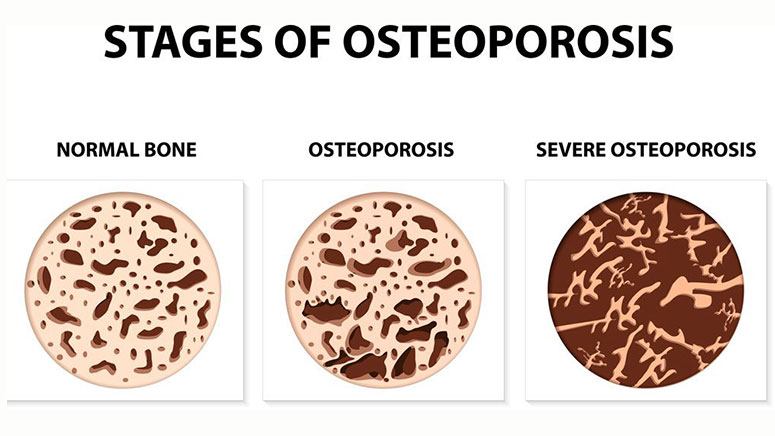
Osteoporosis Progression
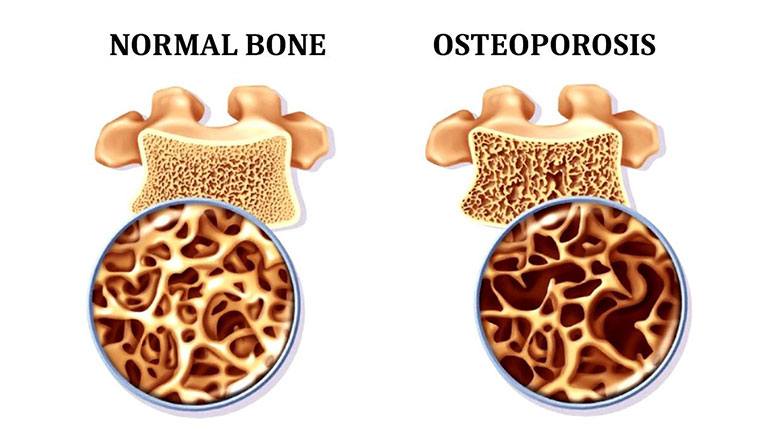
Osteoporosis is a disease of the bone that affects the body’s ability to make bones and/or causes bone loss. When this happens, the bones become very fragile and weak resulting in it breaking from a fall and in some serious situations, from just sneezing, coughing, and minor bumps. This condition is quite common, especially amongst older people.
This disease is caused majorly by the lack of calcium and vitamin D in the body. Low calcium consumption leads to the reduction of bone density and bone loss. Being underweight, smoking, lack of exercise, malabsorption [1], aging, and genetics are also causes of bone weakening in the body. A bone density test [2] is conducted to check for osteoporosis. It is the use of an x-ray to check the density of the bones in your spine, wrists, and hips. Osteoporosis is also known as porous bone.
Stage One
The first stage of osteoporosis begins between the age of 30 to 35. However, it may begin earlier in some person’s, ranging from the age of 25 to 30. This first stage is a state of equilibrium and is the first stage in the decline of the bone’s mineral density [3]. This procedure can be called leaching [4].
Stage Two
In this stage, the rate at which the bones in the body are being broken down will be faster than the rate at which the body builds bones. Bone loss then begins to occur at approximately 0.25% per year. This however varies, depending on environmental and genetic factors.
Symptoms of Stages One and Two
If the jaw is losing bones, this can cause the gums to begin to recede. This is a sign of osteoporosis in its early stages.
The fingernails become weak and feeble.
Reduced grip strength.
Stage Three
Through the ages of 45 to 55, the breakdown of bones occurs at a faster rate. In women, this is an effect of menopause, which leads to a reduction in the hormone oestrogen [5] which is significant in ensuring that all body tissues including bone ligaments, muscles, and tendons are in a good state. Women tend to lose up to 10 to 20% of their bone density in the first five years of menopause. Some women even lose up to 30%. For men, the changes in bone density occur between the ages of 60 to 65. This is caused by a decrease in the hormone testosterone.
This stage is usually characterized by an increase in the fragility of the bones. Where a fall, walking into a door, running, and even bending down to pick something off the floor, which are activities that were considered easy in younger years, may now be enough to cause a fracture.
Stage Four
Osteoporosis reaches this stage when there is no intervention or treatment done to the condition of the bones. In this stage, the effects and consequences of bone loss become quite visible. Factors like continual softening of the bones and the accumulation of fragility fractures, in the body, lead to deformity[6]. With this deformity, comes a lot of pain and discomfort. The individual day by day finds it harder to perform normal daily activities like getting into a car, sitting down, climbing stairs, reaching for something above them, etc.
Conclusion
There is no cure for osteoporosis. There are however treatments for it and steps that can be taken to prevent it. Drugs like bisphosphonates, denosumab, and romosozumab are used to treat osteoporosis. There are also hormone-related medications like calcitonin, parathyroid hormones, and selective estrogen receptor modulators (SERMs) which are treatment methods.
Certain lifestyle changes can also go a long way in preventing and maintaining osteoporosis. Including plenty of calcium and vitamin D in your diet is as important as the medications being taken. Physical activity and exercises like walking, hiking, and dancing is also a good way to treat or prevent this condition.
I hope you’ve learned a great deal about how to deal with Osteoporosis.
Thank you for all the great feedback on the Blogger Highlight series, I’ve enjoyed meeting each blogger and sharing their site with you. This week I highlight a new blogger, Ms. C. Loves.
In my world, where my life is ever so happening yet my memory is ever so fleeting, I have decided to dedicate some time weekly to preserve those precious moments for my future wrinkly self.
So here, I present to you: my valiant attempt to document all the big and small things in life that capture my heart (cheesy, I know!)—enjoy!
Every month Sheryl at A Chronic Voice host the writing prompts for those with Chronic Illnesses. Sheryl has been very ill herself and not able to do the prompts in a couple of months. We’re so glad she’s getting better.
The prompts for the month
DISABLING
ENABLING
COMMITTING
COMMUNICATING
REINVENTING
I’ve chosen three this month, Committing, Communications, and Disabling.
Honestly, I’m not committing to much but myself. I can barely walk, stand up, get up from chair or walk up the stairs. I can only sleep for around 1-2 hours on one hip and 1-3 hours on the other. I feel 70 years old, feeling bad because I make noise in pain when I do any of these moves. I also remember granny never expressed her pain. Not even after failing two stories and cruishing both heels and anckles.
I need a break from doctors until next years just to give me a reprieve and not worry about the process of taking me anywhere.
Over-communication is what I’m working on. It’s a fine balance between sharing and over-sharing. He’s been telling me for two weeks I needed my cane. OH NO!!!!!! Not the cane. It is associated to the time I was so sick, could hardly move around without the wheeled walker. I admitted yesterday that I would try and this morning forgot to go in my office to get it. Now that I’m working downstairs, who wants to get up and feel pain then walk up the stairs moving with a guttural voice from the pain. Not me.
These are times relationships can get hard, one thinks they know the other is thinking and it’s not that at all.
My husband keeps telling me to get out my cane. I’m a fall risk and know it, but in the scenario when I fall or out of balance the cane would only get in my way. It was around 2019 when I put my cane away and will not use it in the house, yet. Outside, I’ve been using a hiking stick but will go back to my cane for outings.
I no longer drive or own a car, I’m closed in 99% of the time, and I feel more disabled than I ever.
1 in 8 women will be diagnosed with breast cancer in her lifetime. That’s one person every 2 minutes in the U.S
The two most common risk factors of breast cancer are being born female and getting older.
In 2022, it is estimated that nearly 44,000 people in the U.S. will die from breast cancer.
These number get my attention!
One of the most important appointments you can keep each year is to get a mammogram.
Fortunately, organization like Susan G. Komen spend each year advocating and educating themselves on the latest research. With them staying in top of the facts, its helps us by getting the latest information.
Know Your Risk
Knowing your family history is lifesaving. Talk to a doctor about your family history and see how that history impacts your risk of breast cancer. You and your doctor can create a personalized plan to monitor for signs of the disease.
Get Screened
For those at average risk, have a mammogram every year starting at age 40. If you have any signs of breast cancer, finding it early and treating it early may save your life.
Make Healthy Lifestyle Choices
Living a healthy lifestyle is within your control and may lower your risk of breast cancer. Maintain a healthy weight, limit alcohol intake and exercise regularly. It all matters when it comes to your overall health and risk of disease.
Need Help?
The Komen Breast Care Helpline is a free resource available for every person, including survivors, caregivers, those living with metastatic breast cancer and people who have not yet been touched by breast cancer but have questions about how to better care for themselves. The Helpline specialists and oncology social workers provide emotional support and guidance to resources and Komen’s other Patient Care Center services, such as financial assistance, access to screening and diagnostic services, and patient navigation.
Mark you calendar early every year so you can get an appointment.
The first Friday of October is World Smile Day (October 7), a relatively new holiday with a fascinating story. Created by a commercial artist named Harvey Ball, this day came about as a response to his creation of the smiley face. Harvey worried that the commercialization of the symbol would lessen its impact. We can hardly blame him for his estimation; the symbol has been used in many different ways including clothing, comic books, coffee mugs, pins, and more. These little yellow faces are more than just a symbol, they’re a statement about the power of smiling.
HISTORY OF WORLD SMILE DAY
In 1963, Harvey Ball, a graphic artist and ad man from Worcester, Massachusetts, created the smiley face symbol we’ve all come to know. Popularity for this symbol exploded into the world of popular culture. It’s every artists’ dream for their work to be respected and recreated and few symbols have had quite the legacy that Harvey’s creation has had.
Throughout the years, the smiley face has become one of the most well-known symbols in the world. It has appeared in movies such as ‘Forest Gump’ and used as a motif in the graphic novel, ‘Watchmen.’ It’s so well-known that just by saying “smiley face”, we bet that you can see it in your mind. That recognizable yellow circle with black dots for eyes and a simple curve for a genuine and pure smile. However, the original smiley face had more of an oblong smile, a bit more hand drawn in aesthetic, taking up more space on the face than we see in modern recreations. Because of its overuse, it started to move away from its intent of goodwill and good cheer and he knew something had to be done.
In 1999, World Smile Day became an official holiday in order to regain control. The celebration aspects of the day were simple yet effective: people were to use the day to smile and make small acts of kindness worldwide. Harvey wanted to keep the smile connected to the human being. By doing so, you’d smile and in return, you’d make someone else smile and brighten up their day.
This is a day I can give support to everyday! SMILE!
Thank you for all the great feedback on the Blogger Highlight series, I’ve enjoyed meeting each blogger and sharing their site with you. This week I highlight a new blogger, Mollie Player.
Self-help author and mental health counselor Mollie Player has one goal: to help people accomplish feats of great strength. These feats include: living simply, parenting peacefully, achieving personal goals, overcoming depression and anxiety, maintaining healthy relationships, increasing self-acceptance and, ultimately, achieving inner peace.
You must check out Mollie Player’s site, you won’t be disappointed.
I can’t of a better day dedicated to educating and advocating for Mental Health. Most of you know I have Treatment Resitant Bipolar Disorder. Taking care of our Mental Health can be as simple as taking my meds every day, reducing stress, and getting enough sleep. Most importantly is to check in with yourself daily, be brutally honest with yourself and your medical team. It took me years to be honest with my doctor because I was Hypomanic and enjoyed the high. Please remember the higher you go, the harder you fall.
With so much going on, it’s easy to get caught up in the everyday tasks and have little time to self-check our emotional wellbeing.
World Mental Health Day on 10 October reminds us to pause and think about our mental health, and what we can do to protect it.
Poor mental health can be prevented if we are supported to live well. While we need government action to fix many of the root causes of mental health problems, such as poverty, poor housing and job insecurity, there are things we can do individually to help ourselves and the people we care about to have good mental health.
Whilst the pandemic has, and continues to, take its toll on our mental health, the ability to reconnect through World Mental Health Day 2022 will provide us with an opportunity to re-kindle our efforts to protect and improve mental health.
Many aspects of mental health have been challenged; and already before the pandemic in 2019 an estimated one in eight people globally were living with a mental disorder. At the same time, the services, skills and funding available for mental health remain in short supply, and fall far below what is needed, especially in low and middle income countries.
The COVID-19 pandemic has created a global crisis for mental health, fueling short- and long-term stresses and undermining the mental health of millions. Estimates put the rise in both anxiety and depressive disorders at more than 25% during the first year of the pandemic. At the same time, mental health services have been severely disrupted and the treatment gap for mental health conditions has widened.
World Mental Health Day is an international day for global mental health education, awareness and advocacy against social stigma. It was first celebrated in 1992 at the initiative of the World Federation for Mental Health, a global mental health organization with members and contacts in more than 150 countries. This day, each October, thousands of supporters come to celebrate this annual awareness program to bring attention to mental illness and its major effects on peoples’ lives worldwide. In some countries this day is part of an awareness week, such as Mental Health Week in Australia.
We all agree that one of the most important aspects of a ‘good life’ is our overall health. A meaningful definition of health as a ‘healthy state of well‐being’ should address the whole person, ‘the general condition of the body and mind’. Studies show that physical and mental well‐being have a major impact on one another – cancer, diabetes, chronic pain, cardiovascular or respiratory disease should not be viewed in isolation from the possible mental and emotional issues of an individual.
This year’s theme for World Mental Health Day is a critical move forward in drawing attention to the effect of long term illness on patients with major chronic disease and their families, as well as its importance to mental health advocates. Addressing mental health issues will lead to better outcomes, better compliance, and improved quality of life for people who suffer from chronic illnesses. Campaign materials will focus on proven strategies for promoting emotional and mental well‐being while living with long term physical illness, and the role of primary care in improving access for those who suffer from mental health and long term health conditions. A special call to action section has been written by seven international health professionals, intended to show us the way forward.
As we all emerge from the pandemic, it is clear that no nation was ready for the associated mental health crisis and the effect of long COVID. In addition, many health systems are ill-prepared to deal with the physical and mental health challenges faced by their populations. On top of the pandemic, the world is also struggling to cope with effect of the war in Ukraine, the consequential displacement, climate emergency and a cost-of-living crisis, all of which have consequences for the well-being of world citizens.
Rates of people experiencing suicidal ideas are increasing globally and people with lived experiences of mental health, their families and other populations continue to tell us that their mental health well-being is not always at the forefront of governments, those who pay for services or society at large. However, we can all play our part in increasing awareness about what preventive mental health interventions work.
I woke up weeping this morning, the reasons are never known. I sit down to write and start to cry. Unsure of what I need emotionally, my focus turns to the computer. Today I needed to hear I was loved.
Josh Groban fills my soul, maybe he can fill you with love today.
The trigeminal nerve is the largest of cranial nerves and consists of 12 pairs of nerves that control many functions of the face. Causes of trigeminal neuralgia range from pressure on the nerve, aging, or a disorder that wears away the myelin such as cerebral palsy. Other causes include injury or stroke.
Those with trigeminal neuralgia may experience severe pain in the face and jaw. Even slight stimulation can trigger pain. The pain can be shooting or jabbing. Before an episode begins, some sufferers experience a burning sensation. The pain may be localized or spread and may worsen over time. It can also last a few minutes or days.
While treatments such as surgery or medications may provide relief, the condition is progressive over time.
About Trigeminal Neuralgia (TN)
Before we can celebrate the passing of this special day, we must first understand what trigeminal neuralgia is. TN is a disorder of the fifth cranial nerve (the trigeminal nerve) that causes chronic pain. It comes in two forms: TN1 and TN2. One can be affected by both of these types, but TN2 is typically a progression of TN1. This condition causes extreme and burning pain in the face, excessive salivation, depression, anxiety, and facial or head contortion. This pain can be triggered by routine activities such as brushing your teeth, shaving, or drinking a hot beverage; however, there is not always a trigger. An episode can occur spontaneously. TN may be caused by multiple things, such as multiple sclerosis, tumors, tangled arteries, an injury to the trigeminal nerve, or a blood vessel pressing on that nerve.
Physical and neurological examinations will be used to find a diagnosis, along with a review of patient history. In order to rule out other conditions, doctors may employ MRIs. Once a diagnosis is obtained, treatment consists of surgery, psychotherapy, anticonvulsants, and antidepressants. Doctors also recommend meditation and yoga.
A chronic painful disease which affects the trigeminal nerves present in the face. Trigeminal nerves carries sensation from face to brain.
Rare (Fewer than 200,000 cases per year in US)
Often requires lab test or imaging
Treatable by a medical professional
Can last several years or be lifelong
It is caused by the disruption of myelin present around the trigeminal nerve. Symptoms include facial pain, difficulty in chewing, speaking, and brushing. Treatment includes medication, and surgery.
Symptoms
The symptoms include:
Severe shooting pain that may feel like an electric shock
Pain or attacks activated by touching the face, biting, talking or brushing
Pain areas include the ear, eyes, forehead, jaw, or mouth and face
Over sensitivity, sensitivity to pain, or uncomfortable tingling and burning
Can be only one attack of pain, some may experience sharp pain every hour or every few seconds
Smartphones have come to dominate our lives, we use them for work, socializing, entertainment, and more; but they can seriously affect our mental well-being at the same time. Still, you don’t need to abandon your phone, simply optimize it and live a healthier lifestyle. Read on to find out how to make your smartphone lifestyle healthier and more beneficial.
Social media can enhance someone’s life significantly, it helps people to stay connected around the world and creates a space for self-expression; but there’s a dark side to social media that most people have encountered, the tendency to compare our lives to our friends and rivals.
Social media and poor mental health have a close correlation because the platforms are as addictive as they are harmful. If you don’t want to take some breathing space from social media try hiding the apps on your smartphone so they are less convenient to locate spontaneously.
Reduce Notifications
A smartphone – like an internet itself – demands your attention! Apps, websites, and emails, all want to send you a notification about the latest update. Of course, this service can be useful if you require updates for your work or social life, but it also interferes with your everyday life.
Living with a smartphone is a game of cat and mouse in some sense, the device is demanding your attention and you have to handle this demand responsibly. One of the best ways to reduce its hold on your life is to optimize the notifications of apps, chats, and websites, to relevant ones.
Digital Downtime
There’s nothing wrong with having an iPhone 13 in your life but you need to know how to use it to protect your mental health and wellbeing. If you find that your digital life is starting to stress you it’s time for digital downtime. Remember, the stress hormone can be very damaging for you.
Digital downtime involves giving yourself permission to turn off your phone for a period and live life on your own terms. It can be challenging at first but separating yourself from your device indicates your level of attachment to technology. Train yourself to find a better overall balance.
Mental Health Apps
Smartphones might be the source of some mental health conditions, but they can also be the solution. There is a wide range of apps to support mental health and wellbeing, so browse through them and find one that supports your life situation the best. Here are a few options.
Betterhelp is a therapy app; when you sign up to BetterHelp you get access to a wide range of accredited and experienced mental health therapists. The app matches you to a suitable practitioner and you can contact them when you need them. Insight Timer is for meditation.
Final Thoughts
Smartphones are an amazing piece of technology, modern devices have the same processing power as the Nasa computers in the 1960s that sent a mission to the mood. The downside is the mental health issues that go with the amazing capabilities. So look after your mental health.
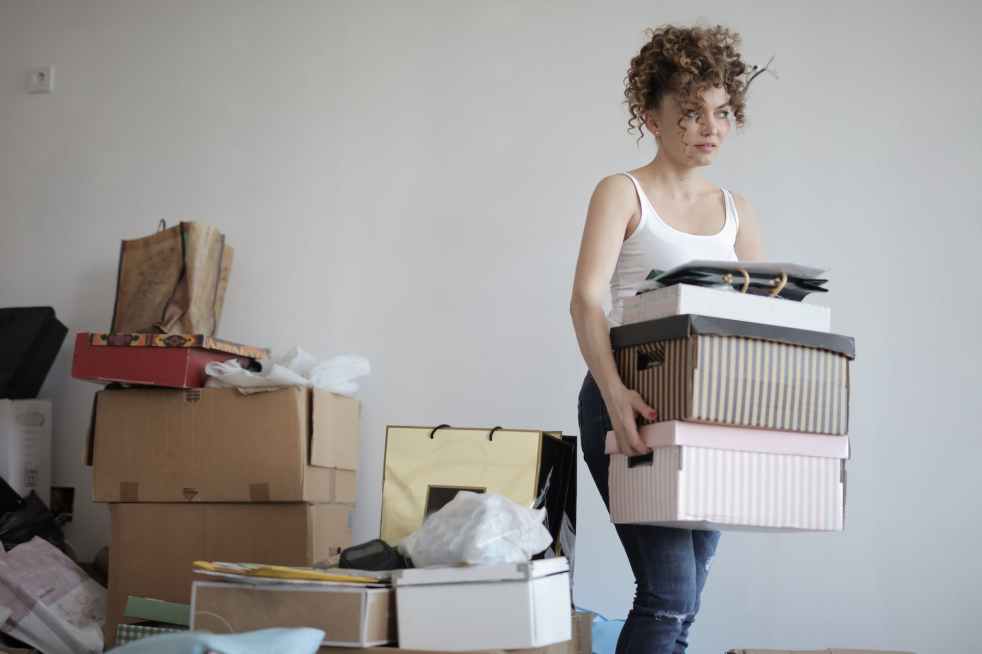
Decluttering is all the rage as a concept, but it can help people live a calmer and more relaxed life. Living with less offers the chance to spend less time cleaning and tidying up, and physical clutter also leads to mental clutter.
So how can you make light work of the clutter in your home?
To get rid of large items quickly or bags of clothes, you don’t feel like sorting through donations can be the fastest route. People are often happy to pick things up quickly when there isn’t a price tag.
Your chosen charity will benefit from the goods when people buy them, and you’ll know you did something for the planet and the people in the area.
Only donate things in good condition.
Yard sale
Bring the buyers to your door with a yard sale. Those who haven’t had yard sales before can feel a bit awkward just putting your items on the lawn for others to browse and buy. But some people are dedicated to buying yard sale items and selling them as a business. Reading some yard sale tips will help you make the most of the sale.
5-5-5
This could be any number, but starting with 5 is a great place. Find 5 things that need to go, 5 things you can donate, and 5 things to sell. Do this weekly to keep the steady decluttering pace without overwhelming yourself.
List
It is easy to get overwhelmed by the sheer amount of things that need to be cleared and removed. Making a list for each room can make the job a lot easier. You can check off a few items on the list and track where you have gotten up to.
Short bursts
Unless you have a team dedicated to helping you clear out the house in record time, it is more beneficial to do it in short bursts until you get to where you want to be. Doing it in short sharp bursts means it won’t become overwhelming or feel like you have taken on too much. Setting 30-minute times and selecting a goal on the list is the best way to keep progressing without taking too much.
Storage
One thing that makes people feel like they need to declutter is insufficient storage for the space. When you have the right size and style of storage, everything will have its place – and it will look less messy.
It can be as simple as adding extra shelving or getting roll-away storage under the bed.
Trash
Be ruthless when it comes to your trash. Anything that isn’t for donation and likely won’t sell should make its way to the trash. Try to recycle where possible – but make putting things in the trash one of your favorite things.
Use-by dates
Tins, jars, dried goods, makeup, and skin care have a use-by date. Go through yours and ensure that anything out or almost out makes it to the bin. This can clear up a huge amount of space.
In this fast-paced social media world, it can be difficult to find the time to look within or back in time. I hope you find these quotes and questions interesting. So glad you stopped by today!
Thank you for all the great feedback on the Blogger Highlight series, I’ve enjoyed meeting each blogger and sharing their site with you. This week I highlight a new blogger, Gradina Magica.
National Child Health Day is on the first Monday of every October where we show our support of children’s health, family, and those that work hard to help them. Family income is a major factor in the health of children both physically and mentally. Children from households below the poverty line have a higher obesity rate than those above it, and with the epidemic not slowing down, it’s clear that there’s more that we need to do.
HISTORY OF NATIONAL CHILD HEALTH DAY
There weren’t any facilities dedicated to the treatment of children until the mid-nineteenth-century. They were treated at home and if that wasn’t an option for families, children went to municipal almshouses just like their parents did. The understanding of children’s health wasn’t defined back then and oftentimes abandoned and orphaned babies were left in infant asylums.
By the 1860s, the problem worsened until hospitals that specialized in the care of children were developed to address the issue. There was a stigma surrounding the sick and the poor and not enough was being done to stem the tide. The early children hospitals would admit these sick and abandoned children and offer food, clothing, and more to better their health. The philosophy of these hospitals was that even if their parents made bad decisions, it wasn’t the fault of the children.
This month has some interesting Awareness Days. This is not an exhaustive list, you can search the Internet for monthly awareness days and get more than enough resources.
See you throughout the month with educational posts.
National Cybersecurity Awareness Month
ADHD Awareness Month
National Bullying Awareness Month
Dyslexia Awareness Week 3rd-9th
Child Health Day 3rd
World Smile Day 11th
Trigeminal Neuralgia 7th
World Mental Health Day 10th
World Osteoporosis Day 20th
International Brain Tumour Awareness Week Sept. 29-October 5th
I hear stories every day about doctors not listening to the patient. I’ve had two situations like this and both ended differently. The first time, I encountered a frustrating conversation with my Psychiatrist, he had me talk with a Therapist in the office. She had known him for a long time and she gave me pointers on how to get his attention and keep him from getting frustrated. She said to keep things short and sweet. It worked. That meeting made all the difference and still see him 30 years later, her too for that matter.
The second experience was building over months and months. I was coming off of Lyme Treatment and had my GP take over my care. He worked with me but was always in a rush, even after booking double appointments. I learned to keep my list short so we could get to all my issues. It came down to the fact that I had maxed out on Tramadol and isn’t wasn’t working. He had no idea where to go next and didn’t refer me to a Pain Doctor. I quit his practice. Most doctors can tell when they have all they can. If they are out of your bailiwick they need to pass the patient on for the things they need assistance with.
I’m glad that decision was made. I love my new doctor and she sends me to a specialist when I have a problem she can’t address. She spends 30 minutes with patients giving plenty of time to discuss your list, maybe. You have to prioritize what issue is most important and start your conversation with that.
Don’t set unrealistic expectations. They have very tight schedules even Specialists and they can’t answer every question you have. You have to narrow it down to three items at most. Write down your questions so the doctor can see you are prepared.
Once in, skip the pleasantries and jump right in. Say I know you are busy so let me jump right in. Then ask your first question, if it draws out because it needs explaining then schedule another appointment before you leave to follow up on other questions. I believe we have to go into a doctor’s office knowing that we are not going to get everything answered in one meeting unless we only have one question.
Bring a dedicated journal to write just medical notes in. This is where you write your questions and your perception of the meeting. Be sure to date each appointment.
The worst thing we can do is play Internet doctor and go in telling them what’s wrong with us. Write your symptoms in a journal, start talking about the most important item for you and let them take the lead, speak up if you need to interject. Be very aware the doctor at most practices only gives 15 minutes to each patient however, if they run late you may not get your full appointment time. Always book a double appointment if insurance will let you. I did that and it helped a great deal. Then I got close to 20 minutes with him and he was less in a rush.
Another best practice is to take someone with you. If it’s someone close to you it’s possible they’ve noticed something new about you and can tell the doctor. I think anyone with a mental illness needs to take someone with them. It gives your partner or family member to hear straight from the doctor’s mouth what is wrong and what you need to take or do.
Don’t leave the doctor’s office without talking about the side effects of any new medication written.
What hacks do you have for getting your doctor’s attention?
After the big showdown with my stepfather, my mother finally relented and let me move to my dad’s. I knew living with my dad was not going to be peaches and cream but at least the beatings and emotional abuse would stop. I was in for a completely different ride but it was bumpy.
One important piece of information is my dad had been taking me to bars since I was nine years old. I’m 12 years old, it’s summertime, and I know no one except the neighbors. There were a couple of neighbors who drank or smoked pot so I hung around their place.
My dad could see I was going crazy without friends. So, my dad start taking me to the club every weekend and sometimes to parties. These parties were for adults, not children. I saw things no 12-year-old should see. At one party, my dad and I were sitting at the bar drinking and I was smoking pot. I had to go to the bathroom and it was upstairs, walking up the stairs was a full-on orgy taking place. I had to walk over people to get to the bathroom.
My dad was married and had a girlfriend, so he would go to the 7-11 every day to call his girlfriend. There were a group of young people who hung around the 7-11 and he thought if we met I would be happy. One night he drove me up there and introduced me to the group. They were all older than me and out of high school. What was my father thinking? Maybe it made sense to him because I had already been hanging out with many older people. Knowing what I know today, he was not well mentally.
Now, this was my gang, even started dating one guy who was 21 years old. In what world do a 12-year-old girl and a 21-year-old man make sense? Not in America. He was the local drug dealer, every week we would break down a kilo of pot and sell it to our friends. Friday night was distribution time, back then you could buy a four-finger bag for just $10! Sometimes I would stay at a friend’s house while he meet some other people. We partied and lived in a world of smoke. Because he had access to other drugs he would ask me if I wanted anything special, it was always hash, speed, or LSD. I had one bad trip on LSD and that was the last time I took it. I was eventually addicted to speed.
One night my boyfriend and I were at my dad’s watching a movie on television, my dad came out of his room madder than hell and put a 357 mag to my boyfriend’s head and told him to get out. Of course, I was mad as hell and a bit frightened so I ran away. My father drove around with that gun and threatened all my friends to tell him where I was. He was pointing the gun at them. I was on the passenger side floorboard when my dad approached one of my friends and I saw the threat playing out. My friends didn’t think anything about it. Now my boyfriend and I started planning how we would kill my father, in the end, God must have said no.
At this point, I was 13 years old and in eighth grade. I didn’t care much for school and would hang out with my friends instead. After missing 34 days of school my father found out and had me put in juvenile detention for three days. My stay was an eye opener to the violence out there, so many girls were in solitary confinement. The stay didn’t affect me, I got out and talked my dad into letting me go to the Eagles concert with my boyfriend just a few days later. It would have been fine except my boyfriend drove a motorcycle so we borrowed a friend’s car. The car broke down as we were almost there. We walked the rest of the way and said we’d figure it out after the concert. After the concert, I used the toll booth phone and called my dad. The worst part is it was freezing outside, my father had never been to that city over an hour away from him. Trying to give directions, I said right before the toll both look for the car. It took him hours to find us and he was pissed.
Right after that, he put a restraining order on my boyfriend, like that would stop me from seeing him. I was in love and we were going to get married. The fights with my dad kept escalating until he put a gun to my head. That was the last straw, I tried and almost succeeded in killing myself. My dad was so out of touch with reality, he took me by the cub to get a glass of milk. He drove 20 minutes to the club when he could have driven five minutes to the hospital. He’s not able to connect with reality.
By this time I was on probation for carrying a gun and saw my probation officer every month and never spoke a word for seven months. She would tell me that the state was already looking for a boot-camp type of place to send me, that was for kids who could not be reformed. She felt I could be reformed and kept talking to me until the eight-month when I said send me somewhere that is not a boot camp and I’ll go. It took a few months but she found a convent that ran a bad girl boarding school, Mount St. Michaels.
Luckily for me, it was only thirty minutes from my grandparents. My father was not allowed to see me for a year, and my mother was allowed but she never came. Every Wednesday night there was group counseling, and my grandparents came every time. I couldn’t visit with them but over time they let me say hello and my grandmother would bring goodies for the entire dorm.
I was in a boarding school for a year, and I cherish my time there. The nuns were always complementary, positive, and reassuring. One day hurt my thumb, and several nuns circled me, held my thumb and they prayed the pain would go away. This was new to me but it worked.
I started going to the Catholic church on-site every day and eventually converted to Catholicism after completing my studies. Father George and my counselor Jim were my teachers and at Baptism, I chose my Catholic name, Catherine, and name Jim as my guardian.
As always my mother fucked up another big moment for me. I was scheduled to leave on the 10th, we had a big party planned and say our goodbyes. Instead, my mother shows up on the 9th, I’m hauled out of class not knowing what was going on until I saw my mother’s car. No goodbyes, nothing. Someone had finished packing my room and off we went. It wasn’t until years later I realized the reason she came early is my brother’s birthday is on the 10th, she couldn’t be bothered the day of his birthday so she showed up unannounced.
I didn’t want to go back to my mother’s and talked with my grandparents about coming to live with them. Behind the scenes, my grandparents put everything in place to take custody of me. My mother never blinked an eye.
Reformed, I was to a point but still drank and did drugs. My grandparents ran a tight ship and my opportunities were limited to weekends. I wasn’t doing many drugs just smoking pot when it was around. Drinking was another story. This was a continuation of my drinking which lead to addiction. My granny knew I drank and if I were taking medication, she would tell me not to take my medication since it was the weekend. I did pretty well at hiding it except for the night I was skunked, hit the washer, and threw up. Gramps knew then I was drunk but no punishment.
I guess they looked at the trauma I grew up with and gave me a pass at times. With my grandparent’s love and strict rules, I went to 10th grade with confidence. I was your typical teenager except I was hiding a horrific past.
I was also sexually abused by my dad but am not ready to say it out loud.
I want to give a special thanks to Editor, Andrea Marchiano from Cherish Editions for sending me the book This Is Mandy by Mandy Kay.
Blurb
Obsessive-compulsive disorder (OCD) is an anxiety disorder that affects millions of people of all ages. Unfortunately, it is often kept a secret – and that’s true in the case of young Mandy, too.
Mandy’s OCD affects her life at home and school, as she spends so much time on her compulsions and obsessions: washing her hands, brushing her hair, checking locks, and re-writing her classwork – over and over and over. But Mandy comes to realize that OCD isn’t shameful, and it doesn’t have to be hidden. Instead, speaking up helps her to feel like herself again.
Publication date: 31/03/2022
ISBN: 978-1-913615-54-3 32 pages
My Thoughts
Having OCD is hard for adults but think about how children feel about their OCD. They are still growing, being judged at school, and do not understand why they do the things they do. Not to mention the stigma. Obsessive-compulsive disorder is broad-reaching, it can affect your entire day. I can’t imagine the stress a child must feel.
Mandy has an art project, she has to paint a portrait of herself. She spends so much time picking the right paint and brush she has little time to draw. But she finished and the portrait has a red face, and black eyes, basically looking very unhappy. Her teacher is alarmed by her work she takes her to a private place to talk about why she drew herself that way. Mandy likes her teacher and opens up about her morning rituals. The teacher reassures her there is nothing to be scared of and that she would get her some help.
Once Mandy gets the help, she feels better. Mandy is confident now and feels good about herself and the future.
I would recommend this book to all children and adults to read to their children. It highlights the struggle with OCD and with treatment life is better. The other moral of the story is trusting someone to share your problems with can often help you deal with them.
Trigger Publishing
TriggerHub.org is the first mental health organization of its kind. We are bringing mental health recovery and balance to millions of people worldwide through the power of our books.
We have built a first-class resource of curated books produced and published in-house to create a unique collection of mental health recovery titles unrivaled in quality and selection. We work with experts, psychologists, doctors, and coaches to produce our books, but we also work with real people looking to share their stories to reach out to others and provide hope, understanding, and compassion. These brave authors also aim to raise awareness of mental health’s “human” face and its impact on everyday lives.

















 Looking for the Light
