
Burden
Exhausted
Not moving
Not contributing
Giving nothing to society
To sick to care
Exhausted
Can’t move
In bed
Frozen
Hopeful

Burden
Exhausted
Not moving
Not contributing
Giving nothing to society
To sick to care
Exhausted
Can’t move
In bed
Frozen
Hopeful
Thank you Daniel for giving us a new adventure to follow. M
Each band influenced my early Rock & Roll experience. If I could only choose 100 LP’s, no doubt these are included. Have a great weekend. I love to spin for you. M
These are classic love songs, Aretha Franklin killed it as always. I hope you enjoy this weeks pick. The 24/7 Request Line is open, longing to hear your choice or choices. I’m happy to spin your tune. Thank you for reading! M

I have started a new blog http://ForTheLoveOfArt.blog. I believe art is art if you think it’s art. Today I posted is an interview with Cindy Knoke at cindyknoke@wordpress.com. She’s a great photographer, I hope you will stop by. Please leave any comments about the site. The good, bad and ugly, your comments will help me form the site.
Melinda
Please stop by to check out my new site ForTheLoveOfArt.blog
Thank you reading, I appreciate every one of you! :) M
I remember these songs like yesterday. There was a large poster of Shawn Cassidy on the wall next to Donny Osmond. I hope you enjoy the classics this week. Have a great weekend. M
Feb. 22, 2018, at 9:00 a.m.


By Julie Davis
HealthDay Reporter

(HEALTHDAY)
THURSDAY, Feb. 22, 2018 (HealthDay News) — Many of us make choices about whether to eat healthy or not-so-healthy foods based on whether we’re in a good or not-so-good mood.
When a bad mood strikes, we often tend to reach for junk food. And that can be a recipe for disaster when you’re trying to lose weight.
Here’s how to keep your emotions from ruining your diet resolve.
Next, look for ways to brighten your mood that don’t involve eating at all. If you’re blue, call a diet buddy who knows how to motivate you. Or turn on a favorite movie. If you’re nervous or angry, release your emotions by working out to your favorite music mix or taking a short run.
Healthy lifestyle habits help insulate you from bad moods and the emotional eating that often follows. Boost your mood on a daily basis with regular exercise and with a few minutes of relaxation, like taking a warm bath, meditating, or reading a book.
Using a food journal can help you look for causes of a bad mood, like stress, and show patterns you can then take steps to change. For example, if giving a presentation at work always has you reaching for a candy bar, be prepared with a healthier snack, like a small container of nuts and dried fruits.
These positive steps will improve your outlook and, in turn, help you make good food choices and stick to your diet.
More information
Cornell University’s Food & Brand Lab has information to help you better understand how your mood can drive food choices, and how to overcome emotional eating.
Copyright © 2018 HealthDay. All rights reserved.
Julia wrote this raw post with several lesson’s to note. Her words touch so many, no doubt motivating others to look deep inside for answers.
Thank you Julia.
I started realizing a little over two years ago just how much I hated myself. Prior to that I thought that I liked myself for the most part but just had some self esteem issues. After suggestions from some friends to make my new year’s goal to love and take care of myself, I realized just how hard this was for me. It was not long before I realized that I had a deep and persistent hatred of myself. I considered myself to be the worst, most worthless person on the earth.
I wasn’t sure what to do with this new knowledge. How do you learn how to love yourself? Where do you start? I decided to start with the people who loved me. If they saw something of worth in me, there had to be something I could love about myself. I wrote on my mirror every single kind…
View original post 420 more words
I’m thrilled to take part in the Blog Tour for Christine Clayfield’s first novel “No Fourth River”. Christine, it’s great to talk with you this morning. Let’s jump in.
Your novel “No Fourth River” is incredibly personal. Starting with the brutal abuse from your father to all the siblings. What convinced you now was the right time to write your story?
There are four influencing factors that made me decide to write my story.
1) My husband and daughters kept telling me, over the years, that I should write a book about my life.
2) I don’t usually share my story with others. However, sometimes when I unintentionally mention things from my past, people are intrigued. They want to know more about my life. I’ve often been told that I should write a book because my struggles would resonate with others and my life story could be an inspiration.
3) I had been jotting down ideas for a while but never started to write. When I collected enough courage to speak on stage, people often burst into tears during my speech. They came up to me after my speech to thank me for sharing my story and to tell me how inspired they were. That moment was when I decided to write my life story. I didn’t realize until then that my life story was an inspiration to others. Very shortly after that, I started writing No Fourth River.
I transformed my life and I wanted to spell out valuable messages in my book too. If I can change one person’s life who will read my book, I will have achieved my goal. I have shared my life experiences, deeply personal ones too and hope to make a difference in someone else’s life. I want people to know that you can change your life, no matter what you have been through. I am a living example.
4) I am not getting any younger so I needed to do it sooner rather than too late , when I perhaps won’t remember all the details of my life.
I was anxiously awaiting the arrival of my first review as I was curious to read people’s thoughts about my story. When I saw my first review, I was pleased as punch and totally overwhelmed with happiness. The review confirmed what I wanted my book to be: an inspiration to others.
How long did the writing process take?
From the moment I started jotting down dates of events in my life until the manuscript was totally finished, 2 years went by. However, I wasn’t writing full-time at the beginning, just a few hours per week. Once I’d written a few chapters, I started thinking: “I can actually do this; write a novel”. I had written five business books prior but this was my first novel. From that moment, I started writing most days of the week and I finished the book one year later but had a long break in between as my mum moved in with me and I looked after her in her last stages of dementia.
“No Fourth River” is your first novel, what’s your next book?
I am planning to write a book about “How to market a novel” , based on my experiences. I believe there is a big gap in the market for an informative book on this subject.
I am also scribbling down ideas for my second novel: a fiction novel.
Writers are often avid readers. What type of book do you read for pleasure?
Aside from reading books about all aspects of doing business, I love true stories and inspirational stories.
What are some of your other personal leisure activities?
A leisure activity is doing what you like and as I like working, I consider that as one of my leisure activities. When you enjoy what you are doing, it doesn’t feel like working. I also enjoy watching my husband play drums in his touring theatre show. Apart from that, I love traveling, watching a good movie and dining with friends and family.
How do you want fans to contact you? ” Facebook? Twitter?
I prefer to be contacted by email: info@christineclayfield.com
Christine’s novel “No Fourth River” available now
It’s such a pleasure to talk with you today. I wish you continued success on “No Fourth River”.
Melinda
You may have noticed the name change from Lyme Update to Lyme Progress. The reason for the change, it’s time to start looking forward, short-term and long-term. I still struggle with illnesses which Lyme left and have days can’t get out of bed. WINNING is looking forward. The chronically ill understand this mindset.
After dismissing my Lyme Doctor in Washington, I came back to Texas determined to build a team of doctors who could manage the different aspects of my illness. The next post I will talk about the long list of doctors required, today I wanted to discuss my immediate complaint. PAIN, PAIN, PAIN!
I made my General Practitioner the main doctor, he was my GP prior to Lyme but many years had passed. We didn’t know each other any longer and trust had to be earned on both sides. We have scheduled 30-minute appointments instead of normal 15 minutes, we have more time to talk. Talking is a big part of getting to know each other.
I’ve had several appointments with him and last week we talked about PAIN. Being a bit detailed, I put the list below together to show the different types of pain. Pain is pain is pain is not the same pain. There are many types of pain and over time they can feel like one but are not.
The information provided helped him see there were many areas of my health not being addressed. What does that mean? He had no clue how to treat a chronically ill patient. Medication, I decide the number of pain meds required every day not him.
Chronic Lyme Illness? Bacteria how active?
Lyme Arthritis
Fibromyalgia
Neuropathy
Full Body Pain
Injuries: Current falls injuring knee and shoulder
Related: Difficulty Sleeping creating more inflammation
Falling down the stairs, breaking bones
I pray this post helps somebody, if so please pay it forward. Bless you.
M
I love each artist picked this week. James Bay’s “Pink Lemonade” is a great example of transformation of music style. Imagine Dragons never disappoint, the are worth watching on YouTube to watch the live shows. One Republic is a breath of fresh air, they play many style of music and their in my top one hundred. Have a great weekend. M
Lyme Journal Rerun from 2015. Included is packed with info about being a patient and the huge political system. I hope someone is helped by the information. M
Chronic Lyme can leave behind other chronic illnesses, many little things, my body is still evolving. I had IV Infusion Treatment, high levels of antibiotics which destroyed, my skin’s protective barrier. My outside limit is 5-10 minutes then its second degree burns. Who needs to use the pool? My doctor said my skin will always be an issue. Great! I’m a Cancer Water Baby, vacation anywhere there’s good clean water.
A big surprise came when freckles popped up everywhere. Not little freckles, masses of darker ones. My arms have the “vacation look”. Yesterday I found several big black freckles on my back. What now!
I have “scaling” on the arms, skin looks snake-like. At 54 Lyme has given me more than I ever asked for. Mother Nature continues to her natural growth. I have tags, mini warts that grow mostly on the chest area.
Chronic Lyme affects everyone different and very different side effects.
For those’s who love us or we love, be gentle. Lyme is a very hard everyday.
M
Thank you Candice for sharing your post. A very important post for WOMEN. :)

From formless
She
Carries the strength of her foresisters
The weight of her thighs
Weighs rivers swell
In tip and measure
She
Defends the feeding babe
Climbs her own knot of thorns
With quills in her back
And knife wounds smiling
Her breasts leak
Her center of gravity is the iron mantle
Set like a spinning throne in Earth’s center
The very blood of her is metal
And a handful of spring
And a mouth kissing
And a belly birthing
Her entirety
The mound of her sight
Stretching like
Hands clasping hands over time
Here is the unbroken connection
Of women
If they will be kind and not snare
Her sisters, raven haired, red and light as snow
We are the rise and set of day
The future in her oracle
We bring or we deny
Our destiny and reach
Seize your place
Take a hand
Bend to the wind
View original post 19 more words
Have a great weekend. The old Rock & rock called me this week. I hope you enjoy. Leave a comment in the comment section with your request. Let me spin a tune for you. M
I hope you enjoy the Hotline Picks this weeks. Have a great weekend. M
Another great post from Amy Gamble. Have a great weekend. M
The request line produced three great videos. Pick up request line and let your tune be heard. Leave request in comment section of post. I love to spin for you. Have a great weekend. M
I had an opportunity to teach a group of school teachers about mental illness. After last weeks Florida school shooting I was prepared for questions about mental illness and violence. It’s beyond sad this is an ever occurring topic. But what happens to those of us who live with a mental illness when the public, […]
via I have bipolar and I am not violent — Shedding Light on Mental Illness
 RAINN
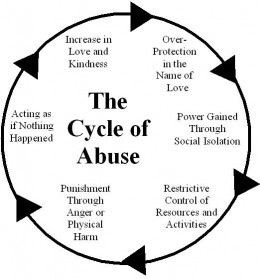
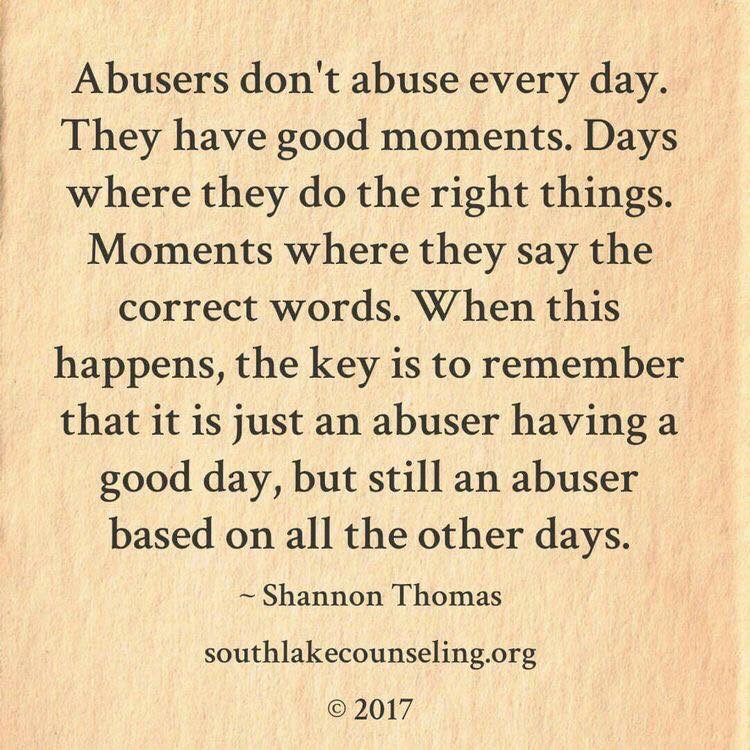
RAINN“With dating violence, early warning signs often begin with behaviors that are not physically violent,” said Jodi Omear, vice president of communications at RAINN. “These behaviors may violate a person’s boundaries, be emotionally abusive, or otherwise controlling.”
Demanding to know their partner’s location at all times, controlling their appearance or behaviors, refusing to use contraceptives or STI protection during sexual activity, or forcing drug or alcohol use—these are all signs of an abusive relationship.
With many aspects of relationships, especially for teens and young adults, taking place over text, Snapchat, Instagram, and online dating apps, knowing how to spot warning signs for dating violence through these platforms and staying safe on social media is more important than ever. When it comes to online communications, small controlling behaviors may not seem to be high risk, but they can quickly escalate into emotionally abusive behavior or physical abuse if you meet in-person.
Check out RAINN’s resources for more information on how to stay safe online and identify potentially abusive behavior:
After chatting with WordPress Support about the Reblog button not working, I learn they already know and no completion date is given. From my own experience not everyone is effected.
Here’s a link I was given to show tracking process. I asked if the link included a completion date I received no answer. We are tracking it here: https://github.com/Automattic/wp-calypso/issues/22491
WP.comTue, Feb 20, 9:00 PM
If you look at the top right, there is a place to be notified when it gets updated.
WP.comTue, Feb 20, 9:00 PM
I would suspect an issue with this much attention should get fixed sooner than later.
lookingforthelightblogTue, Feb 20, 9:01 PM
Thank you signing out
WP.comTue, Feb 20, 9:01 PM
Chat us again if you have more questions!
M

Look up from this screen right now. Take a look around. On a bus. In a cafe. Even at a stoplight. Chances are, most of the other people in your line of sight are staring at their phones or other devices. And if they don’t happen to have one out, it is certainly tucked away in a pocket or bag.
But are we truly addicted to technology? And what about our kids? It’s a scary question, and a big one for scientists right now. Still, while the debate rages on, some doctors and technologists are focusing on solutions.
“There is a fairly even split in the scientific community about whether ‘tech addiction’ is a real thing,” says Dr. Michael Bishop, who runs Summerland, which he calls “a summer camp for screen overuse” for teens.
Dueling diagnoses
“Technology addiction” doesn’t appear in the latest Diagnostic and Statistical Manual, the DSM-V, published in 2013. That’s the bible of the psychiatric profession in the United States. The closest it comes is something called “Internet Gaming Disorder,” and that is listed as a condition for further study, not an official diagnosis.
This omission is important not only because it shapes therapists’ and doctors’ understanding of their patients but because without an official DSM code, it is harder to bill insurers for treatment of a specific issue.
The World Health Organization has, by contrast, listed “gaming disorder” as a disorder due to an addictive behavior in the next edition of the International Classification of Diseases, an internationally used diagnostic manual.
Dr. Nicholas Kardaras is the author of the 2016 book Glow Kids: How Screen Addiction Is Hijacking Our Kids. When I ask him about the term “addiction” he doesn’t miss a beat.
There are brain-imaging studies of the effects of screen time, he says. And he also has treated many teens who are so wrapped up in video games that they don’t even get up to use the bathroom.
He says the evidence is clear, but we’re not ready to face it.
“We have, as a society, gone all-in on tech,” he says. “So we don’t want some buzzkilling truth sayers telling us that the emperor has no clothes and that the devices that we’ve all so fallen in love with can be a problem” — especially for kids and their developing brains, he adds.
Addiction may not be an official term in the U.S., at least not yet. But researchers and clinicians like Bishop, who avoid using it, are still concerned about some of the patterns of behavior they see.
“I came to this issue out of a place of deep skepticism: addicted to video games? That can’t be right,” said Dr. Douglas Gentile at Iowa State University, who has been researching the effects of media on children for decades.
But “I’ve been forced by data to accept that it’s a problem,” he told me when I interviewed him for my bookThe Art of Screen Time. “Addiction to video games and Internet use, defined as ‘serious dysfunction in multiple aspects of your life that achieves clinical significance,’ does seem to exist.”
Measuring problematic use
Gentile’s definition doesn’t address the questions of whether media can cause changes in your brain or create a true physical dependency.
It also doesn’t address the question, raised by some of the clinicians I’ve spoken with, of whether media overuse is best thought of as a symptom of something else, such as depression, anxiety or ADHD. Gentile’s definition simply asks whether someone’s relationship to media is causing problems to the extent that the person would benefit from getting some help.
Gentile was one of the co-authors of a study published in November that tried to shed more light on that question. The study has the subtitle “A Parent Report Measure of Screen Media ‘Addiction’ in Children.” Note that the term addiction is in quotes here. In the study, researchers asked parents of school-age children to complete a questionnaire based on the criteria for “Internet Gaming Disorder.”
For example, it asked: Is their preferred media activity the only thing that puts them in a good mood? Are they angry or otherwise unhappy when forced to unplug? Is their use increasing over time? Do they sneak around to use screens? Does it interfere with family activities, friendships or school?
The experts I’ve talked to say the question of whether an adult, or a child, has a problem with technology can’t be answered simply by measuring screen time. What matters most, this study suggests, is your relationship to it, and that requires looking at the full context of life.
Seeking treatment
Though tech addiction isn’t officially recognized yet in the United States, there are in-patient treatment facilities for teens that try to address the problem.
For my book, I interviewed a teenage boy who attended a wilderness therapy program in Utah called Outback.
“I started playing when I was around 9 years old,” said Griffin, whose last name I didn’t use to protect his privacy. He chose email over a phone interview. “I played because I found it fun, but after a while I played mostly because I preferred it over socializing and confronting my problems.”
After he spent weeks hiking through the wilderness, his mother saw a lot of improvement in his demeanor and focus. However, Griffin came home to a reality where he still needed a laptop for high school and still used a smartphone to connect with friends.
Bishop, who runs therapeutic Summerland camps in California and North Carolina, says the teens who come to him fall into two broad categories. There are the ones, overwhelmingly boys, who spend so much time playing video games that, in his words, they “fall behind in their social skills.” Often they are battling depression or anxiety, or they may be on the autism spectrum.
Then there is a group of mostly girls who misuse and overuse social media. They may be obsessed with taking selfies — Bishop calls them “selfists” — or they may have sent inappropriate pictures of themselves or bullied others online.
Regardless of the problem, “We feel the issue is best conceptualized as a ‘habit’ over an ‘addiction,’ ” Bishop says. “When teens think about their behavior as a habit, they are more empowered to change.”
Labeling someone an addict, essentially saying he or she has a chronic disease, is a powerful move. And it may be especially dangerous for teens, who are in the process of forming their identities, says Maia Szalavitz.
In other words, as long as these companies make their money from advertising, they will have incentive to try to design products that maximize the time you spend using them, regardless of whether it makes your life better. Harris’ solution is to pressure the industry to turn to new business models, such as subscription services. “We’re trying to completely change the incentives away from addiction, and the way to do that is to change the business model.”
Along with Common Sense Media, a nonprofit that offers parents research and resources on kids’ media use, they are currently launching a “Truth About Tech” campaign that Harris compares to anti-smoking campaigns exposing the workings of Big Tobacco.
Fighting tech with tech
For over a decade Gabe Zichermann was a self-described “cheerleader” for what’s called “gamification.” He consulted with the world’s largest corporations and governments on how to make their products and policies as compelling as a video game.
But, he says, “there was a moment I realized that things had gone too far.” He was in a restaurant and looked around and saw “literally everyone was looking at their phones.” Zichermann started thinking about his family history and about his own relationship to technology.
He realized that his work up to that point had been contributing to some serious social problems. Like Harris, he is concerned that in a world of ubiquitous and free content, platform- and device-makers make more money the more time you spend on screens.
This, he says, results in “a ton of compulsive behavior” — around everything from pornography to World of Warcraft to Facebook. Feeling “partially responsible,” Zichermann set out to create an anti-addiction app.
It’s called Onward, and it has a number of different features and approaches in both free and paid modes.
It can simply monitor in the background and give you a report of your use, which for some people, says Zichermann, is enough to motivate change. Or it can share that report with someone else — say, a parent — for accountability (the app is rated for use by 13-year-olds and above).
Or, say you want to stop browsing Facebook during business hours. The paid mode of the app allows you to block Facebook, but it can also monitor in the background to try to predict when you might be about to surf there. “The idea is that when the drink is in your hand, it’s too late,” says Zichermann.
In that moment, the app serves up an intervention like a breathing exercise, or an invitation to get in touch with a friend. Zichermann calls this “a robot sitting on your shoulder — the angel of your good intention.”
The company has partnered with both UCLA Health and Columbia University Medical Center to research the efficacy of the app, and Zichermann says they plan to seek FDA approval as a “digiceutical.”
In essence, Zichermann is trying to gamify balance — to keep score and offer people rewards for turning away from behavior that’s become a problem.
The word “addiction” may currently be attracting controversy, but you don’t need a doctor’s official pronouncement to work on putting the devices down more often — or to encourage your kids to do so as well.

Bad Company has been a favorite since a teenager, it’s no surprise they are my favorite band.
Before I play a video, there is a story connected. I went to see Bad Company in my twenty’s, during the show I kept hearing they were going to the Hard Rock Cafe (back when it was cool). After the show I went straight to Hard Rock. I ate and saved my bill for them to sign, any of them. I was truly hoping for the lead singer.
Three hours later they arrive, I’m getting an autograph, they arrive on third floor and go straight into private room. I was crushed. Try again another show.
Here’s one of my favs from Bad Company. M
Enjoy the oldies! Have a great weekend. Melinda
After leaving my LYME Doctor in DC, I had to compile a team of doctors who could keep me well. This was not the easiest process. Here are the doctor’s I’ve met with so far.
General Practitioner
Endocrinologist
Internal Medicines
Cardiologist
One step I took with my GP is 30 minute appointments. I haven’t seen him in six years, trust takes time when you prescribing pain medication. I don’t have any issue paying for a double appointment, we’ve learned more about each other and the trust is almost 100%.
I still need to met with Neurologist and possible Pain Management.
I still see a Therapist and Psychiatrist. It does take a village.
M
Ashleyleia from MentalHealth@Home.wordpress tagged me for the TMI tag. So, here we go:
Q: What is your favorite show?
Blind Spot
Q: What is your favorite band?
Bad Company
Q: Something you really miss.
Peace
Q: Where do you go when you are sad?
Bed
Q: Have you ever been in a physical fight?
Yes, winning most.
Q: What is your favorite color?
Green
Q: Loud music or soft?
Always loud, Rock & Roll deserves loud music.
Q: Favorite actor.
Harrison Ford
Q: Do you have any fears? What are they?
Snakes & Spiders
Q: Meaning behind your blog name.
I have Treatment Resistant Bipolar Disorder. In dark times I looked for the light.
Q: Last time you said you loved someone.
Yesterday
Q: Last book you read.
The Panic Switch
Q: The book you are currently reading.
The Agoraphobia Workbook
Q: Last sport you played.
As a teen played softball & basketball. I sucked at both.
Q: Last song you sang.
Shooting Star by Bad Company
Q: Favorite food.
Spanish, Mexican, down home country cooking
Q: Place you want to visit.
Morocco, Jordan, Pennsylvania
Q: Favorite flavor of sweet.
Chocolate
Q: What instruments do you play?
None
Q: Favorite piece of jewelry.
Wedding band
Rather than calling out specific people to tag, I’m going to leave it up to my readers. If you’re interested in playing along, well then tag, you’re it!
Every generation has its superstars, these songs were released at a critical point in my life. I was on the fence about being a drug addict, not finishing school, getting married a 13 years old or going straight and leaving the past behind. I made the right and best decision for me.
I hope you enjoy the music, maybe it will bring a few memories to you. M
In case you missed the Half Time Show.

Thank you Alyssa from Fighting MS Daily, fightingmsdaily.com. Everyone has a story, Alyssa is no different. She was diagnosed with Multiple Sclerosis at 19 years old. That’s a life changing blow for anyone. She moves forward, in her 30’s and a strong advocate for MS and all Chronic Illnesses. Thank you for the invite.
Four places I’ve lived:
Texas
Texas
Texas
Texas
Four places I’ve worked:
Robert Half International
Alternative Resources Corporation
Retired 2003 to care for Granny
Minister
Four favorite hobbies:
Sailing
Hiking
Photography
Sky Diving
Four things I like to watch:
SNL
Crime Shows
FBI/CIA shows
Spongebob
Four things I like to read:
Bible
Non-Fiction
Blogs
Medical Research
Four places I have been:
Australia
Russia
France
Spain
Four things I love to eat:
PB&J
Mexican Food
Oysters
Olives
Favorite things to drink:
Water
Lemonade
Hibiscus Water
Smoothies
Four places I want to visit:
Tanzania
Germany
Turkey
Wales
Four bloggers I’d like to tag:
Harlon Davey A Patient Voice
Simon Farnell Planet Simon
Cindy Kocke
Candice Daquin The Feathered Sleep










 Looking for the Light