Celebrate Life · Fun

#Weekend Music Share *Dream Baby Dream

It’s the weekend, YEAH! I’m so glad you’ve joined me. Be Safe. The words to Dream Baby Dream are more relevant than ever. The world has been tested to the limits by the COVID-19 virus and we all need to keep dreaming. There are better days ahead!

Melinda


Welcome back to Weekend Music Share; the place where everyone can share their favorite music.

Feel free to use the ‘Weekend Music Share‘ banner in your post, and don’t forget to use the hashtag #WeekendMusicShare on social media so other participants can find your post.

Fun

Friday Quote

Hi Everyone, It’s Friday! So glad you stopped by today. Please be safe this weekend by wearing a mask.

Photo by Musa Ortau00e7 on Pexels.com

We cannot change our past. We can not change the fact that people act in a certain way. We can not change the inevitable. The only thing we can do is play on the one string we have, and that is our attitude.

Charles R. Swindoll

In Health,

Melinda

Fun · Men & Womens Health

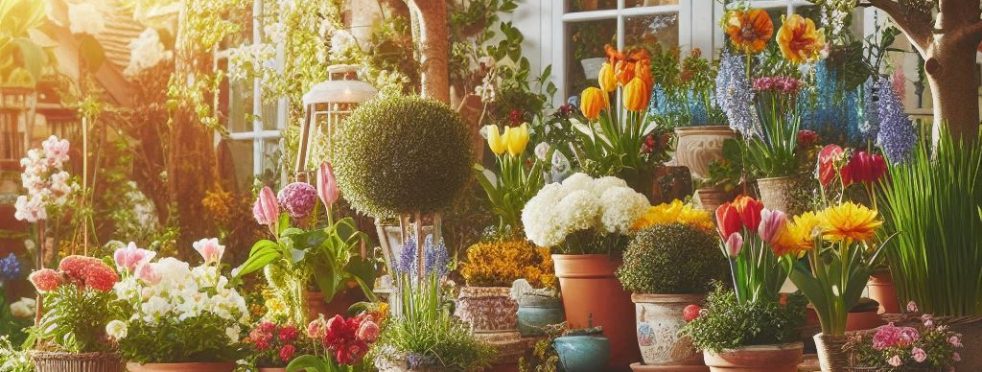
How To Deal With 3 Common Gardening Problems

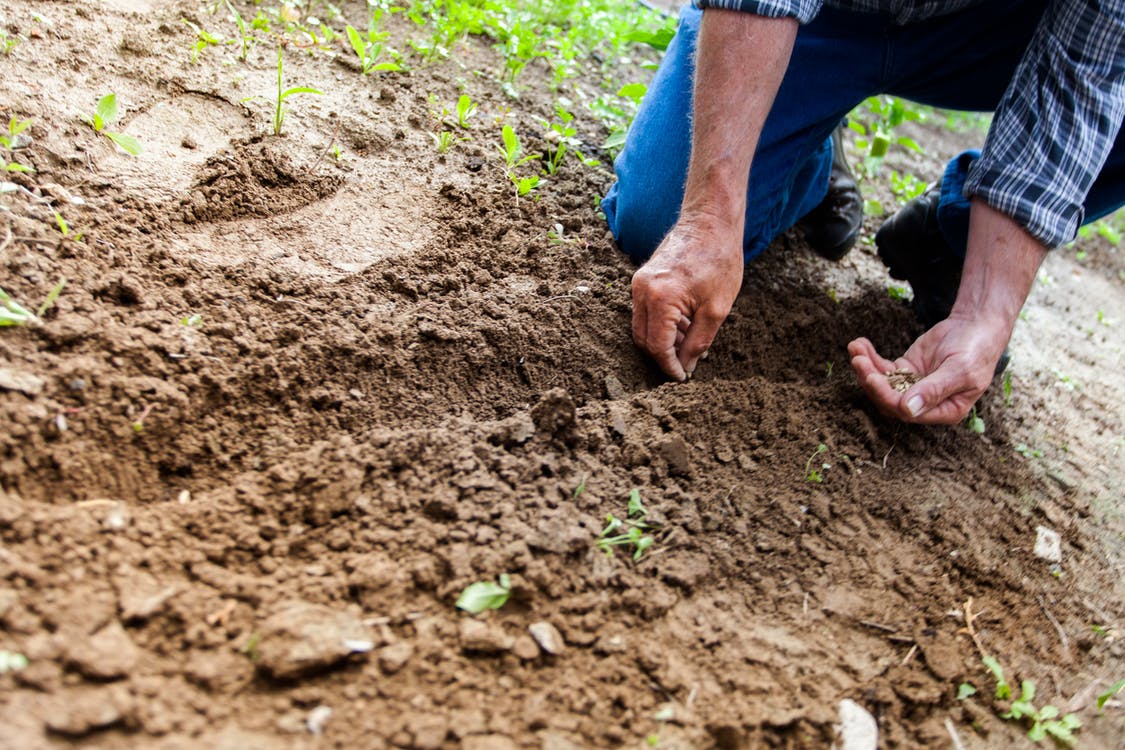
Photo Credit – CC0 License

Gardening is such a therapeutic hobby to take up. In fact, it’s been shown to help a great deal with your mental health during the pandemic. You can spend so many hours in your garden tending to your plants and making everything look perfect. Things don’t always go your way, as there are lots of common garden issues to face. If you’re a garden novice, the advice below can help you deal with some of the most frequent problems in your back garden:

A lack of sunlight

Plants need sunlight to grow big and strong. They take the energy from the sun and use it to grow and carry out other plant functions. You may have a lack of sunlight in your garden that’s not caused by the climate. It could be sunny as hell, but your plants are stuck in the shade due to big obstacles.

Combatting this can be both easy and hard – depending on what the obstacles are. If it’s something you can move with ease, then the problem is solved in minutes. However, trees tend to be the biggest culprits. So, you may have to have yours chopped down or trimmed. Don’t attempt this yourself; companies like the Sydney Tree Company can do it for you. It’s never a good idea to attempt to cut something big down as you have no idea where it can fall!

A lack of water

This is a problem for lots of gardeners during the summer months. The sun comes out, the rain dries up, so your garden is left with no water at all. In some areas, this can go on for a good few months. While your plants need sunlight, too much of it and too little water will cause them to burn up and die. 

As such, you need to be strict with your watering schedule. You’ll have to be out there at least once or twice a day giving your whole garden a little shower. Personally, I think sprinkler systems work the best as you can turn them on and do something else while they water your garden. Plus, there’s no danger of overwatering the plants as the sprinkles distribute the water evenly. 

Too much water

Yes, you can have too much water! As you can probably tell, gardening requires a fine balance of sunlight and water. When the rain clouds come out to say hello, you may be inclined to rejoice. However, if it pours with rain and waterlogs in your garden, your plants will not be happy. Too much water will basically drown the plants and turn them a strange yellow color. 

To rectify this problem, you need a good drainage system for your plants. Some people like to hang theirs in plant pots, while others install a proper irrigation system in their lawn. The choice is yours, just be sure there’s a place for the water to run down when it rains. 

On that note, you’ve come to the end of today’s tips. I hope they will help any aspiring gardeners deal with some of the most common and annoying issues. Now, you can start gardening with more confidence and fewer problems.

This is a collaborative post.

In health,

Melinda

Health and Wellbeing · Men & Womens Health

Looking For The Light Named One Of 34 Best Chronic Illness Blogs To Read In 2020


WOW! What a huge surprise this was. To be included in this list of heavy hitters is such an honor. 
 
I want to give a special thanks to Ruth Gray at GetBlogged.net for taking the time to understand what Looking for the Light is about and for including me among such great blogs. 
 
Please take some time to read Ruth’s post and check out these Chronic Illness blogs. You will find many new blogs to follow and meet some great people along the way. 
 

34 Best Chronic Illness Blogs To Read In 2020

 
Thank you for following my journey, inspiring me, providing moral support, and most of all being a great friend. 
 
In Health,
 
Melinda


Fun · Health and Wellbeing · Men & Womens Health · Mental Health

Gifts for People Who Love to Garden

Buying gifts is always a challenge, but one way to find the ideal gift for a special person in your life is to focus on a niche that you know is of interest to them. So if you know someone who loves gardening, you’ll be glad to learn there are lots of gifts that are ideally suited to people who love to garden. We’re going to look at the best of the bunch today, so keep reading to find out all about them.

Photo by Pixabay on Pexels.com


An Attractively Designed Bird Bath

The great thing about birdbaths is that they’re not just about adding something functional to the garden. They also act as great ornamental pieces, so if you’re looking for something to give that brings a visual impact, an attractively designed birdbath could be exactly what you’re looking for. There’s no shortage of designs and options out there to choose from these days either.

Gardening Gloves

If you want to make the process of gardening a little more comfortable for a special person in your life, a pair of high-quality garden gloves can make the perfect gift. Again, there are lots of styles and designs out there, just make sure you choose a pair that fits well. It’s a good and affordable gift option so it should definitely be considered.

A Seed Subscription

Right now, subscription services are all the rage. There’s a subscription service for just about everything, so you might not be surprised to learn that there’s also a subscription available for seeds. That means you can get different seeds sent to your door each month, so this could be a great gift idea. You could pay for their seed subscription for a year, for example.

The Latest Top Books

There’s a range of great gardening books released each and every year. They might be guide books, general advice, or even photo books. There’s something for just about every garden lover on the shelves of your local book store, so it’s an avenue you should definitely explore. This article is A Review Of The Best Gardening Books in 2020, so it might give you some interesting ideas for which you might want to buy.

Solar-Powered Outdoor Lanterns

You don’t have to choose something that’s focused on the task of gardening; it might be a good idea to choose a gift that adds something new and fun to the garden and has a social dimension. Some solar-powered outdoor lanterns allow you to light up the garden at night and carry on the party into the evening. It’s a good gift idea and they’re also eco-friendly as the battery can charge up during the night and be put to use during the day.

If you’re looking for gifts for the gardener in your life, the ideas above should provide you with the inspiration you need. Find a gift they’re guaranteed to love and help them get even more out of their love of gardening with the kinds of gift options we’ve discussed here. 

This is a collaborative post. 

In Health,

Melinda


Health and Wellbeing · Men & Womens Health · Mental Health

How Resilient Are You?

Posted Sep 07, 2020

Diana Raab PhD

The Empowerment Diary

There are certain characteristics inherent to resiliency. 

I have always believed, and I still believe, that whatever good or bad fortune may come our way we can always give it meaning and transform it into something of value.”  ~ Hermann Hesse

The way in which you deal with the stresses and our ‘new norm’ bestowed on us by the pandemic, could be an indication of how resilient you really are. Resilienceis defined as the ability to withstand or recover from difficult situations. It’s the ability to ‘spring back,’ in spite of all odds. It’s how you’re able to restore equilibrium in your life during or following upheaval. In recent months many of us have encountered many new challenges, personal, economic, psychological and/or emotional, and it’s certainly a good test of resilience.

Even under normal conditions, we all have a certain amount of adversities in our lives. Much of how we deal with an adversary basically has to do with our attitude. We don’t have to look too far away from our circle of friends and family to see the different reactions to the challenges presented by the pandemic. Positive self-talk can do wonders in dealing with scary or unknown situations, and negative thoughts can easily activate the brains’ fear center. Chances are that those who have coped well are flexible, and generally have the ability to cultivate happiness in their lives through balance and wisdom

Those who are resilient have a certain sense of empowerment or are able to easily shift their perspective. This means that during stressful or challenging times, they are able to reframe their situation. In addition to maintaining a sense of optimism,  they are most likely able to regulate their emotions. Some studies have shows that resilience might be inherited, but it’s not all nature—early childhood experiences and environments play a role in how resilient we become. Many of those who have had severe childhood traumaor those who moved a lot, such as military families, tend to be more resilient.

The Resilience Theory states that it’s not the nature of the adversity or challenging situation that is most important, it’s how you deal with it that is important. This is the same philosophy used when teaching memoir. It’s not about telling your story, but it’s about how you reacted to your story and how it transformed you. Positive psychology is connected to resilience theory because they’re both about formulation a beneficial way to foster our health and well-being. In fact, it’s been suggested that those who’ve had exposure to various degrees of lifelong adversity had better mental health and well-being outcomes than those who have had little or no adversity.  

Further, there are those who are more open to new experiences and there are those who get strength from adversity as this is their way of coping with a potential threat. According to Tennen and Affleck (1999), in their study, “Finding Benefits in Adversity,” “The individual who is more open to experience—imaginative, emotionally responsive, and intellectually curious—might be particularly likely to meet the challenge of adversity through a philosophical reorientation and a new direction in life plans.” (p. 286). 

In general, most people have a large capacity for adaptation and to overcome threatening events and experiences. While some individuals might be innately more resilient, there’s no doubt that resilience can be practiced and developed, and like the old adage saying, ‘from all bad comes good,’ and that when one door closes, another door opens.

References

Fletcher, D. and M. Sartar. (2013) Psychological Resilience: A review and critique of definitions, concepts and theory.” European Psychologist. Vol 18. pp. 12-23.

Moore, C. (2020). “Resilience Theory: What Research articles in psychology teach us.” Positive Psychology.com.

Seery, M.D., Holman, A.E. & Silver, R.S. (2010). “Whatever does not kills us: Cumulative lifetime adversity, vulnerability and resilience.” Journal of Personality and Social Psychology, 99, pp. 1025-1041.More

Fun · Travel

#Wordless Wednesday Gulf Shores, Alabama

Hi, it’s Wednesday! I’m so glad you stopped by today. This week I’m taking you to beautiful Gulf Shores, Alabama. This area was recently hit by a hurricane and there was extensive damage across the shoreline. You can see an Oil Rig in the distant sunset. This photo was taken from the balcony of the condo we stayed in.

Gulf Shores Sunset

In health,

Melinda

Health and Wellbeing · Men & Womens Health · Mental Health

9 Simple Check-Ins to Identify Your Needs

Psych Central

By Margarita Tartakovsky, MS 

Last updated: 23 Aug 2020

Tuning into our feelings, thoughts, and physical sensations is the foundation of caring well for ourselves. We have to know what’s going on in order to take healthy, nourishing action and just better understand ourselves. 

But the way we do these check-ins really depends on our personality and preferences. There’s no one-size-fits-all approach. The key is to incorporate a check-in into your day, regardless of what shape or form it takes. Make it as habitual as brushing your teeth. In fact, one way to check in with yourself is to ask how you’re feeling while you are brushing your teeth in the morning and at night. 

Here are additional ideas for checking in: 

  1. Set an alarm on your phone to ding every hour and ask yourself: How am I doing right now?
  2. Do Julia Cameron’s morning pages, jotting down whatever comes to mind first thing in the morning. Simply keep a notebook on your bedside table, and before getting up, fill up three pages of your journal. 
  3. In the evening, for 5 to 10 minutes, reflect on how your day went. What went well? What didn’t? How are you feeling about it? What might you change tomorrow? 
  4. Listen to a guided meditation that specifically helps you tune into your mind and body, such as paying attention to any present tension. 
  5. Ask yourself the same questions every day (and record your responses): What am I grateful for? What am I anxious about? What did I learn about myself today? What do I need? 
  6. Take a few deep breaths, put your hands in prayer position, and ask yourself: What’s on my heart? 
  7. Move your body in a favorite way. For you, this might be taking a yoga class, taking a walk, riding your bike, or doing a stretching video. Personally, I’ve found that any time I move my body, my emotions, which might’ve been previously suppressed as I go about my day, bubble up to the surface and I have a better grasp on how I’m doing. 
  8. Name what emotion you’re feeling, trying to get as specific as possible, and then rate the intensity of that emotion from 1 to 10. 
  9. Draw three concentric circles. In the innermost circle, jot down the emotions you’re feeling. In the second circle, jot down the physical sensations you’re experiencing. In the biggest circle, jot down the thoughts running through your mind or the stories you’re telling yourself right now or have been all day. 

When you’re checking in with yourself, remember to allow whatever arises. It’s so hard, but our jobs are not to censor, judge, or criticize. Our jobs are to witness what’s going on internally, taking on the perspective of an unbiased observer. 

I liken it to writing: It’s not helpful to edit while we write our first draft, because then we might miss something important. We want to write first, to spill our hearts and message onto the page. After everything has poured out, we can start to make sense of that message and refine as needed. 

Pick a check-in practice that resonates with you and, again, incorporate it into your day (or, of course, come up with a practice that feels like a better fit). To make it easier, add it to something you do all the time: check in while you sip your water. Check in during your morning coffee. Check in right before you ask your kids how they’re doing. 

Either way, prioritize your daily check-in—and you’ll likely find that even if you don’t respond to your needs, simply listening helps you feel well taken care of. Because as I’ve written before, listening is a beautiful, powerful gift we can give to ourselves and others. 

Margarita Tartakovsky, MS

Margarita is an associate editor at PsychCentral.com. She writes about everything from taking compassionate care of yourself at any weight, shape, and size, to coping healthfully with difficult emotions. Her goal is to give readers practical, empowering tips to better their lives, and to remind you that whatever you’re struggling with, you’re never, ever alone.

Health and Wellbeing · Men & Womens Health · Mental Health

Home Gardening Promotes Mental Health during COVID-19

Vegetable gardening takes center stage during the pandemic, nurturing the emotional wellbeing of an increasing number of home gardeners

Home gardening is on the rise since COVID-19, says Rose Hayden-Smith, Emeritus advisor at the University of California. But activists from food justice organizations argue that home gardening has the potential to promote emotional wellness, especially for Black women and other marginalized communities.

Home vegetable gardening can not only increase produce consumption and physical activity—it is also associated with improved emotional wellbeing, according to a recent study from Princeton University. The report finds that out of 15 daily leisure activities, such as walking and biking, vegetable gardening is one of the most beneficial activities for mental and emotional health.

“Gardening combines so many things that are positive for mental health—being outdoors around plants and nature, physical exercise,” Diana Martin, Director of Communications and Marketing at the Rodale Institute, tells Food Tank. “Something about growing food, connecting with the earth, and sharing the bounty with your neighbors and community can help you feel rooted, connected, and grateful.”

In response to the influx of home gardeners during COVID-19, the Rodale Institute offers a free Victory Gardens Starter Kit complete with an Organic Gardening 101 webinar, composting tips, and lesson plans to involve children.

Home gardening may also address some effects of long-standing social inequalities. Women, especially women of color, have disproportionately shouldered social care work during the pandemic, according to a recent study in the Journal of Sustainability: Science, Practice, and Policy. And this work may contribute to poor mental health in those responsible for it, according to a report from the Swiss School of Public Health.

“From an equity perspective, supporting household gardening would provide more benefits for women and low-income gardeners,” Dr. Ramaswami, co-author of the Princeton University study, tells Food Tank. She explains that home gardening was the only activity studied that had a greater impact on emotional wellbeing for women and people with low income, compared to men and people with medium-and high incomes.

Jasmine Jefferson, founder of Black Girls With Gardens, also believes that gardening can be a tool for self-care. An online platform, Black Girls With Gardens provides education, support, inspiration, and community for women of color interested in gardening.

Jefferson noticed that her website has gained popularity since COVID-19, as more Black women began home gardening.

“Gardening is an act of self-preservation for Black women,” Jefferson tells Food Tank. “We are able to release our rage in the soil and still not be judged by nature.

Despite the benefits of home gardening, Black, Indigenous, and People of Color (BIPOC) communities have been systematically disenfranchised from growing their own food, Jefferson says. She argues that food deserts, lack of access to quality soil and compost, and white-dominated gardening groups with expensive membership dues all work to keep women of color out of gardening.

“We are resisting systematic racist policies and procedures…when we make the space to grow our own food,” Jefferson tells Food Tank. “Black women deal with very stressful environments, high anxiety, and trauma on [a] daily basis. Gardening can be the escape black women need from that harsh reality of the world.”

Photo Courtesy of Unsplash, Benjamin CombsTweetShareShare

Katell Ane

Katell Ané (she/her) studies International Relations at the University of Edinburgh, focusing on the global politics of food. Her interests in food insecurity in her hometown led her to volunteer with FairShare CSA Coalition, a nonprofit working to create a more sustainable food system in Wisconsin by promoting the Community Supported Agriculture model. Since working with FairShare, Katell has been passionate about changing food systems to address broader questions of racial and migrant justice, health disparities, and Native sovereignty. She spends her free time hiking, dancing, and marveling at heirloom vegetable varieties.PREVIOUS ARTICLE

The Dark Side of Agricultural Free Trade: A Caribbean Perspective

NEXT ARTICLE

New on the Podcast: Tom Philpott, food and agriculture correspondent for Mother Jones Magazine, discusses his new book Perilous Bounty: The Looming Collapse of American Farming and How We Can Prevent It.
Health and Wellbeing · Men & Womens Health

Activated Charcoal: The Underestimated Supplement You Need to Know About

Photo by Anna Shvets on Pexels.com


Activated charcoal is something you will see in most health stores. While most people now go straight towards something like CBD oil for all their ailments, there’s a lot to be said for activated charcoal. For those that don’t know, it is a black powder that stops toxins from being absorbed into the stomach by binding itself to them. It is something used in hospitals if somebody suffers from alcohol poisoning. As the body cannot absorb charcoal, the toxins in your body bind to the charcoal, which will then leave your body in the form of feces. But what else can we use this underestimated supplement for?

Benefits Teeth Whitening and Oral Health

Many people struggle to find affordable dentists these days that will give good advice on brushing teeth. Many people look to making their teeth whiter. And there are many teeth whitening products out there that contain activated charcoal. It’s believed that oral health products with activated charcoal may be detoxifying, antibacterial, and antiviral.

Reduces Intestinal Gas and Diarrhea

Studies have shown that people that had excessive gas in their intestines reduced this by taking activated charcoal and had improved symptoms. And because it is used as an adsorbent in cases of poisoning and overdoses, activated charcoal might prevent diarrhea by absorbing the toxins from bacteria and drugs that can cause diarrhea.

It Can Help Kidney Function

It may be able to help kidney function by filtering out and digested toxins. Activated charcoal needs more research but it appears to be very effective at removing toxins derived from urea. While more research is needed studies have shown that activated charcoal might help reduce gastrointestinal damage and improve kidney function for those who have chronic kidney disease.

It Can Be a Deodorant

It is an ingredient in deodorant. As charcoal might absorb smells and harmful gases it becomes an ideal underarm deodorant. As it can absorb excess moisture and supposedly control humidity in small ways, it may prove very beneficial to those who have issues with body odor.

It Can Help With Skin Infection

Various traditional medicine practitioners use activated charcoal to treat tissue conditions like skin infections. Activated charcoal can absorb the harmful microbes from wounds which has an antibacterial effect.

Can Help With Food Intolerances

For people who have food intolerances like gluten, taking activated charcoal after consuming foods they have a reaction to can minimize the absorption of toxins. While this is not beneficial to those who have extreme reactions such as celiac disease, for those that have a low-level intolerance to foods like gluten, they will feel the benefits upon taking activated charcoal soon after food.

While activated charcoal can yield many benefits, it’s important to not overdo it. For example, if you take medication, having activated charcoal within 2 hours of consuming it may render the medication ineffective. Activated charcoal can certainly help in small doses of toxicity, especially after eating foods, but it’s important to use sparingly and always follow the instructions on the packet. Use it right and it may help you in many areas of your life. 

This is a collaborative post.

In Health,

Melinda

Health and Wellbeing · Men & Womens Health · Mental Health

Regaining The Confidence To Workout When You’ve Suffered A Setback

Getting into a fitness routine, pushing yourself, and reaching your goals takes a lot of time and energy, as well as a big commitment to yourself and your health. So when your health suffers, either through an injury or an illness, it can really set you back and put you right back at square one.

Feeling like you’ve got to start over with your fitness is a common feeling, and it can really affect your confidence. Whether you feel like you can’t do it or that things are harder than they used to be, it’s important to get back on that horse. Exercise will help improve your physical health and boost your mental health, and it can be a welcome part of your routine once you’ve found your feet again.

Here is some advice to help you regain the confidence to work out when you’ve suffered a setback.

Image Credit: Unsplash under Creative Commons

Set yourself some manageable goals

While it’s understandable that you’ll want to be back where your fitness used to be, it isn’t going to happen overnight. If you try to move too quickly, you could end up injured or losing further confidence from not getting the same results as you once did.

Start by setting yourself some manageable fitness goals, aims you can work towards slowly, helping you to regain technique and basic fitness first. From increasing the times of your workouts to making it to the gym a certain number of times a week, start with goals that are realistic before building up to bigger ones.

Choose workout clothes that help your performance 

The workout clothes you wear can help you feel more confident about working out. You should choose items that are comfortable, supportive, and can help keep you cool too. Treating yourself to some new outfits will help you feel in a better mindset for working out. Brands are more attune to the different needs of people now, so you can find great selections for curvier shapes, as well as amputee leggings and other items that can help give you a boost. Always make sure you have the right type of shoes for your workout to make sure you’re better protected against injury.

Ease yourself in, and consider working with someone else

Fitness is something that needs to be built up over time. So if you’re getting back into things after a long period away, ease yourself in gently. Walking and swimming can be gentle, effective exercises to start until you’re feeling fitter and stronger. Take a look at fitness plans from others in your position to see how they’ve eased themselves back into exercise.

It can also help if you work out with someone else, such as a friend or personal trainer who can help make sure you’ve got the right form to prevent injury, as well as help you train as needed. 

If, for any reason, you feel pain – stop! Consult your doctor or take a rest to stop yourself from overdoing things.

Exercise is something that can help you begin to feel a semblance of normality, helping you form a routine and get back into activities that you once enjoyed. Take it slow, put your health first, and soon you’ll see your confidence creeping back up as you start to reach your goals once more.

This is a collaborative post.

In Health,

Melinda

Health and Wellbeing · Men & Womens Health · Mental Health

Thomas Rhett Reveals What Led Him And Wife Lauren To Seek Counseling

I Heart Radio

By Blake Taylor

Thomas Rhett Reveals What Led Him And Wife Lauren To Seek Counseling

From the outside looking in, Thomas Rhett and his wife, Lauren Akins, seem to have a nearly perfect relationship, however, it hasn’t always been easy. 

The country star opened up about his relationship with his wife during an interview on The Bobby Bones Show, revealing that the couple turned to marriage counseling after a “hard” moment in their lives. Referring to Akins’ new memoir, Live In Love, Rhett said the book had “parts where I wish I wasn’t made out to look like such a jerk.” 

The “Be A Light” singer continued on to explain some of the challenges the couple faced throughout the adoption process for their now 4-year-old daughter Willa Gray. At the time, Akins was traveling to Uganda while pregnant with their now 3-year-old daughter, Ada James.

“Lauren called me because it was 9 o’clock in the morning in Uganda and…she hears all of her friends in the background. Meanwhile, Lauren is seven months pregnant and throwing up in a bathroom in Uganda,” he said. “That was when Lauren was like, ‘We are living two completely separate lives right now.'”

“That was a really humbling experience for me, just knowing what she was dealing with in a sense of aloneness while I’m kind of living life as usual,” Rhett added. “That part was really hard for us, for sure. Kind of getting over that and going through some therapy, especially over that one night.”

“Coming on the other side of that, I feel like I learned so much from that experience. It made me know that, in a marriage, you do have to figure stuff out. You have to talk about it. You’ve gotta be real about it. You’ve gotta be honest about it.”

Rhett and Akins, who also share a 6-month-old daughter, Lennon Love, hope their story helps other couples.

Celebrate Life · Fun · Travel

Interview With Photographer/ Guest Blogger Cindy Knoke — For the Love of Art

Cindy Knoke has traveled the world, to the most unusual off the beaten path places you can imagine. Her photography is a window to the world. I ask Cindy a few questions to learn her photography background and how she plans for her extraordinary trips. At what age did you pick up your first camera? Did the world […]

Interview With Photographer/ Guest Blogger Cindy Knoke — For the Love of Art
Men & Womens Health

Caregiver 101 Tips I Missed

Photo by Andrea Piacquadio on Pexels.com

Reblogged from 2009

I care for my 92-year-old gramps and have been here for five weeks. He had three surgeries in seven days. Without Caregiving 101 training, I learned the hard way.

*Ask the doctor what happens if the procedure does not work.

*If a second procedure does not work, is there a third option.

*What is the recovery time and type of home health services needed.

*Is the surgery necessary for a 92-year-old who is already dying!

Gramps went in for non-invasive surgery, nothing prepared me for the outcome. I’ve been through several surgeries with gramps. This procedure had not been performed before however, it sounded like the least complicated procedure to date. I forgot nothing is normal or non-invasive at 92 years old. We went from going home that afternoon, to having three surgeries over seven days. I made the mistake of thinking the procedure would go as in the past. Age makes all the difference, five years at this stage of Kidney Failure can change everything.

I’m blessed to spend this time with gramps, we still have a long road ahead. It is emotional and life-changing. I’ve become the parent and he doesn’t like me telling him when to take his medicine. He has raised his voice more in the past month than in my lifetime. It’s hard to take it in stride, just bite the tongue. Stress has triggered my depression, I struggle to keep myself in check and take care of my gramps.

In Health,

Melinda

Health and Wellbeing · Men & Womens Health

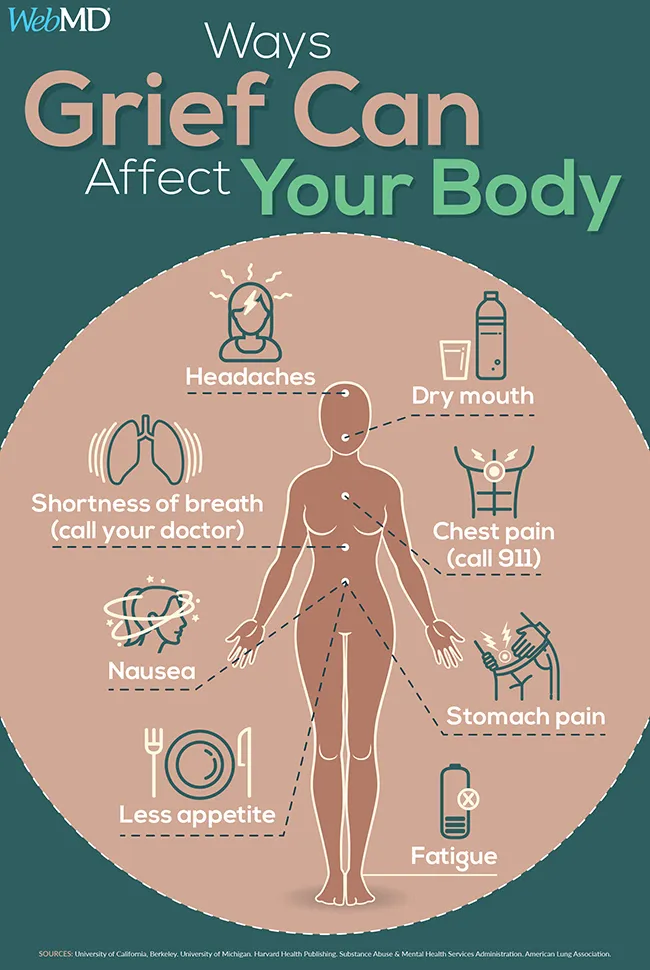
How Grief Shows Up In Your Body

It’s surprising how physical grief can be. Your heart literally aches. A memory comes up that causes your stomach to clench or a chill to run down your spine. Some nights, your mind races, and your heart races along with it, your body so electrified with energy that you can barely sleep. Other nights, you’re so tired that you fall asleep right away. You wake up the next morning still feeling exhausted and spend most of the day in bed.

Amy Davis, a 32-year-old from Bristol, TN, became sick with grief after losing Molly, a close 38-year-old family member, to cancer. “Early grief was intensely physical for me,” Davis says. “After the shock and adrenaline of the first weeks wore off, I went through a couple of months of extreme fatigue, with nausea, headaches, food aversion, mixed-up sleep cycles, dizziness, and sun sensitivity. It was extremely difficult to do anything. … If there’s one thing I want people to know about grief, it’s how awful it can make your body feel.”

What causes these physical symptoms? A range of studies reveal the powerful effects grief can have on the body. Grief increases inflammation, which can worsen health problems you already have and cause new ones. It batters the immune system, leaving you depleted and vulnerable to infection. The heartbreak of grief can increase blood pressure and the risk of blood clots. Intense grief can alter the heart muscle so much that it causes “broken heart syndrome,” a form of heart disease with the same symptoms as a heart attack.

Stress links the emotional and physical aspects of grief. The systems in the body that process physical and emotional stress overlap, and emotional stress can activate the nervous system as easily as physical threats can. When stress becomes chronic, increased adrenaline and blood pressure can contribute to chronic medical conditions.

Research shows that emotional pain activates the same regions of the brain as physical pain. This may be why painkilling drugs ranging from opioids to Tylenolhave been shown to ease emotional pain.

Normal vs. Pathological Grief

Depression is not a normal part of grief, but a complication of it. Depression raises the risk of grief-related health complications and often requires treatment to resolve, so it’s important to know how to recognize its symptoms. Sidney Zisook, MD, a grief researcher and professor of psychiatry at the University of California, San Diego, says people can distinguish normal grief from depression by looking for specific emotional patterns.

“In normal grief, the sad thoughts and feelings typically occur in waves or bursts followed by periods of respite, as opposed to the more persistent low mood and agony of major depressive disorder,” Zisook says.

He says people usually retain “self-esteem, a sense of humor, and the capacity to be consoled or distracted from the pain” in normal grief, while people who are depressed struggle with feelings of guilt and worthlessness and a limited ability “to experience or anticipate any pleasure or joy.”

Complicated grief differs from both depression and normal grief. M. Katherine Shear, MD, a professor of psychiatry at Columbia University’s School of Social Work and director of its Center for Complicated Grief, defines complicated grief as “a form of persistent, pervasive grief” that does not get better naturally. It happens when “some of the natural thoughts, feelings, or behaviors that occur during acute grief gain a foothold and interfere with the ability to accept the reality of the loss.”

Symptoms of complicated grief include persistent efforts to ignore the grief and deny or “rewrite” what happened. Complicated grief increases the risk of physical and mental health problems like depression, anxiety, sleep issues, suicidal thoughts and behaviors, and physical illness.

How Does Avoidance Harm Your Health?

Margaret Stroebe, PhD, a bereavement researcher and professor of clinical psychology at Utrecht University, says that recent research has shed light on many of “the cognitive and emotional processes underlying complications in grieving, particularly rumination.”

Research shows that rumination, or repetitive, negative, self-focused thought, is actually a way to avoid problems. People who ruminate shift attention away from painful truths by focusing on negative material that is less threatening than the truths they want to avoid. This pattern of thinking is strongly associated with depression.

ways grief can affect your body infographic

Rumination and other forms of avoidance demand energy and block the natural abilities of the body and mind to integrate new realities and heal. Research by Stroebe, and others shows that avoidance behavior makes depression, complicated grief, and the physical health problems that go with them more likely. Efforts to avoid the reality of loss can cause fatigue, weaken your immune system, increase inflammation, and prolong other ailments.

How Do Role Adjustments Affect Your Health?

When someone close to you dies, your social role changes, too. This can affect your sense of meaning and sense of self.

Before losing Molly, Davis says she found a personal sense of value in “being good at helping other people and taking care of them.” But after Molly died, she felt like she “couldn’t help anyone for a while.” Losing this role “dumped the bucket” of her identity “upside down.” Davis says, “I felt like I had nothing to offer. So I had to learn my value from other angles.”

Caregivers face especially complicated role adjustments. The physical and emotional demands of caregiving can leave them feeling depleted even before a loved one dies, and losing the person they took care of can leave them with a lost sense of purpose.

“Research shows that during intense caregiving periods, caregivers not only experience high levels of stress, they also cannot find the time and energy to look after their own health,” says Kathrin Boerner, PhD, a bereavement researcher and professor of gerontology at the University of Massachusetts in Boston.

“This can result in the emergence of new or the reemergence of existing ‘dormant’ health problems after the death of the care recipient. These health issues may or may not be directly related to the caregiver’s grief experience, but they are likely related to the life situation that was created through the demands of caregiving,” Boerner says.

It can be hard to make life work again after a close family member dies. Losing a partner can mean having to move out of a shared home or having to reach out to other loved ones for help, which can further increase emotional stress and worry. Strobe says the stress of adjusting to changes in life and health during and after a loss can “increase vulnerability and reduce adaptive reserves for coping with bereavement.”

What Can You Do to Cope With Grief?

Emotional and physical self-care are essential ways to ease complications of grief and boost recovery. Exercising, spending time in nature, getting enough sleep, and talking to loved ones can help with physical and mental health.

“Most often, normal grief does not require professional intervention,” says Zisook. “Grief is a natural, instinctive response to loss, adaptation occurs naturally, and healing is the natural outcome,” especially with “time and the support of loved ones and friends.”

For many people going through a hard time, reaching out is impossible. If your friend is in grief, reach out to them.Amy Davis

Grief researchers emphasize that social support, self-acceptance, and good self-care usually help people get through normal grief. (Shear encourages people to “plan small rewarding activities and try to enjoy them as much as possible.”) But the researchers say people need professional help to heal from complicated grief and depression.

Davis says therapy and physical activities like going for walks helped her cope. Social support helped most when friends tried to reach out instead of waiting or asking her to reach out to them.

“The thing about grief and depression and sorrow and being suicidal is that you can’t reach out. For many people going through a hard time, reaching out is impossible. If your friend is in grief, reach out to them. Do the legwork. They’re too exhausted!”

Davis’ advice to most people who are grieving is to “Lean into it. You only get to grieve your loved one once. Don’t spend the whole time trying to distract yourself or push it down. It does go away eventually, and you will miss feeling that connected to that person again. And if you feel like your whole life has fallen apart, that’s fine! It totally has. Now you get to decide how to put yourself back together. Be creative. There’s new life to be lived all around you.

Melinda

Reference:

WEB MD

By Stephanie Hairston

“WebMD News Special Report Reviewed by Neha Pathak, MD on July 11, 2019

Health and Wellbeing · Men & Womens Health

Things I’m Loving *Chronic Illness List #1


Adjustable Designer Cane

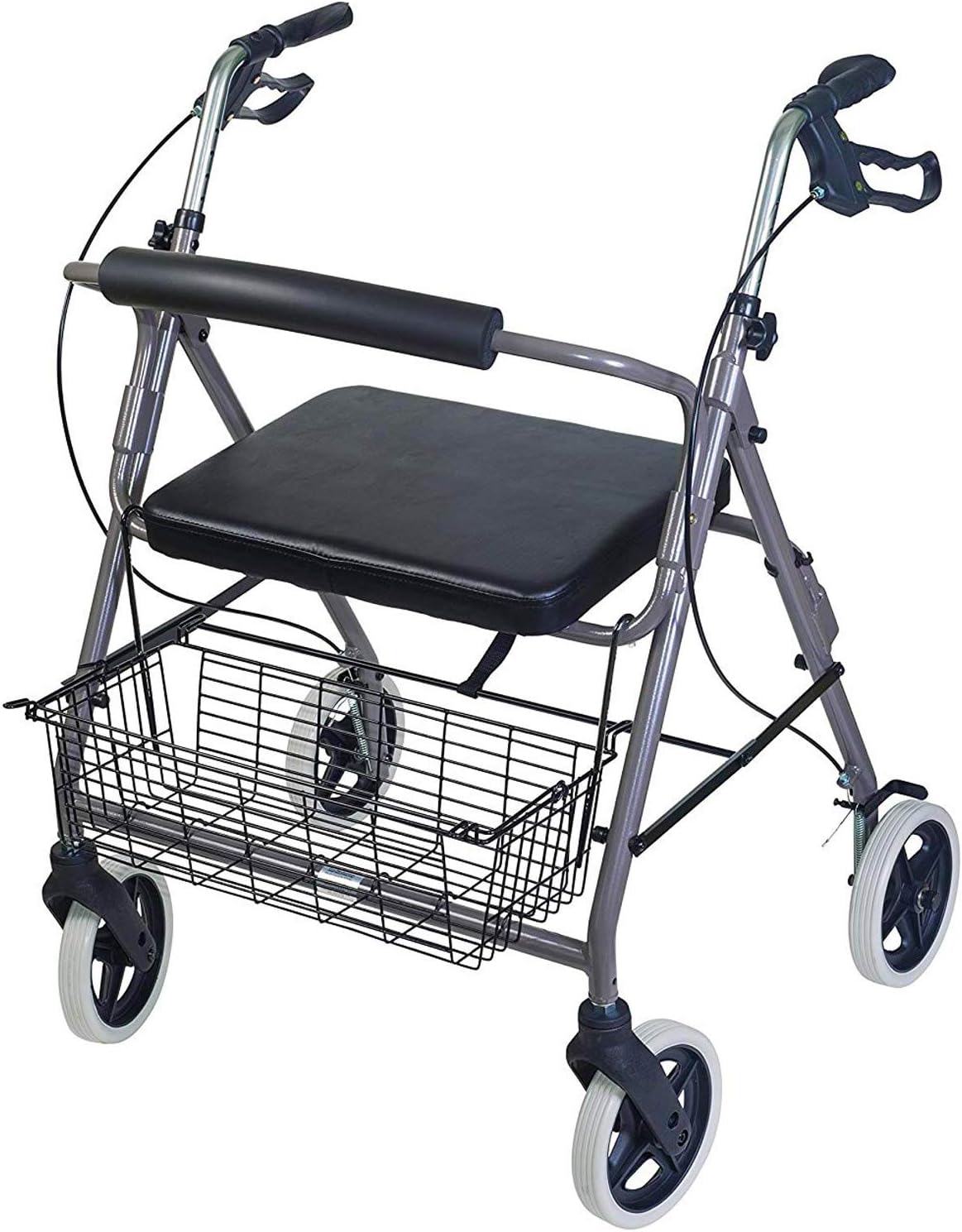
DMI Walker with Basket


This walker is so sturdy and lightweight. I can get it out of the trunk without problems. The basket is large enough for a water bottle and a scarf, or light jacket not much more. It is comfortable to sit on and is adjustable to your height.

WaveLife Energy Cell

WaveLife’s No Pain Energy Cell is a non-invasive, non-chemical pain management method that is based on over thirty years of research. It’s been developed in cooperation with over 2800 clinics in Germany, Switzerland, and Austria. It’s reported to help a wide range of pain, such as arthritis, headaches, lower back pain, post-surgery pain, upper back pain, and osteoporosis. You can find out more about the device and whether it could help you here.

I can’t live without my WaveLife Energy Cell. It’s versatile and can be used in most places on the body and last for six months, making it a great investment in your health. I focus on my arthritis and left knee which is in need of replacement surgery. I have used the stick-on patches that came with and now use whatever tape I have in the medicine cabinet. As mentioned in my review, I start to see relief in about 20 minutes and can oftentimes reduce the number of pain pills I take a day while wearing. Here is my review of the WaveLife Energy Cell

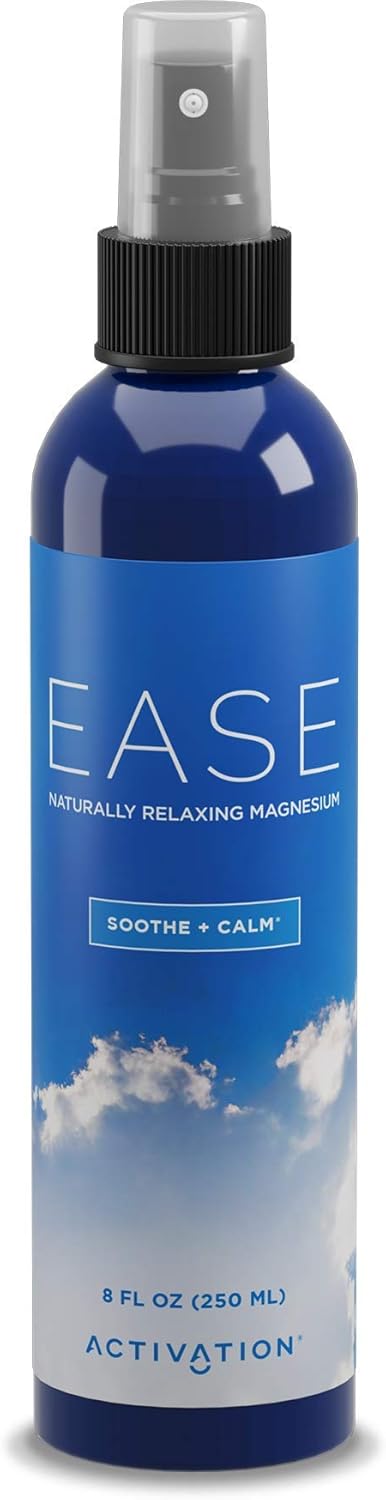
Activation Magnesium Spray

Ease Magnesium Spray contains 100% of the purest form of magnesium chloride hexahydrate – an essential mineral your body needs in good supply to keep more than over 330 enzymatic functions working optimally. The liquid magnesium mineral does not leave any sticky residue on your skin and goes on smoothly and easily to perfectly supply the exact amount of pure magnesium your body needs. Magnesium is a calming ancient mineral, sourced from the Dead Sea, that nourishes your nervous system. 

I love this spray and use it on my hands all day long.  I use on my hands, knees, and other arthritis spots at night. It drys fast without any residue and my Aromalief Hemp Pain Cream goes over and soaks right in. 

MIRA

MIRA 40 Oz Stainless Steel Vacuum Insulated Wide Mouth Water Bottle | Thermos Keeps Cold for 24 hours, Hot for 12 hours | Double Walled Travel Flask | Salt Marsh

The capacity is large enough to fit your daily hydration needs. You can also store coffee or any other liquids. The stainless steel repels any lingering flavors. Put your portable sports water bottle in your gym bag or the side pouch of your backpack or as your daily companion.

This Sierra bottle by MIRA is a whopping 40 ounces! I load up with ice three times a day, refill and drink all day long, it’s perfectly insulated with no sweating. It’s so insulated that whenever I leave water overnight it’s cold enough to drink the next morning. It’s easy to get enough to drink each day knowing it’s 40 ounces. 

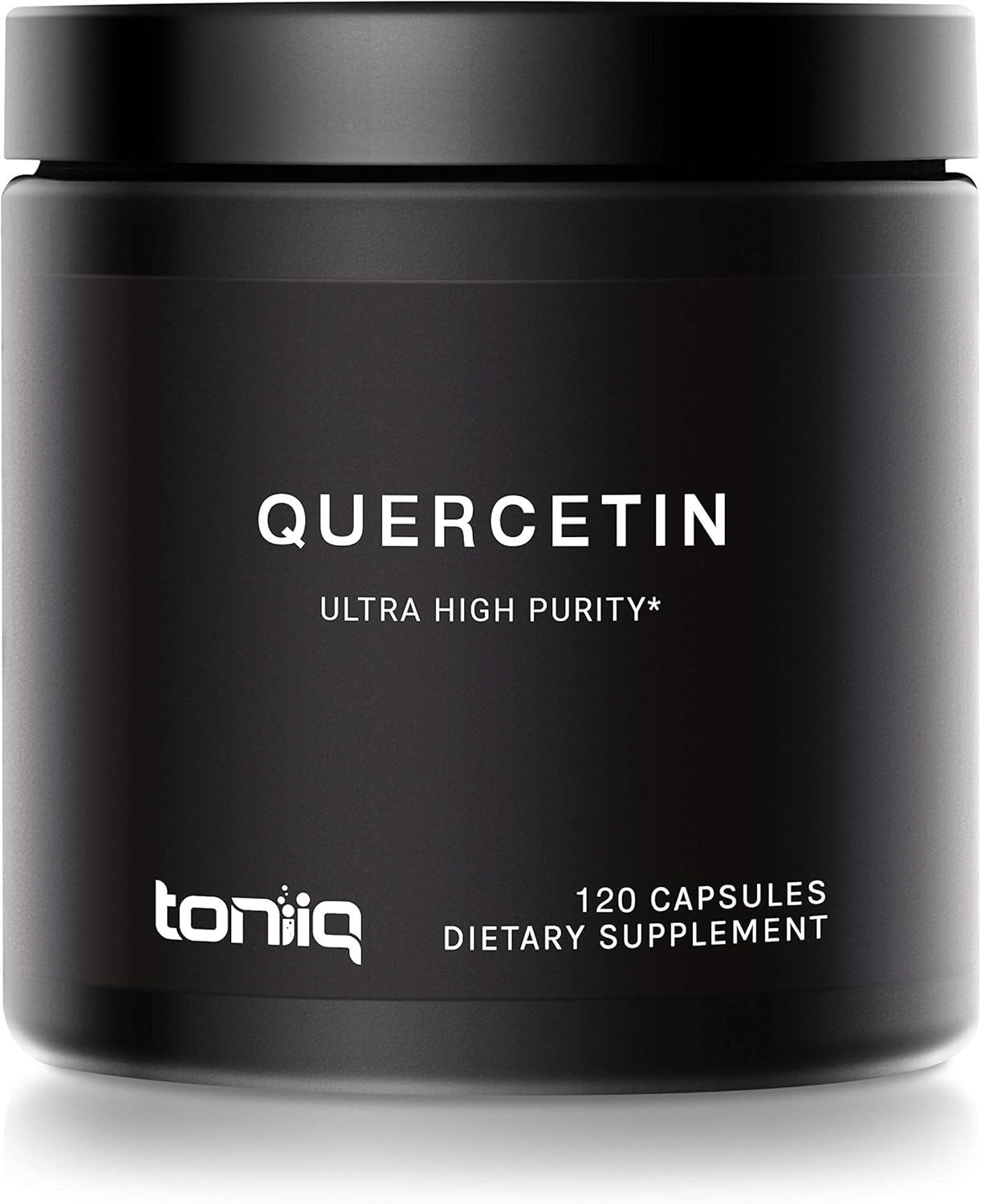
Quercetin by Toniq

Quercetin is a pigment that belongs to a group of plant compounds called flavonoids.

They’ve been linked to several health benefits, including reduced risks of heart disease, cancer, and degenerative brain disorders (1Trusted Source, 2Trusted Source).

The beneficial effects of flavonoids like quercetin come from their ability to function as antioxidants inside your body (3Trusted Source).

Quercetin is a supplement recommended by my Lyme doctor to boost the immune system and help ward off COVID 19. I bought this brand due to the concentration levels of Quercetin compared to other brands. 

This post may contain an affiliate links that don’t cost you extra to use and help supply my coffee habit. 

What are some of the items or services you use every day to help with your health? 

In Health,

Melinda


Health and Wellbeing

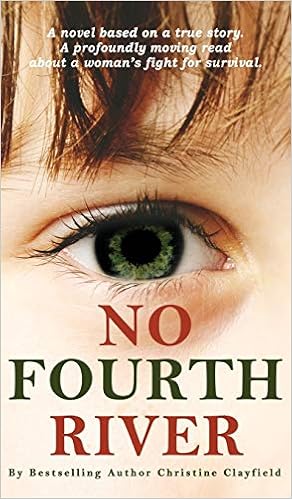
Interview With Christine Clayfield Author Of “No Forth River”

Repost from 2018

No Fourth River is a must-read for anyone who has experienced a dysfunctional household with domestic violence, child abuse, humiliation, electroshock therapy, boarding school, and most importantly survived to see much better days.

Here’s a review from Amazon.

Reviewed in the United States on February 28, 2018

Verified Purchase

I’m thrilled to take part in the Blog Tour for Christine Clayfield’s first novel “No Fourth River”. Christine, it’s great to talk with you this morning. Let’s jump in.

Your novel “No Fourth River” is incredibly personal. Starting with the brutal abuse from your father to all the siblings. What convinced you now was the right time to write your story?

There are four influencing factors that made me decide to write my story.

1) My husband and daughters kept telling me, over the years, that I should write a book about my life.

2) I don’t usually share my story with others. However, sometimes when I unintentionally mention things from my past, people are intrigued. They want to know more about my life. I’ve often been told that I should write a book because my struggles would resonate with others and my life story could be an inspiration.

3) I had been jotting down ideas for a while but never started to write. When I collected enough courage to speak on stage, people often burst into tears during my speech. They came up to me after my speech to thank me for sharing my story and to tell me how inspired they were. That moment was when I decided to write my life story. I didn’t realize until then that my life story was an inspiration to others.  Very shortly after that, I started writing No Fourth River.

I transformed my life and I wanted to spell out valuable messages in my book too. If I can change one person’s life who will read my book, I will have achieved my goal. I have shared my life experiences, deeply personal ones too, and hope to make a difference in someone else’s life. I want people to know that you can change your life, no matter what you have been through. I am a living example.

4) I am not getting any younger so I needed to do it sooner rather than too late when I perhaps won’t remember all the details of my life.

Your fans responded to “No Fourth River” by rating the book with five stars on Amazon.com. What was your first reaction?

I was anxiously awaiting the arrival of my first review as I was curious to read people’s thoughts about my story. When I saw my first review, I was pleased as punch and totally overwhelmed with happiness. The review confirmed what I wanted my book to be: an inspiration to others.

How long did the writing process take?

From the moment I started jotting down dates of events in my life until the manuscript was totally finished, 2 years went by. However, I wasn’t writing full-time at the beginning, just a few hours per week. Once I’d written a few chapters, I started thinking: “I can actually do this; write a novel”. I had written five business books prior but this was my first novel. From that moment, I started writing most days of the week and I finished the book one year later but had a long break in between as my mum moved in with me and I looked after her in her last stages of dementia.

“No Fourth River” is your first novel, what’s your next book?

I am planning to write a book about “How to market a novel” , based on my experiences. I believe there is a big gap in the market for an informative book on this subject.

I am also scribbling down ideas for my second novel: a fiction novel.

Writers are often avid readers. What type of book do you read for pleasure?

Aside from reading books about all aspects of doing business, I love true stories and inspirational stories.

What are some of your other personal leisure activities?

A leisure activity is doing what you like and as I like working, I consider that as one of my leisure activities. When you enjoy what you are doing, it doesn’t feel like working. I also enjoy watching my husband play drums in his touring theatre show. Apart from that, I love traveling, watching a good movie, and dining with friends and family.

How do you want fans to contact you? 

I prefer to be contacted by email: info@christineclayfield.com

Christine’s novel “No Fourth River” available now.

Amazon.co.uk 

Amazon.com 

Amazon.ca 

Indigo.ca

It’s such a pleasure to talk with you today. I wish you continued success on “No Fourth River”.

Melinda

Fun · Health and Wellbeing · Men & Womens Health

How to Find Pockets of Peace In Your Day — Guest Blogger Olivia Lucie Blake

Recently I have become addicted to Tik Tok, I’m not proud of it but they say the first step of beating an addiction is admitting you have one. So here I am. Haha I’m totally kidding but I really do love watching Tik Tok videos. A few months ago I stumbled across a page where […]

How to Find Pockets of Peace In Your Day — Olivia Lucie Blake
Health and Wellbeing · Men & Womens Health · Mental Health

Fibromyalgia Thoughts #5 Life is a full-time job I can’t work

Photo by Valeria Ushakova on Pexels.com

The fog is thick and heavy.

A microfiber wand beside the bed hasn’t been touched in days. The amount of dust in the house is a full-time job I can’t work.

I’m so glad only to have four-legged kids to get on my nerves and wear out my patients.

My body doesn’t hurt as bad as the muscles tense and twitching. Hip pain is now on both sides, I  wonder if Osteoporosis has moved to the left hip. My shoulder has decided to ache all the time making it difficult to sleep. 

I noticed more wrinkles on the face today, feeling old again.

Self-care has gone by the wayside this week, too tired to care.

My mental health is good surprisingly for being in the middle of a pandemic in a state with rising numbers.

I have canceled all doctor’s appointments out of fear of the virus, have only had three face to face visits and two lab trips since March. So many health issues and follow-ups are slipping behind.

I’ve had hives for two months, General Doctor is trying medication before referring me to a Dermatologist. I’m taking two histamine blockers and steroids, still no change. Have scars from the scratching. I have cut out all supplements except probiotics, calcium, and a multivitamin. Had just started several herbal supplements for the immune system. Don’t think there’s a connection but can’t come up with anything to set the hives off.

Trying to decide if all the symptoms are Fibromyalgia or a Lyme relapse or both.

Photo by Lynnelle Richardson on Pexels.com

I hope for better days ahead.

In Health,

Melinda

Health and Wellbeing · Men & Womens Health

Why Has Separation Become More Common?

Photo by cottonbro on Pexels.com

Over the past decade or so, the divorce rate has been increasing, and in some areas quite rapidly at that.  This is an unfortunate stat and statistic but a very real one, so why is the divorce rate reaching such a high level?

The recession

At present, the economy is suffering because of the impact of the recession from COVID-19, and this can cause a lot of financial strain on individuals. If finances are running low, people become stressed and worried and this can cause a lot of arguments with the blame being shifted from one individual to another. This can lead to cracks in a relationship and result in the unfortunate occurrence of a divorce.  

More lenient divorce laws

The rules and laws concerning separation and divorce are much more tolerant than they once were, which means that getting divorced is much easier. Years ago those who desired to get separated had to have a legitimate purpose for requiring this, for instance, cheating or abuse, however, nowadays all states in America have adopted a no-fault divorce law, meaning you do not need a reason to separate from your partner via law. 

More independent women

In the past there was a distinct role between men and women; men were the breadwinners and women stayed at home and looked after the house and children. Nowadays that notion has been well and truly challenged and many women are the main breadwinners in the house. This can lead to added conflict and result in many arguments and possibly divorce.

Less traditional views

In the past, people tended to stay together because of concern they could be looked down on and even ignored. Nevertheless, now society is much more accepting of people who divorce and do not see it as a type of problem. With countless family members and friends being supportive of divorce, most couples know that if the worst happens, a comprehensive support system will surround them. Plus, empathic professional support is available from the likes of Brown & Dahan, LLP and others. 

Media celebrating divorce

Another reason is that divorce is so present in our everyday lives because of the media. Every day you see a different celebrity having marriage problems or going through a divorce e.g. Jennifer Lopez and Jennifer Anniston. This has an impact on individuals as they read this information and so they see divorce thru a different lens. If their favorite star can go through a divorce and be an independent woman, why can’t they? Divorce can often be glamorized by the media rather than frowned upon, if celebrities don’t see divorce as such a big deal we should we?

This is a collaborative post.

In Health,

Melinda

Health and Wellbeing · Men & Womens Health

The Name Matters:Lyme, Fibromyalgia, or Chronic Fatigue Syndrome

Is It Lyme Disease, Fibromyalgia, or Chronic Fatigue Syndrome Image


Many people with Lyme disease are incorrectly diagnosed as having fibromyalgia or chronic fatigue syndrome. In my Seattle practice, before I became a Lyme disease physician, my main focus was treating fibromyalgia and chronic fatigue syndrome. In 2004 one of my patients asked for Lyme disease testing. Her pcr test for Lyme came back positive. This got me thinking that others in my practice could have Lyme disease too. So I tested everyone in my practice for Lyme that had a diagnosis of fibromyalgia and/or chronic fatigue syndrome. I discovered that 30 percent of my patients actually had Lyme disease causing their problems.

Video Thumbnail

To listen to video https://www.treatlyme.net/guide/lyme-fibromyalgia-chronic-fatigue-syndrome

Disease Semantics and Naming

Chronic fatigue syndrome and fibromyalgia are diagnosed when no other cause of fatigue or muscle achiness can be found. They are both a diagnosis of exclusion. This means we exclude any other causes of these problems.

If someone actually has Lyme disease causing muscle pains or fatigue, then it is no longer correct to say they have fibromyalgia or chronic fatigue syndrome. They actually have Lyme disease causing muscle aches or severe fatigue and all the other symptoms associated with these two diagnoses.

Patient Beware

Be aware the current trend in medicine is to label fibromyalgia or chronic fatigue associated with an infection as post-infection chronic fatigue syndrome or post-infection fibromyalgia. Physicians use this term to imply that an initial infection triggered the health problem – but the infection is no longer active and causing the problem.

While this can be true with many infections, Lyme disease infection can persist and lead to ongoing health problems. Thus, it is wrong to call people with active Lyme infection as having post-infection chronic fatigue or fibromyalgia. They actually may have an active infection leading to health problems. These patients actually have chronic Lyme disease.

How to Tell You Have Chronic Lyme Disease

First, you should know 50 percent of people with chronic Lyme do not remember a tick bite. And at least 30 percent of people do not remember the classic bullseye rash. So it is very important to get proper testing.

But testing is extremely complicated. The standard way most physicians test for Lyme is to perform a two-step test method involving an elisa test. If the elisa is positive, then another test called a western blot is performed to determine if the elisa is correct. But here is the problem, studies show that nearly 50 percent of elisa testing will miss Lyme disease when someone has it.

In my practice, I use a test by IGenex called the Immunoblot. This test looks to see if a person has antibodies against eight kinds of Lyme bacteria. According to IGenex validation studies, this method can find Lyme when it is present 95 percent of the time. For more information about Lyme testing and this specific method read A Review of Lyme Infection Tests: Pass or Fail.

Making a diagnosis of Lyme disease is complicated. It is possible to diagnose Lyme disease, even when testing is negative. For more information about how to diagnose Lyme disease especially when testing is negative see How to Diagnose Chronic Lyme Disease, More Than A Test.

A Few Words About Lyme Disease Treatment

If you discover you have Lyme instead of fibromyalgia or chronic fatigue syndrome this means you have a great chance to improve your health. As you consider your treatment options, be aware recovering from Lyme requires more than antibiotics. To recover most people have to address additional imbalances and health assaults that contribute to the illness. For a list of possible things you should address see What is Lyme Disease? A Mess of Things. In The Ross Lyme Support Protocol, I lay out a full treatment approach that addresses the most important issues to improve your health.

Disclaimer

The ideas and recommendations on this website and in this article are for informational purposes only. For more information about this, see the sitewide Terms & Conditions.

Fun · Travel

#Wordless Wednesday Wapama Falls, Yosemite National Park

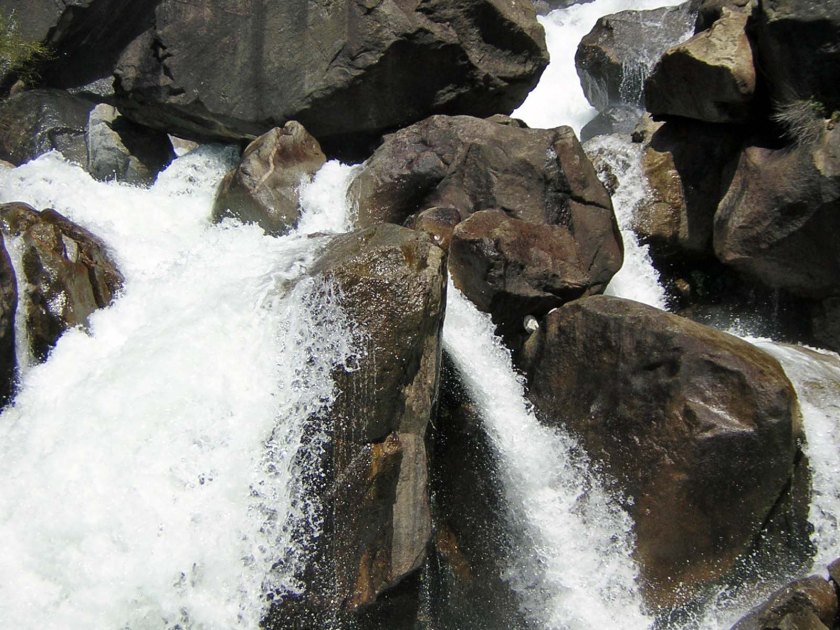
Hi, it’s Wednesday! I’m so glad you stopped by today. This week I’m staying with the Yosemite National Park theme and taking you to the Hatch Hetchy trail. The Hetch Hetchy trail is across the damn from the Yosemite Valley. It’s a five-mile round trip with a moderate rating and is not a heavily hiked trail which makes it perfect for a picnic. You cross over a bridge built right over the bottom of the Wapama waterfall. This is where these photos were taken from.

Hetch Hetchy
Hetch Hetchy

In health,

Melinda

Health and Wellbeing · Men & Womens Health · Mental Health

Making Your Garden Into The Perfect Place For Pilates

Photo by Karolina Grabowska on Pexels.com

It’s all too easy to let your garden go to waste when you don’t put enough time into using it properly. Many people specifically choose homes with outdoor spaces, only to let their garden become overgrown and unusable after just a few short months. Of course, though, a big part of this problem is simply knowing how to use your garden effectively. To help you out with this, this post will be exploring some easy ways to make your garden the ideal space for pilates, yoga, and just about any other static exercise. You don’t need any extra equipment once you’ve gotten started. 

Clear A Space

The first part of this journey is going to involve clearing a space for your pilates area. You won’t need too much room for this, with just enough space for you and your friends to do your exercises while maintaining proper social distance. The more people you have, the more space you will need, and this can often mean having to break into parts of the garden that can long be taken over by nature. Tree removal, weed services, and even landscaping companies can help you with this process, making it possible to make a good start on this side of your garden.

Add Some Ambience

Once you’ve made space, it will be time to start making your garden feel extra relaxing. There are loads of ways to do this, but you want to make sure that your changes are ambient, rather than sticking out and demanding attention. Water fountains, wind chimes, and speakers can be used to generate sound that will make your garden feel natural and open, while different materials can be used to highlight different aspects of your garden. Many people go over the top when they are doing this, but it is worth keeping in mind that you’re trying to capture nature, rather than making your space feel like a disco.

Start Planning

Planning your pilates area will always be a good idea as you go through this process. You need to think about when you’re going to use it, building a routine that will make it easier to keep up with your exercise. Alongside this, though, it can also be good to think about who will be joining you for each workout. Having friends to enjoy a space like this with you will always improve the way that it feels and the use you’re able to get out of it. Of course, though, you will need to take the first step and invite people if you’re going to find success.

With all of this in mind, you should be feeling ready to get started on making your garden perfect for pilates. Having a space for activities like this can make it much easier to keep on top of them and continue your good work. Of course, though, at the same time, and a lot of people find themselves struggling when they get to points like this, and you may need some help from friends along the way.

This is a collaborative post.

In Health

Melinda

Men & Womens Health

Actress and comedian Amy Schumer is being treated for Lyme disease

LymeDisease.org avatar

News
LymeDisease.org

08 SEP 2020

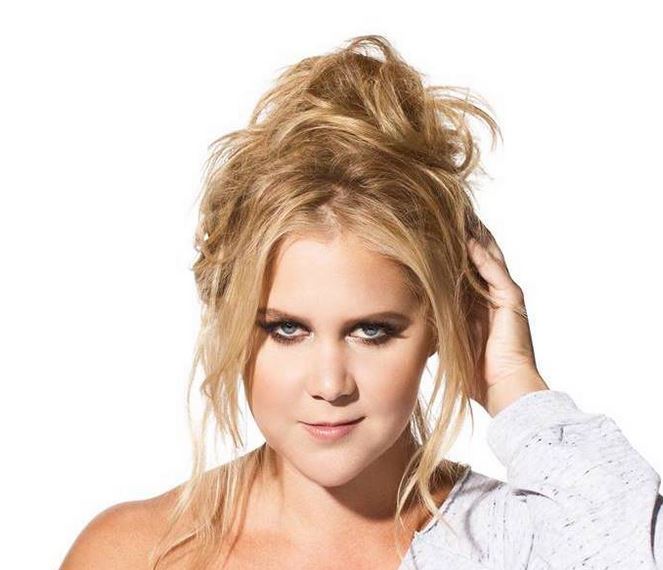
Actress and comedian Amy Schumer is being treated for Lyme disease

Amy Schumer has Lyme disease

Actress and comedian Amy Schumer has announced on Instagram that she’s being treated for Lyme disease.

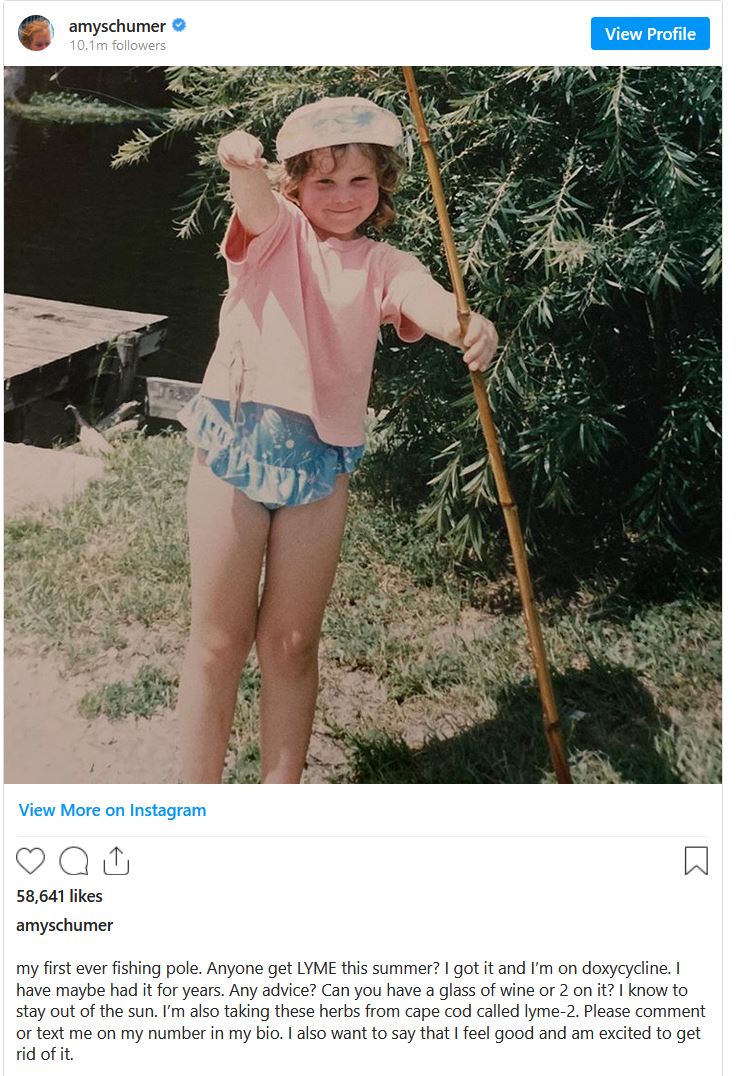
“Anyone get LYME this summer? I got it and I’m on doxycycline,” she wrote. “I have maybe had it for years. Any advice? Can you have a glass of wine or 2 on it?”

“I know to stay out of the sun. I’m also taking these herbs from cape cod called lyme-2,” Schumer continued, asking followers to comment with their own experience with Lyme disease. “I also want to say that I feel good and am excited to get rid of it.”

Amy Schumer is a cousin to Chuck Schumer, the Minority Leader of the US Senate. Senator Schumer has also had Lyme disease.

Here’s what she posted on Instagram today:

amy schumer Instagram post

Related Posts:

  1. NEWS: Sen. Schumer says CDC should bring Lyme and Powassan “out of the weeds” 
  2. Fed Lyme bill stuck in committee. Help us “unstick” it! 
  3. Australian Senate to look into “Lyme-like” illness 
  4. Schumer Amendment Secures First Increase in CDC Lyme Funding in Years 

« Previous Post Were you ever infected with Powassan? These researchers want to know.Next Post » LYME SCI: What smells like citrus and protects you from ticks?

We Invite You To Comment On Our Facebook Page.

Visit LymeDisease.org Facebook Page

Health and Wellbeing

The 360º Journey To Health & Painlessness

Photo by Maksim Goncharenok on Pexels.com
 

WAVELIFE


Dear Friend,

The secret to successful and permanent chronic pain management comes from understanding and dealing with the human condition both from a physiological and emotional perspective.
 
Therapists in Switzerland, Austria, and Germany who have used professional Vital Field techniques for chronic conditions for decades stress the importance of combining sound lifestyle adjustments with frequency methodology. The quick solutions – like drugs, surgery, and manual adjustments – designed to address the symptoms hardly ever deliver long-term results on their own.  

The NO-PAIN Energy Cell allows customers for the first time to gain long-term effects due to a revolutionary innovation in addressing cell regeneration and healing directly with subtle frequencies. Still, if the same physical and emotional stressors persist, issues may arise later in a different body part. This could take place many months or years later. Our goal, however, is to help our customers achieve permanent relief.  

Here are the Top 7 simple lifestyle adjustments you should consider with the NO-PAIN Energy Cell. 

1) HYDRATION

The majority of people are chronically dehydrated. For the body to regenerate, detox, and heal, drinking enough pure water is an absolute condition. Eliminate sugary drinks and sodas, and make sure you drink at least 8 x 8-ounce glasses of water every day, starting in the morning. A fresh lemon combined with at least two glasses helps you hydrate even better. 

2) INTERMITTENT FASTING

We’ve been misinformed about the need to eat three or more times per day. Cellular and mitochondrial regeneration (and the cascade effects of inflammation and pain) is vastly accelerated when the body is not constantly digesting nutrients. Try to eat within an eight-hour window, and when your body adjusts, shoot for a six-hour window.  

3) SLEEP

Regular and plentiful sleep is a precondition to healing. Make sure you get at least eight hours of sleep on average. Some people can manage with six to seven hours, but avoid long stretches of sleep deprivation if you want to heal your body. 

4) MINIMIZE SIMPLE CARBOHYDRATES

Dramatically reduce sugar, wheat, pasta, rice, and packaged foods, most of which hide industrially processed sweet, short-chain, soluble carbohydrates. Focus on whole foods, healthy fats (olive oil, coconut oil, nuts, seeds, avocado…) and avoid processed vegetable oils. 

5) DO THINGS YOU LOVE

It’s easy to say that you need to reduce stress, but if you flip this message around and tell yourself that it’s important to engage in at least two things every day that you love, whether it’s spending time with the people that give you energy, or engaging in hobbies and activities that you genuinely enjoy, the problem often takes care of itself.  

6) MOVE

Dragging yourself to the gym against your will can increase the stress level if you don’t enjoy the activity. Make sure you enjoy the movement you commit to – whether it’s walks, hikes, or other sport activity. A sedentary lifestyle is a huge factor in exacerbating chronic conditions. Make sure you break the pattern and stretch every hour, even if you have to sit for work. Schedule “enjoyable movement” into your calendar even in the busiest of times. 
 
7) NATURE

Exposure to nature a few times a week helps to accelerate cellular healing significantly. Minimizing exposure to humanmade microwaves (cellphone, wifi routers, etc), especially when you sleep, does the same. Nature regenerates, humanmade microwaves degenerate. Find a balance to help your body heal.
 You don’t have to be a disciplinarian to get a benefit. Adopt aspects of the above tips that suit your lifestyle, and make sure you don’t unnecessarily dull your pain with chemicals that only address symptoms.

The NO-PAIN Energy Cell is designed to give you long-term relief without side-effects. Combined with proper lifestyle adjustments opens a window for your body to reach permanent health and painlessness. 

Men & Womens Health · Survivor

The Dark Truth about Gaslighting, Cheating & Emotional Abuse

The Elephant

September 8, 2020

Raven Hughes  |  Contribution: 975

Raven Hughes is Chicago born and LA living, this songwriter/poet/writer keeps her words grounded, yet romantic. She is full of reflection and wisdom and typically writes about… Read full bio

Got gaslighting on your mind? Check these out next: 
What it Really means if You’ve Been Ghosted, Dumped, Unfriended, or Blocked.
I was Gaslighted (& it was the Best thing to Ever Happen to Me).

I was numb.

Since the #metoo movement started, I’ve begun remembering so many instances when I was played that I didn’t even register at the time.

My chest burns, like when you have acid reflux. One of you talked about being manipulated, gaslighted, cheated on, and lied to. My own past stories began echoing through all the veins in my body until the whole house shook. One of you checked in with me because you had seen him out; he reminded you of me; I can’t seem to escape him.

I have always been the type to call someone a friend. Even if we’d only met a couple of times, they were a friend if I liked them. I am different now.

Being a victim can really make you wonder what you did wrong sometimes. I know now that I love too much—for too long.

Isn’t that what we all do? We all love them too much. We fall for the handsome black hole dangling a carrot in front of our face. We go toward it with wonder and shock as we realize every step is atop eggshells. These emotionally manipulative people have a way of being so convincing.

They show their best face as much as possible so that when they are busted with their double life, you can’t even believe it. They always have a good explanation for everything. The dark side is so secretive most of their closest friends don’t even see it. But, if you leave them or call them out, they will act like they don’t know what happened (or worse, say crazy stuff about you).

Then I think about how bad some of these #metoo stories are, and I try to minimize my pain. Push it back down, I beg myself. These feelings aren’t allowed. I know, from childhood, I am only loved when I am happy. Push it down.

We believe because we trust and love. And maybe behind every narcissist is an optimistic person with a dream of curing their abandonment issues. But, without fail, when you look on their phone, this is the kind of person who has voicemails, texts, and emails from about 10 other people.

Or maybe they will randomly message (to check-in and see how we’re doing in quarantine). Or a mutual coworker will catch them on Tinder, and they’ll say it was deleted years before; it must be trapped in the system. And we will believe it.

My hurt is so deep and so vast and expansive—it is coming up. It’s coming up so fast, that bitter acid in my chest. The feeling of an elephant standing on my stomach and the pressure exploding behind my eyes in my head. So many women are coming forward about their abusers, and the men are being forced to see the pain they have caused. But the emotional abuser, the cheater, is probably just fine—they’re living their best life.

We have been hurt so badly, but we would still be the one forgiving them and saying, “Hi,” when we run into one another. How can we stay mad at someone who is so “nice” on the exterior? And then we are left wondering, “How can one man juggle so much?”

The truth is that they will most likely get away with this forever. They are unassuming and nonthreatening.

The tears won’t stop. They will continue to explode from our eyes—hard and fast with all the pressure of our pain beneath them.

Personally, my tears are for all of us; we all know this type of man, the one who never tells the truth—not even once. My tears are for the sad truth that our only thought on the abuse and betrayal is, “At least he didn’t rape me.”

Celebrate Life · Fun · Health and Wellbeing

My Bucket List

Photo by Tanya Gorelova on Pexels.com

Return to St. Petersburg, Russia

Watch artist handcraft a Turkish rug

Learn to double jump rope

Roller Derby

See a grown Hela Monster

Watch baby turtles hatch and return to the sea

Drive Hover Craft

Tango Lessons

Drive Monster Truck

Drive 18 Wheeler

Train and Volunteer to rescue wild animals

Improve Photography skills

Finish Family Tree

I had a panic attack while scuba diving in 1999. I have to dive again to tackle the fear

Visit the worlds Wineries, with an extra long stay in France

Ride a horse again

Volunteer for RAINN as Advocate Speaker for Child and Sexual Abuse

Watch the Caribou migrate

Go to Jordan

Handstand

Walk a mile

Hold a Koala Bear

See Tasmania Devil

Become a Bee Keeper

Walk in Jesus’s Foot Steps

Hear a service by the Pope

Ride in Helicopter over Grand Cayon

What’s on your list? I would love to hear your travel stories, adventure vacations. Where is life taking you? 

Melinda

Fun · Health and Wellbeing

Most Popular Indoor Low Light Plants

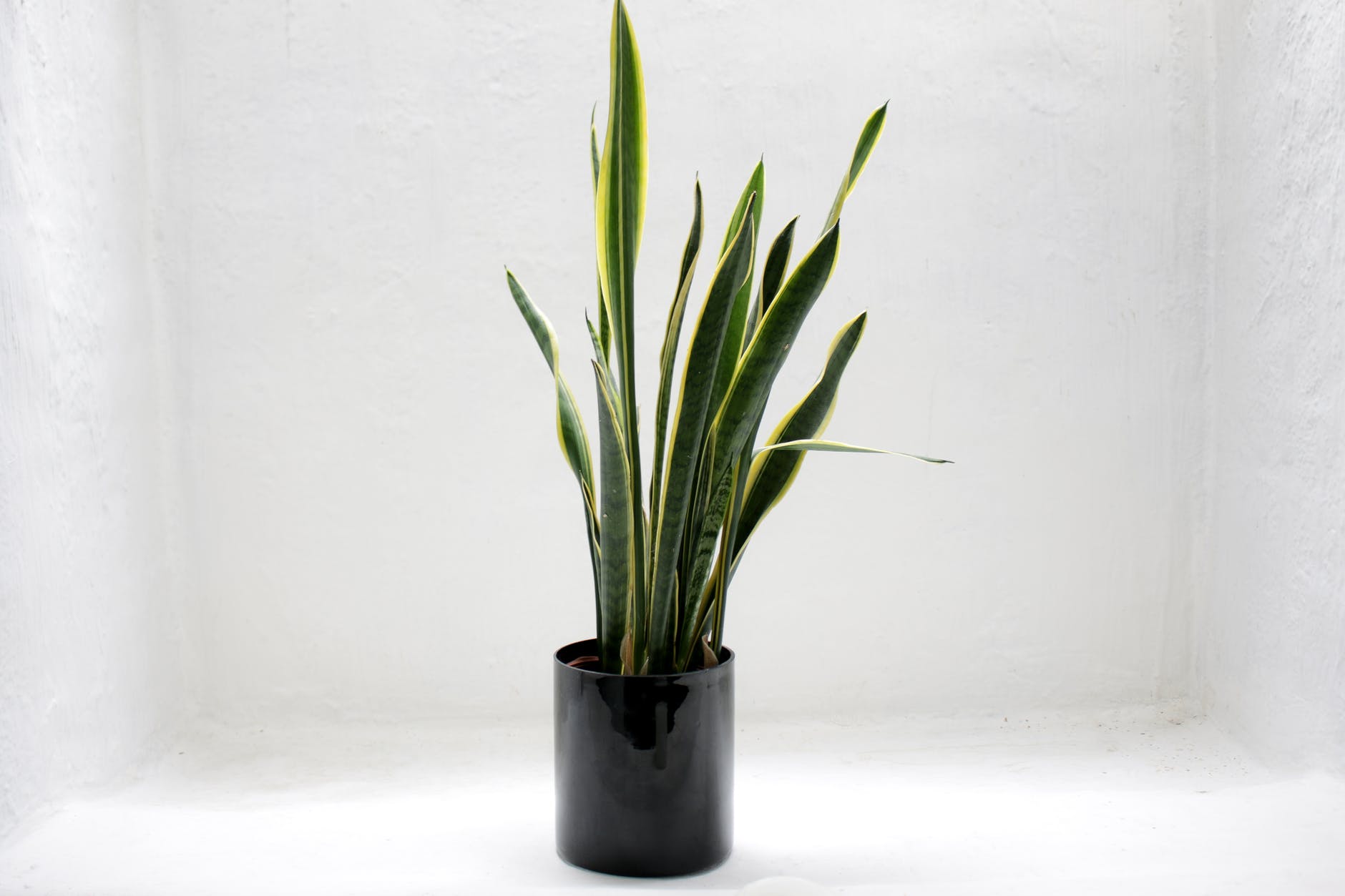
Not everyone has a sunny windowsill to give house plants some love but did you know there are many indoor plants requiring little light. I’ve also included some low light houseplants for beginners. Be sure to check if the plant is poisonous for your pet, I think a couple on this list are.  

Photo by Fabian Stroobants on Pexels.com

This is a photo of a Snake Plant

I own a Money Tree plant and love it, it seems to be a slow grower. I’ve had for around two months and it is just now having two babies. Yes, I call them babies! LOL

Peace Lily

Snake Plant

African Milk Tree

Variegated Red Edge Peperomia

Watermelon Begonia

Money Tree

Heartleaf Philodendron

Swiss Cheese Plant

Weeping Fig

Here’s a great article from Better Home and Gardens


Melinda

Celebrate Life · Fun

#Weekend Music Share *The Red, White And Blue

I’m so glad you joined me, I hope you have a great weekend. Be Safe. In honor of September 11, 2001, for all the lives lost and forever changed. No matter what is going on in our country, I’m proud to be an AMERICAN.

Melinda


Welcome back to Weekend Music Share; the place where everyone can share their favorite music.

Feel free to use the ‘Weekend Music Share‘ banner in your post, and don’t forget to use the hashtag #WeekendMusicShare on social media so other participants can find your post.