Health and Wellbeing · Men & Womens Health · Mental Health

6 Simple Ways to Get Your Life Back on Track

Photo by Jill Wellington on Pexels.com

It’s natural that sometimes life gets away from you a bit. Stress from work or family commitments can take over and it can be hard to find balance. It’s important to step back and try and regain control. Fortunately, there are few basic steps you can take to get your life back on track. Make a list to check off and plan how to find balance again. Here are six simple ways to get organized and get your life back.

Keep on top of maintenance

Sorting out simple maintenance in the house or car is very satisfying and will relieve a lot of stress. There are plenty of online resources to help you. TDot Performance has all the car parts and accessories you need, and you can easily find professional mechanics or technicians for anything you need. Spend a day making a maintenance checklist and work through it.

Work on your relationships

Once you’ve got the practical things out of the way it’s time to focus on your personal relationships. Make more time to dedicate to your friends and family. Follow the necessary steps to improve your personal relationships, and you’ll be able to regain balance in your social life. 

Make a budget

In order to keep things manageable, you’ll need a realistic budget to organize your finances. If you’re feeling stressed about money, then a budget can help you take back control. Make sure you stick to it and if you are struggling you might need to make some changes. 

Spend some time alone

Studies have shown that it’s actually very beneficial to spend time alone. The benefits of alone time include increased happiness, life satisfaction, and stress management. Being alone also gives you the opportunity to plan your life without distractions. Making time for yourself, or even going off the grid for a bit, means you’ll be more adapt to going back to your social life with more tolerance and openness.

Get in touch with nature

The therapeutic benefits of getting in touch with nature are numerous. One of the advantages is the perspective it gives you. Spending a little time outdoors will give you the time you need to reflect and rethink your plans. Try activities such as forest bathing which allow you to clear your mind and focus on the nature around you. Go for a walk into the woods alone and take in all the sights, sounds, and smells. You’ll immediately feel the benefits and more prepared to tackle life’s problems. 

Learn something new

A new hobby or skill is another great way to gain a bit of perspective. It also helps to improve your mood and give you a new lust for life. The more positive you feel, the more you’ll be able to take control and get your life back on track. Whether you study something new for work, or take up a new sport or a creative hobby, learning something new can be very beneficial. Get your life back on track today. 

This is a collaborative post.

Melinda

Fun · Health and Wellbeing · Men & Womens Health · Mental Health

How A Dog Could Improve Your Teen’s Mental Health

Many teenagers ask their parents for a dog, and it can be tough to decide as a family whether the time is right to add a canine companion. A dog can be a great way to teach your teenager to be more responsible, but a pet can also help with mental health. By getting a dog, your teen gets to experience the joy of owning and bonding with a true friend. 

Image – free for commercial use

Pets can be especially beneficial for teens who are struggling with emotional or psychological issues. Many teenagers struggle with their mental health, so the idea of them being helped by owning a dog is worth investigating. For serious problems, professional therapy should be sought, but a dog can help with your teen’s self-care

Growing Up With A Pet

Your teenage years are a turbulent time. Teenagers often start to pull away from their families at this time, as they search for their own identities, separate from their parents. Caught between childhood and adulthood, many teens struggle to find their place in the world, leading to a sense of confusion. 

Many young people lack the skills in coping that they need to deal with troublesome emotions. Sometimes teenagers are left to face these worries alone, but that doesn’t have to be the case. Young people with a pet tend to function better emotionally than those without. Pets give teens a sense of purpose and force them to interact, even at times when they might not feel much like socializing. 

Teens who care for an animal build stronger social relationships. Caring for a dog can help teenagers to connect more to their community too. High levels of attachments to a pet can also help teenagers to feel more connected to others, feel more empathy, and have more self-confidence. 

If you’re thinking about getting your teen a dog from somewhere like Lucky Labs, then you might want to consider these benefits. 

Dogs are easier to hug than a person

A lot of teens aren’t naturally very affectionate, but a pet can help to turn that around. Animals will always demand (and get) attention. It’s much harder for a teenager to ignore an animal seeking attention and expressing their love. This can be very important for teens who aren’t feeling much affection from their peers or are feeling more distant from their parents. 

Dogs are all ears during tough times

Many young people don’t feel that adults understand them or what they’re going through. This means they’re likely to bottle up or push down their feelings instead of talking about them, which isn’t helping. A dog can be used as a listening ear, which is a great way to process and put into words any confusing thoughts and emotions that they might be having. After all, dogs are the best listeners. 

Dogs melt away stress and anxiety

There are few things as effective as petting an animal for soothing and calming a stressed-out mind. Playing with a dog increases levels of oxytocin, which is a hormone that reduces stress, and decreases cortisol, the stress hormone. Having a pet is good for your physical health too. Owning a pet is associated with a decrease in blood pressure, cholesterol, and triglyceride levels, which all reduce the risk of a heart attack. 

Dogs help with socialization and communication

Owning a dog can help young people to enhance their social skills, which is especially useful for teenagers with autism. Animals help young people to feel more assertive and increase their confidence when they interact with other people. Having a dog gives your teen something to talk about if they get stuck for conversation, and also act as a way of getting people to engage with them in social situations. 

Having a dog can also help you to meet new people and start conversations, something which teenagers can struggle to do. Many teens are caught up in social interactions online, whereas a dog is a great ice breaker for real-life social situations. People always want to stop and talk to a dog. 

Dogs are always by your side

A dog is always there for you, even when things are at their hardest. People can come and go in life, but a dog is loyal and with you through every step. A dog can help to fight feelings of depression and anxiety as they provide companionship. Owning a dog can have a positive impact on a person’s self-esteem, as well as other psychological benefits such as lessening feelings of loneliness and helping someone to become less introverted. 

Dogs provide structure

Dogs are a great way to teach a teen to be more responsible and are also a good way of adding structure. Structure is helpful for teenagers who may be feeling adrift from their normal life. No matter how disconnected you feel, a dog will still need you to be up and ready to take it for a walk at least once a day. A dog can help to fight the urge to stay in all day when you feel down, which is an urge that teenagers can often fall victim too. 

Dogs make your brain release the love chemical

Spending time with a dog releases the hormone oxytocin, sometimes known as the love chemical. This hormone plays a part in bonding and trust, as well as reducing stress. This feeling of being bonded to your dog can be very beneficial to a young person who is suffering from PTSD, anxiety, or depression. 

Dogs also help you to release endorphins. Just seeing a dog can trigger your brain into releasing these endorphins, which are natural anti-depressants. Even when you’re doing the jobs that are a less pleasant part of dog-owning, like cleaning up after them, you’ll feel more positive just by having the dog around. 

Dogs can help against allergies and asthma

Children who grow up in homes with dogs or other furry pets are less likely to develop common allergies. Children who are exposed to dogs and cats are a lot less likely to develop allergies such as dust, grass, ragweed, and pet allergies, and are at a lower risk of asthma. Allergies can make people become lethargic, apathetic, and struggle with insomnia. These problems make young people more vulnerable to mental health struggles, like depression. 

Dogs make you laugh

Dogs can be very funny companions and are bound to make you laugh every day. Whether they’re being clumsy, adorable, or silly, your dog will cheer your teen up by making them laugh. Laughter is one of the best forms of stress relief. 

Owning a dog can be very positive for people of all ages. If your teenager is begging you for a dog, it’s worth thinking about all the ways that the might benefit from dog ownership. Dogs are good for mental and physical health, as well as teaching your teenager to be more responsible and social. If you think your teenager is ready for the responsibility of owning an animal, the benefits could make the decision for you. Just remember that a dog is a big commitment, and you should be certain that your child is capable of providing the care that a dog will need. Agree in advance how much responsibility you as the parent will have, such as feeding and bathing. Choose a breed that suits your home and lifestyle, and prepare to see a real change in your teenager and the way they feel. 

This is Collaborative Post.

Melinda

Health and Wellbeing · Mental Health · Moving Forward

What Do you Think of Our New Theme? — Survivors Blog Here Mental Health Collaborative

It’s been years since I gave Survivor’s Blog Here a facelift and today started looking around at options. Does this theme work for how you like the post to pop out on the front page. What is missing? The COVID 19 virus has affected several of our contributors, I’m sure you’ve noticed less blogging […]

What Do you Think of Our New Theme? — Survivors Blog Here Mental Health Collaborative
Men & Womens Health · Mental Health

It’s Been 28 years………

It’s been 28 years since you killed yourself.

Too many Birthday, Christmas, and Thanksgivings.

Wishing I could say I missed you but that would not be true. I do have some great snippets, little memories from my early childhood. Other memories, more unstable memories from my teens when I lived with you.

Driving down the freeway, the speed limit was 70, you drove 90 while punching the radio dials looking for something worth listening to while smoking Swisher Sweet cigars with the window closed as we choked in the backseat.

You would pick me up from daycare and take me to the convenience store around the corner, buy two RC Cola’s, sodas required a 10 cent deposit back then, we would sit in the car singing to Charly Pride and Hank Williams Sr. to the to of our lungs until we finished our soda’s and go in for our deposit. 

I ran away, you drove around with a 357 magnum pointing it at my friends, threatening them to tell you where I was. Cary won an Academy Award for his ” I have no idea where she is speech” as I lay crouched on the floorboard.

You bought me a bag of weed so I would stay home and smoke with you and your friends instead of going out with mine. What is wrong with this picture, I was 13 years old. You thought everything was fine. Like any parent would do the same.

I tried to kill myself, instead of taking me to the hospital five minutes away, you called Granny saying you are going to drive me to see her thirty minutes away. When she said no, you took me to “the club” and had them give me a glass of milk before taking me to the hospital. I almost died just from your lack of action. You had no grasp on reality.

It’s been 28 years since you killed yourself…….

Melinda

Health and Wellbeing · Men & Womens Health · Mental Health

Five Small Ways To Look After Your Mental Health Every Day

If you’re looking for ways to support your mental health but you don’t know where to begin then don’t worry, not alone. Although it can be overwhelming, you need to be sure you’re doing all that you can to look after yourself, including your mental health. Luckily, there are lots of ways in which you can do exactly that. From practising self-care to getting fresh air, there are lots of small changes you can make to your day-to-day life. With that in mind, here are 5 small ways to look after your mental health every day:

Photo by Negative Space on Pexels.com

Make Sure You’re Drinking Plenty Of Water And Eating What Your Body Wants

Although you may not feel as though they’re intertwined, your mental health can often be improved by focusing on what your body needs. Whether that means ensuring you’re drinking enough water or listening to what your body wants to eat, you need to be sure you’re focussing on your physical health too. While it may not be your top priority each and every day, remembering to drink water and eat nutritious meals is important. For more information when it comes to the link between mental and physical health, you can visit this site here. 

Practise Self-Care As Often As You Can

Another great way to help improve your mental health is to focus on practising self-care as often as you can. Whether you’re taking a long hot bath or you’re spending the evening watching your favourite TV, you may be surprised at how much comfort it can provide. As self-care is different for everyone, you may want to look at some self-care ideas here. 

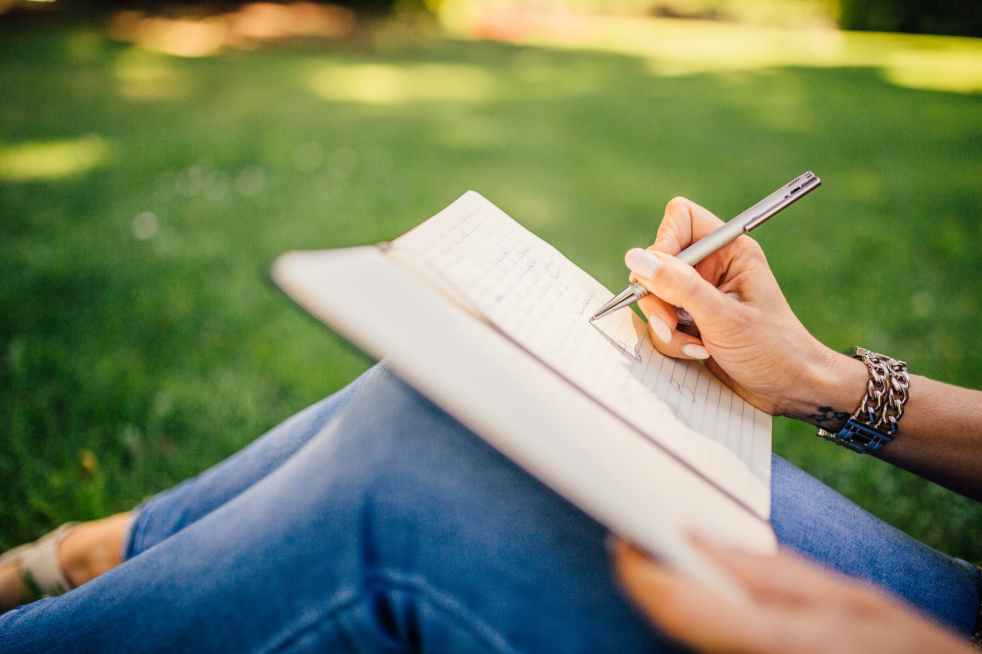
Consider Writing In A Journal 

Although this doesn’t work for everyone, writing in a journal is a great way to get all of your thoughts down in one place. Whether you’re planning out your day or you’re writing down the events that have happened that day, writing things down is known to help many people when it comes to mental health. If you’re looking for inspiration when it comes to finding a mindfulness journal, you can visit this site here. 

Do Things That Make You Happy

Another great way to focus on your mental health each and every day are to do things that make you happy. Whether that means seeing the people you love or cooking your favourite meal, the things that you love are guaranteed to make you smile. For a guide to finding things that make you happy, you can visit this site here. 


Ensure You’re Getting Fresh Air

Finally, you may want to think about getting some fresh air. Although it doesn’t work for everyone, getting outside and going for a walk can help give you a moment of happiness. 

With lots of helpful ways to look after your mental health, you can be sure you’re doing all that you can to put yourself first. What else could you do? Did we miss anything? Let us know your thoughts and ideas in the comments section below. 

Collaborative Post

Melinda

Health and Wellbeing · Men & Womens Health · Mental Health

Are You a Good Friend to Yourself? — Guest Blogger Dr. Eric Perry

Written by Dr. Eric Perry Image Credit: Pixabay “A friend is a gift you give yourself.” ~Robert Louis Stevenson What kind of friend are you? Are you attentive, kind and compassionate or, are you neglectful, uncaring and critical? Scrolling through quotes on the internet, I was reminded of the immense value we place on friendship. […]

Are You a Good Friend to Yourself? — Dr. Eric Perry
Health and Wellbeing · Men & Womens Health · Mental Health

Why Self-Care Is Important To Mental Health

Self-care may seem like a luxury but in fact, it’s important for everyone to take time out for self-care. Self-care or taking a few minutes for ourselves is critical to our mental health. Our mind and body need a break, a chance to unwind, to refocus and there are many ways to unwind. 

I do many things for self-care depending on how much time I have. If I have 30 minutes I may take a hot aromatherapy bath, give myself a manicure, if I’m crunched for time a hot foot soak is very relaxing. Simple ways are enjoying a candle for a few minutes, meditating, watching the birds, or just taking a walk around my backyard to clear my head. 

Men need self-care just as much as women, the manner in which you find a moment of joy may look different. A good foot soak is always a great way to relax, meditation, taking a 15-minute power nap, hot shave, scalp massage, hot bath, or even stretching exercises and aromatherapy is can be relaxing. 

3 simple strategies to help you focus and de-stress

Does it seem like you can’t complete even the simplest task without being distracted? Texts, emails, social media alerts, noisy colleagues, ringing phones… Friends, you are not alone.

Distracted thinking — aka daydreaming or mind-wandering — affects everyone. In fact, researchers have found that people think about something other than what they’re actually doing — or supposed to be doing — almost half of the time. Turns out that a wandering, easily distracted mind is actually the default mode for the human brain.

Succumbing to distraction over and over, though, can build stress, foster unhappiness, and even lead to depression. So if you’re one of the many looking to figure out how to handle distractions and improve your ability to focus, take comfort in the fact that research has shown a way forward.

One word: mindfulness.

Mindfulness means maintaining moment-to-moment awareness of where you are and what you’re doing. At work, for instance, it means you’re focused on the project in front of you; walking with a friend, it gives you the ability to really focus on your surroundings and your conversation. Scientists have shown that you can actually train your brain to become more mindful. Like anything else, it just takes practice.

Ready to get started? These three practices have all proven useful in building mindfulness.

1. Mindfulness-based stress reduction (MBSR)

MBSR training has become a recognized way to help people learn to avoid distractions and increase their attention to the task in front of them. It can also help improve memory, motivation, and autonomy — all things likely to make you (and your boss) happier. MBSR programs typically include breathing, stretching, and awareness exercises.

2. Meditation

Meditation aims to increase your awareness of the present moment and help you develop a gentle, accepting attitude toward yourself. Regular meditation practice has been shown to actually alter the brain — in a good way. One study showed that the area of the brain dedicated to regulating your emotions was significantly larger in meditators. In other words, in a world determined to trip you up with distractions and unpleasant surprises, meditation can help you stay more positive and more focused.

3. Mindful movement

The hallmarks of mindful movement, or yoga — structured breathing, controlled movement, mental focus — make it sound like the perfect antidote to stress and distracted thinking, but does science back that up? Yes, over and over again. Many studies have found that, after beginning a yoga program, people feel less stressed, more focused, even more optimistic. In fact, yoga’s been found to be even more beneficial to people who’re highly stressed.

In today’s so-called attention economy, the world is actually being designed to distract you. Everybody wants your attention, and they want it right now. But you can take back control of your focus, shed that stress, and wake up happier to meet your day.

Ready to commit to becoming more mindful? Great, go for it!

Melinda

Health and Wellbeing · Men & Womens Health · Mental Health

Surprising Ways Gardening Can Improve Mental Health

Life can be stressful and times like these are not making it any easier. That is why spending time outside is encouraged for your mental health. Research has shown that time outdoors gardening can lift your spirits. Playing in the dirt can reconnect you with nature, allowing you to see the bigger picture and giving you a different perspective. Here are some surprising ways gardening can do wonders for your mental health.

Photo by Mike on Pexels.com


Allows You To Practice Acceptance

Sometimes things are just the way they are and there may not be much you can do about it. In times like these, practicing acceptance comes in handy to keep your mental health in check. Life is unpredictable. Gardening will help you realize that life will blossom in the way it wants. Of course, you can provide an ideal environment for your plants to be strong, healthy and nutritious, but after a while, you have to let it do its own thing.

Allows You To Let Go Of The Need For Perfection

Life is not perfect. Nothing is perfect. Desperately trying to make things perfect will run you ragged and leave you frustrated. Wanting perfection can cause you to miss opportunities, damage your relationships, and can even paralyze you from trying something new. Nothing will teach you that more than planting your favorite vegetable or fruit. No matter how carefully you try to map out how your garden will look, how it will grow, or how many Ryobi trimmer reviews you read, there are many factors that cause imperfections in your garden. These are things like insects, diseases of your plants, bad weather, and pests. Gardening will force you to relinquish the need for perfection.

Allows You Change Your Mindset

One of the ways to maintain your mental health is to change your mindset from a fixed mindset to a growth mindset. When you have a growth mindset you believe that you are constantly learning even when things do not go as planned. You look at those situations as an opportunity to learn and grow instead of failure. It can change your perception of making mistakes. Gardening can help you work on building up that mindset. You cannot fail at gardening, even if all your plants die. All that you did is learn how to better take care of your plants for the next time.

Allows You To Connect

Gardening allows you to connect with people and the world. For one, gardening is a hobby enjoyed by many people around the world. If you garden, you will likely find a friend who enjoys gardening too. It also allows you to connect with the earth. Think about it; you are playing in its dirt all day and you are adding to it. You are creating an impact. Gardening almost feels like being a parent because you develop a bond with the plot of land you are tending as well as the plants that sprout out of it.

Collaborative Post

Melinda

Health and Wellbeing · Mental Health

Can Yoga Help Depression? — Guest Blogger The Wellness Warrior

Yoga students may present with a variety of physical health concerns, such as chronic pain or injury. As a yoga instructor, it is important to become familiar with student histories so that the teacher can ensure the yoga studio remains a safe space for students. Overall, engagement in yoga practice has been consistently increasing in […]

Can Yoga Help Depression? — The Wellness Warrior
Health and Wellbeing · Men & Womens Health · Mental Health

Fibromyalgia Thoughts #4 Living Without A Flair


Vacuumed kitchen and dining room.

Mopped kitchen.

Applied cuticle cream twice.

Vacuumed part of the living room, still need to clean the floor.

Potted two house plants.

Enjoyed a candle for a few minutes.

Emptied dishwasher.

Woke up 4:00 A.M. with the puppy.

Haven’t taken a nap.

I cleaned up but no shower, those hospital towelettes sure come in handy, hair still in a ponytail.

Took my morning meds.

Washed face twice.

Emptied bathroom trash.

Brushed teeth twice.

Played with dogs, felt like forever!

Went to Starbucks for a cold coffee with my husband.

I’m exhausted at 2:30 P.M. 

This is an exceptional day! I set my goals at a realistic level this week and am working at breaking them down. Today is Tuesday and I’m ahead of schedule. The new puppy is exhausting but he brings so much joy and laughs.

I don’t always give myself credit for all the little tasks and tend to focus on the bigger things which make me feel like I haven’t accomplished much.  All task add up even on the worst days, everything adds up to an accomplishment.

Tomorrow is a new day.

Melinda


Celebrate Life · Men & Womens Health · Mental Health · Moving Forward · Survivor

You Matter — Guest Blogger Don’t Lose Hope

There’s a grave in Dozenhem military cemetery where the inscription on the headstone reads: “G. Blacker. Somerset light Infantry. 9th August 1917. Age 39”. This man existed, and he mattered. This man was a member of our family. He died for his country in World War 1. And like the others who are buried there […]

You Matter — Don’t Lose Hope
Celebrate Life · Mental Health

I’ve updated My Photo

The photo I’ve been using was old, back when I was younger and believe much prettier, but reality can burn sometimes. Fifteen years, anti-psychotic medications and chronic illness has changed my looks.

I have always been comfortable with how I looked. That is until three years ago when I gained over 40 pounds from taking a new medication for my Bipolar Disorder. Anyone who takes medications for mental illness can relate to this amount of weight gain in a month’s time.

I write openly, honestly, and from my heart. I have taken many photos over the past couple of months looking for one I could live with. This is the best one so far. It will probably not be the last one. I want you to see the face behind the blog.

Re-energize, Re-generate, and Seek Wellness

Melinda

Health and Wellbeing · Men & Womens Health · Mental Health

Everyday Ways To Cope With Anxiety

Anxiety affects more people than you might realize. Now that mental health is becoming less stigmatized, it’s becoming more normal for people to talk about their anxiety and put it out there in the open. But just because more people are talking about it, doesn’t mean that coping with anxiety itself is getting any easier.

Unpredictable and at times, crippling, anxiety affects people in different ways. Everyone has their own way of dealing with things, but there are some things you can do every day to help you help your anxiety and help you regain your calm.

Image Credit: Unsplash under Creative Commons

Learn to focus on your breathing

Never underestimate the power of focused breathing. Focusing on even, steady breaths when you’re feeling anxious could help you bring your heart rate down and help you clear your mind to give your attention to the task at hand. Many people find the 4-7-8 breathing technique useful for this. Taking some slow deep breaths can have an instant effect, so try practicing measured breathing to help you in the future.

Write it down

If something is making you anxious, it can help you get some clarity to write it down – especially if something is overwhelming or you can’t make sense of it. People use writing as a way to cope with difficult experiences, and it can be used to tackle everyday thoughts and feelings too. Even if you just write something down on your phone, you could feel better once you’ve got it all out.

Look at alternative remedies

There are different remedies that can help you deal with anxiety. Many people use aromatherapy as a way to promote calm, while otc anxiety treatments can also be effective for some sufferers. Always seek medical advice before taking supplements, especially if you’re taking medication, but some natural supplements could be effective for helping you to manage your anxiety.

Do some short exercise

Exercise has many benefits for your health, and it can be great for your mental health. When you’re feeling a wave of anxiety coming on, or you’re dealing with a stressful situation, try exercising. There are some excellent short yoga routines for dealing with anxiety that could help you regain your center and help you relax too. Regular exercise is important, but it’s good to know where to find some short routines you can do as and when you need them. 

Going for a run or a short walk can also be good alternatives to yoga, helping you get out in the fresh air and enjoy a change of scenery.

Anxiety brings many different challenges, but finding ways to cope can help you when you feel an attack coming on. While not every method will work for you, there are some simple but effective tips you can try to help you find what works best for you. Don’t let your anxiety beat you; make sure you get the help you need to overcome it.

Re-energize, Re-generate and Seek Wellness

Melinda


Health and Wellbeing · Men & Womens Health · Mental Health

Depression, anxiety rates increase among pregnant women, new mothers during pandemic

Healio

By Erin Michael

June 26, 2020

More pregnant women and new mothers are experiencing anxiety and depression during the COVID-19 pandemic, according to survey results published in Frontiers in Global Women’s Health

Photo by Georgia Maciel on Pexels.com

Researchers surveyed 520 pregnant women and 380 women who had given birth in the last year. The participants — primarily from Canada — were recruited on social media from April 14 through May 8.

Mental health in pregnant women, new mothers due to COVID-19
Reference: Davenport H, et al. Front Glob Womens Health. 2020;doi:10.3389/fgwh.2020.00001.

The survey included a questionnaire on self-reported depression and depressive symptoms, anxiety and physical activity before and during the pandemic.

When responding to questionnaires on depressive symptoms, 15% of women had scores indicating depression before the pandemic compared with 40.7% of women during the pandemic. 

The survey also identified moderate to high anxietyin 29% of respondents before the pandemic and 72% of respondents during the pandemic. 

According to the results, 64% of women reported that they had reduced their physical activity levels due to isolation measures, whereas 15% reported increased physical activity and 21% did not change their physical activity.

Researchers found that women who had at least 150 minutes of moderate physical activity each week had significantly lower depression and anxiety scores compared with those who did not.Photo of Margie DavenportMargie H.Davenport

Healio Primary Care spoke with lead author Margie H. Davenport, PhD,director of the Program for Pregnancy and Postpartum Health and associate professor in the faculty of kinesiology, sport and recreation at University of Alberta, to learn more about the study and what physicians can do to combat depression and anxiety in pregnant women and new mothers.

Q: Why was this study needed?

A: We know that the social and physical isolation measures that are critically needed to reduce the spread of the virus are affecting mental health; however, during pregnancy, the development of depression and anxiety can have detrimental effects on the mental and physical health of both mother and baby that can persist for years. Our previous work has demonstrated that exercise during and following pregnancy is associated with a reduced risk for depression and depressive symptoms, but access to safe places to walk or other types of exercise are greatly reduced. We wanted to conduct this survey to learn more about the impact of COVID-19 on the mental health and physical activity of women during and following pregnancy.

Q: How might recall bias have affected the results?

A: We know that in nonpandemic times, 1 in 7 women experience depression and/or anxiety during the perinatal period. Although recall bias may have influenced the pre-pandemic results, the fact that 41% of women are experiencing depression and 72% moderate to high anxiety currently is substantially higher than we would expect. 

Q: What can physicians do to address depression and anxiety in pregnant and postpartum women during the COVID-19 pandemic?

A: It is critical to increase awareness of the impact of social (and physical) isolation on the mental health of pregnant and postpartum women. Speaking to patients about the signs and symptoms of depression and anxiety, as well as continuing to ensure access to diagnosis and treatment of these conditions is a key step in supporting women through a healthy pregnancy.

Q: Physical activity decreased among many of these women during the COVID-19 pandemic. What can PCPs recommend to these patients to help them increase physical activity during the pandemic?

A: The closures of indoor recreation centers and outdoor parks have increased some barriers to physical activity during the pandemic. However, encouraging outdoor walking or online fitness classes can be feasible options to engage in physical activity while continuing to adhere to public health recommendations for physical distancing. Extensive research supports the benefits of walking. Every minute counts!

Q: What additional research is needed to evaluate the mental health of pregnant and postpartum women during the COVID-19 pandemic?

A: Additional research needed to better understand how we can support the mental health of pregnant and postpartum women who are experiencing isolation — even in nonpandemic times — is critical. Working with women to develop supports and resources that fit with their needs — online support groups, better access to diagnosis and treatment, free perinatal fitness classes — is needed to mitigate the effects of the pandemic.pregnant womendepressionanxietycovid-19coronavirus

Additional information:

A mental health treatment center for women affirms this study, particularly in relation to their male counterparts. The Gooden Center found that “women are nearly twice as likely as men to be diagnosed with depression or anxiety,”

Photo by Valeria Ushakova on Pexels.com


Women, the Gooden Center notes, are more prone to trauma, which is deeply interconnected with depression and anxiety along with stress. Complications with trauma, depression and anxiety go much deeper than a lower quality of life. It can lead to reduced life expectancy, life-threatening health complications and suicide.


Note:

 If you need help please consider anxiety therapy, where there is life there is hope.

Melinda


Health and Wellbeing · Men & Womens Health · Mental Health

Shelter In Place? I’m Used To Staying At Home

Photo by Alexander Zvir on Pexels.com

Being stuck at home is new to many people. But I started sheltering in place in 2013 when I was diagnosed with Lyme disease. I spent three years on IV therapy, seven days a week, and walked only to the bathroom and back. The years after IV therapy was just as rough.

I required assistance with everything. The pain unbearable–going to the bathroom, taking a shower, walking down the stairs were so difficult. Mentally I struggled, too, trying to remember to make appointments and phone calls I needed to. I couldn’t even handle putting my medicine in the case each week without mistakes. I felt so much guilt.  I thought my husband would leave me as soon as he could, or maybe he would have an affair. Why couldn’t I keep up with showering and fixing my hair? When was the last time I wore makeup? 

But I have learned to overcome my guilt by dealing with facts, not fears, and knowing I can handle whatever reality throws my way.

In addition to Lyme disease, I’ve been diagnosed with fibromyalgia, cognitive dysfunction (which includes lack of balance), and dementia. Dementia is the real kicker. There are a host of other ailments I suffer from, and I’m sure I will have more as the years pass. I was told early on that Lyme would cause problems that seem unrelated for years to come because there is no cure and my immune system remains compromised. This past month I found that to be true again when.

I was diagnosed with a new immune disorder, hypogammaglobulinemia. Hypogammaglobulinemia is a problem with the immune system that prevents it from making enough antibodies called immunoglobulins. Antibodies are proteins that help your body recognize and fight off foreign invaders like bacteria, viruses, and fungi. Without enough antibodies, you’re more likely to get infections. People with hypogammaglobulinemia can more easily catch pneumonia, meningitis, and other infections that a healthy immune system.

This makes the COVID-19 pandemic especially scary for me. I get stressed out when I watch more than an hour of news a day, or see people not wearing masks.

In general, though, I’m very used to having to stay at home. I quit driving years ago and have only driven a handful of times in recent years. It’s not that I couldn’t drive, but my husband came along to take notes at appointments since my memory is not what it used to be. Don’t get me wrong. I miss the independence of driving without my husband having to take off work. I also miss being able to see my hairstylist, getting a manicure, and finding great spots for taking photos.

I have to get out of the house for my mental health, at least a little bit, regardless of my immune deficiencies. We still go for a Starbucks run as often as possible. We have a whole sanitation process down, including wiping down his mask, credit card, steering wheel, and both of the top of our cup to the bottom. We take all precautions when he brings groceries in and packages, we wash our hands immediately and wash again after putting everything away. He doesn’t want me to get sick, and I know he does everything possible every time he leaves the house.

I’m ready for this to pass and it will pass, but for now, I’m staying calm and entertained indoors as best as I can. I hope you can do the same.

In Health,

Melinda

Chronic Illness · Health and Wellbeing · Medical · Men & Womens Health · Mental Health · Self-Care

What is Hypocalcemia? My latest diaognosis

Earlier in the month I was diagnosed with persistent Hypocalcemia. The lack of calcium can cause many problems but the most troubling to me at this time is more Osteoporosis which I already have in my hip and heart complications, which I already have several heart issues.

Like everyone my appointment was pushed out and we wait out the social distancing to get back to normal. I’m lucky that I don’t have the worst symptoms yet.

Hypocalcemia (Calcium Deficiency Disease)

What’s calcium deficiency disease?

Calcium is a vital mineral. Your body uses it to build strong bones and teeth. Calcium is also needed for your heart and other muscles to function properly. When you don’t get enough calcium, you increase your risk of developing disorders like:

Children who don’t get enough calcium may not grow to their full potential height as adults.

You should consume the recommended amount of calcium per day through the food you eat, supplements, or vitamins.

What causes hypocalcemia?

Many people are at an increased risk for calcium deficiency as they age. This deficiency may be due to a variety of factors, including:

  • poor calcium intake over a long period of time, especially in childhood
  • medications that may decrease calcium absorption
  • dietary intolerance to foods rich in calcium
  • hormonal changes, especially in women
  • certain genetic factors

It’s important to ensure proper calcium intake at all ages.

For children and teenagers, the recommended daily allowances for calcium are the same for both sexes. According to the National Institutes of Health (NIH), the daily allowances are:

According to the U.S. government’s dietary guidelinesTrusted Source, calcium requirements for adults are:

Women need to increase their calcium intake earlier in life than men, starting in middle age. Meeting the necessary calcium requirement is particularly important as a woman approaches menopause.

The hormone disorder hypoparathyroidism may also cause calcium deficiency disease. People with this condition don’t produce enough parathyroid hormone, which controls calcium levels in the blood.

During menopause, women should also increase their calcium intake to reduce the risk of osteoporosis and calcium deficiency disease. The decline in the hormone estrogen during menopause causes a woman’s bones to thin faster.

Other causes of hypocalcemia include malnutrition and malabsorption. Malnutrition is when you’re not getting enough nutrients, while malabsorption is when your body can’t absorb the vitamins and minerals you need from the food you eat. Additional causes include:

  • low levels of vitamin D, which makes it harder to absorb calcium
  • medications, such phenytoin, phenobarbital, rifampin, corticosteroids, and drugs used to treat elevated calcium levels
  • pancreatitis
  • hypermagnesemia and hypomagnesemia
  • hyperphosphatemia
  • septic shock
  • massive blood transfusions
  • renal failure
  • certain chemotherapy drugs
  • “Hungry bone syndrome,” which may occur after surgery for hyperparathyroidism
  • removal of parathyroid gland tissue as part of surgery to remove the thyroid gland

If you miss your daily dose of calcium, you won’t become calcium deficient overnight. But it’s still important to make an effort to get enough calcium every day, since the body uses it quickly. Vegans are more likely to become calcium deficient quickly because they don’t eat calcium-rich dairy products.

Calcium deficiency won’t produce short-term symptoms because the body maintains calcium levels by taking it directly from the bones. But long-term low levels of calcium can have serious effects.

What are the symptoms of hypocalcemia?

Early stage calcium deficiency may not cause any symptoms. However, symptoms will develop as the condition progresses.

Severe symptoms of hypocalcemia include:

Calcium deficiencies can affect all parts of the body, resulting in weak nails, slower hair growth, and fragile, thin skin.

Calcium also plays an important role in both neurotransmitter release and muscle contractions. So, calcium deficiencies can bring on seizures in otherwise healthy people.

If you start experiencing neurological symptoms like memory loss, numbness and tingling, hallucinations, or seizures, make an appointment to see your doctor as soon as possible.

How’s calcium deficiency disease diagnosed?

Contact your doctor if you have symptoms of calcium deficiency disease. They’ll review your medical history and ask you about family history of calcium deficiency and osteoporosis.

If your doctor suspects calcium deficiency, they’ll take a blood sample to check your blood calcium level. Your doctor will measure your total calcium level, your albumin level, and your ionized or “free” calcium level. Albumin is a protein that binds to calcium and transports it through the blood. Sustained low calcium levels in your blood may confirm a diagnosis of calcium deficiency disease.

Normal calcium levels for adults can range from 8.8 to 10.4 milligrams per deciliter (mg/dL), according to the Merck Manual. You may be at risk for calcium deficiency disease if your calcium level is below 8.8 mg/dL. Children and teens typically have higher blood calcium levels than adults.

How’s hypocalcemia treated?

Calcium deficiency is usually easy to treat. It typically involves adding more calcium to your diet.

Do not self-treat by taking a lot of calcium supplements. Taking more than the recommended dose without your doctor’s approval can lead to serious issues like kidney stones.

Commonly recommended calcium supplements include:

  • calcium carbonate, which is the least expensive and has the most elemental calcium
  • calcium citrate, which is the most easily absorbed
  • calcium phosphate, which is also easily absorbed and doesn’t cause constipation

Calcium supplements are available in liquid, tablet, and chewable forms.

Shop for calcium supplements.

It’s important to note that some medications could interact negatively with calcium supplements. These medications include:

  • blood pressure beta-blockers like atenolol, which may decrease calcium absorption if taken within two hours of taking calcium supplements
  • antacids containing aluminum, which may increase blood levels of aluminum
  • cholesterol-lowering bile acid sequestrants such as colestipol, which may decrease calcium absorption and increase the loss of calcium in the urine
  • estrogen medications, which can contribute to an increase in calcium blood levels
  • digoxin, as high calcium levels can increase digoxin toxicity
  • diuretics, which can either increase calcium levels (hydrochlorothiazide) or decrease calcium levels in the blood (furosemide)
  • certain antibiotics such as fluoroquinolones and tetracyclines, whose absorption can be decreased by calcium supplements

Sometimes diet changes and supplements aren’t enough to treat a calcium deficiency. In this case, your doctor may want to regulate your calcium levels by giving you regular calcium injections.

You can expect to see results within the first few weeks of treatment. Severe cases of calcium deficiency disease will be monitored at one- to three-month intervals.

What are the possible complications of hypocalcemia?

Complications from calcium deficiency disease include eye damage, an abnormal heartbeat, and osteoporosis.

Complications from osteoporosis include:

  • disability
  • spinal fractures or other bone fractures
  • difficulty walking

If left untreated, calcium deficiency disease could eventually be fatal.

How can hypocalcemia be prevented?

You can prevent calcium deficiency disease by including calcium in your diet every day.

Be aware that foods high in calcium, such as dairy products, can also be high in saturated fat and trans fat. Choose low-fat or fat-free options to reduce your risk of developing high cholesterol and heart disease.

You can get 1/4 to 1/3 of your RDA of calcium in a single serving of some milks and yogurts. According to the United States Department of Agriculture (USDA)Trusted Source, other calcium-rich foods include:

While meeting your calcium requirement is very important, you also want to make sure you’re not getting too much. According to the Mayo Clinic, upper limits of calcium intake in milligrams (mg) for adults are:

  • 2,000 mg per day for men and women 51 years of age and up
  • 2,500 mg per day for men and women 19 to 50 years of age

You might want to supplement your diet by taking a multivitamin. Or your doctor may recommend supplements if you’re at high risk for developing a calcium deficiency.

Multivitamins may not contain all of the calcium you need, so be sure to eat a well-rounded diet. If you’re pregnant, take a prenatal vitamin.

Vitamin D

Vitamin D is important because it increases the rate calcium is absorbed into your blood. Ask your doctor how much vitamin D you need.

To increase your calcium intake, you can add food rich in vitamin D to your diet. These include:

  • fatty fish like salmon and tuna
  • fortified orange juice
  • fortified milk
  • portobello mushrooms
  • eggs

As with calcium-rich dairy products, some vitamin D-rich dairy products can also be high in saturated fat.

Sunlight triggers your body to make vitamin D, so getting regular exposure to the sun can also help boost your vitamin D levels.

Melinda

Celebrate Life · Family · Health and Wellbeing · Men & Womens Health · Mental Health

Four Hidden Reasons For Family Drama During Wedding Planning

 It’s not about “bridezillas” or the fight for bigger centerpieces.

The summer wedding season is upon us—the culmination of months or years of planning and executing the day that honors a couple’s legal union. For many couples and their families, these months mean navigating a complex web of logistical decisions tied to culture, religion, money, relationships, and identity. The fight over centerpieces, a stressed out “bridezilla,” or even mundane miscommunications may immediately come to mind as the culprit for inter-family discord during wedding planning, but the fights are typically much deeper. Here are some of the real reasons wedding planning can be so acrimonious and stressful:

The Couple’s Joint Identity and Split Loyalties

When a couple comes together, they merge their experiences, traditions, and values into a life that reflects shared goals and priorities. In the process, they may step away from their original families’ religious, political, financial, geographical, and dietary values. Typically, couples can gloss over or avoid these differences, attending their family’s religious events even if they no longer believe in the tradition or eating before attending a family dinner that doesn’t meet their dietary needs. But during wedding planning, these differences must be negotiated and decisions must be made about what the wedding will look like, leading to hurt feelings. Families may experience the couple’s diverging views with feelings of irrelevance, confusion, alienation, abandonment, or rejection.

Complicating matters, during arguments, each partner may feel loyal both to their future spouse and their family. When a future spouse and a parent disagree about the religious nature of the ceremony, for example, the partner may feel compelled to both defend their parents and defend their partner. In that process, somebody’s feelings can get hurt. Weddings force couples to draw lines in the sand and declare their loyalty to one another while managing delicate family ties.

Whose Wedding Is It, Anyway?

Perhaps it seems obvious that a wedding should reflect the choices and preferences of the couple getting married. But if the members of a couple come from different religious backgrounds, ethnic cultures, geographical regions, socio-economic classes, or culinary traditions, the question of “whom should this wedding reflect” will almost certainly emerge and create tension. Should the day reflect the couples’ wishes and beliefs, even if they diverge from those of their families? Should one family expect the wedding to reflect their own needs and values? When the wedding cannot reflect everybody, who takes priority, and does that change based on who is paying for the wedding—one or both sets of parents, or the couple themselves? Some weddings more closely resemble the desires and preferences of parents while others focus more on the couple’s vision for the day. Many couples and their families try to work together to incorporate important cultural elements to create a sense of inclusion and respect, but parsing out those details can lead to many arguments and hurt feelings.

Fear of Judgement and Community Perception

The question of whom the wedding reflects may be tied not only to a family’s commitment to their culture and beliefs but also to the issue of perception. With family, friends, business colleagues, and community members from all sides of the family attending, many worry about how the wedding will reflect back on them. The couple and both families may worry about what their friends and family will say about the event and what others will assume about them based on what it looks like, how much money was spent, and what religious and cultural traditions did or did not take place. Fear of gossip, judgment, and community standing may be at stake, heightening the stakes of the wedding. Concerns about perception muddy the waters of decision-making because they turn the question of What do we want for the event? into What does this event need to look like to receive the approval of others?

Control and Inclusion

When families argue over venues, centerpieces, and colors, the point of the disagreement can quickly become less about the centerpieces and more about who has the power to make the decision about the centerpieces. Logistical conversations quickly turn to who said what to whom, what families think about one another, and who feels included and excluded. For some, the desire to have control may reflect the fear of being left out or feeling irrelevant on the couple’s big day. For others the need for control over decisions ties back to the idea of parental control over their now-adult children. Many adult children no longer live at home by the time they get married, leaving parents with less say over their decisions and choices. When a wedding comes around, that parent/child dynamic can re-emerge and parents and kids may seek or unconsciously recreate that power differential.

A more complicated truth

For many families, weddings are not merely a day to celebrate the couple, but a way to illustrate family identity, beliefs, wealth, and culture. And so the couple, with its new differentiated identity, as well as each family, must address their different priorities, needs, and beliefs. It is much easier to blame a stressed-out bride or disagreements about wedding decor for ongoing tension, but the underlying dynamics tell a different story. Indeed, some couples avoid these dynamics all together when they decide to make all decisions unilaterally, taking full responsibility for their wedding.  But even then, families may carry expectations.

Melinda

Source:

Psychology Today

Celebrate Life · Health and Wellbeing · Men & Womens Health · Mental Health · Moving Forward · Survivor

The messy, complicated truth about grief

IDEAS TED TALKS

May 1, 2019 / Nora McInerny

Mourning the loss of a loved one isn’t efficient, compact or logical, and it changes us forever, says writer Nora McInerny. She explains why.

I quit my job shortly after my husband Aaron died in 2014 following three years with brain cancer. It made sense in the moment, but I needed money to keep my son and myself alive so I went to a networking event to hopefully make connections. I was introduced to a successful woman in her early 70s who everyone referred to as a “legend.” She wanted to meet me for coffee and I thought, “What could she possibly see in me?”

What she saw in me was herself. She had been 16 when her boyfriend died. He was her first love and they were teenagers in a different era, when it was perfectly plausible that you would be married after high school. Instead, he went to the hospital one day and never came back. She learned later that he’d died of cancer, which his parents had kept secret from him and from his friends. They didn’t know how to talk about it, and they didn’t want him or his friends to worry.

This boy had died decades ago. She was married, a mother and a grandmother. And she told me about his death as if it had happened weeks ago, as if she were still 16, still shocked and confused that her beloved was gone and she’d not had a chance to say goodbye. Her grief felt fresher than mine did, because I didn’t feel anything yet.

The only guarantee about grief is that however you feel right now, you will not always feel this way.

Time is irrelevant to grief. I cannot tell you that it will feel better or worse as time goes by; I can just tell you that it feels better and worse as time goes by. The only guarantee is that however you feel right now, you will not always feel this way.

There are days when Aaron’s death feels so fresh that I cannot believe it. How can he be gone? How can it be that he will forever be 35 years old? Likewise, there are days when his death feels like such a fact of my life I can hardly believe that he was ever not dead. I thought I would be able to control the faucets of my emotions — that certain days (his birthday, his deathiversary) would be drenched in meaning, and most days would not.

I wish that were the case; I wish we could relegate all our heaviest grieving to specific days of the year. It would certainly be more efficient. Instead, I know that I have some friends who will understand perfectly when I call them to say that the entire world feels heavy, that I’ve been crying for reasons I can’t quite explain other than that I am alive and Aaron is not, and the reality of that happened to hit me in the deodorant aisle, when I spotted Aaron’s favorite antiperspirant. I bought a stick for myself, so that my armpits and his armpits would be forever connected.

In 2017, Lady Gaga released her Joanne album, named for an aunt who died before she was even born. The titular song is 100 percent guaranteed to make you cry, and it’s written about someone Lady Gaga never even met. In her Netflix documentary, Gaga: Five Foot Two, she plays the song for her grandmother and bawls uncontrollably. Her grandmother listens to the song, watches Gaga weep, and thanks her for the song. She does not shed a tear. Their grief — even for the same person — is different. The roots of grief are boundless. They can reach back through generations. They are undeterred by time, space or any other law you try to apply to them.

The woman I met had lived far more of her life without that boyfriend than with him. Time had not healed that wound, and it never will.

A common adage is “time heals all wounds.” It is true physically, which I am grateful for because I am typing this while hoping the tip of my thumb fuses back together after an unfortunate kitchen accident involving me attempting to cook a potato. But it is not true mentally or emotionally. Time is cruel. Time reminds me of how long Aaron has been gone, which isn’t a comfort to me.

The woman I met for coffee had lived far more of her life without that boyfriend than she had with him. Her grandchildren were now the same age she’d been when she lost him. Time had not healed that wound, and it never will. If you’re still sad, that’s because it’s still real. They are still real. Time can change you, and it will. But it can’t change them, and it won’t.

And here’s some advice for the grief adjacent. For you, time marches on, steadily and reliably. A year is just a year. A day is just a day. You are not aware of the number of days it’s been since they took their last breath or said their last word. You’re not mentally calculating when the scales of time tip, and more of your life has been lived without them than was lived with them.

We do not move on from the dead people we love or the difficult situations we’ve lived through. We move forward, but we carry it all with us.

You may be tempted to tell the grieving to move on. After all, it’s been weeks. Years. Decades. Surely this cannot still be the topic of conversation. Surely, at this point, they must have moved on? Nope.

But, you may be thinking, “This person has gotten married again or had another baby! They have so many good things in their life, this one awful thing can’t possibly still be relevant … can it?”

We do not move on from the dead people we love or the difficult situations we’ve lived through. We move forward, but we carry it all with us. Some of it gets easier to bear, some of it will always feel Sisyphean. We live on, but we are not the same as we once were. This is not macabre or depressing or abnormal. We are shaped by the people we love, and we are shaped by their loss.

“Why are they still sad?” you may think. Because this is a sad thing, and always will be.

Excerpted from the new book The Hot Young Widows Club: Lessons on Survival from the Front Lines of Grief by Nora McInerny. Reprinted with permission from TED Books/Simon & Schuster. © 2019 Nora McInerny.

ABOUT THE AUTHOR

Nora McInerny has a lot of jobs. She is the reluctant cofounder of the Hot Young Widows Club (a program of her nonprofit, Still Kickin), the bestselling author of the memoirs “It’s Okay To Laugh”, “Crying Is Cool Too”, and “No Happy Endings” and the host of the award-winning podcast “Terrible, Thanks for Asking.” McInerny is a master storyteller known for her dedication to bringing heart and levity to the difficult and uncomfortable conversations most of us try to avoid, and also for being very tall. 


Celebrate Life · Health and Wellbeing · Men & Womens Health · Mental Health

If you’re unhappy with your body, just repeat after us: You are the new hotness

IDEAS.TED.COM

Mar 28, 2019 / +

Too many of us struggle to achieve a body ideal that’s just not obtainable by humans. It’s time to redefine what’s good, healthy and attractive on our own terms, say writers (and sisters) Emily Nagoski and Amelia Nagoski.

The Bikini Industrial Complex. That’s our name for the $100 billion cluster of businesses that profit by setting an unachievable “aspirational ideal,” convincing us that we can and should — indeed we must — conform with the ideal, and then selling us ineffective but plausible strategies for achieving that ideal. It’s like old cat pee in the carpet, powerful and pervasive and it makes you uncomfortable every day but it’s invisible and no one can remember a time when it didn’t smell.

Let’s shine a black light on it, so you can know where the smell is coming from. You already know that basically everything in the media is there to sell you thinness — the shellacked abs in ads for exercise equipment, the “one weird trick to lose belly fat” clickbait when all you wanted was a weather forecast, and the “flawless” thin women who fill most TV shows. The Bikini Industrial Complex, or BIC, has successfully created a culture of immense pressure to conform to an ideal that is literally unobtainable by almost everyone and yet is framed not just as the most beautiful, but the healthiest and most virtuous.

But it’s not just magazine covers, ads and other fictions that get it wrong. The body mass index (BMI) chart and its labels — underweight, overweight, obese, etc. — were created by a panel of nine individuals, seven of whom were “employed by weight-loss clinics and thus have an economic interest in encouraging use of their facilities,” as researchers Paul Ernsberger and Richard J Koletsky put it.

You’ve been lied to about the relationship between weight and health so that you’ll perpetually try to change your weight. But listen: It can be healthier to be 70 or more pounds over your medically defined “healthy weight” than just five pounds under it. A 2016 meta-analysis in The Lancet medical journal examined 189 studies, encompassing nearly four million people who never smoked and had no diagnosed medical issues. It found that people labeled “obese” by the CDC have lower health risk than those the CDC categorized as “underweight.” The study also found that being “overweight” according to the CDC is lower risk than being at the low end of the “healthy” range as defined by the US federal government and the World Health Organization.

Another meta-analysis even found that people in the BMI category labeled “overweight” may live longer than people in any other category, and the highest predictable mortality rate might be among those labeled “underweight.” Taking it further, newer research is suggesting that doctors warn their middle-aged and older patients against losing weight, because the increasingly well-established dangers of fluctuations in weight outweigh any risk associated with a high but stable weight.

Authors (from left) Emily and Amelia Nagoski. Photo: Paul Specht.

Our culture has primed us to judge fat people as lazy and selfish. And it goes deep. Amelia conducts a children’s choir, and she has to teach her kids to breathe. At ten, eight, even six years old, they already believe that their bellies are supposed to be flat and hard, so they hold their stomachs in. You can’t breathe deeply, all the way, without relaxing your abdomen, and you can’t sing if you can’t breathe. So Amelia has to teach children to breathe.

Please: Relax your belly. It’s supposed to be round. The BIC has been gaslighting you.

We’re not saying the people or companies that constitute the BIC are out to get you. Frankly, we don’t think they’re smart enough to have created this system on purpose. But they recognize there’s money to be made by establishing and enforcing impossible standards.

We all encounter the BIC every day. So how can we make it through the fray?

One strategy: Play the “new hotness” game.

When we reconstruct our own standard of beauty with a definition that comes from our own hearts and includes our bodies as they are right now, we can turn toward our bodies with kindness and compassion. Well, easier said than done.

Amelia is vain about pictures of her conducting, in which she inevitably has her mouth wide open and her hair is a sweaty wreck. Emily watches herself on TV and worries that her chin is too pointy because one time, somebody said it was. (We are identical twins.)

Neither of us has ever had the skinny proportions of a model, and we watched our mom — who was model-thin before she gestated two seven-pound babies at the same time — look at her reflection in mirrors and cry at what she saw there. What she saw there is very much like what we see in our own reflections now.

Which is why we play the “New Hotness” game, a way to let go of body self-criticism and shift to self-kindness. One day, Amelia was at a fancy boutique, trying on gowns for a performance. Attire for women conductors is hard to find: solid black with long sleeves, formal yet not frumpy is an unlikely combination. Finding all of this in her size is even more difficult.

She tried on a dress that looked so amazingly good she texted Emily a dress selfie, with a caption paraphrasing Will Smith in Men in Black II: i am the new hotness.

And now “new hotness” is our texting shorthand for looking fabulous without reference to the socially constructed ideal. We recommend it. It’s fun.

Maybe you don’t look like you used to, or like you used to imagine you should, but how you look today is the new hotness. Even better than the old hotness.

Saggy belly skin from that baby you birthed? New hotness.

Gained 20 pounds while finishing school? New hotness.

Skin gets new wrinkles because you lived another year? New hotness.

Hair longer or shorter, or a different color or style? New hotness.

Mastectomy following breast cancer? New hotness.

Amputation following combat injury? New hotness.

The point is, you define and redefine your body’s worth, on your own terms. It’s not necessary to turn toward your body with love and affection — love and affection are frosting on the cake of body acceptance, and if they work for you, go for it. But all your body requires of you is that you turn toward it with kindness and compassion, again and again, without judging all your contradictory emotions, beliefs and longings.

No doubt after you finish reading this, you will go out into the world and notice the diversity of bodies around you. And you will still have reflexive thoughts about the people who don’t conform to the aspirational ideal, envious thoughts about the people who do, or self-critical thoughts about the ways the world tells you that you fall short. And then you might even have emotional reactions to your emotional reactions: “Darn it, I shouldn’t think that!”

Change happens gradually. Your brain has been soaking in the BIC for decades; any time you step outside your door, you’re back in it; any time you turn on a TV, you’re back in it; and any time you put clothes on, you’re back in it. Just notice it, as you’d notice a fleck of dust floating through the air. Smile kindly at the mess. And know what’s true: Everyone is the new hotness. You are the new hotness. So is she. So are they. So are we.

Excerpted from Burnout: The Secret to Unlocking the Stress Cycle by Emily and Amelia Nagoski. Copyright © 2019 by Emily and Amelia Nagoski. Used by permission of Ballantine, an imprint of Random House Publishing Group, a division of Penguin Random House LLC. All rights reserved. No part of this excerpt may be reproduced or reprinted without permission in writing from the publisher.

Watch Emily Nagoski’s TED talk here:

Health and Wellbeing · Men & Womens Health · Mental Health

Dementia and Suicide

Second Stage Dementia


As dementia progresses, the symptoms first experienced in the early stages of the dementia generally worsen. The rate of decline is different for each person. A person with moderate dementia scores between 6–17 on the MMSE. For example, people with Alzheimer’s dementia in the moderate stages lose almost all new information very quickly. People with dementia may be severely impaired in solving problems, and their social judgment is usually also impaired. They cannot usually function outside their own home, and generally should not be left alone. They may be able to do simple chores around the house but not much else, and begin to require assistance for personal care and hygiene other than simple reminders.[11]


I’m in Second Stage Dementia, a 17 on the MMSE and I’m going to kill myself. There’s no emotion in my voice, my husband, my Therapist, and my Psychiatrist know. I don’t want to die and that is why picking the right time is so important. I won’t lie wasting away not knowing anyone, unable to speak or eat. Someone has to bathe you and change your bed several times a day, it’s gut-wrenching to watch someone you love die this way.  

I cared for my Granny, the second stroke is where she started losing touch. She would say “Why did Gramps leave me at this house.” I took photos off the wall to assure her he went to get groceries, she was lost in a terrible reality. She would bang her head against the wall and scream she wanted to die. My Granny got so violent I had to medicate her and that was the last time my Gramps could leave the house until her death. 

My Dementia was caused by Lyme Disease, the Spirochetes used my brain as a host. I’m in the second stage and it’s difficult already. It’s not just the words forgotten, it’s the time’s per day forgotten. I talked with my husband last night but have no idea what we talked about. Many times the words don’t come. Maybe you’ve noticed? I try to tell myself it’s freeing to not worry about the date or day of the week, it’s sad cover.

Melinda


Celebrate Life · Health and Wellbeing · Men & Womens Health · Mental Health

Putting the Brakes on ‘Emotional Eating’

Feb. 22, 2018, at 9:00 a.m.

Putting the Brakes on ‘Emotional Eating’

By Julie Davis
HealthDay Reporter


(HEALTHDAY)


THURSDAY, Feb. 22, 2018 (HealthDay News) — Many of us make choices about whether to eat healthy or not-so-healthy foods based on whether we’re in a good or not-so-good mood.

When a bad mood strikes, we often tend to reach for junk food. And that can be a recipe for disaster when you’re trying to lose weight.

Here’s how to keep your emotions from ruining your diet resolve.

First, it helps to think about the future rather than just that moment. Refocus on the long-term health benefits of good nutrition, and remind yourself how much more important they are than any short-lived comfort from food.
Celebrate Life · Health and Wellbeing · Men & Womens Health · Mental Health · Moving Forward · Self-Care · Trauma

Male Sexual Assault-Road to Recovery

Men and boys who have been sexually assaulted or abused face the same mental and physical effects as other survivors. Cultural stereotypes about men and how they portray masculinity can sometimes feel toxic to male survivors, adding additional challenges to their experience.

Recovering from sexual assault or abuse is a process that looks different for everyone, and it’s important to support a survivor, no matter their gender identity. Focusing on self-care after a sexual assault is a vital step toward recovery. Sexual assault can affect the physical and emotional health of a survivor, so it’s important to address both components of self-care. Should a victim choose to seek professional help, therapy can provide a space to openly discuss their thoughts and experiences.

One out of every 10 rape victims is male. It’s crucial to remind male survivors that they are not alone and share the services available to help them through their recovery.

Survivors can call the National Sexual Assault Hotline 800.656.HOPE (4653) or visit online.rainn.org to be connected with local sexual assault service providers in their area. RAINN also partners with 1in6, an organization dedicated to helping men who survived unwanted or abusive sexual experiences in childhood. If something happened to you, know that you are not alone and help is available. This Men’s Health Month—and all year round—join RAINN in supporting all survivors.

https://www.rainn.org/news/male-sexual-assault-road-recovery

Thank you for reading. RAINN is an excellent has extensive resources for men and women.

Additional resources:

 Melinda

Health and Wellbeing · Men & Womens Health · Mental Health · Moving Forward · Survivor

Memories: I Was Stalked For Six Years

On my first business trip, I was 24 years old and clueless. The company was celebrating a milestone. Once we were bored, around 20 of us found a bar and settled in. This is the time for a stalker, large groups of people, and pick your target.

First, he sent me a dozen white roses every day. I was young and naive about stalking. I assumed he had money.

The cards started coming and he started asking me to come to Boston. The phone calls were coming more often. I didn’t know how a stalker reeled in their target.

After months of roses and cards, I gave in. Once in Boston, his lies were easy to see. The parents owned the house, he lived in a small house over the garage. My radar is up about but nothing else. There was a party at a friend’s house, let’s see how many are losers. The party was fun I talked about food, wine, and traveling. He paraded me around like a 100-lb piece of meat.

We had a selection of drugs, hash, cocaine, and some using a needle. I don’t use a needle period. I enjoyed the selection of smokes. We left heading for his house, he was high and driving. We arrive, had problems with the stairs, which were too high, and laughing ass off. I told him before arriving, that I would not sleep with him, ok no problem he says. We started doing a line of coke, no memory of how many lines, it didn’t matter

I was stoned. He tried to get to lay on the bed and he wouldn’t touch me. The other sleeping option was the couch, I chose the couch. His personality changed to anger. He begged me for what seemed like an hour. He finally gave up, leaving him to plan his next move.

I left my cell phone at home and used his phone to call Granny. BAD MOVE. We had lunch with his parents. They seemed normal, which was good, maybe the thoughts were a reaction from past experiences.

We went to the mall so he could buy me a leather jacket. WEIRD. Before leaving he takes me to a 5-star restaurant on the water. Then off to the airport, and listened to more lies.

The calls to my office and home were nonstop, leaving messages on my phone with his voice getting angrier, making threats. What can he do to me he’s in Boston. NAIVE.

The fear escalated over six years, always looking over my shoulder, and avoiding crowds. Years went by and I thought it was over, NOT, he wrote me a letter at my new address. Dating was worse, you have to tell them about this crazy person. One guy I dated had two boys, and afraid for them he would go to the car alone in case a bomb ignited.

It’s been 15 years and more traumatic memories. Now another Stalker has me in sight. I’m 53 not a kid anymore and I still get scared. I thought the Stalker had left me alone, there still watching, always there, letting me know.

I wrote in an earlier post about how I taunted the Stalker. Don’t take my lead and attack back, expressing your anger. Their anger can grow and aggression can escalate.

Don’t keep the secret to yourself, it’s a heavy load.

Don’t allow yourself to be bait, stalkers can take years grooming,

Melinda


Men & Womens Health · Mental Health · Moving Forward · Survivor

Postpartum Psychosis by Guest Margie Lackfield

Postpartum depression accompanied by Psychosis

This is not a war to win. It cages a soul and will not allow reason of any kind. I prayed, I begged and I pleaded. You can have me, but you cannot have my daughter.

On this particular morning I thought I’d heard a knock at my front door, or was that coming from the back door? I trusted nothing. I sat in the nursery until the pounding stopped, and the sound of what I thought was my name being called, ended. Rocking my angel. I sobbed so violently. I wanted the voices and the visions to go away. I wanted nothing more than to save my baby from myself.

Something made me pause. Was that the front lock-set being opened, the door flinging open, where those real voices?

They found me. Jo and Prescilla. They found me, and they did not let go of me. One took the baby, the other took the phone directory.

And every chance I get, I tell them, “Thank you.”

I spent the following three and a half months in a locked Psych ward.

Each one of us has a story that shames us, it can trap us in a sort of hell, but sometimes to escape hell, we must find words to express its grievance. I used to think this would be one that I could not share for fear of losing someone whom I love(d). Now I fear that if I don’t share it, someone may lose their way, they may find themselves lost, alone, aberrant, and of course, crazy. I would rather lose every friend I have for the sacrifice of gaining that one that reached out to me in need. The one that discovered hope, when they felt there was none left. But, if you can find clarity, if you can trust that there are people in this world that care first for others, and second for themselves, than you, and they, will walk with you through hell. When we have true friends, they don’t leave us when the going gets rough. They stop at nothing to see that we realize how important we are, in their life. They don’t call you, Pyscho, MisFit, Crazy. They call you, Friend. That having us is a joy, a blessing, a God-send. A true friend does not judge, does not keep a score card and knows that we are them, should they ever need us and not out of guilt or because a favor needs returning. No, a true friend stands by knowing that without our connection we are only half of ourselves.

When others walked out, you walked in. You asked for nothing in return. You never used my illness to shame me, to discount me, to write me off. You stood beside me, carried me through my darkest hours. Prescilla, Senn, Jo McCormack, thank you for seeing me when I could not see myself. But more than anything, thank you for saving my Megan from the psychotic lunatic that I had become. We have fought hard to win, and without each of you, I would have lost. It took three and a half months, out-of-state, in a mental institution, numbers of medications and therapy sessions, but I came home, loving and vowing that one day I would share this story.

Never give up hope. When you are at your weakest, grasp for straws. Dial for help. Swallow your pride. Do not fear that you will be labeled, CRAZY, for the rest of your life, even by those you thought would stand behind you through thick and thin. One of the best pieces of advice given to me were these words:

“They already think you’re crazy. Nothing you do, or say, will change their opinion. Absolutely nothing, therefore, be yourself. Only you know the journey and the victory.”

To Megan,

I promised you I would finish a tale that I had begun earlier in one of my posts. I think I even noted Day 16 as the day that I would write it. Day 16, arrived, but the time didn’t feel ‘just right’. Today it does. I believe you will recall the post, original, and if not, I’ll help you retrieve it.

I spent three full days in bed making Pom-Poms out of tissues. And not intentionally. “No, Martha, I did not use your official cut-and-twist guide.” I fashioned mine while I tried building a dam to nowhere, for my sinus drainage. I took my temperature so many times I killed the battery in the thermometer. I’ve never slept so many hours in my life! This comes from someone who suffers extreme bits of insomnia. Food? I found two cans of soup at the back of the cupboard and considering we don’t eat processed canned items I can’t help but wonder where they came from, much less, why I consumed them.

I’d had enough of this Chit, so by 10:00 a.m., I drug my lazy self out of bed and into the steaming shower, threw on some clothes, and asked Hannah if she’d like to go for a walk.

I thought I’d heard a lot of commotion over the roar of my blow dryer, but I wasn’t in the mood to go ‘seek-and-find,’ what all the mischief was. Once dressed, and out the door, I looked up the street to see the fire truck. What the heck?!#&@

Okay, right off the bat I have to confess. I’m not into seeking out horror. I can’t handle it. Put me in a car, drive me down the freeway, and have someone shout, “Look! There’s been a car accident!” What do I do? Slither down in my seat and turn my head in the opposite direction. If I’m the one who happens to be driving, you won’t find me rubbernecking.

Where was I going with this?

The Walk…(and not on the wild side.)

Finally, on our way, we journey toward the coffee shop. I realize I can’t enter, doggie and all, but then I remember the new app I have downloaded on my phone. Hannah and I mosey up to the patio and sit down. Attempting to order, I realize this app needs a few software upgrades, but I’m not in the mood to hack up the menu in broad daylight, much less try to find a workaround on the store’s wi-fi firewall. Dang, I can’t just walk away, the pup is looking at me with those sweet, begging eyes as if to ask, “How much longer, Mummy?”

Thinking comes quick when smitten by a man’s best friend. I lasso a chair with her harness and tie the pup securely to it, placing her in full view of any area I’ll find myself at once inside the store.

…..Admit it, you’re just a wee bit bored, but you just can’t seem to pull yourself away from all the action. Consider yourself a rubbernecker and let’s get moving…..

We are at a junction in the road. If we take the route we came, we’re out 1.5 miles, but if we journey the alternate route we are out 1.5 miles. Decisions, decisions, oh, and the trick math question at the end. (Find your calculators.)

Let’s go rogue. I’m caffeinated and jet-packed by toxic chemicals from eating rancid soup. What could go wrong?

The Traffic Light!…(into the jungle)

The sucker must have been rigged for red-light runners! Hannah and I were caught in the median of a crazed intersection. Everyone dreams of a cuppa joe or a fuel tank of $2.35 gasoline. I think the only thing that saved us was the California Highway Patrol t-shirt my son (in-law) gave me. I looked, OFFICIAL!

Okay, I was only a third grey, now color me white-headed. I match the dog now. Lesson learned: Rubberneckers. “You folks are everywhere!” One of you almost put tire tracks on my bright orange and pink sneakers. Tell the truth, “We’re you wanting my eye color or that close-up of fear earmarked across my face?”

…..This painstakingly will end at some point. Why don’t you take a snooze and check back later for the mischief of the last mile and a half?….

Safely in a green space, we walk among the oak trees listening to the sound of acorns dropping in our midst. (Note to self: Bring bike helmets in the future.) Meandering along and I look up to see we are at the high school. My heart skips a beat, and then another. “Wasn’t it just yesterday?” Oh, how time does fly. But I won’t let this moment go. I grab my phone and take a couple of photos. I zip them off to my two beautiful daughters. They’ll open their messages and go back in time themselves. I wonder at what moments their day will stand still? I knew mine. I know it well. I’ll cherish it forever.

There I sat awaiting the dismissal bell. The bell echoes. Oh, I miss that bell. I miss all the ringing of that far-off bell.

Saturday my youngest daughter moves away from home. Off to her grown-up home. Not a dorm room, no, those days are gone, too. There’s part of me that wants her to go, but then there is that part of me that knows how far away she may one day travel. And yet, I must give her the pieces of the apron strings, the wings to fly, to soar, to dream and dare.

Did anyone find me a pen and some paper? Did you find your calculators? Get ready, here she blows:

If I live 1.5 miles in one direction, yet I am able to travel in an opposing direction 1.5 miles and arrive at my origination, what direction am I traveling?

We set off to run errands. Hannah’s errands, actually. I should just admit that some days I simply say to hell with the housework, laundry included, and I put my best friend in the car and we set about finding mischief.

We ran thru the CVS drive-through to pick up some of my meds and beg for the usual dog biscuit. FAIL! They were out of treats.

Starbucks redeemed her spirit though when they gave her a Puppy Whip. It’s a small cup container filled with whipped cream.

Across the railroad tracks and we head into Southlake. The outdoor shopping mall is always fun. There are fountains galore and hundreds of shade trees. Unfortunately, they have no outdoor drinking fountains. Hannah drank a bit of my iced tea as I cursed myself for not having brought along her collapsible water bowl and some water. Finally, I recalled the Whole Earth Provisions Store allows dogs in their store. I took my girl in and she made a group of newly found friends, all human and eager to dote upon her. Someone snagged a dog treat for her and everyone took turns petting her.

This picture was actually taken a bit earlier. We visited Three Dog Bakery before our walking pursuit. Seems they are in the process of doing a Facebook gallery and they wanted her photo. I expressed sadness that I’d miss seeing her posted and that’s when they kindly asked for my email so they could send her posting to me.

The girl is worn out. Now resting with a full tummy of treats and back inside to the cooled air conditioning.

I hope you’ve learned and discovered tools for Postpartum depression/Psychosis. She’s a very brave woman and has enjoyed getting to know her. This post is years old but it matters today as well.

Melinda

Family · Health and Wellbeing · Medical · Men & Womens Health · Mental Health · Trauma

Mother leaves 8 year old at county hospital overnight

It’s interesting the events our mind suppresses or forgets. I have no problem or emotion talking about the physical and emotional abuse at the hands of my mother and step father. I have disassociated memories of sexual abuse by my father. I know it. My therapist and I have talked about it, she doesn’t push and knows if the door opens I’ll talk. What I will not do is force my mind and body to endure pain it’s not ready for. I have a good perspective on what I’ve survived and the methods our mind uses to deal with our deepest pain. I’m not sure if this particular memory was forgotten or suppressed. I had no emotion as my therapist was almost brought to tears.

I saw a story on the news about a 8-year-old girl tortured by her parents in some way. I don’t recall the circumstances. I always plan what I want to talk about but this day was different. I sat down and the memory of the little girl crossed my mind. I asked her if she had heard the story then adding my thoughts. I started to cry which I do easily for others in pain. As we talked about what type of parent would do that, a childhood memory flooded over me. The tears dried and it was if I was talking about someone else. When I was 8 years old I started having terrible side pains and daycare called my mother. She didn’t take off early and it was maybe 3 hours before she arrived. At that point I could barely walk and could not walk and breath. The supervisor thought I had an appendicitis attack and should get to the hospital right away. It was Halloween night and I didn’t want to miss out on the candy but pain was taking over my small body. My mother was angry for ruining things for my brother, nothing new about that. I guess we did not have insurance since the first hospital turned us away. We are talking early 1970’s. She drove to the county hospital and I waited on a bed until the people bleeding and dying received treatment. Halloween night is one of the busiest nights of the year with more shootings than normal. The emergency room was full and I was outside a mans curtain to wait my turn. During this time my mother left to take my brother to trick or treat. I didn’t realize until a nurse asked where she was. I said she talked to a nurse and went home. She was a big woman and I knew nobody gave her any shit. Asking why in the hell my mother would leave me there. My answer did not sit well with her, I knew a beating was in store for me. One thing to keep in mind is the county hospital is in the hood in one of the worst areas of Dallas. This is not a place an adult would feel comfortable let alone a child. I was on my side crying in pain and saw the man thru the curtain. He was an older man and he had what looked like wires coming out of several places on both arms. My eyes caught his, I ask does that hurt. He was a kind man saying not as bad as my pain did and then where was my mother. I told him how upset I was that my brother would not share his candy with me. He looked shocked my mother would leave me there. My mother eventually came back in the greatest of moods and was raising her voice at the big nurse. I was rooting for her to punch my mother if the mouth or grab her by the neck. I have no doubt it happened many times getting drunks under control.

The doctor didn’t think I needed surgery, just to stay overnight for observation. For a second I was glad until rolled to my room. The hospital was so overcrowded I hade to sleep in a baby bed. That is the last thing a kid (big girl) wants to hear. I cram myself in the bed and they pull the side up. It was so dark in there I thought I was alone until babies started crying. Which made it much worse for me. Not only did I have to sleep with my legs pulled up, babies are crying and my mother is home in her comfortable bed.

You would think at this point in the story I would feel some emotion but my mind switches back to the little girl. My mind turned a switch, my story was over, no big deal, that was my mother, that was my life. I couldn’t help but cry for the other girl. How can people do that to their children. As I’m talking to my therapist my story and pain never crosses my mind again. That was several years ago, it buried itself and popped back up last week.

XO Warrior