Each month there is a long list of awareness months, days and weeks, To keep the post short I only write about the awareness months. To read to complete list CLICK HEREor the link at bottom of post.
Cervical Health Awareness Month
Glaucoma Awareness Month
Mental Wellness Month
National Blood Donor Month
National Eye Care Month
National Slavery and Human Trafficking Prevention Month
National Stalking Awareness Month
Poverty Awareness Month
Self-Love Month
National Mentoring Month
Many of the awareness months hit close to home for me, not only through experience but as missions I’m dedicated to by advocating and sharing information with you.
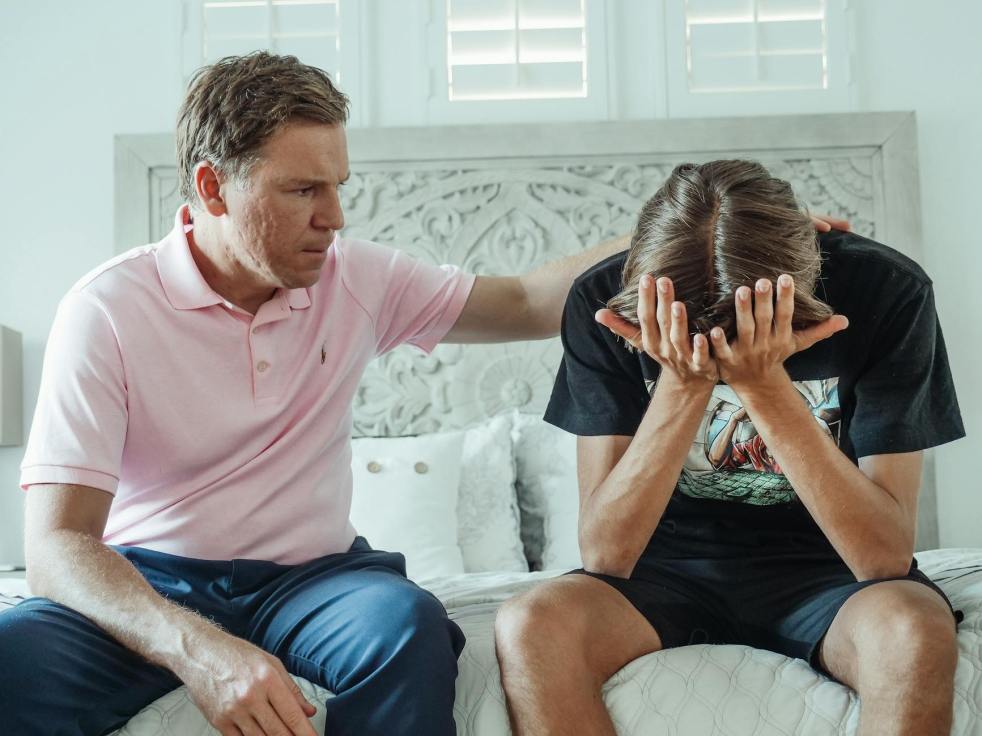
When it comes to treating anxiety in children and teens, Instagram, Twitter and Facebook are the bane of therapists’ work.“With (social media), it’s all about the self-image — who’s ‘liking’ them, who’s watching them, who clicked on their picture,” said Marco Grados, associate professor of psychiatry and clinical director of child and adolescent psychiatry at Johns Hopkins Hospital. “Everything can turn into something negative … [K]ids are exposed to that day after day, and it’s not good for them.”
Anxiety, not depression, is the leading mental health issueamong American youths, and clinicians and research both suggest it is rising. The latest study was published in April in the Journal of Developmental and Behavioral Pediatrics. Based on data collected from the National Survey of Children’s Health for ages 6 to 17, researchers found a 20 percent increase in diagnoses of anxiety between 2007 and 2012. (The rate of depression over that same time period ticked up 0.2 percent.)Philip Kendall, director of the Child and Adolescent Anxiety Disorders Clinic at Temple University and a practicing psychologist, was not surprised by the results and applauded the study for its “big picture” approach.
“There is definitely a rise in the identification of kids with serious anxiety,” he said. They are “growing up in an environment of volatility, where schools have lockdowns, where there are wars across borders. We used to have high confidence in our environment — now we have an environment that anticipates catastrophe.”
The data on anxiety among 18- and 19-year-olds is even starker. Since 1985, the Higher Education Research Institute at UCLA has been asking incoming college freshmen if they “felt overwhelmed” by all they had to do. The first year, 18 percent replied yes. By 2000, that climbed to 28 percent.By 2016, to nearly 41 percent.
The same pattern is clear when comparing modern-day teens to those of their grandparents’ or great-grandparents’ era. One of the oldest surveys in assessing personality traits and psychopathology is the Minnesota Multiphasic Personality Inventory, which dates to the Great Depression and remains in use today. When Jean Twenge, a professor of psychology at San Diego State University, looked at the MMPI responses from more than 77,500 high school and college students over the decades, she found that five times as many students in 2007 “surpassed thresholds” in more than one mental health category than they did in 1938. Anxiety and depression were six times more common.
Statistics on anxiety in children and younger adolescents aren’t easy to come by. The study published last month was based on the National Survey of Children’s Health, which the researchers noted “is the only national data source to evaluate the presence of anxiety and depression on a regular basis.” The findings were limited, though, and relied on the reports of parents and guardians as to whether a health-care professional had ever told them their child was suffering from one of those conditions.
Those responding yes were asked to describe the level of both anxiety and depression in their children: 10.7 percent said their child’s depression was severe, and 15.2 percent who listed their child’s anxiety atthat level.
Among the study’s other findings: Anxiety and depression were more commonly found among white and non-Hispanic children, and children with anxiety or depression were more likely than their peers to be obese. The researchers acknowledge that the survey method — parents reporting what they were told by their child’s doctor — likely skewed the results.
Grados often identifies anxiety in the children and adolescents he sees as part of his clinical practice in Baltimore. “I have a wide range [of patients], take all insurances, do inpatients, day hospital, outpatients, and see anxiety across all strata,” he said.
The causes of that anxiety also include classroom pressures, according to Grados. “Now we’re measuring everything,” he said. “School is putting so much pressure on them with the competitiveness … I’ve seen eighth graders admitted as inpatients, saying they have to choose a career!”
Yet even one of the latest study’s authors acknowledges that it can be difficult to tease out the truth about the rise in anxiety.
“If you look at past studies,” said John T. Walkup, chairman of the Department of Psychiatry at Lurie Children’s Hospital in Chicago, “you don’t know if the conditions themselves are increasing or clinicians are making the diagnosis more frequently due to advocacy or public health efforts.”
Nearly a third of all adolescents ages 13 to 18 will experience an anxiety disorder during their lifetime, according to the National Institutes of Health, with the incidence among girls (38.0 percent) far outpacing that among boys (26.1 percent).
Identifying anxiety in kids and getting them help is paramount, according to clinicians.“Anxiety can be an early stage of other conditions,” Grados said. “Bipolar, schizophrenia later in life can initially manifest as anxiety.”
For all these reasons, Kendall said, increased awareness is welcome.
“If you look at the history of child mental health problems,” he said, “we knew about delinquency at the beginning of the 20th century, autism was diagnosed in the 1940s, teenage depression in the mid-’80s. Anxiety is really coming late to the game.”
Melinda
Reference:
Amy Ellis Nutt covers neuroscience and mental health for The Washington Post. She won the Pulitzer Prize in feature writing in 2011 and previously worked at the Star-Ledger in Newark, NJ and Sports Illustrated.
Every two seconds someone in the U.S. needs blood. It is essential for surgeries, cancer treatment, chronic illnesses, and traumatic injuries. Whether a patient receives whole blood, red cells, platelets or plasma, this lifesaving care starts with one person making a generous donation. The statitics are only for America, think of the tremendous need around the world. It’s a privilege as an American to give blood and pallets to save anothers life. What if you or your family needed blood? You would pray there would be enough blood supply.
Facts About Blood Needs
Every 2 seconds someone in the U.S. needs blood and or platelets.
Approximately 29,000 units of red blood cells are needed every day in the U. S.
Nearly 5,000 units of platelets and 6.500 units of plasma are needed daily in the U.S.
Nearly 16 million blood components are transfused each year in the U.S.
Sickle cell disease affects 90,000 to 100,000 people in the U.S. About 1,000 babies are born with the disease each year. Sickle cell patients can require blood transfusions throughout their lives.
The average red blood cell transfusion is approximately 3 units.
A single car accident victim can require as many as 100 units of blood.
Blood and platelets cannot be manufactured; they can only come from volunteer donors.
The blood type most often requested by hospitals is type O.
One donation can help save more than one life.
According to the American Cancer Society, more than 1.9 million people are expected to be diagnosed with cancer in 2023. Many of them will need blood, sometimes daily, during their chemotherapy treatment.
Blood Supply Statistics
The Red Cross provides about 40% of our nation’s blood and blood components, all from generous volunteer donors. But supply can’t always meet demand because only about 3% of age-eligible people donate blood yearly. Each new donor helps us meet patient needs.
Each year, an estimated 6.8 million people in the U.S. donate blood.
13.6 million units of whole blood and red blood cells are collected in the U.S. in a year.
About 45% of people in the U.S. have Group O (positive or negative) blood; the proportion is higher among Hispanics (57%) and African Americans (51%).
Type O negative red cells can be given to patients of all blood types. Because only 7% of people in the U.S. are type O negative, it’s always in great demand and often in short supply.
Type AB plasma can be transfused to patients of all blood types. Since only 4% of people in the U.S. have type AB blood, this plasma is usually in short supply.
Red blood cells must be used within 42 days (or less).
Platelets must be used within just 5 days.
Giving blood on a regular basis helps keep people alive and platelets are essential for people diaognosed with Leukemia and Sickle Cell patients who require blood transfusions throught their life. Making a blood donation is easy and doesn’t take long, if you give pallets it only takes two hours out of your day. Also if you have O negative blood, your blood is needed more than ever because it’s a rare blood type.
Spending too much time thinking about the past is holding you back from planning your future. Daydreaming about the future is very healthy, we use our imagination and we can manifest a brighter future. That’s not to say I never look back, there’s great joy in thinking about my grandparents and looking at old photos all the way back to when I was born.
Thinking about the past all the time can stagnate your growth and could mean you have unresolved anger or trauma. I first experienced trauma shorthly after I was born because my mother abused me. I’ve had other trauma’s like being stalked, sexually assaulted and my father’s suicide, I don’t want to wallow in those memories. Seeing my Therapist for 32 years has helped me resolve my trauma and I don’t look back.
The future is wide open and you have the ability to live your best life.
Notice the heading is Mental Wellness, not Mental Health or Mental Illness because they are each separate topics. Good Mental Wellness allows children and adults to live a fullfilling live and is critical for overall health. Put any preconcieved ideas aside and read the post for your health.
What Does Mental Wellness Mean?
Mental Wellness is a term that considers psychological, physical, emotional, and social well-being. Looking at the whole self in this way can help people flourish. Mental Wellness is relevant to all of us, not just those experiencing mental health challenges.
Mental Wellness is marked by
feeling up to the challenges of day-to-day life
experiencing moments of pleasure and joy in activities or relationships
feeling satisfaction with life
experiencing positive emotions
having the resources to help cope with the circumstances you face.
Definition and Components
Mental wellness encompasses emotional, psychological, and social well-being. It influences how we think, feel, and act, and is not merely the absence of mental illness. Instead, it represents a proactive approach to maintaining a balanced and fulfilling life. Key components of mental wellness include:
Self-awareness: Understanding one’s emotions and thoughts.
Resilience: The ability to cope with stress and bounce back from challenges.
Healthy relationships: Building and maintaining supportive connections with others.
Purpose and fulfillment: Engaging in activities that provide meaning and satisfaction in life.
Working on Mental Wellness daily is like taking care of our body only a salad isn’t the answer.
Don’t let your misunderstanding of what Mental Wellness emcompasses stop you from living your best life.
What would be the greatest gift? WOW, that is a big question however true love and committment are the greatest gifts for me. I’ve been fortunate to have received expensive gifts and small simple gifts and honestly they both made me happy but love can’t be bought.
I’ve been married 23 years and everyday my husband shows me he loves me in little ways that make me feel joy inside. Sometimes, like for Christmas this year he bought me a couple of small Swarovski Crystal trinkets including an ornament for 2025. He is the only person to buy me the trinkets and it’s been at least 15 years since he purchased the last one, it was quite a surprise.
Leaning on the hard-earned wisdom of others helps shift your perspective and uplift your spirits, serving as a reminder that resilience is possible even on the toughest days.
May these words serve as a gentle source of inspiration and comfort. If you have a specific quote that helps you through the hard times, we invite you to share it in the comments.
Love’s Power to Ease Life’s Sorrows
“Love has, at its best, made the inherent sadness of life bearable, and its beauty manifest.” ~ Kay Redfield Jamison (An Unquiet Mind, 1995)
Seeing Stars Beyond the Tears
“If you cry because the sun has gone out of your life, your tears will prevent you from seeing the stars.” ~ Rabindranath Tagore
Finding Safety in the Present
“In times of pain, when the future is too terrifying to contemplate and the past too painful to remember, I have learned to pay attention to right now. The precise moment I was in was always the only safe place for me.” ~ Nicholas Sparks
Courage Is Something Quiet
“Courage doesn’t always roar. Sometimes courage is the quiet voice at the end of the day saying, ‘I will try again tomorrow.’” ~ Mary Anne Radmacher
Perseverance Is the Foundation
“Of all that is good, sublimity is supreme. Succeeding is the coming together of all that is beautiful. Furtherance is the agreement of all that is just. Perseverance is the foundation of all actions.” ~Lao Tzu
The Power of Hope
“Hope is the thing with feathers that perches in the soul — and sings the tune without the words — and never stops at all.” ~ Emily Dickinson
Imagination, Love, and Laughter
“I believe that imagination is stronger than knowledge; myth is more potent than history; dreams are more powerful than facts; hope always triumphs over experience; laughter is the cure for grief; love is stronger than death.” ~ Robert Fulghum (All I Really Need to Know I Learned in Kindergarten: Uncommon Thoughts on Common Things, 1986)
Life is Music — Both Joyful and Sad
“Life is like a piano; the white keys represent happiness and the black show sadness. But as you go through life’s journey, remember that the black keys also create music.” ~ Ehssan
How Our Loved Ones See Us
“Those who love you are not fooled by mistakes you have made or dark images you hold about yourself. They remember your beauty when you feel ugly; your wholeness when you are broken; your innocence when you feel guilty; and your purpose when you are confused.” ~ Alan Cohen (Wisdom of the Heart, 2002)
Embrace Nature’s Reality
“It isn’t the language of painters one ought to listen to but the language of nature…. Feeling things themselves, reality, is more important than feeling paintings, at least more productive and life-giving.” ~ Vincent van Gogh (letter to Theo van Gogh, The Hague, on or about Friday, July 21, 1882)
Welcoming the Day With Joy
“Hello, sun in my face. Hello, you who made the morning and spread it over the fields… Watch, now, how I start the day in happiness, in kindness.” ~ Mary Oliver (poem, “Why I Wake Early,” 2004)
The Art of Living Well
“Living well is an art that can be developed: a love of life and ability to take great pleasure from small offerings and assurance that the world owes you nothing and that every gift is exactly that, a gift.” ~ Maya Angelou (Wouldn’t Take Nothing for My Journey Now)
Happiness is What Drives Life
“Happiness is what greases the wheels of life, what opens the floodgates, raises the sun, aligns the stars, beats your heart, finds true love.” ~ Mike Dooley
Courage Through Facing Fear
“You gain strength, courage, and confidence by every experience in which you really stop to look fear in the face.” ~ Eleanor Roosevelt (You Learn by Living, 1960)
Accepting Life’s Unexpected Path
“We must let go of the life we have planned, so as to accept the one that is waiting for us.” ~ Joseph Campbell (to Diane K. Osbon, as recorded in Reflections on the Art of Living: A Joseph Campbell Companion)
Stronger After Life’s Storms
“And once the storm is over, you won’t remember how you made it through, how you managed to survive. You won’t even be sure whether the storm is really over. But one thing is certain. When you come out of the storm, you won’t be the same person who walked in. That’s what this storm’s all about.” ~ Haruki Murakami (Kafka on the Shore)
Keep Moving Forward
“If you can’t fly, then run; if you can’t run, then walk; if you can’t walk, then crawl; but whatever you do, you have to keep moving forward.” ~ Dr. Martin Luther King Jr. (“Keep Moving from This Mountain,” speech at Spelman College, April 10, 1960)
It’s Never Too Late to Be You
“For what it’s worth: It’s never too late or, in my case, too early to be whoever you want to be. There’s no time limit. You can change or stay the same; there are no rules to this thing. We can make the best or the worst of it. I hope you make the best of it.… I hope you live a life you’re proud of. If you find that you’re not, I hope you have the courage to start all over again.” ~ Eric Roth (The Curious Case of Benjamin Button, film, 2008)
It seems like there are new myths about Marijuana popping up all the time. The reality is that many of these myths have been disproven long ago. However, they persist in today’s society for one reason or another. Some people believe them because they haven’t done any research on their own. In contrast, others may do so because it benefits them to keep these misconceptions alive. We’ll be giving you the facts about some common myths associated with Marijuana and dispel them once and for all!
You Can’t Get Addicted To Marijuana
You can find this myth in many pro-marijuana campaigns across the world. The truth is that it’s entirely possible to get addicted to Marijuana, just like any other substance out there. Of course, it will not happen overnight, and you shouldn’t be able to do so by smoking one joint either! When people argue about whether or not marijuana addiction exists, they are usually talking about cannabis dependency. This type of dependency occurs when someone smokes on a daily basis for an extended period of time, usually several months. It slowly becomes harder and harder for them to function normally without getting high first.
This doesn’t mean that these individuals have no control over their actions, though; they simply use weed as a crutch because they’re too anxious or uncomfortable without it. The next time you’re around someone who is high, really think about whether or not they look like they need it to function normally.
Marijuana Is Always Safe To Use
One of the most common things heard about weed is that it’s safe and harmless to use. This couldn’t be further from the truth! We’ll touch on some key points here, but if you would like more information, then research Marijuana safety tips.
There are many negative health effects associated with smoking marijuana regularly or excessively. For one thing, long-term smokers usually end up getting respiratory problems such as bronchitis because they inhale so much tar and ash into their lungs. If this doesn’t sound healthy to you already, keep in mind that Marijuana contains 50% more carcinogenic hydrocarbons than regular cigarettes do too! There have also been studies showing an increased risk of lung cancer among people who smoke Marijuana regularly.
Getting your Marijuana from the best dispensary possible is an additional factor to consider as there are legislative quality controls they need to follow, ensuring you get a pure and clean product.
Marijuana Is A Gateway Drug
This is a controversial point, but it has been proven that Marijuana does not cause people to try out harder drugs. Sure there are cases where this happened due to the influence of others, but overall it would be an unfair label to place on Marijuana.
The problem here lies in the fact that some unscrupulous dealers will sell their customers harder drugs when they come back. It’s not because the Marijuana itself made them do it, but you can’t deny that Marijuana is an easy way to get someone hooked on something else! There are studies showing that people who already have a tendency towards addiction may try harder substances if given access to an alternative like Marijuana in most cases.
Marijuana Doesn’t Have Any Medicinal Value
The biggest argument for legalizing Marijuana is its medicinal properties. There are many positive uses for Marijuana, both as an analgesic and to help with the symptoms of certain diseases. It makes sense that people who could benefit from this would want access to it without having to wait until the laws change in their state or country!
There has been a wealth of research done in the past several years that have shown Marijuana’s amazing medical value. The US government even holds a patent on Cannabis for its antioxidant and neuroprotectant abilities.
In conclusion, there are many common myths when it comes to marijuana use that simply isn’t true at all! This is especially important nowadays when more and more states are legalizing the drug either recreationally or medically.
Robin was the brightest star with humor in his blood. He shared his talent with us and we are thankful. His life was cut too short from mental illness.
It’s the weekend!!!!!!
I’m glad you joined me for another edition of Weekend Music Share this week.
Have a great weekend!
Melinda
Welcome back to Weekend Music Share, the place where everyone can share their favorite music.
Feel free to use the Weekend Music Share banner in your post, and use the hashtag #WeekendMusicShare on social media so other participants can find your post.
The U.S. Geological Survey found that at least 45% of tap water in the U.S. is estimated to have one or more types of PFAS, known as “forever chemicals,” which are linked to serious health issues
Nearly half of the country’s tap water could be contaminated with cancer-causing “forever chemicals,” according to a new study.
The study — released Wednesday by the U.S. Geological Survey — found that at least 45% of tap water in the United States is estimated to have one or more types of per-and poly-fluoroalkyl substances.
The United States Environmental Protection Agency (EPA) states that PFAS, or per-and poly-fluoroalkyl substances, are a group of about 14,000 man-made chemicals that are “very persistent in the environment and in the human body – meaning they don’t break down and they can accumulate over time.”
PFAS, also known as “forever chemicals” by the NIH, can last for years without breaking down and are linked to cancer, fetal complications, liver disease, kidney disease, thyroid disease, fertility problems, autoimmune disorders and other serious health issues.
The USGS said the study is the first to test for PFAS in tap water from both private and public water supplies, testing 716 locations across the country between 2016 and 2021. Of the locations, both rural and urban areas, 447 rely on public water supplies and 269 rely on private wells.
Scientists estimate that there is about a 75% chance of PFAS being found in rural areas and about a 25% chance in urban areas. High exposure areas were reported in the Great Plains, Great Lakes, Eastern Seaboard, and Central/Southern California regions.
“USGS scientists tested water collected directly from people’s kitchen sinks across the nation, providing the most comprehensive study to date on PFAS in tap water from both private wells and public supplies,” said USGS research hydrologist Kelly Smalling, the study’s lead author. “The study estimates that at least one type of PFAS – of those that were monitored – could be present in nearly half of the tap water in the U.S. Furthermore, PFAS concentrations were similar between public supplies and private wells.”
The EPA regulates public water supplies while private water supplies are maintained, tested and treated by homeowners. Anyone interested in testing and treating private wells should contact their local and state officials for guidance as testing is the only way to confirm the presence of PFAS in wells.
“If the average American is worried about the quality of their drinking water, they can use this and other studies to get informed, evaluate their own [personal] risk and reach out to their local health officials about testing or treatment,” Smalling told NPR.
Consumers are encouraged to dispose of any contaminated food products immediately
Residents in Sacramento and Davis, Calif., may want to check the eggs in their fridge following a recall from a local distributor.
According to the California Department of Public Health (CDPH), Veg Farms, based in Dixon, Calif., issued a recall on Friday, Dec. 5, due to the potential of Salmonella contamination.
12-count cartons and 30-count flats of eggs with sell-by dates of Dec. 22 and earlier, or Julian dates of 328 and earlier are affected by the recall. Contaminated products with a handler code of 2136 were shipped to both restaurants and farmers’ markets.
A Veg Farms spokesperson confirmed with local news outlet KCRA3 that the company’s processing equipment contaminated the roughly 1,515 dozen eggs, not the farm’s flock of chickens.
Veg Farms stated that it disposed of all of the product from the affected store locations. The company also encourages any consumers who have purchased the eggs to throw them away immediately.
According to the Food & Drug Administration (FDA), symptoms of Salmonella infection can include stomach cramps, diarrhea, fever, headache, nausea and vomiting. While most cases may resolve without medical treatment within a few days, the illness can be more serious (and potentially fatal) for infants, senior adults, people with weakened immune systems and individuals living with sickle cell disease.
This is only one of the many recalls reported this year due to potential Salmonella infection. Earlier this month, Wegmans, a popular regional grocery store, recalled two types of mixed nuts.
While the company didn’t specify where the Salmonella contamination originated, it’s important to read labels, wash hands and dispose of potentially affected food items to avoid any bodily harm.
Happy New Years Eve!!!!!! We celebrate the end on 2025 and welcome in 2026 with open arms. I haven’t been a party person in over 20 years but sure remember some doozies. If you out and drinking, be sure to have a safe driviner with you, who wants the year to start on very bad note. We celebrate quietly with a table full of finger for and desert and may watch some early New Years Even programs if they are before 9PM. I have a hard core bedtime hour.
Have fun making memories with family, friends reminiscing on the old days and tomorrow you can start thing about what you want to accomplish in 2026. No wish list, wishes down’t come through, make a set of goals and remember to work towards them everyday to manifest them.
We have spent 23 years building our finances around living comfortably in retirement and beyond and buying a new house. David retired last April, our house is paid for and we have no debt, just as we planned and saved for.
Yesterday we made an offer on our first house and now David is pulling all the financing together for a mid-February move-in date. I am so in love with the house and have dreamt of living in a one-story without a pool for the longest time.
The seller accepting our offer is just the start. We plan to move into new house, then upgrade our house and sell it. This will be a longer process but I’m screaming inside with excitement.
I’ll give an update if the offer is accepted. We went in with a low offer because it’s been on the market for over a year and no one is living there. The market is down and continuing to go down in our area. Now is the time to buy before the market swings upward.
That’s a great question because I’m not into sports. I watch a tiny bit of football or golf with my husband on occasion but not a fan of any. I do appreciate the great play’s in any sport, that is the excitement of the games.
Of the college & professional football teams, most mascot’s are boring. I would chose an animal like a leopard, koala, or a marine animal and a color combination that works best for the animal. If I had the ability to make the decision, I would teaming up with an appropriate charity or conservation organization with a percentage of money from each game, or concessions to make a difference and educate the public with out having it crammed down their throat.
For years, people living with Lyme disease and other infection-associated chronic illnesses have reported cognitive decline, mood changes, memory problems, and unexplained psychiatric symptoms. Yet these symptoms are routinely dismissed as psychological rather than biological.
At the 2nd Annual Alzheimer’s Pathobiome Initiative (AlzPI) & PCOM Symposium, a new conversation is reshaping that understanding.
In a special live recording of Pathobiome Perspectives, author and Galaxy Diagnostics CEO Nicole Bell shares how her family’s search for answers revealed the role of infection in her late husband Russ’s devastating neurological decline.
What lab tests later showed
In her presentation, “When the brain pathobiome becomes personal,” Bell describes laboratory findings from Russ’s donated brain, including:
Borrelia burgdorferi (Lyme)
Chlamydia pneumoniae
Babesia otocoli (previously thought to be deer-restricted)
Elevated heavy metals (lead and mercury)
These data, now being prepared for publication, reinforce a growing scientific model: polymicrobial infection and toxic exposures may converge to drive neuroinflammation and Alzheimer’s-like symptoms.
Bell also outlines why so many patients fall through the cracks:
Standard two-tier Lyme serology can miss true infection, especially in late-stage disease
Direct detection methods can identify active pathogens that serology overlooks
Bartonella and Babesia must be considered alongside Lyme when neuropsychiatric symptoms appear
She highlights hallmark Bartonella clues often mistaken for psychological disorders — irritability, anxiety, OCD, tics, vision changes, and stretch-mark-like striæ — noting that exposure risk extends beyond ticks to fleas and household cats. Bell advocates for precision diagnostics that assess pathogen load, immune dysfunction, and toxic exposures together, rather than in isolation.
A turning point for chronic illness science
Bell’s story underscores a pivotal shift: what looks psychiatric or “idiopathic” may be a complex, biologically driven pathobiome process — and recognizing it early could change outcomes.
Tune in to this episode of Pathobiome Perspectives, presented in collaboration with Tick Boot Camp and LymeDisease.org, to learn how cutting-edge research could transform our understanding of chronic illness and cognition–and offer hope to millions navigating life through the haze.
New episodes of Pathobiome Perspectives will roll out every Tuesday night at 7:30 p.m. Central.
Ali Moresco is a tick-borne disease survivor, advocate, speaker and founder of Moresco PR, a healthcare communications firm. She also serves as Executive Board Chair of Project Lyme. You can connect with Ali on Instagram at @AliTMoresco or on YouTube.
“Forever chemicals” are synthetic compounds found in products like non-stick pans, waterproof clothing, dental floss and more items
Researchers have found a new link between exposure to “forever chemicals” — synthetic compounds found in non-stick pans, waterproof clothing, dental floss and more items — and one lifelong health condition.
A new study, published in the scientific journal Environment International, found that people exposed to two major environmental toxins — known as perfluorooctane sulfonic acid (PFOS) and polychlorinated biphenyls (PCBs) — are more likely to be diagnosed with multiple sclerosis, or MS.
“We saw that several individual substances, such as PFOS and two hydroxylated PCBs [substances that arise when PCBs are broken down in the body], were linked to increased odds for MS,” Kim Kultima, who led the Sweden-based study, said in a press release.
“People with the highest concentrations of PFOS and PCBs had approximately twice as high odds of being diagnosed with MS, compared with those with the lowest concentrations,” she added.
According to the Mayo Clinic, multiple sclerosis is a chronic autoimmune disease that causes a breakdown of the protective covering of nerves, causing numbness, weakness, trouble walking, vision changes and other symptoms.
MS causes an interruption in communication between the brain and the rest of the body, and can eventually lead to permanent damage of the nerve fibers.
In this study, researchers analyzed blood samples from 900 people who had been recently diagnosed with MS, and compared them to samples from people who do not have MS.
Kultima and her team then measured the toxin levels in each group’s blood samples, using statistical models see how chemical exposure corresponded with the odds of developing MS. According to the study, people are often exposed to a mixture chemicals at the same time, so researchers also investigated how exposure to more than one toxin affected them.
“We could then see that an increase in total exposure was linked to higher odds of MS, even after adjusting for previously known lifestyle and genetic risk factors,” said Aina Vaivade, the first author of the study.
The final phase of the study also explored the relationship between genetics, chemical exposure and the odds of being diagnosed with MS.
Researchers found that people who carry a certain gene variant have a reduced risk of MS. People who carry the gene and participated in the study saw “unexpected increased odds” of being diagnosed with MS when they had higher PFOS exposure.
“This indicates that there is a complex interaction between inheritance and environmental exposure linked to the odds of MS,” Kultima added.
The product should be thrown away and not consumed, per the U.S. Department of Agriculture’s Food Safety and Inspection Service (FSIS)
A food production company in Georgia has issued a nationwide recall for more than 60,000 lbs. of chicken that was shipped to restaurants across the United States.
The product contains soy, which is a known allergen, but it is not listed on the label, per FSIS.
The chicken was produced on Oct. 16, 2025, and has case code “P-1380 126237 B30851 23:11 K04” printed on the side of the packaging. It is shipped in 18 lb. cases containing four units.
FSIS is currently “concerned that some product may be in restaurant refrigerators or freezers,” and restaurants are urged to throw the chicken away should they have it, per the recall.
FSIS first became aware of the contamination when they were alerted to the issue by Suzanna’s Kitchen, which realized some of the chicken had been mislabeled, per the recall statement.
I’m so glad you are enjoying Fun Facts. I learn something new each week, even if it’s weird. I love hearing your comments!
Contrary to popular belief, it’s really, really hard to see the Great Wall of China from space, particularly with the naked eye. (nasa.gov)
The first footprints on the moon will remain there for a million years. (nasa.gov)
Days on Venus are longer than years. Due to its slow axis rotation, it takes 243 Earth days to spin once; but it only takes 225 Earth days to go around the sun. (nasa.gov)
Humans could never “land” on Jupiter, Saturn, Uranus or Neptune because they are made of gas and have no solid surface. (natgeokids.com)
But you could ice skate on one of Jupiter’s moons, Europa, which is covered in ice. An Axel jump would take you 22 feet in the air! (nasa.gov)
Keep the feedback coming, I sure enjoy your comments each week.
These incredible pups catch poachers, sniff out invasive plants and diseases, and more, thanks to the work of wildlife biologist and conservation-dog expert Megan Parker.
What happens to those dogs that are just too much dog for people to handle? “You know them — you go to your friend’s barbecue, their dog is so happy to see you that she pees on your feet, and she drops a slobbery ball in your lap,” says Megan Parker (TEDxJacksonHole talk: Dogs for Conservation), a wildlife biologist and dog expert based in Bozeman, Montana. “You throw it to get as much distance between you and the dog as possible, but she keeps coming back with the ball. By the 950th throw, you’re thinking, Why don’t they get rid of this dog?” All too often, their owners reach the same conclusion and leave their pet at a shelter.
Thanks to Parker and the team at Working Dogs for Conservation (WD4C), some of these dogs have found a new leash lease on life. They’re using their olfactory abilities and unstoppable drive in a wide variety of earth-friendly ways, working with human handlers to sniff out illegal poachers and smugglers, track endangered species, and spot destructive invasive plants and animals.
Chai is shown here with a trainer. After a dog learns to recognize a particular scent, the education isn’t over — their handler works with them regularly so they maintain their skills. These days, you can find this sweet German shepherd protecting wildlife in Zambia, along with her brother Earl.
Parker first considered using dogs in conservation when she worked on the reintroduction of wolves to Yellowstone Park and was asked how researchers could track wolves through their scat, or droppings. “I started thinking how best to detect their scat off a large landscape, and the idea came up for dogs,” she says. In 2o00, she cofounded WD4C to train and use canines in conservation work. Most of their dogs are adopted from shelters or from organizations or work settings where they didn’t quite fit in.
While it’s fair to say almost all dogs love toys, wildlife-detection dogs areobsessed with them. “They’ll do anything to chase a ball or a tug toy,” says Parker. If their preferred plaything is thrown far into the brush or buried in a massive pile of leaves, no worries — they won’t stop looking until they find it. No food, obstacle or distractions can deter them, and WD4C staff have turned this single-minded focus into a powerful incentive. Their canine friends are rewarded with their favorite toy every time they locate a desired wildlife-related scent, anything from elephant ivory and poachers’ guns in Zambia and trafficked snow leopards in Tajikistan to predatory Rosy wolf snails in Hawaii and invasive Argentine ants on California’s Santa Cruz Islands. The dogs are careful not to disturb or touch any specimens they pinpoint; it’s all about the toy.
Lily, a yellow Lab, is one of the group’s many sad-start-happy-ending stories. When the then-three-year-old came to the attention of WD4C trainers, she’d already bounced her way in and out of five different homes. She couldn’t sit still and she never, ever wanted to stop playing. Oh, and she was a bit of a whiner. Since joining WD4C in 2011, she has been trained to recognize a dozen different conservation-related scents and been deployed to track grizzly bears and sniff out the eggs, beetles and larvae of emerald ash borers, an insect that has killed millions of trees in the US and Canada.
Hilo was originally meant to be a guide dog for the blind, but when that didn’t work out, he found a place at WD4C. Here, he wears the standard orange vest that tells conservation dogs it’s time to get to work. Hilo helps detect quagga and zebra mussels on boats.
The three-dozen-strong WD4C pack also includes purebred working dogs who weren’t right for their intended occupations. Orbee, a border collie, had the enthusiasm and live-wire energy required of ranch dogs, but there was one problem: he had zero interest in herding sheep. He also barked a lot. Since joining WD4C in 2009, Orbee has had a globe-trotting career — he has spotted invasive quagga and zebra mussels on boats in Alberta and Montana, monitored the habitats of the endangered San Joaquin kit fox in California, and assisted scientists in northern Africa in counting up Cross River gorillas, the world’s rarest gorilla.
Jax is a Belgian malinois, a sturdy breed frequently used by the police and military. He was in training to serve with the US Army’s special unit, the Green Berets, until his handlers realized Jax doesn’t like to bite people — just toys. And, boy, does he loves toys; he’s even tried to climb trees to reach prized objects. Since 2017, Jax’s athleticism and high spirits have been used by the WD4C to perform tasks such as mapping the movements of bobcats in the western US.
Tule gets to roam the great outdoors for WD4C, using her keen nose — dogs have around 300 million olfactory receptors compared to humans’ 6 million — to track animals such as the endangered black-footed ferret in Wyoming.
“Different dogs have different strong suits,” says Parker. She and the WD4C team try to place their charges in environments that match their skillset, likes and dislikes. Unlike many dogs, Tule (above), a Belgian malinois who flunked out of a job with US Customs and Border Patrol, has absolutely no desire to chase small animals such as cats, squirrels and rabbits. This made her the perfect fit to help researchers monitor black-footed ferrets, which live in the same territory as a large, scampering prairie-dog population. The ferrets, once thought extinct in the US, were reintroduced in Wyoming in recent years. Tule alerts her handlers to the scent of live ferrets or their scat, information that allows state wildlife officials to map their distribution and see if the population is recovering. Without Tule and her pack, researchers would be forced to study the elusive creatures with cameras or live traps, undependable methods at best.
The dogs’ efforts have resulted in positive, substantial changes. The organization teamed up with the nonprofit Wildlife Conservation Society so their dogs could track the scat of four keystone carnivores (grizzly bears, black bears, mountain lions and wolves) through the Centennial Mountains in Idaho and Montana. Five years of doggie data showed that all four species depended on the mountains to move between the Greater Yellowstone ecosystem and central Idaho wilderness areas. Thanks to this information, activists were able to stop construction of a housing development that would have interrupted their migratory pathway.
Tobias is a former stray who was found on the streets of Helena, Montana. He has searched for Argentine ants on California’s Santa Cruz Island, and now he spots invasive mussels on watercraft in and around Glacier National Park.
Some dogs are searching for animals and plants that are most wanted for the opposite reason: they’re invasive species proliferating where they don’t belong and driving out native flora and fauna. There’s the previously mentioned zebra and quagga mussels, which spread by clinging to boats and watercraft, and which clog water and sewage pipes, foul up power plants, and destroy good algae. Tobias (above) is a specialist in finding them. In one test, WD4C dogs identified 100 percent of the boats with mussels aboard (human screeners spotted 75 percent). The dogs did the job more quickly, and they could also detect the mussels’ microscopic larvae.
Former shelter dog Seamus (shown at the top of the post), a border collie, is an expert in searching out dyer’s woad on Mount Sentinel in Montana.Humans have tried to eradicate the invasive weed by spotting its flowers and pulling out plants by hand, but these attempts barely made a dent. By the time it’s found, it’s often already seeded (and a single plant can produce up to 10,000 seeds). Seamus’s keen nose, along with those of three canine colleagues, learned to sniff out woad before it flowered, a time when it’s extremely hard for human eyes to see. They also found root remnants left in the ground. At a recent checkup, just 19 of the invasive plants were found on the mountain. “It will be a complete extermination,” says Parker. “It’s just going to take a long time because we don’t know how long their seeds last in the soil.”
The dogs’ hunting grounds even extend into the water. Although prized in their native habitat, brook trout are an invasive species elsewhere; in some places in the Western US, they are pushing out the native cutthroat trout. WD4C was brought to Montana by the US Fish and Wildlife Service, the US Geological Survey and the Turner Endangered Species Fund to see whether their animals could learn to sniff out live fish in moving water. Reports Parker, “This project confirmed what we long suspected: that dogs can detect and discriminate scents in water.”
Pepin can recognize 20 wildlife scents, including the scat of snow leopards, wolverines and cheetahs. In one cheetah study, he and another conservation dog located 27 scats in a 927-square-mile area. How many did humans find in the same territory? None.
Pepin (above), who worked on the brook trout project, is part of an ambitious charge to train the dogs to detect infectious diseases in animals.“He’s done the first of a lot of things for us, because he’s so game,” says Parker. Some wildlife carry brucellosis, a bacterial disease that is particularly harmful to cattle. It’s difficult to tell when animals are first infected because they typically don’t display symptoms, so in areas where the disease is prevalent, ranchers tend to keep livestock and wildlife as far away from each other as possible — severely limiting the territory and movement of both kinds of animals. The hope is that dogs could provide a fast, reliable way to identify infected herds. So far, Pepin has shown he can discriminate infected elk scat with higher and lower concentrations of the bacteria, and W4DC is eager to explore this use of dog power. “We have proof of concept,” says Parker. “I’d like to move that work forward.”
There are so many other unexplored capacities and environments where dogs could help, Parker believes. To that end, WD4C started a program in 2015 called Rescues 2the Rescue, which aims to help shelters around the world identify would-be detection dogs and place them with wildlife and conservation organizations. What kind of dogs are they looking for? Ones that are, uh, crazy.
To clarify that adjective, we’ll close by telling you about Wicket, a black Lab mix who retired from WD4C in 2017 at the top of her game, having detected 32 different wildlife scents in 18 states and seven countries. Wicket languished in a Montana shelter for six months, barking up a storm and scaring away potential owners, until WD4C cofounder Aimee Hurt found her there in 2005. When she went to adopt her, the shelter director said, “You don’t want that dog — that dog’s crazy!” To which Hurt replied, “I think she might be the right kind of crazy.”
I’m glad you joined me for another edition of Weekend Music Share this week.
Have a great weekend!
Melinda
Welcome back to Weekend Music Share, the place where everyone can share their favorite music.
Feel free to use the Weekend Music Share banner in your post, and use the hashtag #WeekendMusicShare on social media so other participants can find your post.
I’ve been a car lover since high school after meeting several guys how had awesome and fast cars. It’s not just fast cars that catch my eye, I’ve been to many types of local cars shows or car club meeting over the years. It’s hard to pick one car when I appreciate so many however being the owner of a 1963 Corvette fully restored would blow my mind.
At every Corvette meeting, I would chat up every owner of a 1963-1967 Corvette, they are the same body style but 1963 is the year I was born. Adding icing to the cake. I also love many old salon type cars, for that matter I enjoy cars old and new.
If you are thinking about buying a Corvette, I suggest you drive one and get in and out many times. The car lays close to the ground and getting in and out can be awkward at times. I bought a white Corvette in my early 30’s not thinking about logistics, like getting in with an umbrella or taking a older client to lunch.
I had to take care of a baby for a half a day, my friend managed to get Cowboy’s tickets on Thanksgiving day. I wrangled the car seat in and headed to my brother’s for our gathering. The baby was a huge surprise from me and the only thing I had to do was change a diaper and found out later it was on backwards. All the women kept passing the baby around that I had little to do, which is great since I know nothing about babies except you feed them and shortly after it’s time for a diaper change.
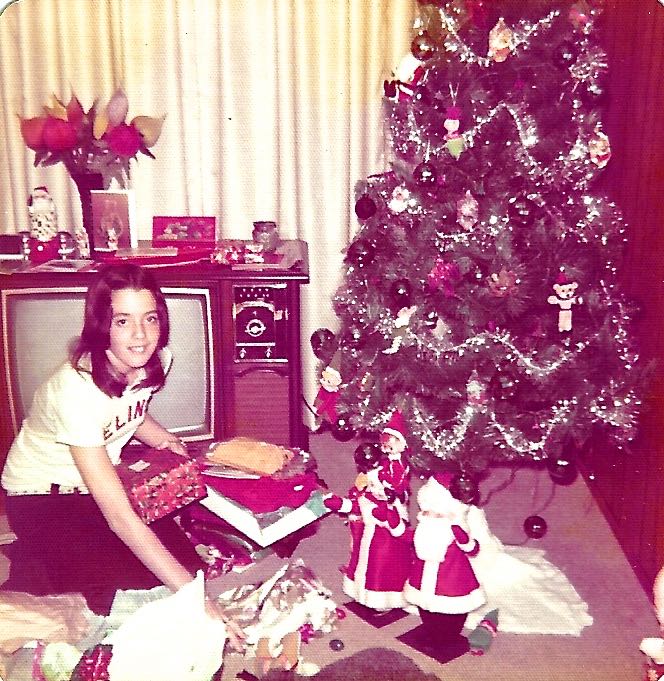
Growing up I couldn’t wait to arrive at my Grandparent’s house for Christmas. My Granny would go over the top with food and sweets. We opened our presents on Christmas Day. They usually bought lots of clothes. I still have all of their ornaments, they are frail, and I don’t use them but I have them to look at and bring back old memories.
Today we celebrate the birth of Jesus, the son of God. Please take a minute to think of the reason for the season.
Around 12 years old
Have a blessed Christmas, I hope you have family and friends to celebrate with and enjoy a good meal by starting with thanks to God for sending his only son who died for our sins..
Growing up our family didn’t have any traditions, we just waiting for Santa. If we were celebrating Christams with my Grandparents and the holiday fell during the week, Gramps had to work and we had to wait all day until he came home from work, it felt like forever.
At 27, I decided to make Christmas Eve a celebration as well. Presents were opened in the early evening followed by a table full of hard meats, cheeses, crackers, olives and desert. For me it was an evening to make special memories more centered on relationships, walks down memory lane, expressing joy and love.
On Christmaas we have a full meal focused on the birth of Jesus and how blessed we are.
What are your Christmas Eve traditions? I love to hear all the ways people celebrate.



















:max_bytes(150000):strip_icc():focal(749x0:751x2)/vega-farms-eggs-120925-2-e376d5b1e17c4e46bb87fbf7b3cfef1f.jpg)
:max_bytes(150000):strip_icc():focal(749x0:751x2)/vega-farms-eggs-120925-1-6cc1af1042f246618032d330929f8b23.jpg)
















 lookingforthelight.blog